

New Domain vs. Established Website SEO Timeline in Las Vegas: What Small Businesses Should Expect
Launching a new website can feel like the cleanest possible solution. An older site may have an outdated design, years of neglected pages, slow load times, old plugins, confusing navigation, and content that no longer reflects the business. At the same time, keeping an established website can preserve assets that took years to build.
For Las Vegas business owners, the decision is rarely as simple as “new is better” or “older ranks better.” When comparing a new domain vs. established website SEO timeline in Las Vegas, the practical question is: Which path protects the useful assets your business already has while creating the strongest foundation for future local growth?
An established website may already have indexed service pages, relevant backlinks, branded search activity, local citations, and a recognizable web address. It may also have serious technical debt, outdated information, duplicate location pages, thin content, or a platform that is hard to maintain. A new domain starts without the old problems, but it also starts without the site history and visibility that may be worth preserving.
This guide gives Las Vegas, Summerlin, and Clark County businesses realistic expectations before investing in search engine optimization, a website redesign, or a domain move. It explains what affects the timeline, what early SEO progress should look like, where migration risk comes from, and how to choose between improving an existing site, rebuilding on the same domain, or starting with a new domain.
New Domain vs. Established Website: The Short Answer
For many local businesses, improving a usable established website is the lower-risk SEO path. The current domain may already have important pages indexed in search results, legitimate links from local or industry sources, customer familiarity, and a connection to the company’s existing Google Business Profile and citations.
That does not mean an old domain automatically delivers faster rankings. Domain age alone is not a shortcut to SEO results. A ten-year-old Las Vegas website can still need extensive work if it has poor mobile usability, broken pages, generic service copy, inconsistent phone numbers, weak site structure, or content that no longer matches the business.
A new domain usually takes longer to produce reliable SEO results because search engines and customers need time to discover it, crawl and index its pages, understand its services and location relevance, and see legitimate signals that support the business. A new site can absolutely become competitive, but launch day is the start of the SEO process rather than the finish line.
The right decision depends on the condition of the current website, the value of its existing URLs and links, the scale of the business change, the target markets, and the budget available for careful implementation after launch.
| SEO Consideration | New Domain and New Website | Established Website |
|---|---|---|
| Existing indexing | Priority pages need to be discovered, crawled, and indexed for the first time. | Important service, location, and informational pages may already be indexed, although weak pages may require cleanup. |
| Backlinks and references | Starts without an established link profile unless a prior site is migrated correctly. | May have relevant local, industry, vendor, media, or community links worth preserving. |
| Content foundation | Requires new service pages, location information, navigation, and supporting content. | May have useful content that can be improved, expanded, consolidated, redirected, or retired. |
| Technical condition | Can be built with a cleaner foundation, but launch errors can still delay visibility. | May have technical debt, but not every technical issue requires abandoning the domain. |
| Local signals | Needs accurate business details and a clear connection to the company’s local presence. | May already have branded searches, a recognized address, reviews, citations, and map visibility. |
| Early SEO risk | Slow discovery, limited initial visibility, and an unproven content foundation are common. | Redesign or migration mistakes can cause preventable traffic loss if URLs and redirects are mishandled. |
| Best fit | A genuinely new business, major rebrand, separate business entity, or a site that cannot be repaired efficiently. | A business with a recognizable domain, legitimate links, useful indexed pages, or local visibility worth protecting. |
For a Las Vegas company with an established name, it is often smarter to keep the current domain and improve the website. For a business undergoing a real name change, ownership change, or separation into a new brand, a new domain may be justified. The important point is to make the choice based on business facts and SEO assets—not on the assumption that a new domain will rank better or that an older domain will automatically keep ranking.
What Gives an Established Las Vegas Website an SEO Head Start
An established website can have an SEO head start when it already contains useful assets. The key word is useful. Old pages, old links, and old content are not valuable simply because they exist. A practical SEO review should separate the pages and signals worth protecting from the clutter that may be holding the site back.
Existing Indexed Pages Can Reduce the Starting Work
If a Las Vegas contractor, dental office, restaurant, law firm, home service provider, medical practice, or professional service company already has pages appearing in search results, those pages provide a starting point. They may not rank at the top of the results, but they have already been found and categorized to some degree.
Often, the best response is to improve a useful URL instead of replacing it. A service page may need clearer headings, more specific information about the service, improved internal links, stronger mobile formatting, accurate service-area details, and a more direct path to call or request an appointment. Updating that page while preserving the URL can be less disruptive than deleting it and hoping a new page gains the same visibility.
For example, an established Summerlin business may have a page for a core service that earns occasional impressions but does not generate many calls. The page may be too brief, have no clear explanation of the process, lack local relevance, or be buried in the navigation. Improving it can be more practical than creating a completely new page on a new domain.
Not every indexed page should be retained. A useful audit may recommend consolidating or removing:
- Outdated promotions and discontinued services.
- Duplicate service pages targeting nearly identical phrases.
- Thin location pages that only replace “Las Vegas” with “Summerlin” or another city name.
- Old blog posts with inaccurate or no-longer-relevant information.
- Low-value tag archives, internal search pages, or duplicate URL variations.
- Former team, office, or contact pages that no longer represent the business.
An established website can provide a useful head start, but it still needs a deliberate plan. Keeping the domain does not mean keeping every page, every design choice, or every technical problem.
Relevant Links and Mentions May Be Worth Protecting
Over time, legitimate businesses may earn links and mentions from local organizations, suppliers, chambers, community programs, media outlets, vendors, industry publications, customers, or business directories. Those references do not guarantee rankings, but they may be meaningful assets when they point to relevant pages on a legitimate website.
A new domain does not automatically take those references with it. If a Las Vegas business changes domains without a migration plan, external websites may continue linking to the old address. Customers may find old bookmarked pages, outdated listings, or broken links. The new website loses the practical benefit of those existing references if the old pages are not redirected appropriately.
When a business changes a URL, the best practice is usually to redirect the old page to the closest relevant new page. A former air conditioning repair page should redirect to the updated air conditioning repair page, for example. Redirecting every old URL to the home page is often a poor substitute because it gives visitors less relevant information and makes it harder to preserve the original page relationship.
Existing links should also be reviewed honestly. A site with a long list of unrelated or questionable links should not assume that link volume is a reason to keep the site unchanged. The question is whether the domain has legitimate references that support the business and whether the pages receiving those links can be preserved or improved.
Brand Searches and Local Recognition Matter
A known local business may have useful brand signals beyond its website. Customers may search for the company name, phone number, specific office location, service name, or directions. The business may already have a verified Google Business Profile, established reviews, consistent local citations, and a website address customers recognize.
These signals do not guarantee map pack placement or organic rankings. They do mean the company is not starting from zero. For businesses serving Las Vegas, Summerlin, North Las Vegas, Summerlin, or wider Clark County, accurate local information is foundational.
The website should reinforce the same business identity shown in local listings. The business name, address, phone number, hours, and relevant location details should be accurate and consistent. A local business should also make it easy for a customer to understand where it is located, what areas it serves, and how to contact the right office or department.
If you are deciding how much of the campaign should focus on local visibility versus broader organic content, review local SEO versus traditional SEO for Las Vegas businesses. A single-location business, a service-area business, and a multi-location operator may need different priorities even when they work in the same market.
Older Websites Often Have Technical Debt
An older site may have history, but history can include problems. Technical debt is the accumulation of website issues that become harder to manage over time. It may include old plugins, unsupported templates, inconsistent URL patterns, copied pages, slow scripts, fragile forms, poor mobile formatting, or years of edits that no longer follow a clear structure.

Common warning signs on established Las Vegas websites include:
- Multiple versions of the same page caused by HTTP and HTTPS, www and non-www, or URL parameter variations.
- Pages that load slowly because of unnecessary scripts, oversized files, outdated plugins, or excessive tracking code.
- Service pages with nearly identical content that do not clearly explain the service.
- Location pages that add city names without offering real location-specific information.
- Broken internal links, missing page titles, poor heading hierarchy, or navigation that makes key services hard to find.
- Old phone numbers, former addresses, inaccurate hours, or a website that conflicts with local business listings.
- Expired promotions and discontinued services that are still indexed and visible to prospective customers.
These issues do not automatically require a new domain. In many cases, a same-domain rebuild, technical cleanup, content consolidation, and careful redirect plan are enough to preserve valuable assets while correcting the underlying problems.
Why a New Domain Usually Takes Longer to Produce Reliable Results
A new website SEO timeline in Las Vegas is usually longer because the site must establish basic visibility before it can compete consistently. Search engines need to discover the website, crawl key pages, index them, understand the relationship between services and locations, and process signals that indicate the business is relevant to local searchers.
For a local business, the challenge is not simply publishing a homepage. The new site needs a structure that makes the following points clear to both visitors and search engines:
- What the business actually offers.
- Which services deserve dedicated pages.
- Where the business is located or which areas it serves.
- Which location provides which service when there are multiple offices.
- How a customer can call, request service, book, or visit.
- Why the business is a relevant option for the customer’s specific need.
A New Site Begins Without Established Content Equity
A new site needs useful content that addresses real customer intent. A Las Vegas HVAC company should not expect one generic homepage to compete for repair, replacement, installation, maintenance, indoor air quality, and emergency service searches. A medical practice should not place every service, provider, office detail, and insurance question on a single broad page and expect that page to answer every local search need.
This does not mean every business needs hundreds of pages. It means the site should have a practical structure around the services and locations that matter most. A smaller website with strong service pages, accurate location details, logical internal linking, clear contact paths, and useful supporting information is more valuable than a large site made up of thin pages written only to mention neighborhoods around Clark County.
New content should be specific to the business. It should explain what customers need to know before contacting the company, such as what is included, which areas are served, what the process looks like, whether the service is performed on-site or at the customer’s location, and how the business handles common customer questions.
Discovery and Local Trust Signals Take Time
There is no responsible answer that gives every new business a guaranteed ranking date. The SEO timeline depends on competition, service type, geographic reach, technical setup, page quality, local presence, implementation speed, and the business’s established reputation outside of search.
For a brand-new Las Vegas business website, early technical milestones may happen within weeks after launch. Search engines may crawl key pages, index the homepage and main services, and begin showing the site for branded searches or highly specific queries. Those are useful early signs, but they are not proof that the site will immediately compete for broad, high-value local searches.
Meaningful traction for commercially important service terms commonly requires sustained work over several months. In highly competitive Las Vegas categories, the timeline may be longer. Search results can include long-established local providers, large directories, review platforms, map features, paid ads, and businesses that have been improving their web presence for years.
A new domain can outrank an established competitor over time, but not simply because it has a cleaner design or a more modern URL. It needs a stronger overall answer to the searcher’s needs: useful content, accessible pages, credible local information, clear site structure, legitimate brand awareness, and ongoing improvement.
A New Design Is Not an SEO Strategy
A polished new design can improve readability and conversion experience, but design alone does not create search visibility. Businesses sometimes assume that a new website will rank because it looks modern. A visually attractive website that lacks service detail, location clarity, crawlable content, internal links, accurate business information, and measurement tools may still struggle to generate relevant organic traffic.
Before launch, a new website should have a clear plan for:
- A preferred domain version and secure HTTPS configuration.
- Search-friendly page titles, headings, navigation, and internal linking.
- Dedicated pages for priority services and real business locations.
- Accurate phone numbers, contact forms, calls to action, and conversion paths.
- XML sitemap setup and appropriate indexing controls.
- Analytics and search performance measurement.
- Accurate Google Business Profile website links and local business information.
- A process for publishing, improving, and measuring useful content after launch.
Google’s SEO Starter Guide is a useful reference for crawlability, helpful content, logical structure, and other foundational practices. It is not a formula for instant rankings, but it supports the practical reality that technical and content fundamentals should be in place before expecting competitive visibility.
The Factors That Matter More Than Domain Age
Domain age and SEO rankings are often discussed as if an older registration date carries its own ranking advantage. That is not a useful way to evaluate a business website. An older domain may have more content, more links, more customer familiarity, and more local citations simply because it has been active longer. Those assets may matter. The age itself is not the shortcut.
When assessing whether to preserve an existing site or build something new, focus on the current condition of the website and the business assets attached to it.
Technical Accessibility and Site Structure
Important pages need to be accessible to search engines and easy for customers to use. They should not be blocked accidentally, buried deep in the website, duplicated across multiple URLs, or separated from the navigation that customers use to make decisions.
For example, a Summerlin contractor may need clear pages for the specific high-value services it provides rather than one catch-all services page. A Clark County business with offices in Las Vegas and Summerlin may need separate location pages that accurately identify each office, its contact details, hours, and the services available there.
The goal is to reflect the real business model. It is not to create repetitive city pages for every neighborhood in Southern Nevada. A page should exist because it helps a customer understand a real service or location, not because it repeats a city name.
Useful, Specific Content
Content should help a prospective customer decide whether the business is a fit. It should answer practical questions: What is included? What does the service address? Which customers or properties are served? Is an estimate, consultation, appointment, or site visit needed? What should the customer expect next?
Older content may be worth updating when it has a useful purpose and accurate information. It can be expanded, improved, and connected to relevant service pages. Content that is outdated, generic, copied, or too thin to help anyone may be better merged into stronger pages or removed.
For businesses seeking a broader campaign rather than a one-time website cleanup, Las Vegas SEO services should be evaluated in terms of the practical work involved: technical priorities, content improvements, local relevance, link-building opportunities, measurement, and ongoing refinement.
Accurate Local Information
Local SEO depends on more than website copy. A company’s Google Business Profile and other core business references should accurately reflect the business name, address or service-area setup where appropriate, phone number, hours, category information, and website.
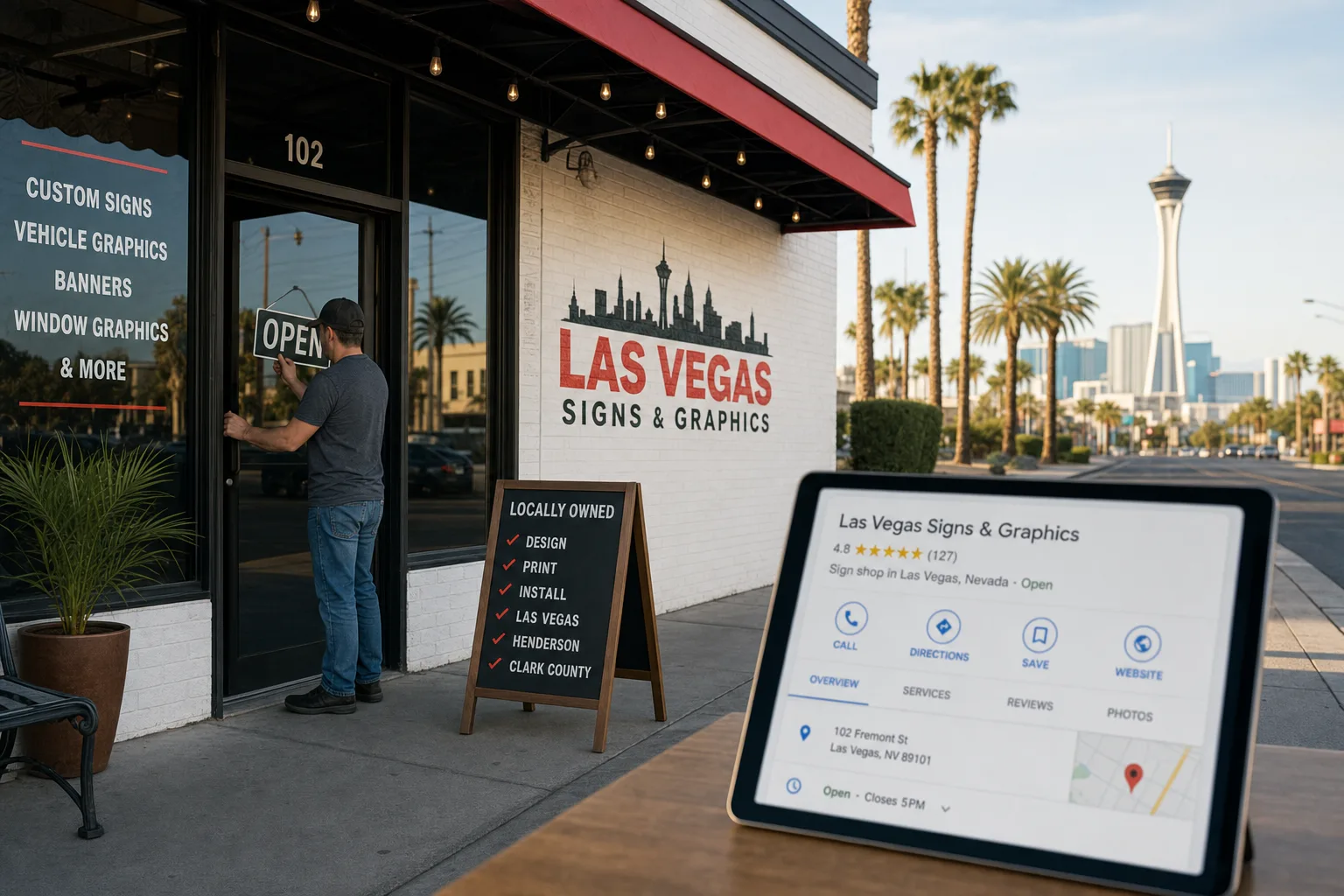
For multi-location operators, each real office needs a clear strategy. Do not create pages that imply a physical location where the company does not have one. Do not mix addresses, phone numbers, office hours, or staff details across pages. A Las Vegas office and a Summerlin office may share a brand, but customers still need accurate information about the office relevant to them.
The Google Business Profile Help Center provides guidance on managing business information and maintaining an accurate local presence. Keeping those details current is basic operational work, not a one-time launch task.
Quality of Links and Brand References
A practical link-building approach emphasizes relevance and legitimacy. Local community relationships, supplier profiles, industry organizations, earned media mentions, useful resources, and genuine partnerships can be more valuable than a large number of unrelated links.
For an established site, review which outside websites link to priority URLs before changing those pages or moving to another domain. For a new site, create pages worth referencing and build authentic awareness over time. A new domain does not remove the need for those ongoing efforts.
Competition and Search Intent
The phrase a business wants to rank for may be far more competitive than it appears. Broad Las Vegas searches may return established businesses, large directories, review websites, maps, ads, and informational pages. The timeline for gaining visibility for a specific service question may be very different from the timeline for competing on a broad category phrase.
A practical SEO campaign prioritizes pages by business value and realistic opportunity. Start with the services that create qualified leads, the service areas the company can serve well, and the pages that can answer customer questions better than the current website does. Then expand based on performance data and business priorities.
SEO Timeline Comparison: First 90 Days and Beyond
SEO is ongoing because websites, competitors, customer behavior, and search results change. Still, a phased plan helps business owners understand what should happen first and what progress is reasonable to expect.
The ranges below are planning guidance, not guaranteed ranking dates. A major migration, limited implementation capacity, a poorly built website, a highly competitive Las Vegas market, or significant local listing problems can extend the timeline. The goal is to measure meaningful progress in stages rather than expect immediate placement for every desired keyword.
First 30 Days: Assessment, Protection, and Foundation
For a new domain: The first priority is launch readiness. Work may include confirming the preferred URL version, technical accessibility, indexing controls, sitemap setup, analytics, core service pages, location details, contact paths, and local business information. The site may begin appearing for branded searches and some highly specific terms after key pages are crawled and indexed.
For an established site: The first priority is an SEO audit. This should identify pages receiving impressions or traffic, broken links, duplicate content, technical errors, valuable URLs, existing backlinks, local listing inconsistencies, and pages that must be protected during a redesign. Early work may involve title tags, internal linking, page cleanup, mobile improvements, and fixes to obvious indexation problems.
At this stage, a useful outcome is not “page one rankings.” It is a documented baseline, a prioritized roadmap, access to the necessary website and local profile accounts, and a clear order for implementation.
Days 31 to 90: Implementation and Early Search Signals
For a new domain: Important pages should continue gaining indexed coverage. The team can refine page copy, strengthen internal links, resolve crawl or indexing issues, and build supporting content around real customer questions. Local profile information should be reviewed carefully so the new site is connected to accurate business details.
For an established site: This period often includes deeper service-page improvements, technical cleanup, consolidation of duplicate pages, and a review of page-level search performance. If the website is being rebuilt, redirect mapping and launch testing must happen before the switch.
For either path, useful early indicators can include crawl coverage, page indexation, impressions for relevant searches, stronger branded visibility, calls or form submissions that can be attributed properly, and better performance from priority service pages. These are directional signals, not proof that rankings are permanently established.
Months 4 Through 6: Building Meaningful Traction
At this stage, consistent SEO work becomes more important than the initial launch decision. The business can review which services, locations, and content topics are creating relevant impressions and engagement. Priority pages can be strengthened, internal links can be adjusted, weak content can be improved, and legitimate local marketing and link-building opportunities can be pursued.
An established site with worthwhile assets may gain traction as technical and content issues are resolved. A new site may become more consistently visible for branded, niche, and lower-competition searches as it develops a stronger footprint. Neither result should be treated as a universal timeline for every business.
Six Months and Beyond: Ongoing Competitive Work
For many businesses, this is where SEO becomes less about basic repair and more about sustained competition. The website needs current information, usable service pages, accurate local signals, a healthy technical foundation, and regular review. Competitors are also updating pages, improving their visibility, publishing content, and investing in local marketing.
Monthly work should not be vague. It should connect back to a visible plan: which pages are being improved, what technical work is being completed, what content is being updated, what local information is being checked, and how performance is being measured.
For budget-conscious owners, it is important to distinguish between a limited repair project and the work that requires continued attention. Review how to compare one-time SEO fixes and monthly retainers before assuming either option is automatically less expensive over the long term.
When Rebuilding or Moving to a New Domain Is the Better Choice
Preserving an established domain is often sensible, but it is not always the right choice. There are cases where a full rebuild or new domain is justified. The decision should be based on technical and business realities, not frustration with an outdated design alone.
A Same-Domain Rebuild Is Often the Best Middle Ground
Many companies do not need a new domain. They need a new website on the current domain. This approach can preserve existing customer familiarity, indexed URLs, citations, relevant links, and branded search behavior while replacing an old platform or design.
A same-domain rebuild may make sense when:
- The current content management system is difficult to update or no longer meets business needs.
- The site has persistent mobile, usability, security, or performance problems that are inefficient to patch.
- The current navigation does not reflect the company’s actual services or locations.
- The business needs better WordPress SEO controls, forms, tracking, or lead-routing capability.
- The current domain has legitimate visibility, links, and local recognition worth protecting.
Where possible, retain the existing URLs. If a URL needs to change, use a permanent redirect to the closest relevant new page. Before launch, test redirects, navigation, forms, tracking, canonical settings, sitemap files, and the content on high-value pages.

A New Domain May Be Appropriate for a Genuine Business Change
A new domain may make sense when the company has undergone a genuine rebrand, the old name no longer represents the business, a separate operation is becoming a distinct brand, or there is another strong business reason to make the change.
Even in those situations, a local business website migration SEO plan is essential. The business should inventory important pages, identify URLs receiving visits or backlinks, map old URLs to relevant new ones, maintain the old domain for redirects, update key listings, revise Google Business Profile links where appropriate, and monitor performance after launch.
Google’s documentation for site moves with URL changes explains why permanent redirects, accurate URL mapping, and post-move monitoring matter. A migration can create temporary fluctuations even when it is handled carefully. That is not a reason to avoid necessary change, but it is a reason to avoid rushing the process.
Migration Warning Signs That Should Slow Down a Launch
A redesign deadline should not be more important than protecting the online assets that support the business. Pause and review the plan if any of these conditions are true:
- No one has exported a complete list of existing URLs and identified pages receiving traffic, impressions, leads, or backlinks.
- The new site has fewer useful service or location pages without a clear business reason.
- Redirects are being planned after launch instead of before launch.
- A development site can be indexed accidentally, or the live site is blocked from indexing accidentally.
- The new website uses generic copy that is less useful than the existing content.
- Important calls, forms, booking paths, directions links, and tracking tools have not been tested.
- The business is changing its name, domain, address, and website at the same time without coordinating its local listings.
A careful migration does not eliminate every fluctuation. It does reduce avoidable loss. A rushed migration can turn a manageable website project into months of repair work.
How Las Vegas Businesses Can Choose the Right SEO Starting Point
The best SEO starting point is the one that protects legitimate value, fixes the barriers that matter most, and fits the business’s actual priorities. The goal is not to choose the newest option. It is to choose the most realistic option for local growth.
Improve the Existing Site When the Core Assets Are Worth Keeping
Improvement is often the practical choice when the business has a recognizable domain, useful pages that already earn relevant impressions, legitimate local or industry links, an accurate brand identity, and a platform that can be improved without unreasonable cost.
This is common for established Las Vegas and Summerlin businesses that have added services, changed operations, or grown over time but still have online equity worth preserving. Start with pages closest to revenue: primary services, key locations, contact paths, and pages already receiving relevant search visibility.
Do not spend the first month rewriting old blog posts while the main service page is unclear, difficult to use on a phone, missing accurate local information, or disconnected from the navigation.
Choose a Rebuild When the Existing Platform Prevents Good Work
A rebuild may be the better choice when the current website is too fragile, outdated, or limiting to improve efficiently. Preserve the existing domain when possible, bring forward useful pages and topics, and plan the URL structure before design and development decisions are finalized.
For a multi-location operator, location-level accuracy should be part of the rebuild from the beginning. Each real office needs clear information, appropriate local relevance, and a logical relationship to the services provided there. A generic template should not hide meaningful differences between Las Vegas and Summerlin operations.
Choose a New Domain Only When the Business Case Is Strong
A new domain should solve a real business problem, such as a legitimate rebrand or a separate business entity. It should not be selected because someone says a newer domain will rank better.
Before moving, review the current domain carefully. Look at indexed pages, search visibility, external links, branded searches, location listings, business email dependencies, tracking access, and the ability of the current platform to support needed improvements. That review may show that a new build on the existing domain is the safer choice.
Use a Phased Plan When the SEO Budget Is Limited
A limited budget should focus first on reducing the barriers that affect actual leads and customer trust. A practical phased plan may include:
- Protect and measure: Confirm access to analytics, search performance tools, website hosting, domain registration, local profiles, and a baseline of important pages.
- Fix critical technical issues: Address indexing blocks, broken paths, mobile usability problems, duplicate versions, important redirects, and major conversion issues.
- Strengthen priority pages: Improve the services and locations most closely connected to calls, appointments, estimates, or sales.
- Align local information: Review the business name, address, phone number, hours, location pages, and Google Business Profile details for accuracy.
- Expand carefully: Add useful supporting content based on real customer questions, service demand, and performance data.
- Review monthly: Measure what is improving, what is not, and what should receive the next round of attention.
Before hiring an SEO provider, ask for a scope that makes this sequence visible. A useful proposal should explain what will be reviewed, which work comes first, how content and local SEO fit together, what the business must provide, and how progress will be reported. Use this guide on what to look for in an SEO proposal to compare scopes that may appear similar but include very different levels of practical work.
Frequently Asked Questions
How long does SEO usually take for a brand-new Las Vegas business website?
A new site may begin appearing for branded searches and highly specific queries in the early months after key pages are crawled and indexed. More meaningful traction for important service and city searches commonly takes several months of consistent technical, content, local, and promotional work. In competitive Las Vegas categories, broader visibility can take longer. A useful expectation is phased progress, not a guaranteed ranking date.
Can a new domain outrank an established local competitor?
Yes. A new domain can become more visible than an established competitor when it provides a stronger technical experience, clearer service information, better local relevance, more useful content, and stronger legitimate brand and link signals over time. It is not likely to happen simply because the site has a modern design or a new domain name. The business needs sustained work and realistic expectations.
Will changing domains hurt the rankings of an existing Las Vegas website?
A domain change can create temporary disruption, and it can cause significant loss when poorly managed. Risk is reduced by mapping important old URLs to their closest new pages with permanent redirects, retaining useful content, updating important business listings, submitting updated sitemap information, and monitoring the move closely. Do not change domains casually if the current site has pages, links, or local recognition worth protecting.
Should I redesign my current website or start over on a new domain?
First determine whether the issue is the website itself or the domain. If the business name and domain remain relevant, a rebuild on the existing domain is often the lower-risk option. If the site has technical debt but useful pages and links, preserve those assets through a planned rebuild. Consider a new domain only when there is a genuine rebrand, separate business, or another strong reason to make the change.
What should a small business prioritize first if its SEO budget is limited?
Prioritize the work closest to qualified leads: accurate local business information, technical accessibility, a mobile-friendly website, clear pages for the most profitable services, and reliable call or form paths. Then improve supporting content and ongoing local visibility. Avoid spending the entire budget on a large content library or visual redesign before core service and location pages are working properly.
Choose the Path That Protects Your Business, Not Just Your Launch Date
The established-versus-new question is not really about choosing an old website over a fresh one. It is about selecting the most realistic path for your business. Preserve legitimate value where it exists. Repair the technical and content issues that hold the site back. Build new assets where the current foundation cannot support growth. Treat a domain move as a business transition that needs planning, not just a design task.
If you operate in Las Vegas, Summerlin, or elsewhere in Clark County, Red Zone SEO can review your current site, planned domain, budget, and target service areas before you commit to a rebuild. We can help you evaluate whether it makes more sense to preserve and improve the existing website, migrate carefully, or build a new SEO foundation for local growth.
Request a practical SEO review or call (702) 489-0881 to talk through which option fits your situation best.


