What is on-page seo: Mastering Essentials 2025
Why On-Page SEO is Your Website's Secret Weapon
What is on-page seo? On-page SEO is the practice of optimizing individual web pages to improve their search engine rankings and attract more organic traffic. It involves refining both the content and HTML source code of your pages, focusing on elements you can directly control.
Key components of on-page SEO include:
- Content Optimization: Creating high-quality, relevant content that matches user search intent.
- HTML Elements: Optimizing title tags, meta descriptions, and header tags (H1, H2, H3).
- Keyword Strategy: Strategic placement of target keywords throughout your content.
- Internal Linking: Connecting related pages to improve site structure and user navigation.
- Image Optimization: Using descriptive alt text and optimizing file sizes for faster loading.
- URL Structure: Creating clean, descriptive URLs that both users and search engines can understand.
With more than 50% of all website traffic coming from organic searches and 93% of online experiences beginning with a search engine, mastering on-page SEO is essential for business survival. Unlike off-page factors like backlinks, on-page SEO is completely within your control. You can implement changes directly on your website and often see results quickly.
Effective on-page optimization acts as the foundation of your digital marketing, helping search engines understand what your pages are about and why they deserve to rank higher than your competitors.
Related content about what is on-page seo:
The Three Pillars of SEO: On-Page, Off-Page, and Technical
A robust SEO strategy rests on three pillars: on-page, off-page, and technical SEO. Understanding how these three essential ranking factors work together is key to building a solid website foundation that search engines and users will value. What is on-page SEO in this context? It's the pillar you have the most direct control over.
The table below breaks down how each pillar contributes to getting your website noticed.
| Aspect |
On-Page SEO |
Off-Page SEO |
Technical SEO |
| Focus |
Content, Keywords, HTML Tags, User Experience |
Backlinks, Brand Mentions, Social Signals |
Site Speed, Indexing, Security, Crawlability |
| Elements |
Title tags, headings, content, internal links |
Inbound links, social shares, online reviews |
HTTPS, sitemaps, mobile responsiveness, structured data |
| Control Level |
High (you directly control) |
Low-Medium (depends on external entities) |
High (you directly control, often with expertise) |
| Timeframe |
Shorter-term impact, continuous refinement |
Longer-term authority building |
Medium-term impact, foundational improvements |
| Goal |
Relevance, clarity, user engagement |
Authority, trust, popularity |
Accessibility, performance, findability |
On-Page SEO: The Content and Structure of Your Site
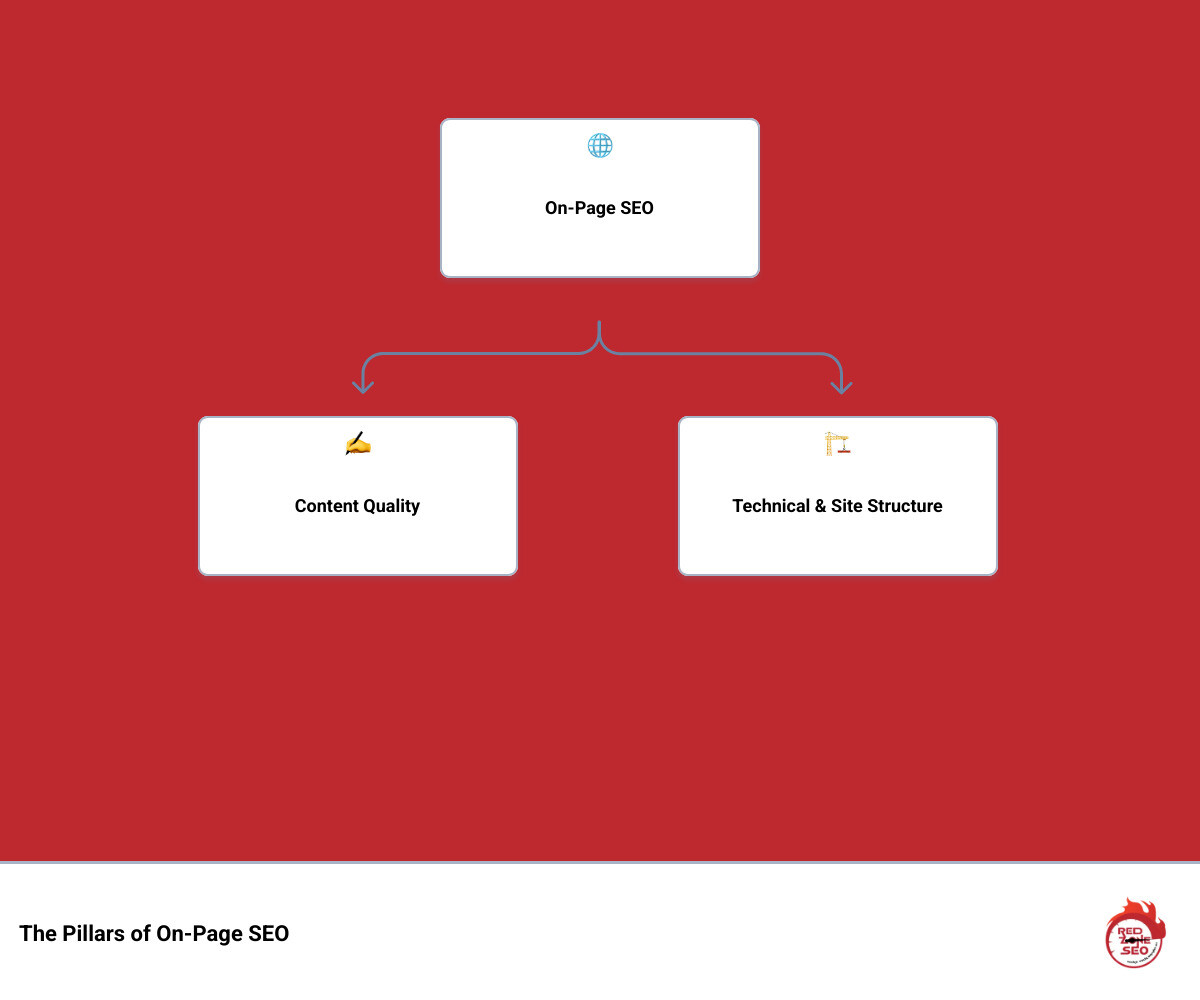
On-page SEO involves optimizing elements on your website to be as clear and valuable as possible for both search engines and visitors. This includes content optimization—creating content that directly answers user questions—and structuring it with HTML source code elements like title tags and headers. Because you have direct control over these user-facing elements, on-page SEO is the perfect starting point for any SEO strategy. Improving your content and structure not only sends positive relevance signals to Google but also creates a better experience for your audience.
Off-Page SEO: Building Your Site's Authority
Off-page SEO refers to actions taken outside of your own website to impact your rankings. It's about building your site's reputation and authority through external signals. The most significant of these are backlinks—links from other websites to yours. High-quality backlinks act as votes of confidence, boosting your domain authority. Other off-page factors include brand mentions (even without a link) and signals from social media marketing that drive traffic and awareness. Building authority this way takes time and effort, as you are relying on external entities to vouch for your credibility.
Technical SEO: The Foundation of Your Website
Technical SEO is the work done behind the scenes to ensure your website's foundation is solid, allowing search engines to crawl and index your site effectively. Key components include crawlability and indexability, which depend on clean code and a logical site structure. Site speed is another critical factor, as fast-loading pages rank better and reduce user frustration. With Google's mobile-first indexing, mobile-friendliness is non-negotiable. Finally, website security via HTTPS is a standard ranking factor that builds trust with both users and search engines. These foundational improvements have long-lasting effects across your entire site.
The Core Elements of On-Page SEO: From Content to Code
Let's explore the specific elements that make on-page SEO effective. Each component works together to help search engines understand your content and, more importantly, help users find the answers they need. Mastering these elements is the key to aligning ranking factors with genuine user engagement and satisfying search intent.

Content Quality: The Heart of On-Page SEO
High-quality content is the most critical part of what is on-page seo. If your content doesn't genuinely help people, no amount of technical tweaking will lead to long-term success.
- Satisfy User Intent: Understand what your audience is really looking for and provide direct, comprehensive answers.
- Demonstrate E-E-A-T: Showcase your Experience, Expertise, Authoritativeness, and Trustworthiness. Google's E-E-A-T framework prioritizes content from credible sources. Write with authenticity to build trust with both search engines and readers.
- Offer Unique Value: Provide information or a perspective that users can't find elsewhere. This "information gain" is what separates top-ranking content from the rest.
- Improve Readability: Use short paragraphs, clear headings and subheadings, and bullet points to make your content easy to scan and digest. As Google's own guidance on people-first content emphasizes, your primary focus should be on serving your audience.
Keyword Strategy: What is the role of keywords in on-page seo?
Keywords act as signposts, helping search engines understand your content's topic. A modern keyword strategy is about relevance and natural language, not stuffing terms into your text.
- Keyword Research: Use research to uncover the phrases your audience uses. Identify a primary keyword for each page's main focus and support it with long-tail keywords (longer, more specific phrases) that capture targeted traffic.
- Semantic Search: Google understands context and synonyms. Write naturally about your topic, and Google's sophisticated semantic search capabilities will recognize the page's relevance for a wide range of related queries.
- Strategic Placement: Place your primary keyword naturally in important locations like the title tag, H1 heading, and the opening paragraph. Weave keywords and related phrases throughout your content in a way that feels helpful, not forced. Avoid keyword stuffing at all costs; it harms user experience and can lead to penalties.
Optimizing On-Page HTML Elements
HTML elements are what users and search engines see first. They are critical for making a good first impression in search results.
- Title Tags: This is the clickable headline in search results. It should include your primary keyword (ideally near the start), be compelling, and stay around 55-65 characters to avoid being cut off.
- Meta Descriptions: This is your 145-160 character sales pitch in the search results. While not a direct ranking factor, a great meta description significantly boosts your Click-Through Rate (CTR) by telling users why they should choose your page.
- Header Tags: Use headers (H1, H2, H3, etc.) to structure your content logically. Your H1 is the main title of the page. Use H2s and H3s to break up content into easy-to-read sections, which helps both users and search engines understand the information hierarchy. For more tips, review these best practices for writing an effective title tag.
URLs and Internal Linking: Creating a Cohesive Site Structure
A logical site structure makes your website easy to steer for both users and search engine crawlers.
- SEO-Friendly URLs: Use short, descriptive URLs that include your keyword (e.g.,
yoursite.com/what-is-on-page-seo). A clean simple URL structure tells everyone what the page is about at a glance. Google recommends this approach for using simple URLs.
- Internal Linking: Your internal linking strategy connects related content on your site. This helps users find more of your content, guides search engines to important pages, and distributes link equity (ranking power) throughout your site. Use descriptive anchor text (the clickable text) instead of "click here" to provide context about the linked page.
Advanced On-Page Optimization: What is on-page seo beyond the basics?
Once you've mastered the fundamentals, advanced tactics can set you apart from the competition. What is on-page seo at this level? It's about perfecting the page experience and using sophisticated techniques to earn more visibility through features like rich snippets.
Images are powerful SEO assets that can drive traffic and improve engagement. To leverage them effectively:
- Use Descriptive Alt Text: Alt text helps visually impaired users and tells Google what an image is about. Be specific (e.g., "golden retriever puppy playing with red ball") to help your images rank in Google Image searches.
- Create SEO-Friendly Filenames: Before uploading, name your files with descriptive, hyphenated keywords (e.g.,
on-page-seo-infographic.jpg) instead of generic names like IMG_1234.jpg.
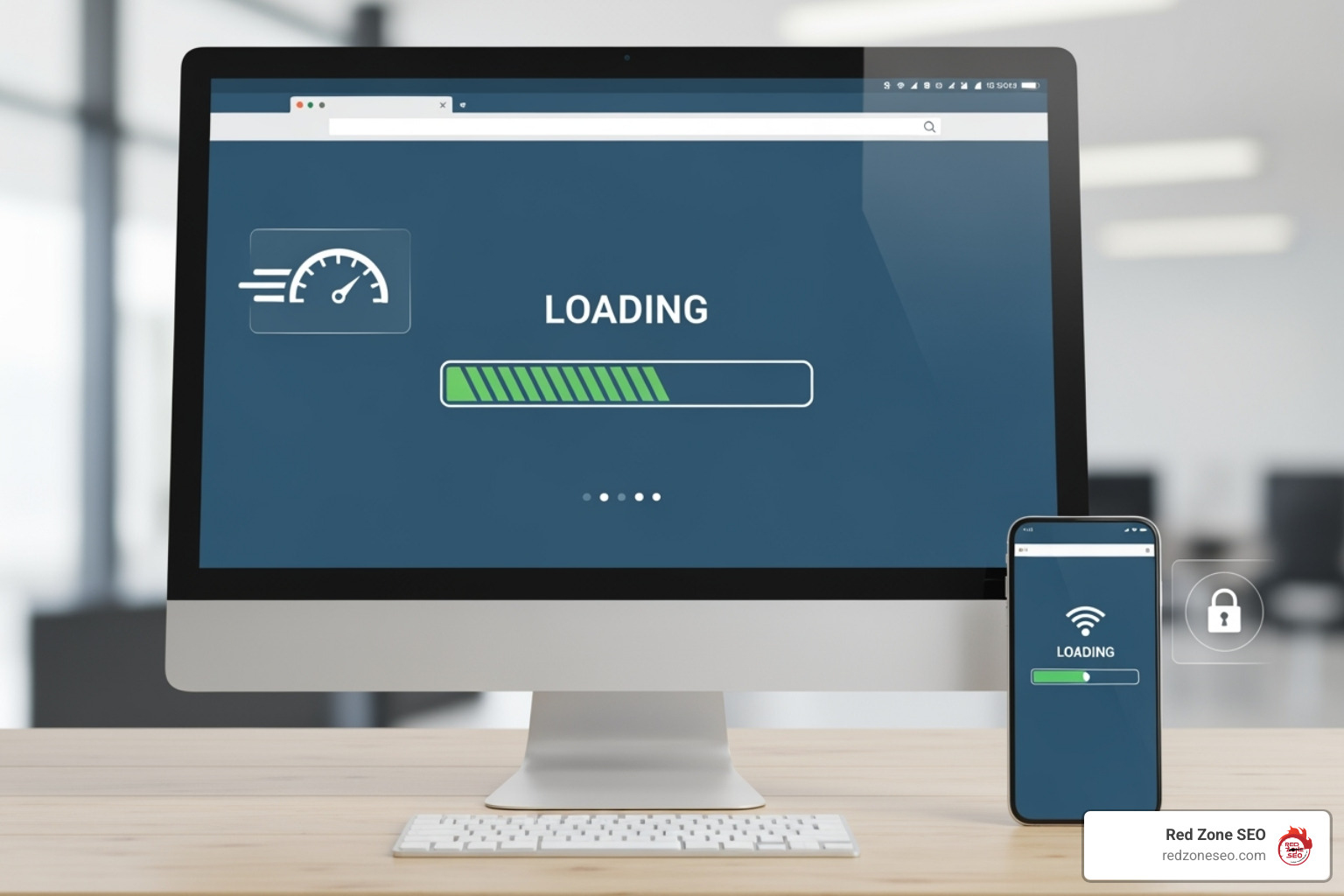
- Compress Images: Large image files slow down your site. Use tools like TinyPNG to reduce file sizes without sacrificing quality. This is crucial for page speed.
- Implement Lazy Loading: This technique defers the loading of off-screen images until a user scrolls to them, which significantly improves initial page load times. Optimized images can be a major source of Google Images traffic.
Page Experience Signals: Speed, Security, and Mobile-Friendliness
Google uses page experience signals, including Core Web Vitals, as official ranking factors. A poor user experience can directly harm your rankings.
- Core Web Vitals: These metrics measure user experience.
- Largest Contentful Paint (LCP): Measures loading performance. Aim for under 2.5 seconds.
- Interaction to Next Paint (INP): Measures responsiveness. Aim for under 200 milliseconds. (This replaces First Input Delay, FID).
- Cumulative Layout Shift (CLS): Measures visual stability. Aim for a score under 0.1.
- Mobile-First Indexing: Google primarily uses the mobile version of your site for ranking. Your site must be fast, functional, and offer the same content on mobile as it does on desktop.
- Website Security (HTTPS): An SSL certificate encrypts data and is a confirmed ranking signal. Browsers warn users about non-secure (HTTP) sites, so HTTPS is essential for trust. You can get free certificates from services like Let's Encrypt.
You can check your site's performance using Google PageSpeed Insights for specific improvement recommendations.
Structured Data and Schema Markup: Helping Google Understand Your Content
Structured data is a standardized format for providing information about a page and classifying its content. Using schema markup, you can explicitly tell search engines what your content means.
- Earn Rich Snippets: The primary benefit of schema is qualifying for rich snippets—improved search results that show extra information like ratings, prices, or cooking times. These stand out and can dramatically increase your click-through rates (CTR).
- Use JSON-LD: This is Google's preferred format for implementing structured data. It's added as a script in your page's head or body, keeping it separate from your user-visible HTML.
- Optimize for Featured Snippets: While not schema-based, you can optimize for "position zero" answer boxes by structuring content to directly answer common questions using concise paragraphs, lists, or tables.
Always validate your implementation with Google's Rich Results Test tool to ensure it's error-free and eligible for rich results.
Measuring and Monitoring Your On-Page SEO Success
On-page optimization is not a one-time fix. To ensure your efforts are effective, you must measure and monitor your success. This allows you to identify what's working, find areas for improvement, and adapt your strategy over time.
Key Metrics to Track
Keep a close eye on these metrics to understand your performance:
- Organic Traffic: An increase in visitors from search engines is a primary indicator of success.
- Keyword Rankings: Track your position for target keywords to see if your visibility is improving.
- Click-Through Rate (CTR): The percentage of people who click your link in search results. A high CTR indicates compelling titles and descriptions.
- Bounce Rate: The percentage of visitors who leave after viewing only one page. A high bounce rate can sometimes indicate that content isn't meeting user expectations.
- Time on Page (Dwell Time): Longer times suggest users find your content engaging and valuable.
- Conversion Rate: The percentage of visitors who complete a desired action (e.g., fill out a form, make a purchase). This metric connects SEO efforts directly to business goals.
Several powerful tools can help you track these metrics:
- Google Search Console: This free tool from Google provides data on your site's search performance, including queries, clicks, impressions, and indexing issues.
- Google Analytics: Another free tool that offers comprehensive insights into website traffic, user behavior, and conversions.
- Rank Tracking Software: Tools like Semrush, Ahrefs, or Moz help you monitor keyword rankings over time and analyze competitors.
- Heatmap Tools: Services like Hotjar or Crazy Egg show where users click and scroll, providing visual insights into user engagement and potential experience issues.
By regularly analyzing data from these tools, you can continuously refine your on-page SEO strategy for sustainable growth.
Frequently Asked Questions about On-Page SEO
Business owners often have similar questions when starting with on-page SEO. Here are answers to three of the most common ones.
How often should I perform on-page SEO?
On-page SEO is an ongoing process, not a one-time task. Search engine algorithms, competitor strategies, and user behavior are constantly changing. To stay competitive, you should adopt a regular maintenance schedule.
- Monthly Check-ins: Briefly review your key pages' performance in Google Search Console. Look for significant drops in rankings or traffic that may need immediate attention.
- Quarterly Deep Dives: Re-evaluate your most important content. Update statistics, refresh information, and expand sections to ensure your page remains the best resource for its topic.
- Annual Audits: Conduct a comprehensive audit of your entire on-page strategy. This is the time to identify content gaps, review your keyword targeting, and align your efforts with the latest SEO best practices. Regular updates are crucial for maintaining and improving rankings.
What is the most important on-page SEO factor?
While all elements work together, high-quality, comprehensive content that satisfies user search intent is the most critical factor. Google's primary goal is to provide users with the most relevant and helpful answers to their queries. If your content achieves this, you've won the most important part of the battle. Technical elements like title tags and headers are essential for helping Google understand and present your content, but they cannot make up for content that is irrelevant or unhelpful. Great content is the foundation upon which all other on-page SEO efforts are built.
What is the difference between on-page SEO and technical SEO?
The distinction can seem blurry, but it's best understood this way:
- On-page SEO focuses on the content of individual pages. This includes writing the text, choosing keywords, crafting headlines, optimizing images, and adding internal links. It's about making each page as relevant and user-friendly as possible for its specific topic.
- Technical SEO focuses on the website's infrastructure as a whole. This includes ensuring the site loads quickly, is secure (HTTPS), can be easily crawled by search engines (via XML sitemaps and a clean site structure), and works flawlessly on mobile devices.
In short, technical SEO builds a fast, accessible highway for search engines, while on-page SEO ensures the destinations (your pages) are valuable and worth visiting. The two work hand-in-hand for optimal results.
Conclusion: Mastering On-Page SEO for Lasting Results
Mastering on-page SEO is not a luxury—it is the price of entry for competing in today's search landscape. From crafting people-first content that nails search intent to polishing every HTML element, each tweak you make sends a clear signal to Google: this page deserves to rank. Because these improvements are almost entirely within your control, on-page work delivers one of the highest ROIs in digital marketing.
Remember the key takeaways:
- Content Comes First. Without clear, comprehensive, and trustworthy information, no amount of technical fine-tuning will save a page from obscurity.
- Structure Matters. Title tags, meta descriptions, headers, and URLs are your elevator pitch to both users and crawlers. Make them unmissable.
- User Experience Is a Ranking Factor. Fast load times, mobile responsiveness, and secure HTTPS connections directly influence visibility.
- Data Guides Decisions. Continually measure traffic, rankings, and engagement metrics so you can refine what works and fix what doesn't.
At Red Zone SEO, we specialize in turning these principles into tangible growth. Whether your company is headquartered in Las Vegas or expanding operations across Austin, Florida, Henderson NV, or elsewhere in Nevada, our data-driven SEO solutions meet you where you are and propel you to where you want to be.
Ready to open up the full potential of your website? Our team is here to help you refine every element—from keyword research to schema markup—and build a sustainable stream of qualified organic traffic.
Take your website to the next level with our Las Vegas SEO services
A Final Word on Continuous Improvement
SEO is a marathon, not a sprint. The best-ranking pages on the internet didn't get there overnight—they earned their spot through regular updates, consistent optimization, and relentless attention to user needs. Treat your on-page SEO the same way you treat any other mission-critical business process: review performance data, test new ideas, and iterate until you outperform the competition. Over time, these incremental gains compound, turning your website into an always-on sales engine that works for you 24/7.