SEO for B2B Companies 2025: Master Your Success
Why B2B SEO is Critical for Business Growth
SEO for B2B companies is fundamentally different from consumer marketing, focusing on a distinct set of challenges and opportunities. With 54% of B2B brands increasing their digital and website budgets, it's clear that online visibility is paramount. Modern B2B buyers are methodical researchers, not impulse purchasers. They seek solutions to complex problems, involving significant investments and multiple stakeholders.
This landscape is defined by:
- Longer sales cycles (often 6-18 months)
- Multiple decision-makers in a buying committee
- Lower search volumes for higher-value keywords
- A focus on expertise and trust over emotion
- An emphasis on thought leadership content
While B2B keywords have lower search volumes, they attract highly qualified prospects. A single conversion can represent substantial revenue. The goal of B2B SEO isn't just ranking; it's about establishing your company as a trusted authority that decision-makers rely on to solve their most pressing business challenges.
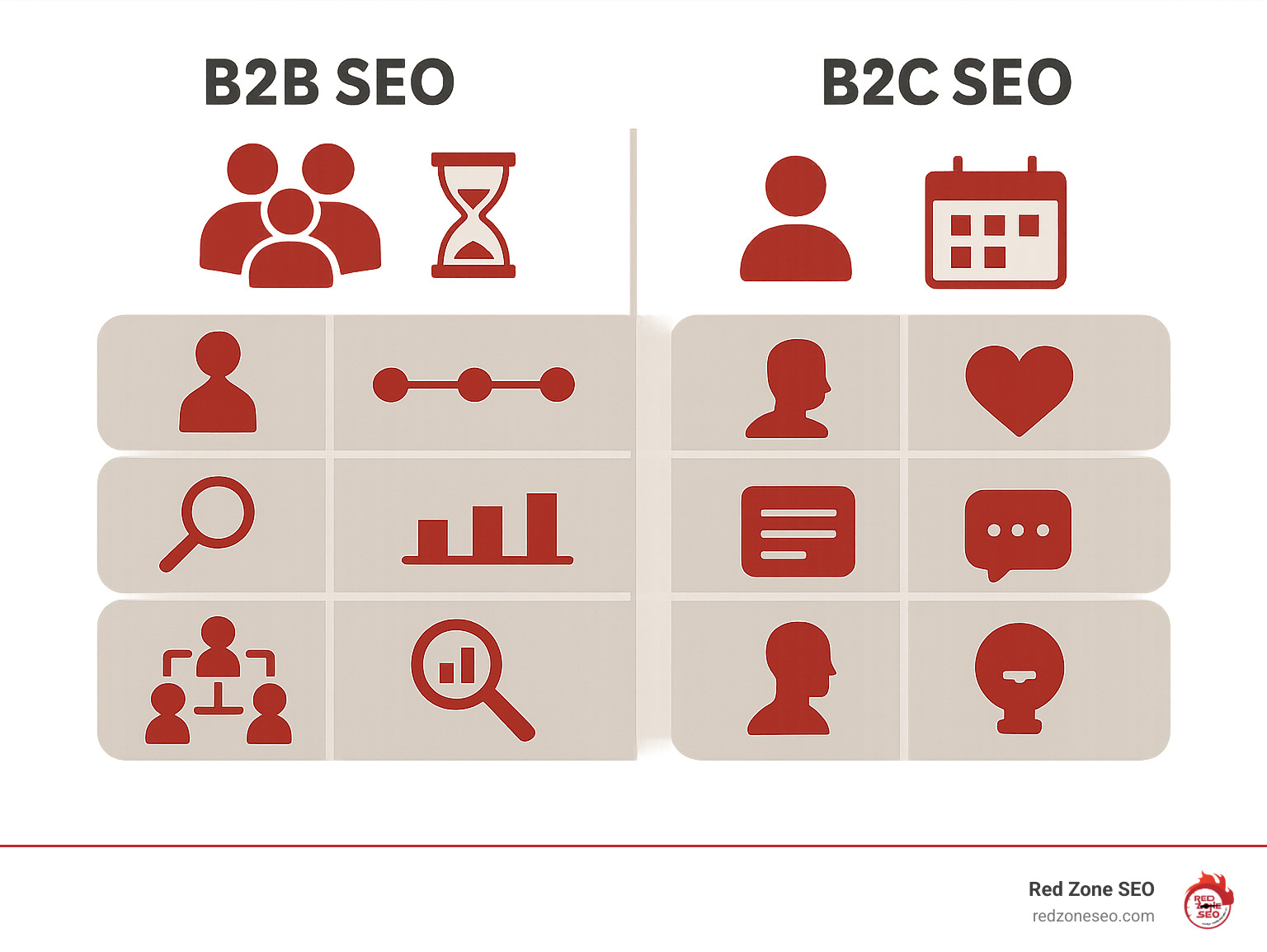
Seo for b2b companies terms to know:
The B2B SEO Landscape: Why It's a Different Ballgame
SEO for B2B companies requires a strategic, long-term approach, much like a game of chess. Unlike the B2C world, B2B SEO is about endurance, precision, and understanding complex business dynamics. You're not casting a wide net; you're targeting a smaller, more valuable audience of professionals and executives solving specific business problems.
The key differences are stark:
- Audience Targeting: You're speaking to methodical researchers and buying committees, not impulse shoppers.
- Sales Cycle Length: The journey from awareness to purchase can take 6-18 months, requiring sustained nurturing.
- Keyword Intent: The focus is on specific, technical, low-volume keywords that signal strong commercial intent, like "enterprise inventory management software for manufacturing."
- Decision-Making Process: Gartner's research shows B2B buying groups often involve 6-to-10 decision-makers, each with unique concerns that your content must address.
- Brand Authority: Trust is paramount. Companies making high-stakes decisions need to see you as a credible expert.
| Factor |
B2B SEO |
B2C SEO |
| Audience |
Businesses, professionals, multiple decision-makers |
Individual consumers, broad demographics |
| Sales Cycle |
Long, complex, multi-touchpoint |
Short, often impulse-driven |
| Keyword Strategy |
Specific, technical, long-tail, high-intent, lower volume |
Broad, general, high-volume, often emotional |
| Content Goals |
Educate, build trust, demonstrate expertise, solve problems |
Entertain, inform, persuade, drive quick sales |
Navigating the B2B Buying Committee
Understanding the different roles within a buying committee is crucial for creating content that resonates. Each member has a different perspective and requires different information to feel confident in a decision.
- The Initiator/Champion: This person first identifies a need and advocates for a solution. They need educational content that helps them define their problem and build a business case for change.
- The Influencer/Researcher: Often a technical expert, this individual evaluates the nuts and bolts of a solution. They need in-depth content like technical specifications, whitepapers, and detailed feature comparisons.
- The Decision-Maker (e.g., VP, C-Suite): This executive holds the final authority and is focused on ROI, strategic alignment, and business impact. They need high-level summaries, case studies with clear financial outcomes, and content that builds trust in your brand's authority.
- The Buyer/Purchaser: This person handles the procurement process and is concerned with pricing, contracts, and terms. They need clear pricing pages, implementation details, and information on support.
- The End-User: These are the people who will use your product or service daily. They care about usability and how it will make their job easier. They respond well to demos, tutorials, and user guides.
Your content strategy must provide assets that speak to each of these roles, guiding the entire committee toward a consensus.
The B2B Buyer's Journey: From Awareness to Decision
The B2B buying process is complex, with multiple stakeholders involved. Your SEO strategy must cater to their needs at each stage.
- Awareness Stage: Buyers realize they have a problem. Your content should focus on identifying and explaining their pain points without being promotional.
- Consideration Stage: Buyers research solutions. Your content should provide educational comparisons and explore different approaches to solving their problem.
- Decision Stage: Buyers are ready to choose a vendor. Your content must provide validation, proof points like case studies, and specific details to build confidence.
Aligning content to this journey is crucial for nurturing leads effectively. By serving the right information at the right time, you build trust and guide prospects through their decision-making process.
The Critical Role of E-E-A-T in B2B
In B2B, trust is everything. Google's E-E-A-T framework—Experience, Expertise, Authoritativeness, and Trustworthiness—is your guide to building that trust. Many B2B topics are considered Your Money or Your Life (YMYL) topics in B2B because a poor decision can have significant financial consequences.
To demonstrate E-E-A-T:
- Create expert content: Go beyond surface-level posts. Dive deep into industry challenges and provide actionable insights.
- Showcase author credentials: Use clear author bios that highlight relevant experience and professional backgrounds.
- Cite reputable sources: Back up claims with data from industry research, government reports, or respected publications to build authority.
The goal is to become the go-to resource for decision-makers, which naturally leads to better SEO performance.
Building Your Foundation: B2B Keyword Research & Strategy
Keyword research is the blueprint for your entire SEO for B2B companies strategy. It's about finding the exact phrases your ideal customers use when solving critical business problems. This process begins with understanding your audience through detailed buyer personas—not just their job titles, but their pain points and professional language.
Search intent is your guide, helping you understand if a user is learning, comparing options, or ready to buy. This shapes both keyword selection and content creation. Your competitor analysis may also reveal that you're competing for keywords with non-direct competitors like consultants or industry publications, opening new content opportunities.
A powerful way to structure your content is through topic clusters and pillar pages. Instead of isolated articles, you create a comprehensive content hub. The pillar page covers a broad topic, while cluster pages dig into specifics, linking back to the pillar. This model builds immense topical authority with search engines.
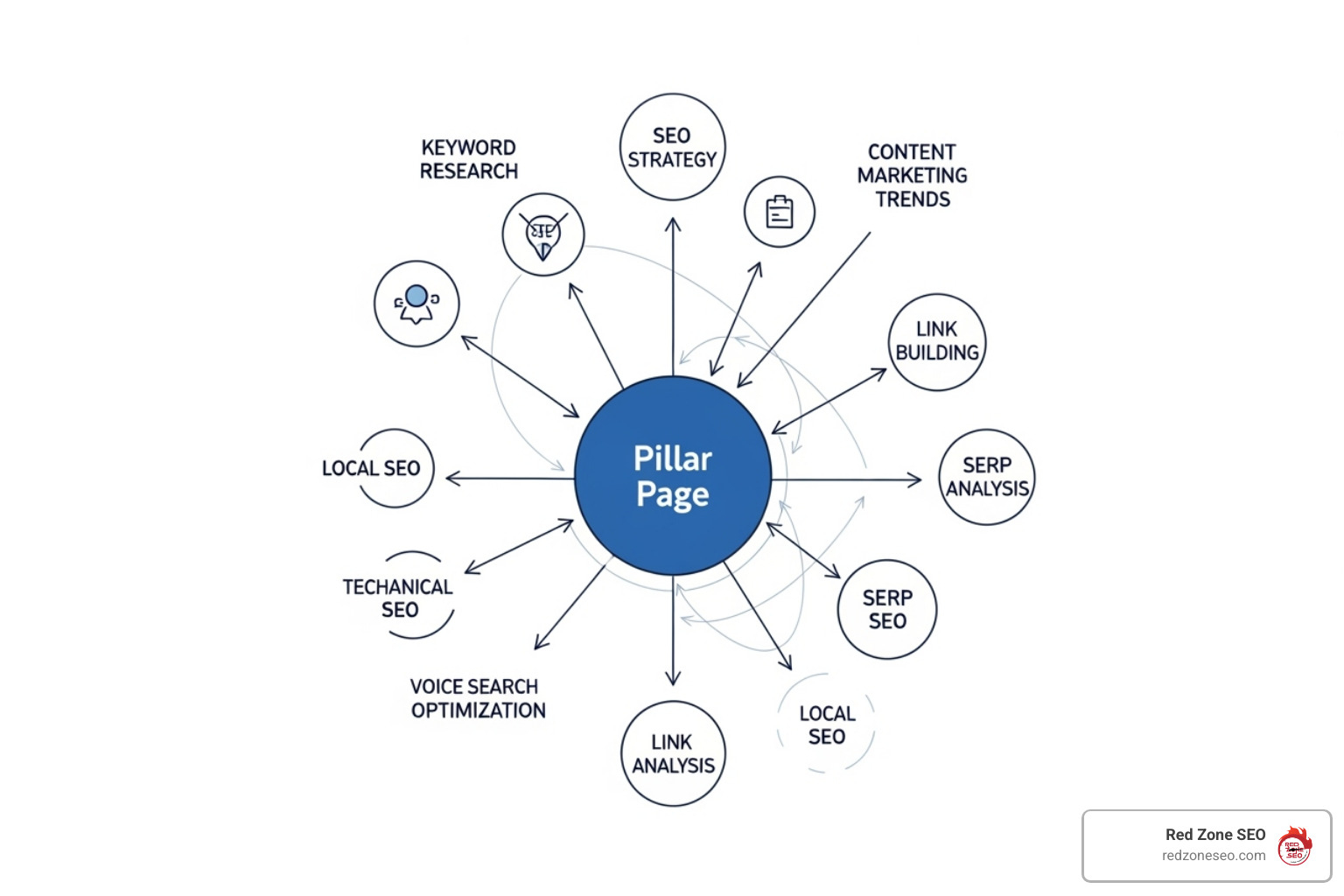
Our comprehensive Keyword Research process uncovers these strategic opportunities to create content that converts.
Uncovering High-Intent Keywords for Decision-Makers
In B2B, the focus is on high-intent long-tail keywords. A phrase like "AI-powered inventory management software for pharmaceutical companies" may have low search volume, but the user is a serious buyer.
- Problem-based queries ("how to reduce employee turnover") show a user with a real business pain point.
- Solution-oriented terms ("enterprise cloud storage solutions") capture prospects actively evaluating options.
- "Best" and "vs" keywords ("Salesforce vs HubSpot") indicate users in the final comparison phase.
We leverage tools like Google Ads Keyword Planner to analyze Cost Per Click (CPC) data. High CPC is a strong indicator of commercial intent, helping us prioritize keywords that drive qualified traffic.
Mapping Keywords to the Buyer's Journey
Aligning keywords to the buyer's journey creates a seamless experience that guides prospects from awareness to purchase.
- Awareness (Informational Keywords): Target broad, educational searches like "what is supply chain optimization." The content should be helpful and build trust.
- Consideration (Commercial Investigation Keywords): Focus on terms like "benefits of managed IT services." The content should help users compare solutions.
- Decision (Transactional Keywords): Capture specific searches like "enterprise security software demo" or "pricing for B2B marketing automation." The content should facilitate a purchase decision.
A keyword map ensures every piece of content serves a strategic purpose, changing your website into a lead generation engine.
Executing Your Plan: On-Page, Technical, and Content SEO
With a solid keyword strategy, the next step is execution. This involves building a strong foundation with on-page SEO, ensuring flawless performance with technical SEO, and creating compelling content that engages your audience. For B2B, professionalism is key; a slow page or a typo can damage the trust of a high-value decision-maker. A comprehensive SEO Audit is the best starting point to identify areas for improvement.
Best Practices for On-Page SEO for B2B Companies
On-page SEO makes every page work harder to attract and convert prospects.
- Optimized Title Tags: Be specific. Instead of "Software Solutions," use "Enterprise CRM Software for Manufacturing Companies" to include your keyword and target audience.
- Compelling Meta Descriptions: Write a concise elevator pitch (around 160 characters) that highlights a clear benefit and encourages a click.
- Logical Header Structure: Use H1, H2, and H3 tags to organize content logically for both users and search engines, making complex information digestible.
- Natural Keyword Integration: Weave keywords into your content naturally. B2B buyers can spot keyword stuffing, which appears unprofessional and erodes trust.
- Strategic Internal Linking: Guide prospects through their journey by linking to related case studies, data, and service pages, creating a web of authority on your site.
- Schema Markup Implementation: Use structured data (like Organization, Service, and FAQPage schema) to help search engines understand your business, services, and expertise, which can lead to improved search results (rich snippets).
Our approach to On-Page SEO Definition and Content Optimization ensures every page meets both SEO and user needs.
Technical SEO: Ensuring a Flawless Foundation
Technical SEO is critical for B2B success. A slow, insecure, or broken website suggests your services might be unreliable.
- Site Speed and Performance: Fast-loading pages are essential. We analyze and provide recommendations for optimizing images, minifying code, and leveraging browser caching to ensure a swift user experience.
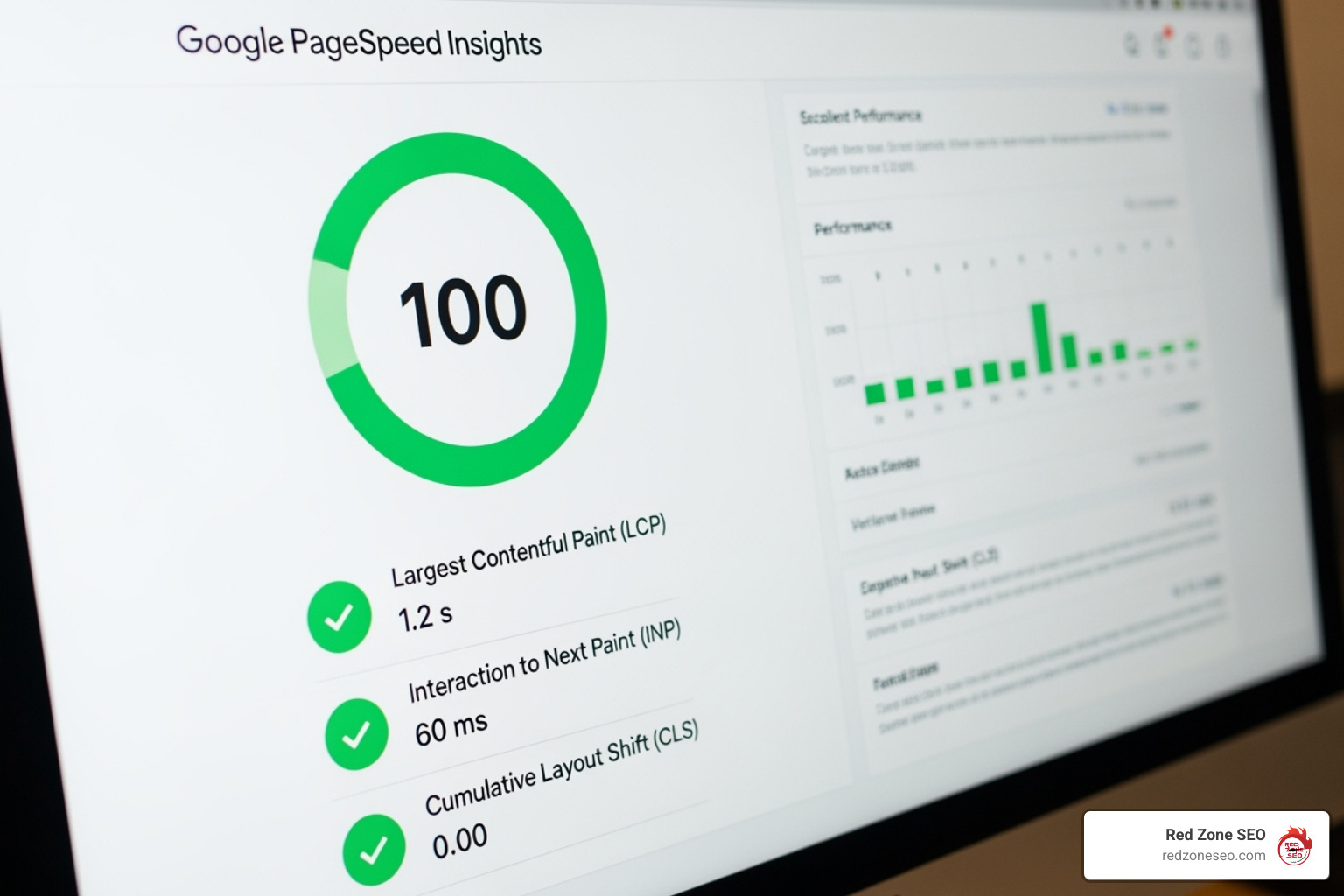
- Google's Core Web Vitals: These Google metrics measure user experience (loading, interactivity, stability). A good score is a vital ranking signal and a key indicator of a professional, user-friendly site.
- Mobile-First Indexing: Your site must be flawless on mobile, as decision-makers often conduct initial research on their phones during commutes or between meetings.
- Clean URL Structure: Use simple, descriptive URLs (e.g.,
/enterprise-cloud-solutions) for professionalism, clarity, and better user experience.
- XML Sitemaps & Robots.txt: An optimized XML sitemap helps Google find all your important content, while a well-configured robots.txt file guides search engine crawlers efficiently.
- Crawl Budget Optimization: For large B2B sites with thousands of pages, ensuring Googlebot's time is spent crawling your most important content is crucial for timely indexing and ranking.
- HTTPS Security: This is non-negotiable for building trust with business clients and is a confirmed ranking factor.
Fueling Growth with Content Marketing and Thought Leadership
In B2B, content is about establishing your company as an industry expert. Create resources that solve real problems and build trust.
- High-Value Content Formats: Focus on whitepapers, case studies, in-depth guides, and webinars to demonstrate deep expertise and provide tangible value.
- Original Research: Publishing data-driven reports and industry benchmarks positions you as a thought leader and attracts valuable backlinks from authoritative sources.
The goal is to create substantial resources that address your prospects' biggest challenges. This approach aligns with our SEO Content Strategies, turning your content into a 24/7 salesperson.
Amplifying Your Reach: Link Building and Local SEO for B2B Companies
Building a technically sound website with great content is just the beginning. Now comes the exciting part: getting your SEO for B2B companies strategy noticed by the right people. For an SEO for B2B companies strategy, this means executing off-page SEO through strategic link building and local SEO. These external "votes of confidence" signal to search engines that your content is valuable and trustworthy. In B2B, the quality and relevance of links always trump quantity.

Earning High-Quality B2B Backlinks
Backlinks are a primary ranking factor, and B2B companies have a unique advantage in earning them through expertise.
- Create Linkable Assets: Develop valuable resources like original industry reports, proprietary data studies, or comprehensive guides that others will naturally want to reference and link to.
- Digital PR & Guest Blogging: Build relationships with industry journalists and bloggers. Contribute thoughtful articles to niche trade publications that your target audience reads. This involves more than just writing; it's about identifying relevant outlets, crafting personalized pitches, and providing genuine value to their audience.
- Unlinked Brand Mentions: Monitor the web for mentions of your company that don't include a link, then reach out with a polite request to add one. This is a quick win for building authority.
- Partner and Supplier Links: Leverage your existing business relationships. Ask partners, suppliers, and other companies in your ecosystem to link to your site from their resources or partners page.
Capturing Leads in Your Backyard with Local SEO for B2B Companies
Even national or global B2B companies benefit from local visibility. Decision-makers often prefer local providers for high-touch services, and a strong local presence helps attract top talent. At Red Zone SEO, we've seen this across our locations in Austin, Florida, Henderson, and Las Vegas, where local leads often convert at higher rates.
- Google Business Profile Optimization: A fully optimized profile is your digital storefront. This includes a compelling business description, correct primary and secondary categories, high-quality photos, and regular updates via Google Posts.
- NAP Consistency: Ensure your Name, Address, and Phone number are identical across all online directories to avoid confusing search engines and potential customers.
- B2B-Specific Local Citations: Focus on listings in high-authority, industry-specific directories (like Clutch, G2, and professional associations) and your local chamber of commerce, which carry more weight for B2B than generic directories.
- Geo-Targeted Landing Pages: Create pages optimized for local search terms (e.g., "IT consulting Austin") to capture businesses actively seeking nearby providers. These pages should feature local testimonials and case studies.
- Encouraging Client Reviews: Detailed reviews from satisfied clients are powerful social proof for B2B buyers. Actively request reviews and respond to them professionally to build trust and significantly impact local search visibility.
Whether you're seeking SEO Services Las Vegas or SEO Henderson, our approach builds a crucial local presence.
An SEO for B2B companies strategy is incomplete without robust measurement. We focus on data-driven decisions to prove the value of your investment. For B2B, this means tracking how organic search contributes to qualified leads, sales opportunities, and bottom-line revenue. The goal is to connect the dots from a prospect's first search to a signed contract, demonstrating clear business impact to stakeholders.
Key Metrics and KPIs for B2B SEO Success
We track metrics that matter to business growth, not just vanity numbers. Our focus is on KPIs that resonate with the C-suite.
- Organic Traffic Growth: The starting point for measuring increased visibility and brand reach.
- Keyword Ranking Improvements: We monitor rankings for high-value, commercial-intent keywords to confirm our content strategy is capturing the target audience.
- Conversion Rate on Key Actions: Tracks valuable micro and macro conversions, such as demo requests, whitepaper downloads, webinar registrations, and contact form fills.
- Lead Quality (MQLs & SQLs): We work with your sales team to distinguish between general inquiries and true Marketing Qualified Leads (MQLs) that progress to Sales Qualified Leads (SQLs).
- Organic-Sourced Pipeline Value: This metric tracks the total value of sales opportunities in your pipeline that originated from organic search, providing a direct link between SEO and potential revenue.
- Cost Per Acquisition (CPA): Calculates the true cost of acquiring a qualified lead or customer through SEO, often demonstrating a much higher ROI than paid channels over time.
- Assisted Conversions: In a long B2B sales cycle, SEO often plays a crucial role early in the journey. We track how organic search assists in conversions, even when it's not the final click.
We use a suite of professional tools to measure and analyze performance.
- Google Analytics: Our command center for tracking website traffic, user behavior, and conversions through custom B2B dashboards that filter out noise and focus on meaningful actions.
- Google Search Console: Essential for monitoring search performance, index coverage, Core Web Vitals, and the specific queries driving traffic.
- Analyzing Sales Funnel Data (CRM): Analyzing SEO performance data alongside your CRM data (e.g., Salesforce, HubSpot) is crucial. This connection allows us to track leads from their first organic visit through the entire sales funnel, proving ROI by attributing revenue back to specific SEO efforts.
- SEO Platforms: Tools like SEMrush or Ahrefs are indispensable for deep rank tracking, comprehensive competitive analysis, backlink audits, and technical site health monitoring.
By combining data from these sources, we provide transparent reports that show the tangible business results of your SEO for B2B companies strategy.
Frequently Asked Questions about SEO for B2B Companies
We work with many clients on SEO for B2B companies and often hear the same questions. Here are answers to the most common ones.
What's the biggest difference between B2B and B2C SEO?
The primary difference is the audience and their buying process. B2B SEO targets a smaller, professional audience with a long, logic-driven sales cycle involving multiple decision-makers. This requires a focus on high-intent, low-volume keywords and in-depth, trust-building content like whitepapers and case studies. In contrast, B2C SEO targets a broad consumer base with a shorter, often emotional sales cycle, using high-volume keywords and more direct calls to action.
How long does B2B SEO take to show results?
B2B SEO is a long-term investment. While you may see early indicators like ranking improvements within 3-4 months, significant results such as a steady flow of qualified leads typically take 6 to 12 months or more. The timeline depends on factors like your industry's competitiveness, your website's existing authority, and the consistency of your efforts. Patience is key, as building the trust and authority Google values takes time.
Can a small B2B business compete with larger companies in SEO?
Absolutely. A small business's greatest advantage is the ability to be a specialist. While large corporations target broad, high-volume keywords, smaller companies can dominate niche, long-tail keywords. For example, instead of competing for "cybersecurity solutions," a small firm can own a term like "HIPAA compliant network security for dental offices." By creating highly targeted content that addresses the specific pain points of a niche audience, a smaller business can build authority, attract highly qualified leads, and effectively outmaneuver larger, more generalized competitors.
Conclusion
We've established that SEO for B2B companies is not just a marketing tactic; it's the backbone of sustainable growth. Your potential clients are actively searching for solutions online. A strategic SEO plan ensures they find you.
The B2B landscape is defined by long sales cycles, buying committees, and the critical need for trust. Success requires a patient, strategic approach that nurtures relationships through every stage of the buyer's journey—from keyword research and technical optimization to creating authoritative content and earning high-quality backlinks.
The power of B2B SEO lies in its compounding returns. Unlike paid ads, a strong organic presence delivers qualified leads for years to come, building a durable competitive advantage.
At Red Zone SEO, we specialize in creating these predictable growth engines. Our data-driven, custom strategies are designed to improve rankings and build the authority your business deserves in your specific industry. We transform websites from digital brochures into powerful lead-generation machines.
Ready to dominate your industry's search results? Learn how our proven SEO process works and find how we can help you achieve your business goals.