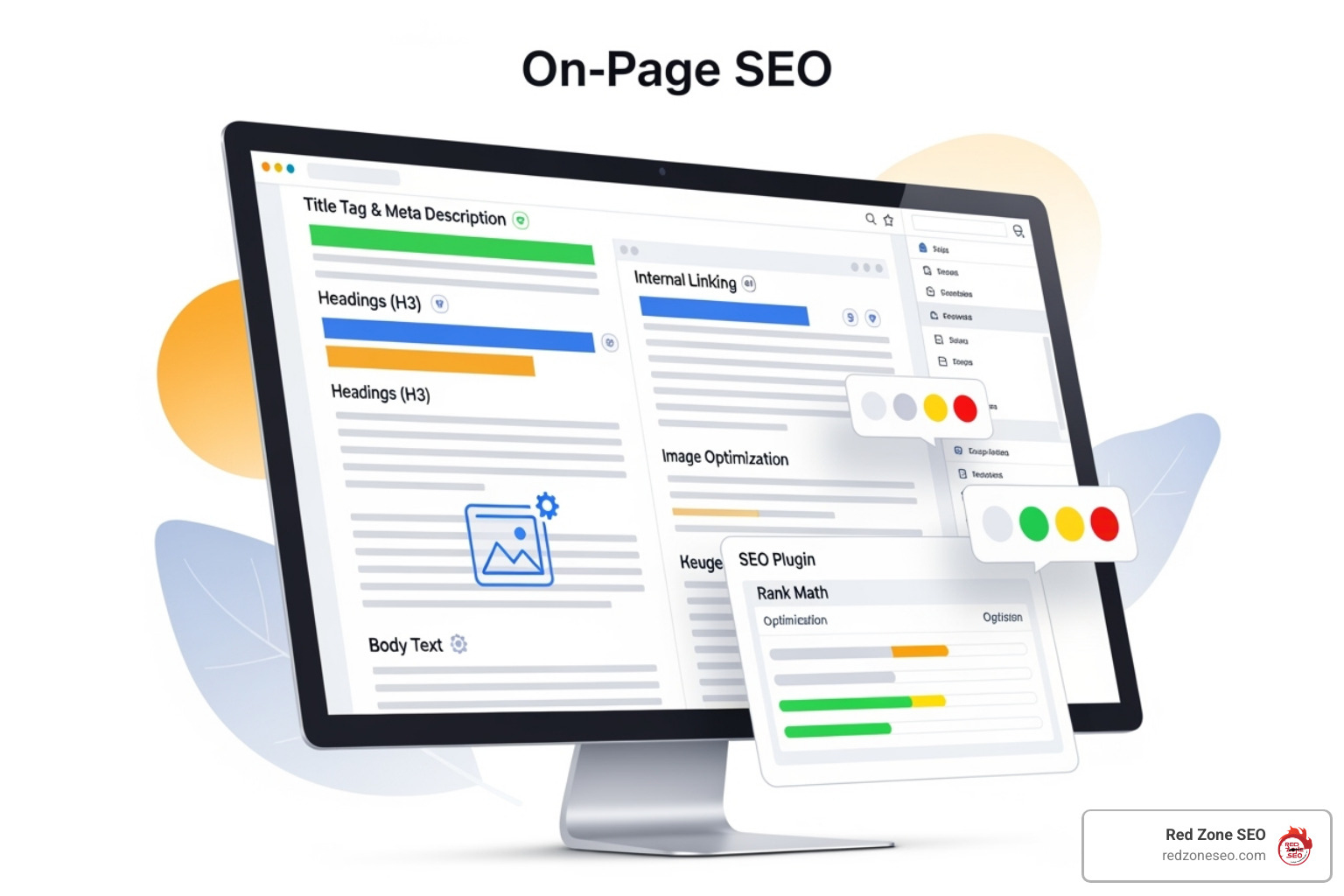
Learning how to do on page optimization in seo is the foundation of any successful SEO strategy. It involves optimizing individual web pages to rank higher and earn more relevant traffic from search engines. This is achieved by improving both the content and the underlying HTML source code of your pages.
Effective on-page SEO focuses on creating high-quality, user-focused content that matches search intent, optimizing title tags and meta descriptions, and structuring content with proper header tags (H1, H2, H3). It also includes using descriptive URLs, implementing internal links, optimizing images, ensuring fast page speeds, and adding schema markup.
Unlike off-page SEO factors like backlinks, on-page optimization is completely under your control. This is a critical advantage; you don't need to wait for another website to link to you or for a journalist to mention your brand. You can make changes immediately and see the impact directly. Google's algorithms have evolved far beyond simple keyword placement to understand context, semantics, and user intent. This means modern on-page SEO prioritizes a holistic user experience. Pages that load quickly, provide clear and comprehensive answers, and offer genuine value will consistently outrank those that don't. For small businesses, mastering on-page SEO is often the fastest and most cost-effective way to improve search rankings and generate a tangible return on investment.
Key terms for how to do on page optimization in seo:
If you've ever wondered how to do on page optimization in seo, you're in the right place. Think of on-page SEO as the art of making your website speak fluently to both search engines and real people. It's the practice of optimizing everything that lives directly on your website—your content, HTML code, images, and how they all connect.
To understand its role, it's helpful to know the three main flavors of SEO:
The game changed with Google's focus on user intent. Google is now incredibly smart about understanding why people search. This means modern on-page SEO requires thinking like your customers, not a keyword-stuffing robot. This aligns with Google's emphasis on E-E-A-T (Experience, Expertise, Authoritativeness, and Trustworthiness), which rewards content from authors who genuinely know their subject matter. E-E-A-T is demonstrated through:
This all ties into Google's push for people-first content. When you write for humans first, search engines follow. This is why on-page SEO is so crucial: it gives Google a clear roadmap to your content, leading to improved rankings and increased organic traffic. A compelling title and description can also boost your click-through rate, stealing clicks from higher-ranked competitors. Best of all, these are completely controllable SEO factors, making on-page optimization the essential foundation for all other SEO efforts. For more details, check out our More info about On-Page SEO Definition.
Now that we understand the "why," let's dive into the "how." The heart of how to do on page optimization in seo lies in carefully crafting your content and optimizing the HTML elements that structure it. This is where your words meet the code to tell search engines and users what your page is about.

Content is king, but only if it's created to help people. Writing for users first is the most sustainable path to SEO success. This means creating in-depth content that goes beyond surface-level answers. While there's no magic word count, comprehensive content often performs better because it thoroughly addresses a user's needs.
What truly makes content shine is original research and insights. In an age of AI-generated articles, your unique perspective and real-world experience are invaluable. This can include conducting your own surveys, analyzing proprietary data from your business, presenting unique case studies, or offering a novel perspective that challenges conventional wisdom. When you bring fresh value to a topic, you create content worth linking to. This also helps demonstrate expertise, a key component of Google's E-E-A-T framework. Show your credentials, cite reputable sources, and share your real-world experience. Finally, ensure your content is readable by using short sentences, conversational language, and plenty of white space. You can learn more info about Content Optimization on our website.
Modern keyword research focuses on understanding customer intent. The goal is to balance primary keywords (the main terms you want to rank for) with long-tail keywords (longer, more specific phrases that often have higher conversion rates). Tools like Ahrefs can uncover opportunities, but the best insights often come from listening to your customers.
Keyword mapping is the process of assigning specific keywords to specific pages. This prevents your own pages from competing against each other for the same search queries, a problem known as keyword cannibalization. For example, if you have two different blog posts both trying to rank for "on-page SEO checklist," Google may struggle to determine which is more relevant, potentially hurting the rankings of both. By mapping one primary keyword to one primary page, you create clarity for search engines. Once mapped, focus on natural keyword integration. Place your primary keyword in the first 100 words to signal the topic to readers and search engines. Use variations of your keyword in headings and subheadings to guide users through the content. In the body copy, write naturally; Google understands synonyms and context, so there's no need to repeat the exact phrase over and over. You can find more info about Keyword Research on our website.
These HTML elements are your content's first impression in search results. Get them right, and you'll attract more clicks.
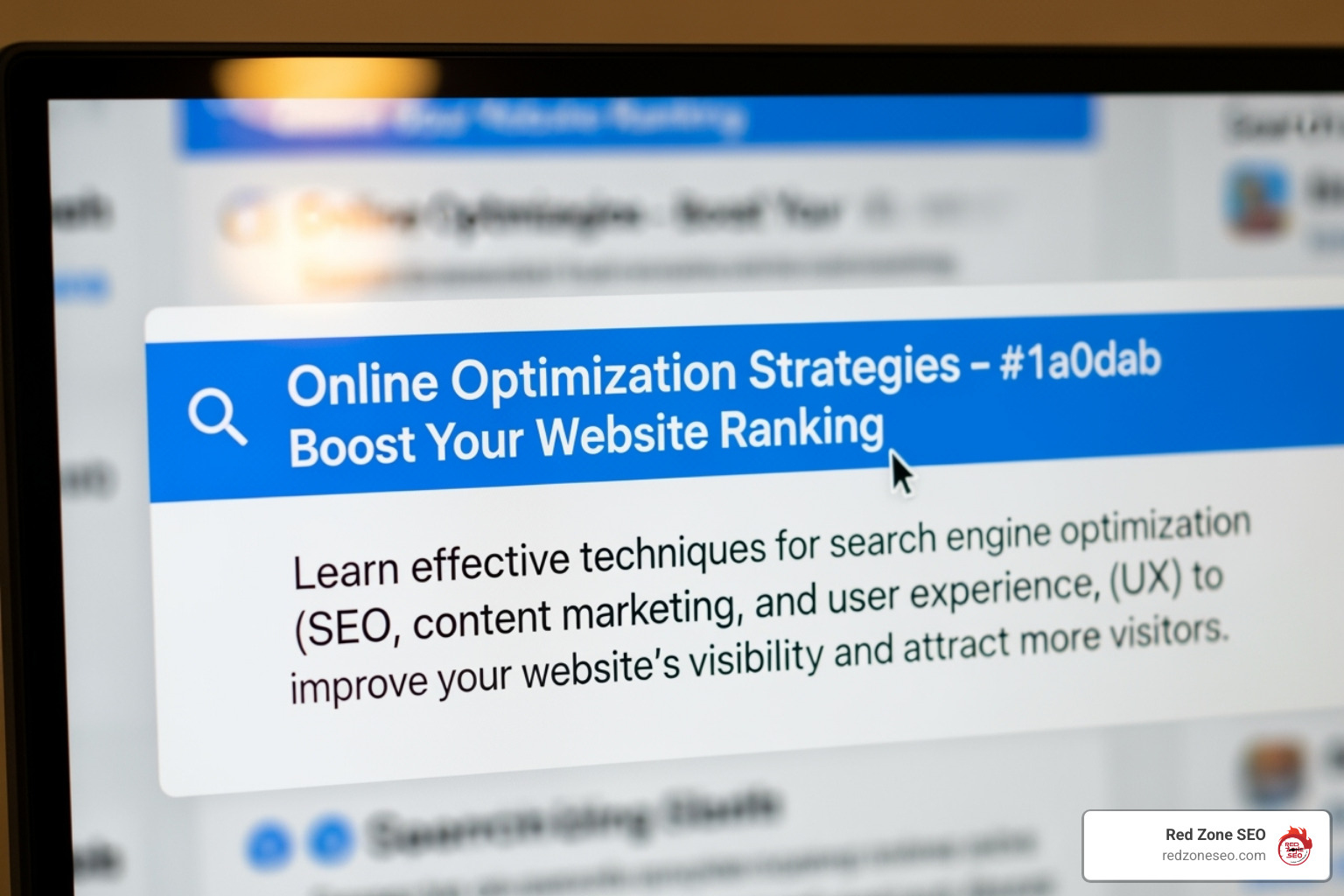
Google's advice on title links emphasizes creating clear, unique, and concise titles. Following these guidelines creates a better experience for everyone.
Beyond the words on your page, a technical layer significantly impacts your on-page SEO. These elements ensure your content is findable, accessible, and enjoyable. Think of it as the essential plumbing and wiring of your website.
Mastering how to do on page optimization in seo requires attention to these technical details. Here’s what belongs on your checklist.
A well-crafted URL tells users and search engines what to expect. Follow these best practices:
yourwebsite.com/on-page-seo-guide is better than yourwebsite.com/p-123.Links connect your content and guide users and search engines.
Optimized images are powerful SEO assets that can drive traffic from image search.
IMG001.jpg to on-page-seo-checklist.jpg before uploading.Schema markup is code you add to your site to help search engines understand your content in greater detail. This structured data can help you earn rich snippets in search results—improved listings that include star ratings, prices, or event dates. For example, adding FAQ schema to a list of questions and answers on your page can make those Q&As appear directly in the search results, taking up more space and enticing clicks.
Common schema types include FAQ, How-to, Review, and Product schema. These make your listing stand out and can significantly increase click-through rates. After implementing schema, use the Schema Markup Validator to ensure it's error-free. You can explore all available types at Schema.org.
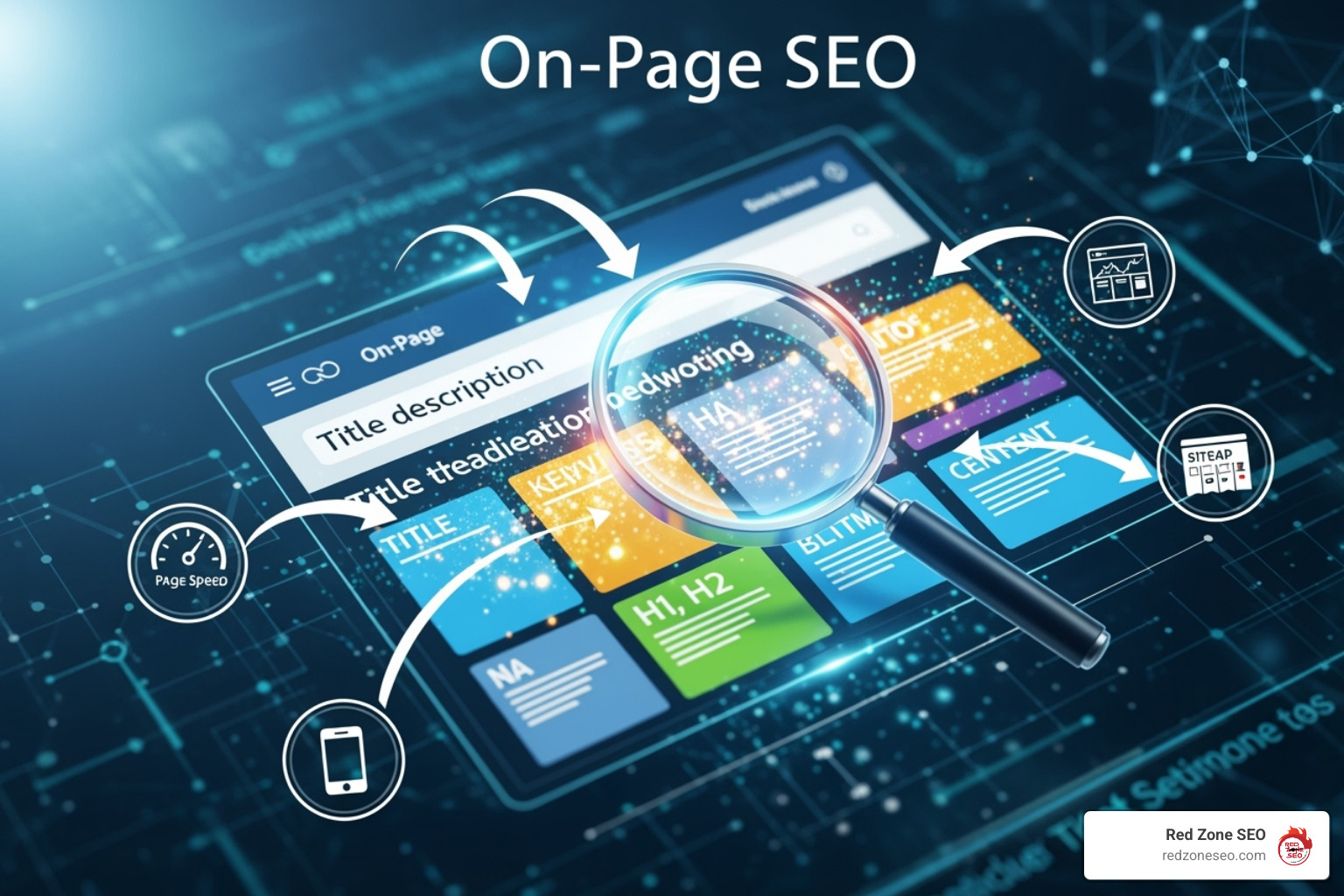
Optimization is an ongoing process. To truly master how to do on page optimization in seo, you must continuously audit your site, measure performance, and adapt your strategies based on data.
Featured snippets, or "Position Zero," are boxes that appear at the very top of search results, providing a direct answer to a user's query. To win them, you need to identify snippet opportunities (often question-based keywords) and structure your content accordingly:
Winning a snippet provides incredible visibility and can significantly boost click-through rate (CTR).
In our mobile-first world, page speed is non-negotiable. It's a confirmed ranking factor, and slow load times lead to high bounce rates. With Google's shift to mobile-first indexing, the mobile version of your site is now the priority for ranking. If your mobile site is slow or clunky, your overall rankings will suffer.
Google uses Core Web Vitals to measure user experience:
Use tools like Google's PageSpeed Insights to diagnose issues. Optimizing for speed and mobile isn't just for Google; it's about respecting your visitors. This is especially crucial for SEO for Small Business success.
A content audit is like spring cleaning for your website. It helps you systematically evaluate every piece of content to identify what to keep, update, or remove. The goal is to improve the overall quality and performance of your site.
At Red Zone SEO, we've helped countless businesses master their on-page optimization. Here are the answers to the most common questions we hear.
Think of on-page SEO as everything you control directly on your website. This includes your content, title tags, internal links, and page speed. It's like renovating your own house.
Off-page SEO, on the other hand, involves actions taken outside your website to build its reputation and authority. This includes earning backlinks from other sites, social media mentions, and online reviews. It's like building your reputation in the neighborhood.
Both are vital, but on-page SEO offers immediate power to make improvements, making it the perfect starting point.
This is the most common question. The answer depends on the change. Simple optimizations, like improving a title tag, can appear in search results within days and quickly boost click-through rates.
However, for significant ranking improvements and traffic growth, patience is key. It typically takes 4-6 months for major changes to fully manifest. Google needs time to recrawl, reindex, and re-evaluate your pages against competitors. SEO is a long-term strategy where consistent effort compounds over time.
Yes, placing your primary keyword in the first paragraph (ideally the first 100 words) is a best practice. It sends a clear signal to both users and search engines about your page's topic right away.
The critical rule is that it must feel natural and make contextual sense. Don't force a keyword into an awkward opening sentence. Instead, create a compelling introduction that naturally incorporates your keyword. Google's sophisticated algorithms reward natural language, so focus on writing for your audience first.
AI can be a powerful tool for brainstorming, outlining, and even drafting content, but it should be used as an assistant, not a replacement for human expertise. Google's stance is that it rewards high-quality content, regardless of how it's produced. However, content created for people is key. Purely AI-generated content often lacks the E-E-A-T signals (Experience, Expertise, Authoritativeness, Trustworthiness) that build trust. The best approach is to use AI to accelerate your workflow, but always have a human expert add unique insights, original research, and a genuine voice to ensure the final piece is valuable and helpful to the reader.
Congratulations! You now have a complete roadmap for turning your website into a search engine magnet. We've covered how modern on-page SEO has moved beyond keywords to focus on creating a seamless experience where high-quality content meets technical excellence.
The core elements—from compelling titles and structured content to technical details like SEO-friendly URLs, optimized images, and schema markup—are the building blocks of visibility. We've also seen that on-page SEO is a continuous process, not a destination. Regular audits, performance monitoring, and adapting to algorithm changes are essential for long-term success.
The beauty of mastering how to do on page optimization in seo is that it's entirely within your control. You can implement these changes today and start building momentum. Every action you take, from improving your Core Web Vitals to optimizing for a featured snippet, is an investment in your site's future.
At Red Zone SEO, we've seen businesses transform when they commit to a user-first approach backed by solid technical optimization. Search engines will always reward websites that provide genuine value, load quickly, and offer an exceptional experience. By consistently implementing these strategies, you're not just improving rankings—you're building a stronger online presence that converts your ideal customers.
Ready to put these strategies into action? Your website has incredible potential waiting to be opened up. Get a comprehensive SEO strategy for your business and let's work together to turn your knowledge into measurable growth.