
SEO for enterprise companies is fundamentally different from traditional SEO. While small businesses might optimize a few hundred pages, enterprises manage thousands or millions across multiple business units, international markets, and complex technical infrastructures. This isn't just SEO made bigger; it's an entirely different discipline.
Key differences between enterprise and traditional SEO:
Enterprise websites face unique challenges. For example, GitHub has over 78 million pages indexed in Google. The stakes are also higher, as a single technical error can impact thousands of pages, and a poor content strategy can waste millions. As one expert notes, "Enterprise SEO is not just about optimizing web pages; it's about creating a cohesive strategy that aligns with the overall business goals."
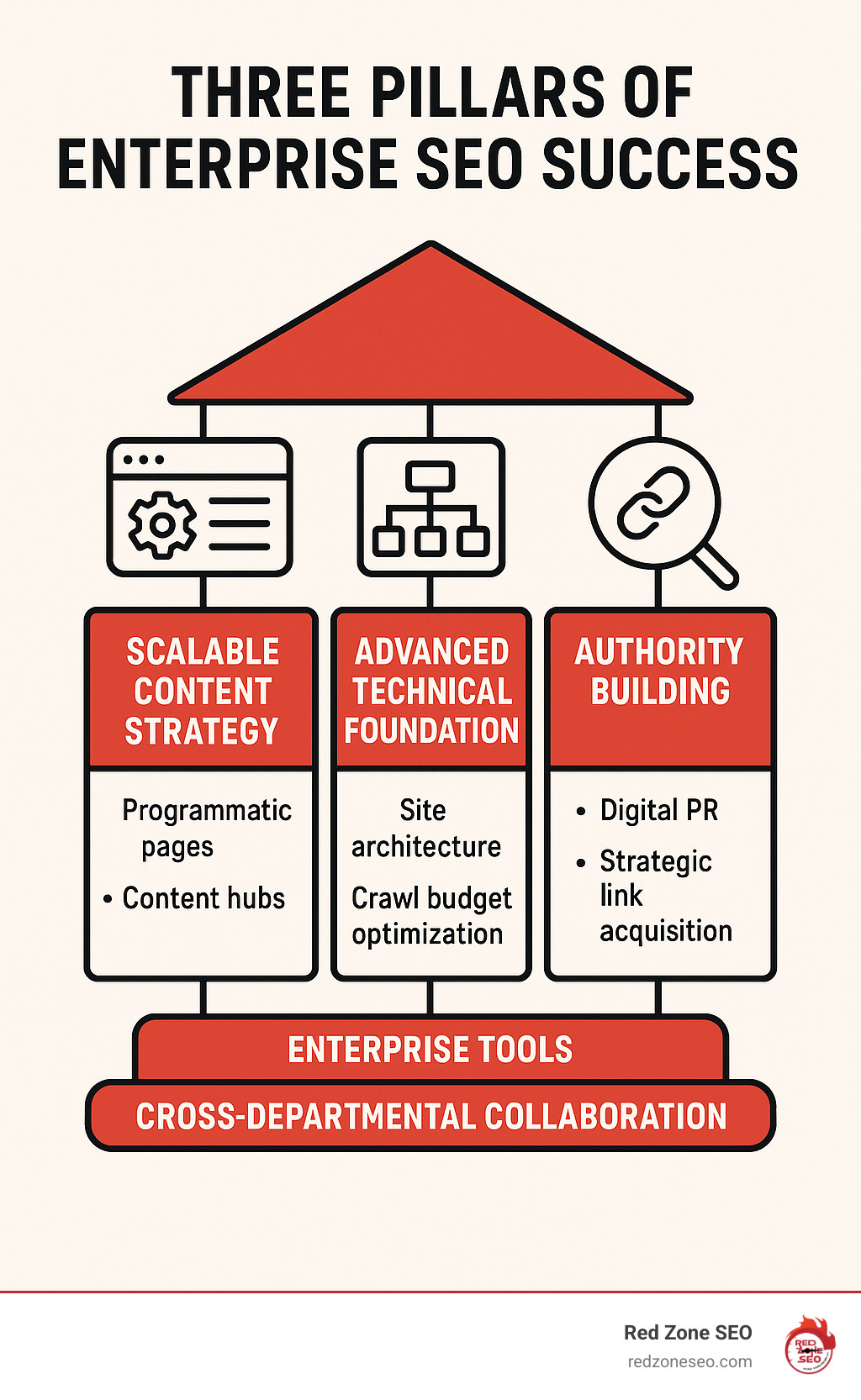
Success requires three core elements: scalable content strategies, advanced technical foundations, and systematic authority building. It also demands navigating complex organizations, securing executive buy-in, and coordinating across departments. When done right, enterprise SEO delivers results at scale, with companies often seeing a significant uptick in organic traffic over 9-12 months.
Common seo for enterprise companies vocab:
SEO for enterprise companies is a fundamentally different discipline than traditional SEO. While the core principles of content, technical health, and backlinks remain, the application becomes exponentially more complex. It's the difference between managing a home office and orchestrating the global logistics of a multinational corporation, where a single misstep can have cascading effects across the entire supply chain.
Enterprise SEO is the science of optimizing massive websites that serve multiple audiences across various markets. Key characteristics include:
These factors create a high-stakes environment where brand reputation is paramount and every ranking position against other Fortune 500 companies matters.
The operational challenges for enterprise sites exist in a different universe compared to smaller businesses.
| Factor | Traditional SEO | Enterprise SEO |
|---|---|---|
| Website Size | <1,000 pages | 10,000+ pages, often millions |
| Keyword Strategy | Long-tail, niche focus | Competitive head terms & programmatic |
| Team Structure | Small integrated team | Siloed departments |
| Tools | Standard tools | Enterprise platforms and custom solutions |
| Budget | Limited | Significant investment |
| Time to Results | 3-6 months | 6-12+ months |
This difference in scale introduces unique and complex problems. Page bloat from low-quality or outdated pages (e.g., old marketing campaigns, unused tags, thin user-generated content) can dilute site authority and waste precious crawl budget. Duplicate content issues multiply exponentially, arising not just from similar product pages but also from tracking parameters, printer-friendly page versions, and improperly configured international site versions. G2's category pages show how to handle this by creating unique, valuable content for each category, avoiding the duplication trap.
Furthermore, internal linking becomes a complex architectural puzzle. At scale, it's impossible to manually ensure that new, high-value content receives links from authoritative pages or that orphan pages aren't being created daily. This requires intelligent, automated systems to manage link flow effectively. Most importantly, securing stakeholder buy-in is critical. You must demonstrate clear, forecastable ROI to IT directors, legal teams, and CFOs, each of whom has different priorities and requires a custom business case. Success in seo for enterprise companies requires not just SEO tactics, but a deep understanding of organizational dynamics and scalable systems.
Building a successful seo for enterprise companies program is like constructing a digital empire. It rests on three foundational pillars: scalable content, a bulletproof technical foundation, and systematic authority building. Mastering all three creates a powerful, sustainable competitive advantage.
Enterprise content isn't about a few blog posts; it's about orchestrating a content ecosystem that demonstrates unparalleled expertise. This starts with content hubs and topic clusters, where a central, authoritative pillar page on a broad topic is supported by numerous specific sub-topic pages. This structure signals deep expertise to search engines and keeps users engaged within your site.
Programmatic SEO is a key tactic for scaling content. It allows for the automated generation of thousands of unique, optimized pages targeting specific long-tail queries. To be successful, this must be built on a foundation of unique data points to avoid creating thin, templated pages. G2's category pages are a masterclass in this, using unique review data to create comprehensive pages for countless software categories.
Other critical elements of an enterprise content strategy include:
Scaling content production while maintaining quality requires streamlined editorial workflows, AI-assisted writing tools for efficiency, and robust content frameworks and templates.
Technical SEO for an enterprise site is like maintaining a city's infrastructure—small, hidden problems can cause massive outages. The goal is flawless performance and crawlability at scale.
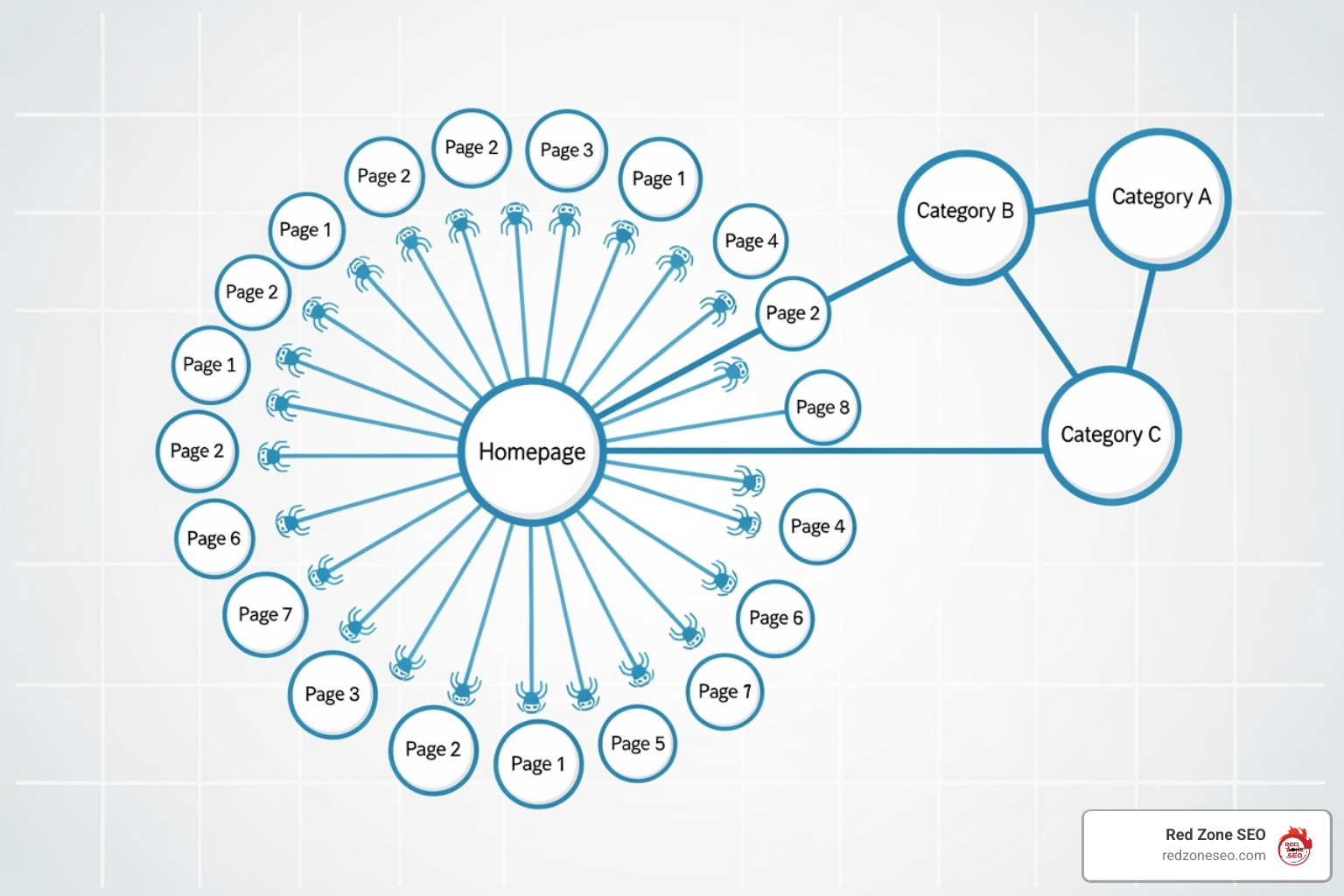
Key technical priorities include:
A comprehensive Technical SEO Audit is the non-negotiable foundation for identifying and fixing critical issues like broken links, redirect chains, and indexing errors before they cause widespread damage.
In the hyper-competitive world of enterprise SEO, authority is the ultimate moat. It requires a sophisticated, brand-aligned approach that goes far beyond basic link building.
An excellent strategy is worthless without flawless execution and rigorous measurement. For large organizations, this means building the right team structure, leveraging enterprise-grade technology, and implementing a measurement framework that proves the business value of SEO to the C-suite.
Choosing the right team structure is a critical strategic decision with long-term implications. While a dedicated in-house team offers deep institutional knowledge and direct control, it's expensive to build and maintain, requiring significant investment in salaries, ongoing training, and enterprise-level tools.

Hiring an expert SEO partner like Red Zone SEO provides battle-tested experience, immediate access to premium tools, and specialized expertise that is difficult to hire for. An external perspective can also spot opportunities and challenge internal assumptions that may be holding back growth.
A hybrid model is often the ideal solution for enterprises. The internal team manages day-to-day operations, stakeholder communication, and brand alignment, while the agency partner provides high-level strategic guidance, handles specialized projects like technical audits or large-scale campaigns, and brings an outside-in view of the competitive landscape.
Regardless of the model, a centralized SEO lead or Center of Excellence is crucial to unify strategy and prevent initiatives from fragmenting across departments. This lead acts as an evangelist and translator, showing each department how SEO directly benefits their specific goals—translating technical fixes into improved site stability for IT, or increased visibility for product marketing's latest launch.
Managing seo for enterprise companies requires industrial-strength platforms designed for data processing and automation at scale.
The real power comes from integrating SEO data with business intelligence tools. Connecting Google Search Console and SEO platform APIs to tools like Tableau, Power BI, or Google Data Studio allows you to visualize the direct relationship between SEO activities, rankings, traffic, and most importantly, revenue.
Success in enterprise SEO is defined by demonstrating clear business impact, not reporting on vanity metrics. We focus on KPIs that resonate with your CFO and board of directors.
Creating custom dashboards for C-suite reporting is key. We translate technical metrics into business language, showing revenue generated, market share gained, and pipeline influenced instead of just traffic and rankings. For multi-location businesses, tracking local search performance is also critical. As research from Google shows, 78% of local mobile searches lead to an in-store visit. Our Local SEO Packages are designed to optimize performance and drive foot traffic across all your locations.
The path to enterprise SEO success is complex, and what seems like a minor hiccup can quickly cascade into a major crisis impacting millions in potential revenue. Awareness of these common pitfalls is the first step toward building a resilient and effective program.
The Pitfall: This is the single biggest hurdle in enterprise SEO. Without C-suite support, SEO remains a low-priority "marketing thing," starved of resources. Initiatives stall due to friction between marketing, IT, and product teams who have competing priorities, different KPIs, and speak different professional languages.
The Solution: Speak the language of business results and build a compelling business case. We align SEO goals directly with overarching business objectives like revenue growth, market share, and customer acquisition cost reduction. We create forecast models that project potential revenue growth from specific SEO initiatives, framing SEO not as a cost but as a capital investment in a durable business asset. Fostering cross-departmental communication with shared goals and demonstrating how SEO makes other teams' work more successful helps break down silos and turns colleagues into advocates.
The Pitfall: Over years of development, migrations, and redesigns, large websites accumulate significant technical debt. This includes slow page speed from legacy code, complex redirect chains, an insecure mix of HTTP/HTTPS pages, and thousands of low-quality, "zombie" pages. This debt drains crawl budget, dilutes authority, and silently kills performance.
The Solution: A proactive, systematic approach to technical hygiene is essential. We conduct regular, comprehensive SEO Audit to diagnose issues before they become critical. We implement a strategic content pruning and consolidation plan to remove low-value pages while redirecting their equity to more important content. To secure resources from IT, we prioritize technical fixes using an impact/effort matrix. This 2x2 grid clearly identifies high-impact, low-effort quick wins (e.g., fixing a critical robots.txt error), providing a data-driven roadmap that development teams can act on.
The Pitfall: Manual processes that work for small sites break spectacularly at the enterprise level, creating impossible bottlenecks and inconsistent results. Relying on manual optimization for thousands of pages, manual reporting, or manual technical checks leads to wasted effort and missed opportunities. The mantra "Boring = $$$” applies here, as the consistent, automated execution of fundamentals drives the most significant results.
The Solution: Accept enterprise-grade tools and intelligent automation as a core competency. We invest in systems for rank tracking, site monitoring, and internal linking that can handle massive data sets. We develop automated workflows and custom scripts for tasks like running weekly on-page audits, finding and reporting new broken internal links, or generating alerts for significant ranking drops. This doesn't replace human experts; it empowers them by freeing them from repetitive tasks to focus on high-impact strategic work that drives competitive advantage. Success in seo for enterprise companies comes from anticipating these challenges and building robust systems to prevent them.
SEO for enterprise companies is a marathon, not a sprint. While quick wins from technical fixes can appear in the first few months, meaningful, business-moving results typically take 6 to 12 months to materialize. This timeline is due to the scale involved; Google needs time to crawl millions of pages, process changes, and recognize growing authority. The impact is cumulative, like compound interest, building on itself over time. Factors like industry competition, your site's current health, and resource allocation will influence the exact timeline.
Without a doubt, the biggest challenge is managing scale and complexity. This appears in three main areas:
Mastering these complexities is difficult, but the rewards are proportionally massive, often leading to 30% or higher increases in organic traffic.
Absolutely. This is often called enterprise local SEO. If your business has dozens or hundreds of physical locations, you face the same challenges of scale, automation, and systematic management.
Enterprise principles are applied to local search through:
Given that 78% of local mobile searches result in a visit within a day, scaling local SEO is a powerful revenue driver. Our specialized Local SEO Packages are designed to solve these multi-location challenges, combining a systematic approach with the high-conversion potential of local search.

Mastering seo for enterprise companies requires a fundamental shift in thinking. It's not about doing more of the same; it's about moving from manual tasks to systematic automation, building robust strategies for content and technical excellence, and leveraging data to execute flawlessly at scale.
When done right, enterprise SEO transforms from a cost center into a powerful revenue engine that builds a sustainable competitive advantage. It's a marathon, not a sprint, but the investment pays compounding dividends, creating a moat around your business that competitors will struggle to cross.
At Red Zone SEO, we've guided countless enterprise clients through these complexities. We provide the data-driven, proven solutions needed to turn strategy into measurable results. We act as your strategic partner, working alongside your team to build a system for long-term revenue growth and market dominance.
Ready to transform your enterprise SEO into your biggest growth driver? Learn how our process works and let's start scaling your success together.