
SEO data analysis is the process of collecting, interpreting, and acting on your website's search engine performance data to improve rankings, traffic, and conversions. Instead of guessing what works, you use real data to make smart decisions about your SEO strategy.
Quick Answer: SEO Data Analysis Essentials
Search engines constantly update their algorithms, and your competitors are always optimizing. Without analyzing your SEO data, you're flying blind in a fast-changing landscape. Think of it as your website's health checkup—it shows you what's working, what's broken, and where your biggest opportunities are hidden.
As Neil Patel says, "Without analytics, you are flying blind." Your website generates tons of valuable data every day. The question is: are you using it to grow your business?
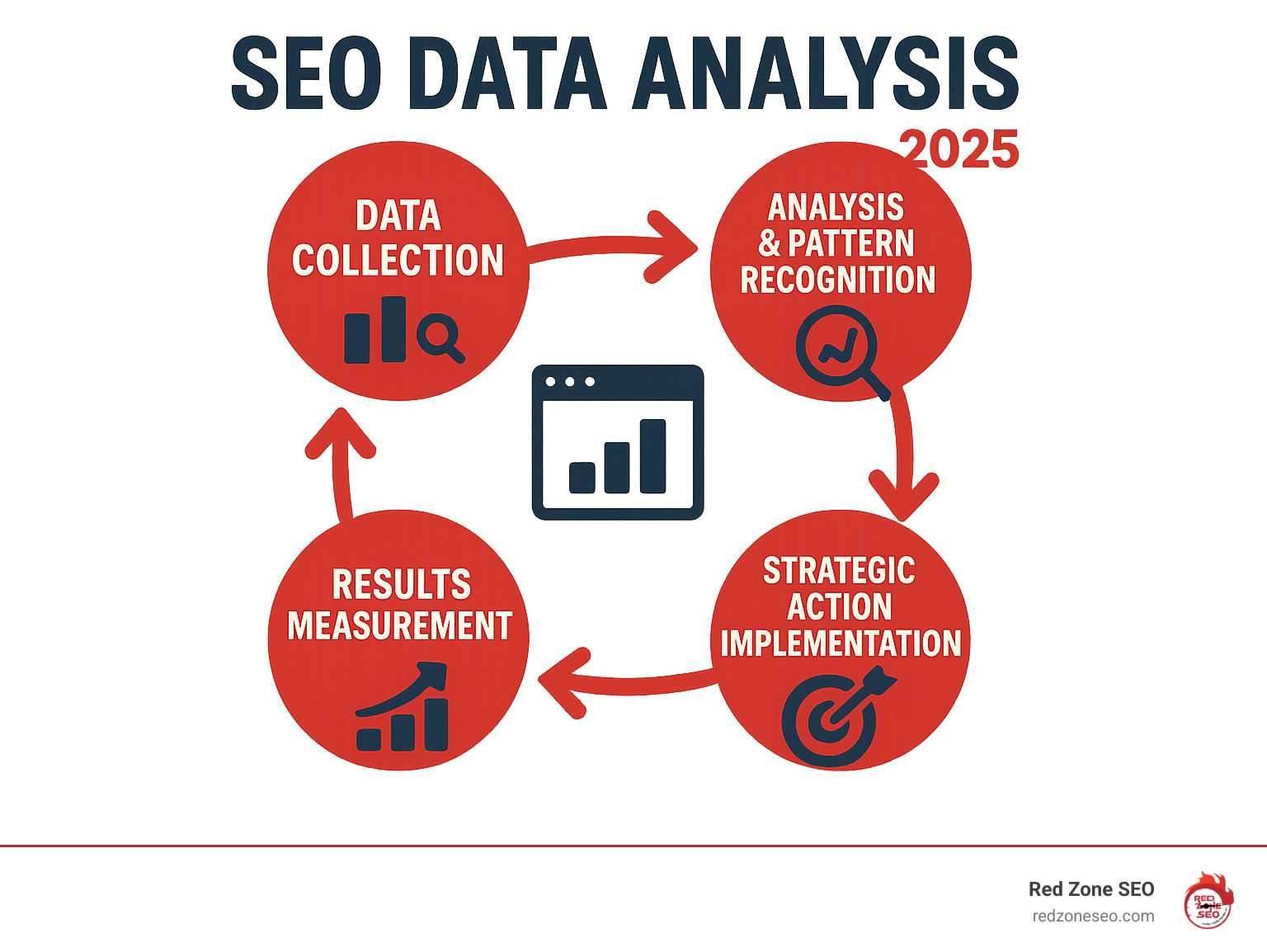
Think of SEO data analysis as a conversation with your website. Every click and search query tells you what your visitors want and how well you're delivering it. SEO analytics is the digital detective work of collecting clues from search engines, piecing together user behavior patterns, and using those insights to make your website more visible and valuable.
Why is this essential for your business growth?
Companies that succeed online treat data as a competitive advantage. More info about our data-driven SEO strategies shows how we turn insights into growth for our clients.
Effective SEO data analysis isn't about collecting more data—it's about collecting the right data. Your business goals should determine which metrics you track.
Your website's technical foundation is critical. If search engines can't find, crawl, or understand your site, your content strategy won't matter. Monitoring site health ensures your SEO efforts have the best chance to succeed.
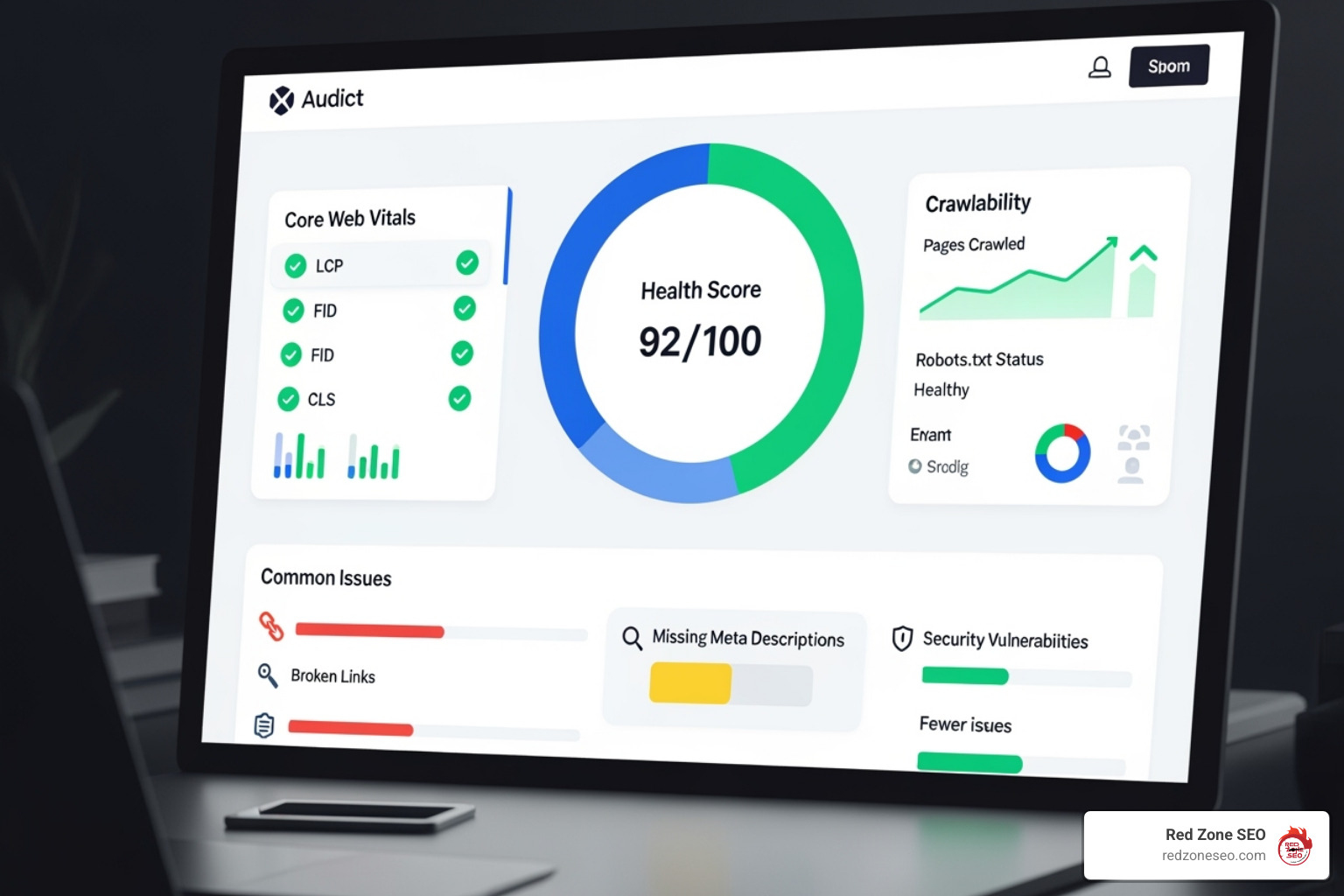
Key areas we monitor:
Regular site health monitoring prevents minor technical issues from becoming major ranking problems. More info about technical SEO audits shows our comprehensive approach.
To master SEO data analysis, you need the right tools. They allow us to track, troubleshoot, and significantly improve your site's search performance. The real power comes from integrating data from multiple sources into a unified view, which helps us spot trends and opportunities.
Automating data collection is key. It frees up valuable time from manual reporting, allowing us to focus on what truly matters: analyzing insights and implementing strategies that drive growth. How Red Zone SEO integrates data for clients.
Google's free tools are the foundation of any solid SEO data analysis strategy.
Google Search Console (GSC) for pre-click data
GSC is our window into how Google sees your site. It provides crucial pre-click data, including impressions, clicks, click-through rate (CTR), and average ranking position. We use it to understand your visibility in search results and identify technical issues like indexing errors.
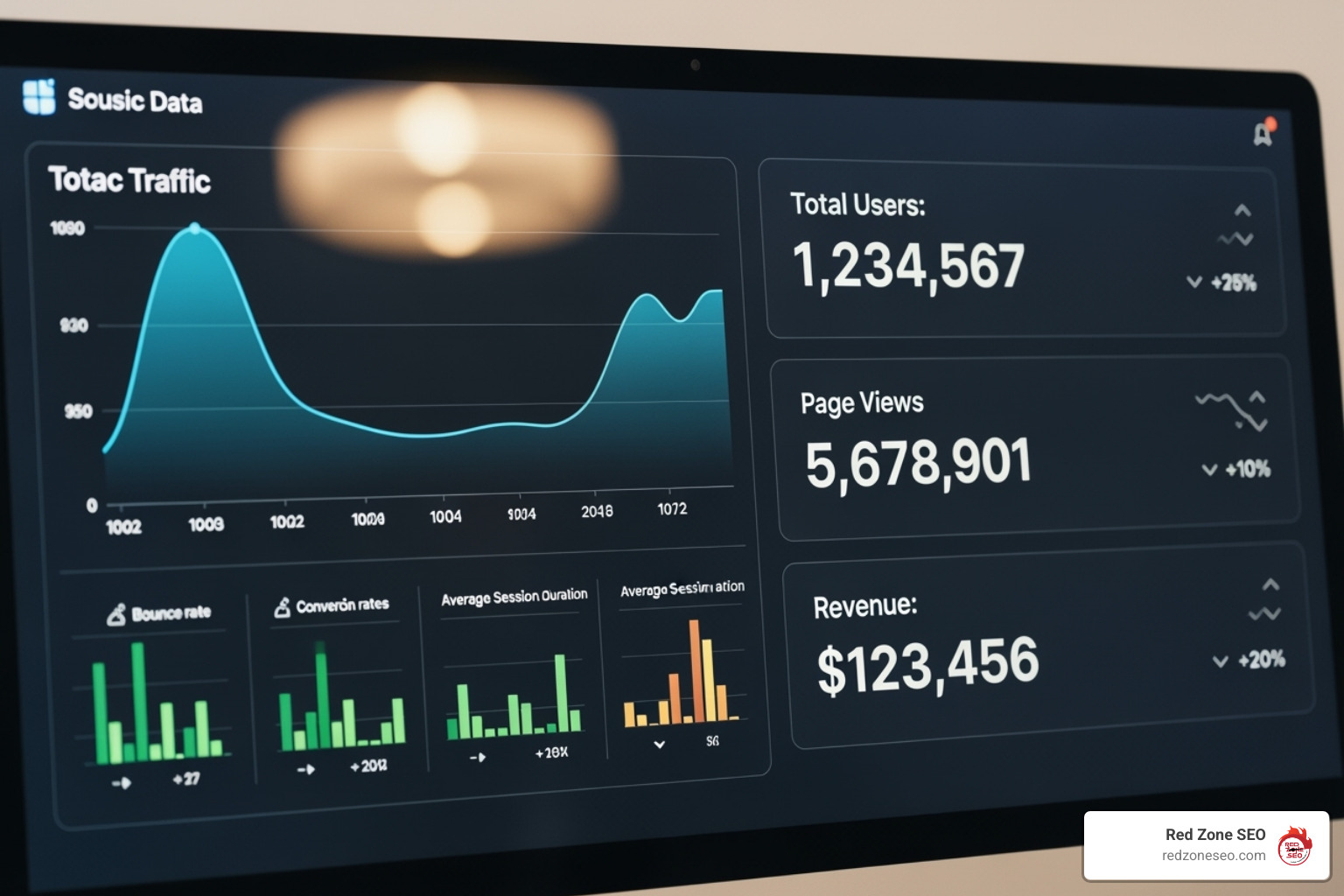
One of our favorite GSC tactics is finding keywords with high impressions but low CTR. Improving the page titles and meta descriptions for these terms can deliver a quick and significant traffic boost.
Google Analytics 4 (GA4) for post-click data
While GSC shows how users find you, GA4 reveals what they do after they arrive. This powerful tool provides deep insights into user behavior, engagement, and conversions. We use it to track metrics like average engagement time and, most importantly, to measure how organic traffic contributes to your business goals, such as form submissions or sales. More info about Google Analytics.
While Google's tools are essential, paid SEO platforms are necessary to outmaneuver the competition. They offer a level of depth, automation, and competitive intelligence that free tools can't match.
Advanced tools like Ahrefs and Semrush provide:
Here's a comparison of free versus paid tools:
| Feature/Tool Category | Free Tools (GSC, GA4, Bing Webmaster Tools, SEOQuake) | Paid Tools (Ahrefs, Semrush, Moz, Screaming Frog, SpyFu, etc.) -|
| Keyword Research | Basic keyword performance data (your site only). | Advanced keyword research, difficulty scores, and competitor keyword analysis. -|
| Backlink Analysis | Limited view of incoming links. | Comprehensive backlink profiles, authority metrics (DA/DR), and competitor link analysis. -|
| Competitor Analysis | Almost none. | In-depth analysis of competitor strategies, keyword gaps, and backlink sources. -|
| Technical SEO Audit | Basic error reporting (e.g., crawl errors in GSC). | Comprehensive site audits that identify hundreds of potential technical issues, from broken links to hreflang errors. -|
| Content Optimization | Manual analysis of content performance in GA4. | AI-powered content editors that provide real-time suggestions for improving on-page SEO and readability. -|
Collecting data is just the first step. The real value of SEO data analysis comes from turning those insights into concrete actions that improve performance. This is where we move from observation to optimization.
Turning Insights into Action
Data eliminates the guesswork. Instead of wondering what to do next, we follow a systematic process: measure what matters, analyze the patterns, report the findings, and take decisive action. This approach allows us to prioritize SEO tasks based on their potential impact. We focus on fixing the critical "red flags" first—like site-wide technical errors—that deliver the biggest return on effort.
A/B Testing and Continuous Improvement
SEO isn't about making a change and hoping for the best. We use A/B testing to validate our strategies, experimenting with different page titles, content variations, or calls-to-action to see what truly works. By measuring the results in tools like Google Search Console, we create a continuous feedback loop: implement, measure, analyze, and refine. This iterative process keeps your website ahead of algorithm updates and competitive pressures.
A sudden drop in rankings can be alarming, but a data-driven approach allows us to diagnose the cause methodically. Common culprits include:
We use GSC's URL Inspection Tool to get a direct look at how Google sees a specific page, identifying any crawling or indexing errors that might be holding it back. More info about the URL Inspection Tool.
Data is only useful if it's understood. We translate complex analytics into clear, compelling stories that stakeholders can act on.
Our goal is to make SEO data accessible and actionable, empowering you to make confident decisions about your digital marketing. More info about our Las Vegas digital marketing agency services.
Here are answers to some of the most common questions we receive about SEO data analysis.
The ideal frequency depends on your goals, but a consistent schedule is key.
Think of it as the difference between your home's interior design and its neighborhood reputation.
On-Page Data refers to everything on your website that you control directly. This includes content quality, keyword performance, technical health (like site speed), and user engagement metrics (like time on page). It's about how well your site is built and optimized for users and search engines.
Off-Page Data reflects your website's authority and reputation across the web. This is primarily about your backlink profile—who links to you and the quality of those links. It also includes brand mentions and social signals, which act as external votes of confidence.
A successful SEO strategy requires optimizing both. Great on-page SEO makes your site worthy of earning high-quality backlinks, and a strong off-page profile boosts the visibility of your well-optimized content.
This is where SEO data analysis directly impacts your bottom line. It's not just about traffic; it's about turning visitors into customers.
Flying blind isn't an option. SEO data analysis is the process of changing raw website data into a powerful growth engine, providing the clear insights needed to make strategic, impactful decisions.
The core principle is a continuous improvement cycle: Collect data, analyze patterns, take action, and measure results. Every click, ranking change, and user interaction tells a story. The businesses that thrive are those that listen to what their data is saying and use it to their advantage.
At Red Zone SEO, we've seen how data-driven decision-making can transform a business's online presence. Whether it's uncovering keyword gaps in Austin, fixing site speed issues in Henderson, or outmaneuvering competitors in Las Vegas, data provides the roadmap for success.
Your website is constantly generating valuable information. By embracing SEO data analysis, you can move beyond guesswork and make confident, purposeful decisions that lead to sustainable growth and measurable results.
Contact our Las Vegas SEO experts to open up your website's potential.