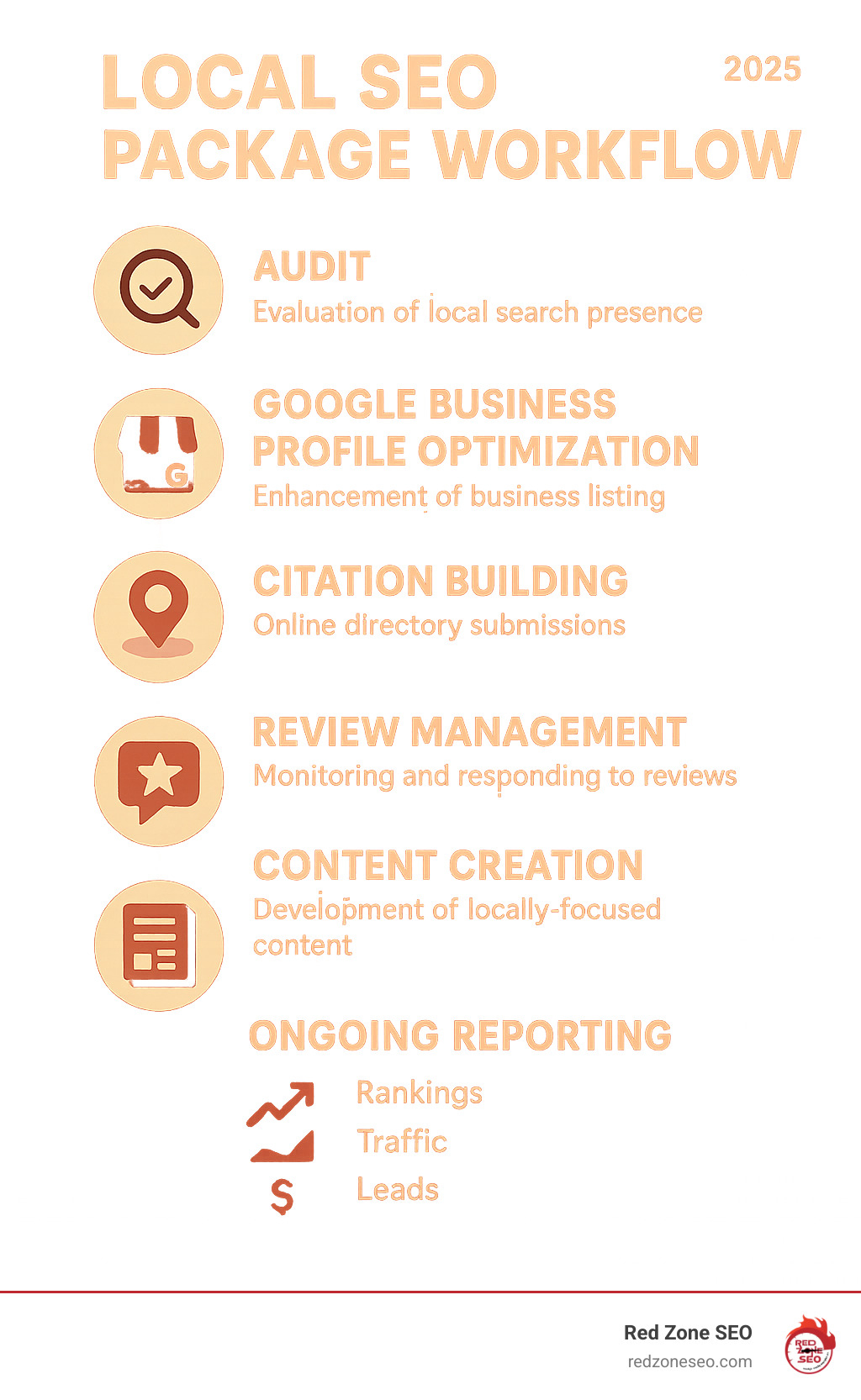
Local SEO packages are bundled services designed to improve your business's visibility in local search results and Google Maps. These comprehensive solutions typically include Google Business Profile optimization, citation building, review management, and local content creation to help businesses attract nearby customers.
Key Components of Local SEO Packages:
Common Package Tiers:
The reality is stark: over 90% of local searches include Google Maps results, and businesses not optimizing for local search are essentially invisible to nearby customers. Small businesses face unique challenges in local markets, competing against established players with bigger budgets while needing to capture customers within specific geographic areas.
Local SEO packages solve this by bundling essential services into affordable, predictable monthly investments. The results can be dramatic - businesses often see 12% average increases in local leads with data-enabled campaigns, while some report up to 398% increases in organic traffic within months of implementation.
Local SEO packages are comprehensive service bundles that bring together everything your business needs to get found by customers in your immediate area. Just like you wouldn't build a house with only a hammer, you can't dominate local search results with just one or two tactics.
Local SEO involves juggling over 250 ranking factors simultaneously. Local SEO packages ensure every element works together smoothly, tackling Google's three critical factors for local search: Proximity (how close your business is to the searcher), Relevance (how well your business matches what they're looking for), and Prominence (how well-known and trustworthy your business appears online).
These packages become crucial when you consider that customers search more than 5 billion times daily on Google, with nearly half hunting for new products or services. Your Google Business Profile becomes your digital storefront, and local SEO packages ensure it attracts customers inside.
Citation building forms another cornerstone, involving consistent business listings across directories while maintaining perfect NAP consistency (Name, Address, Phone number) across every platform.
The difference between local and general SEO packages is like comparing a neighborhood coffee shop to a massive corporation. Local SEO packages zero in on geographic targeting with laser precision, obsessed with helping you dominate searches like "dentist in Austin" or "plumber near me."
Local packages concentrate heavily on Google Business Profile optimization and dive deep into location-specific keyword targeting, local citation building, and review management. The link building stays community-focused, seeking connections with local organizations.
General SEO packages think bigger picture, targeting broad keywords without geographic modifiers and building authority through high-domain backlinks. Over 90% of local searches include Google Maps results, so local businesses using general SEO approaches are essentially bringing a knife to a gunfight.
Multi-location businesses face complex challenges that well-structured local SEO packages can handle when designed properly. Franchise brands walk a particularly tricky tightrope - each location needs its own distinct digital presence while maintaining brand consistency.
The complexity multiplies fast. A single-location business might need 50-100 citations, but a 10-location franchise could require 500-1,000 citations for visibility across all markets. Multi-location local SEO packages typically include automated citation management, location-specific landing pages, and bulk review management systems that handle responses across multiple locations without losing personal touch.
When investing in local SEO packages, you deserve to know exactly what you're getting. The magic isn't in any single service - it's in how these core components work together like a well-oiled machine.
Google Business Profile optimization serves as your foundation - your primary real estate in local search results. Comprehensive packages treat your GBP as a living asset needing constant attention, including complete setup, ongoing management, and regular optimization based on performance data.
NAP consistency (Name, Address, Phone number) forms the backbone of everything else. These three pieces of information must be identical everywhere your business appears online, as even small variations can confuse search engines and hurt rankings.
Citation building involves systematically submitting your business information to relevant directories. Quality matters more than quantity - the best packages target 35-120 directories in the first month, focusing on high-trust sources that influence local rankings.
Review management has become critical because online reputation directly impacts search result positioning. Packages include systems to monitor feedback, respond professionally, and encourage satisfied customers to share experiences.
On-page local SEO optimization ensures your website speaks the same language as search algorithms, optimizing title tags, meta descriptions, and content for location-specific keywords. Technical elements like local schema markup help search engines understand your location and services.
Local link building focuses on community connections - local newspapers, chambers of commerce, and complementary businesses. These links carry special weight because they demonstrate genuine community involvement.
Content localization involves creating material that resonates with your specific local audience, covering local events, highlighting community involvement, or addressing location-specific customer concerns.
Your Google Business Profile is your digital storefront, and first impressions matter enormously. Comprehensive local SEO packages treat GBP optimization as an ongoing process rather than one-time setup.
Getting basics right is crucial - complete, accurate business information with correct business categories. High-quality photos are essential, as businesses with photos receive 42% more direction requests and 35% more website click-throughs.
The Q&A section often gets overlooked but provides opportunities to control narrative and provide accurate information upfront. Regular posting keeps profiles active, signaling to Google that your business is relevant.
More info about How It Works - our systematic approach ensures every GBP aspect is optimized for maximum local visibility.
Citation building requires strategic directory selection and meticulous attention to detail. Effective local SEO packages focus on quality over quantity, targeting directories that actually matter for local rankings.
Data aggregators like Infogroup and Factual serve as foundations, feeding data to hundreds of smaller directories efficiently. Industry-specific directories often carry more weight than general business directories.
Manual submissions typically produce better results than automated tools, allowing better quality control and customization. Ongoing monitoring is essential because citation information can change over time.
Online reputation management has evolved from nice-to-have to absolutely essential. Reviews directly impact local rankings and influence customer decisions at every buying stage.
Monitoring involves tracking reviews across Google, Yelp, Facebook, and industry-specific platforms. Professional responses to both positive and negative reviews are crucial - potential customers often read responses as much as reviews themselves.
Review generation involves implementing systems to encourage satisfied customers to leave reviews, while social proof integration leverages positive reviews for increased conversions.
Understanding local SEO package pricing is crucial for making smart business decisions. Most agencies structure pricing in tiers, like choosing a phone plan - you start with basic coverage and upgrade as needs grow.
Pricing varies dramatically based on competition level. A dentist in downtown Las Vegas faces stiffer competition than a specialty shop in a quieter neighborhood, directly impacting investment requirements.
| Package Level | Monthly Cost | Citations | Keywords | Key Features |
|---|---|---|---|---|
| Bronze/Starter | $150-300 | 10-20 | 5-10 | Basic GBP setup, limited citations |
| Silver/Standard | $300-600 | 20-50 | 10-20 | Improved optimization, review management |
| Gold/Premium | $600-1000 | 50+ | 20+ | Comprehensive management, content creation |
Setup fees typically run $199-500, covering initial audits, account creation, and proper configuration. Geographic location plays a huge role - metropolitan areas with higher competition typically command premium prices, but potential ROI often justifies increased expense.
More expensive packages include more dedicated work hours monthly, access to premium tools, higher-quality content creation, comprehensive reporting, and dedicated account management.
Time allocation typically follows predictable patterns: 30-40% goes toward technical optimization and maintenance, 25-35% focuses on content creation and optimization, 20-30% covers citation building and link acquisition, with remaining 10-15% covering reporting and account management.
Tool costs factor significantly into pricing structures. Professional local SEO requires expensive software for rank tracking, citation management, and competitive analysis, often costing $200-500 monthly per client.
Deliverables should be crystal clear in proposals. Look for specific commitments like "15 citations in month one" rather than vague promises about improving rankings.
SEO Audit - our comprehensive audit process identifies exactly what your business needs and provides transparent pricing based on specific requirements.
Measuring return on investment from local SEO packages goes beyond simple ranking reports. Focus on metrics that directly correlate with revenue and business growth.

Key metrics include:
Most businesses see initial improvements within 3-6 months, with significant gains typically occurring within 6-12 months. Revenue impact can be substantial - case studies show businesses achieving 398% increases in organic traffic, 1,105% increases in top 10 keyword rankings, and 12% average increases in local leads.
The compounding nature of local SEO creates long-term value that paid advertising can't match. Unlike pay-per-click campaigns that stop when you stop paying, local SEO builds lasting visibility providing value for years.
Choosing the right local SEO package isn't about finding the cheapest option or most features - it's about finding the perfect match for your business goals, market conditions, and growth ambitions.
Your business goals should guide package selection. A new bakery opening has completely different needs than an established dental practice expanding to a second location. Industry specifics play huge roles - restaurants thrive on visual appeal and event promotion, while law firms need careful content management and compliance-aware review responses.
Competition level dramatically affects what you'll need to succeed. Opening a pizza shop in a town with fifty other Italian restaurants requires more aggressive strategy than being the only specialty pet groomer in your area.
The DIY versus fully managed decision often comes down to team capabilities and available time. DIY packages provide tools and guidance but require internal execution. Fully managed packages handle everything, perfect for busy owners wanting results without hassle.
Provider vetting becomes critical given wide quality variation across the industry. Look for transparent pricing, detailed service descriptions, relevant case studies, and clear reporting processes. Industry certifications indicate ongoing education and professional standards.
Affordable SEO Las Vegas - we understand Las Vegas market conditions and provide local SEO packages designed specifically for businesses competing in our unique local landscape.
Provider evaluation goes beyond comparing prices. The cheapest option rarely provides best value, while most expensive doesn't guarantee superior results.
Transparency in proposals separates professionals from amateurs. Detailed proposals should feel like roadmaps for success, not vague promises. Look for specific deliverables with realistic timelines, clear pricing breakdowns, and honest expectation setting.
Defined success metrics ensure everyone agrees on what constitutes success. Rather than nebulous goals like "better visibility," you want concrete metrics like "increase local keyword rankings by 50% within six months."
Case studies provide valuable insight into provider capabilities. Look for examples relevant to your industry and market size. Ask specifically for examples from businesses similar to yours.
Google Partner badge - our Google Partner status demonstrates expertise and commitment to best practices, giving you confidence in our ability to deliver results.
Client retention rates tell stories about satisfaction levels and consistent results. High retention suggests clients are happy with both results and service experience.
Multi-location local SEO campaigns require completely different approaches than single-location optimization. Complexity multiplies exponentially as you add locations, each with its own competitive landscape and optimization needs.
Location hierarchy helps organize campaigns effectively and ensures appropriate resource allocation. Corporate-owned locations might receive different treatment than franchise operations.
Data feeds can streamline multi-location management by centralizing business information and pushing updates to multiple platforms simultaneously. Centralized dashboards provide necessary oversight capabilities for multi-location campaigns.
Quality control becomes increasingly challenging with multiple locations. Consistent brand messaging, review response quality, and optimization standards require systematic approaches and regular auditing.
Local SEO packages aren't magic bullets that transform visibility overnight. Most businesses start seeing meaningful improvements within 3-6 months, but timelines depend on several factors worth understanding upfront.
The first 1-3 months typically bring "quick wins" - properly optimized Google Business Profile, basic citations appearing across directories, and visibility for less competitive local searches. These early improvements build foundations for bigger gains ahead.
Months 3-6 bring substantial keyword ranking improvements, more phone calls, and increased traffic from local searches. Online reputation strengthens through consistent review management, and customers find you more easily.
The 6-12 month mark is where local SEO shows real power. Many businesses achieve dominant positions in local search results, see significant revenue impact, and establish themselves as trusted local authorities.
Competition level plays huge roles in timelines. Dentists in major metropolitan areas competing against dozens of practices need more time than specialized contractors in smaller markets. Your starting point matters too - businesses with zero online presence need more foundational work before visible improvements occur.
Results from local SEO packages can be impressive but vary significantly based on industry, market size, and investment level.
Traffic improvements are usually first noticed. Most clients see 25-100% increases in organic traffic within 6-12 months. Local search visibility typically improves by 50-200%, meaning you show up for many more relevant searches in your area.
Google Maps rankings often improve by 15-50%, directly translating to more direction requests and foot traffic. Website conversions typically increase by 20-75% as you attract more qualified local prospects.
Business impact extends beyond website metrics. Most businesses see 10-40% more phone calls from local search, and retail locations often experience 15-60% more foot traffic. Lead generation improvements can be dramatic - 25-150% increases are common.
Revenue impact varies by business model. Service-based businesses with high transaction values often see more dramatic ROI than retail businesses with lower margins. Results compound over time - month six typically looks much better than month three.
Regulated industries face unique challenges that standard local SEO packages often don't address. Healthcare providers, financial advisors, and legal professionals operate under strict compliance requirements affecting everything from content creation to review management.
Healthcare providers must steer HIPAA requirements impacting patient information handling and review responses. They can't make certain treatment claims, and patient privacy affects review management strategies.
Financial services professionals face regulations about claims, disclaimers, and client communications affecting local SEO content. Review responses must comply with industry regulations about client confidentiality.
Legal professionals steer advertising restrictions varying by jurisdiction and practice area. Some states have strict attorney advertising rules affecting website content and Google Business Profile optimization.
Specialized packages for regulated industries typically include compliance-aware content creation, industry-specific citation building, regulatory-compliant review management, and ongoing monitoring for regulatory changes affecting online presence.

The journey through local SEO packages reveals a clear truth: this isn't just another marketing expense - it's one of the smartest investments a local business can make. Your potential customers are searching for your services right now, typing "plumber near me" or "best Italian restaurant in Las Vegas" into their phones. The question is whether they'll find you or your competitors.
Businesses that succeed with local SEO packages recognize that local visibility isn't a luxury - it's a necessity. They understand that success requires patience, consistency, and the right strategy.
Start by taking an honest look at where you stand today. Can customers easily find you on Google Maps? Are your business listings consistent across the web? Do you have a steady stream of positive reviews? If you're answering "no," you're not alone - and you're not stuck.
The beauty of local SEO lies in its compound nature. Unlike paid advertising that stops working when you stop paying, local SEO builds lasting value. Every citation you build, every review you earn, and every piece of local content you create works for you 24/7.
We've watched businesses in Henderson start with basic packages and grow into local market leaders. Las Vegas restaurants have gone from invisible to fully booked. The change isn't magic - it's the result of consistent, strategic effort guided by proven local SEO packages.
Your competitors aren't waiting. While you're reading this, they're optimizing their Google Business Profiles, building citations, and strengthening their local presence. The gap between businesses that invest in local SEO and those that don't widens every day.
At Red Zone SEO, we've built our reputation on understanding local markets. We know that a dental practice in Austin faces different challenges than a contractor in Nevada. We don't implement cookie-cutter solutions - we craft strategies that fit your business like a custom suit.
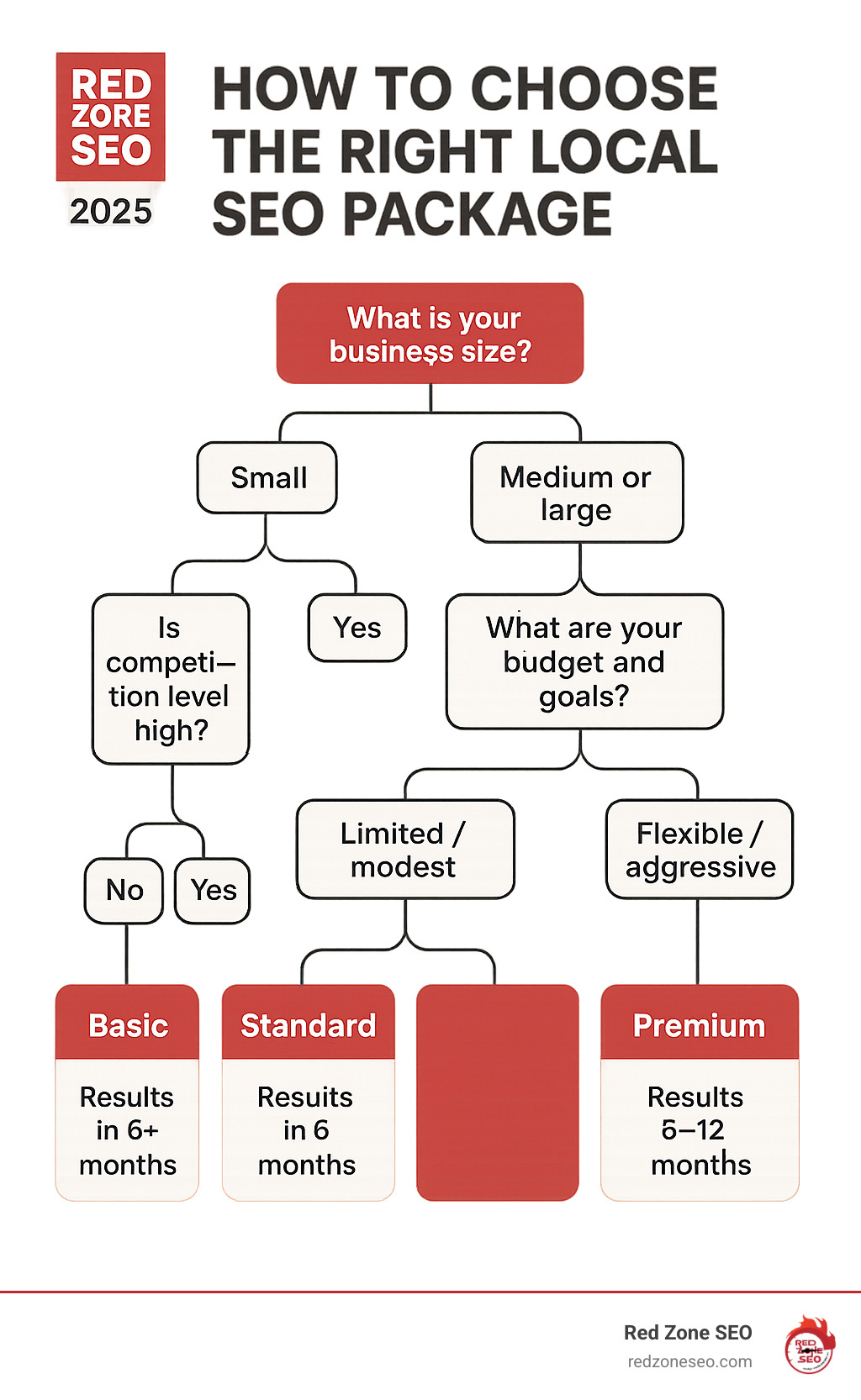
The data we've shared represents real results from real businesses that invested in their local visibility. The 398% increase in organic traffic and 1,105% improvement in keyword rankings represent actual client outcomes.
Your next step is simple: stop waiting for the perfect moment. Local SEO isn't just about rankings - it's about building a digital presence that accurately represents your business and makes it easy for customers to find and choose you.
The most successful local businesses understand something crucial: local SEO isn't a cost - it's an investment that pays dividends for years. They view their monthly package fee like rent or insurance - as necessary business expense that protects and grows their investment.
Your local market is more competitive than ever, but that creates opportunity for businesses willing to invest in their visibility. While competitors debate whether local SEO is worth it, you can be building the foundation for long-term success.
More info about Pricing - find our transparent pricing options and find the local SEO package that fits your business needs and budget.
Don't let another month pass while competitors gain ground. The businesses that act now will have substantial advantages over those that delay. Your future customers are searching for you right now - make sure they can find you.
Ecommerce store SEO is the process of optimizing your online store to rank higher in search engines like Google, driving more qualified traffic and sales without paying for ads. Here's what you need to know:
Key Components of Ecommerce Store SEO:
If you're a small business owner struggling to compete with larger retailers, SEO levels the playing field. While big companies spend millions on ads, you can capture their customers through strategic organic search optimization.
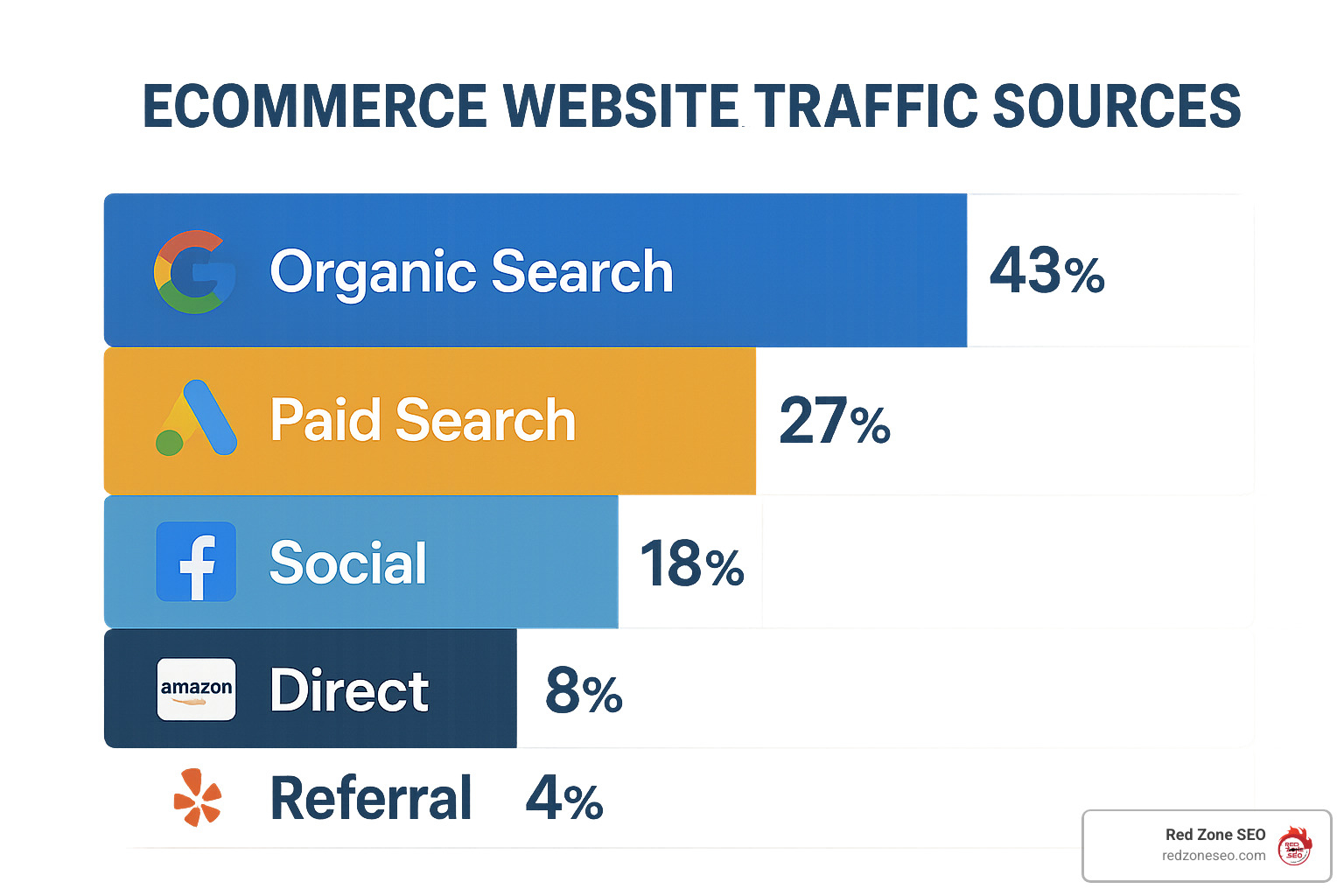
The numbers tell a compelling story. 43% of all ecommerce traffic comes from Google's organic search results, and with global ecommerce sales projected to reach $8 trillion by 2027, the opportunity is massive. Even better, 75% of users never scroll past the first page of search results, meaning top rankings deliver consistent, high-quality traffic.
Unlike paid ads that stop working the moment you stop paying, SEO builds long-term value. According to research on page speed and conversions, websites improving their loading time by just one second experienced an 8.4% boost in conversions.
The beauty of ecommerce SEO lies in its ability to capture customers at the exact moment they're ready to buy. When someone searches for "best running shoes for flat feet," they're not just browsing - they're shopping. Your job is to be there when they search.

Ecommerce store SEO is your digital storefront's secret weapon. While traditional website SEO focuses on getting visitors through the door, ecommerce SEO is all about turning those visitors into paying customers.
Ecommerce store SEO is the art and science of making your online store visible when people search for products you sell. You're not just competing for any traffic - you're fighting for the attention of people who are ready to buy.
When someone searches for "waterproof hiking boots size 10," they've already decided they need boots, they want them waterproof, and they know their size. Your job is to be there at that exact moment.
The numbers are staggering. We're looking at a global ecommerce market heading toward $8 trillion by 2027. Google controls nearly 90% of all web traffic, making search visibility critical for survival.
What sets ecommerce SEO apart is its laser focus on commercial intent. Regular SEO might target someone looking for "how to tie shoes," but ecommerce SEO targets "buy Nike Air Force 1 size 9." One query might lead to a blog read; the other leads to a sale.
While Google Shopping ads might give you a decent 4.6x return on ad spend, SEO delivers something even better: 500-1000% ROI that keeps paying dividends long after you've done the work.
Picture this: You spend $1,000 on Google Ads and get $4,600 in sales. Great! But next month, if you don't spend another $1,000, your traffic disappears. SEO spending that same $1,000 gets $5,000 in sales this month, then $5,000 next month, and the month after that - all without additional ad spend.
75% of users never scroll past the first page of search results, and the top organic result captures nearly 28% of all clicks. When your product appears at the top organically, customers see it as more trustworthy than paid ads.
B2B ecommerce operates differently. Your customers aren't making impulse purchases; they're conducting board meetings about your product. The sales cycle stretches from days to months. A B2B buyer might search for "industrial equipment specifications" months before they search for "buy industrial equipment."
B2C ecommerce is where emotions drive decisions. Your customers might see a product and buy it within minutes. They search for "cute summer dresses" or "trendy phone cases" - terms loaded with emotional intent.
The KPI differences are striking. B2B focuses on lead generation metrics, while B2C measures immediate conversions, average order value, and repeat purchase rates.
Building a successful ecommerce store SEO strategy is like constructing a house - you need a solid foundation before you can add the finishing touches. The most successful online stores follow a systematic approach that starts with understanding their customers and builds outward from there.
Before diving into tactics, consider conducting a comprehensive SEO audit to understand your current position.
Real keyword research for ecommerce requires detective work. Start with Amazon's search bar, which acts like a crystal ball into customer behavior. Amazon processes over 2 billion searches monthly, making its autocomplete suggestions incredibly valuable.
Tools like Helium10 and Semrush take this research to the next level. Helium10 specializes in ecommerce keyword research and can generate hundreds of variations from a single seed term. Semrush reveals the search volume and competition levels that help you prioritize your efforts.
Create a keyword matrix that organizes your findings by commercial intent. Focus heavily on long-tail terms with clear transactional intent. While "shoes" might have massive search volume, "waterproof hiking boots size 10 wide" tells you exactly what the customer wants.
Don't overlook seasonal patterns. Google Trends reveals that searches for "organic dog food" spike 300% in January and drop significantly during summer months.
Your site architecture is the invisible foundation that makes or breaks your ecommerce store SEO efforts. The 3-click rule should govern your architecture decisions. Every product should be accessible within three clicks from your homepage.
Implement a flat hierarchy that flows logically: Homepage leads to main categories, which lead to subcategories (if needed), which lead to individual products.
Clean URLs serve as street addresses for your products. Instead of "yourstore.com/p/x7b9k2m," use "yourstore.com/womens-running-shoes/nike-air-zoom-pegasus."
Breadcrumb trails help users understand where they are on your site and create additional internal linking opportunities.
Internal linking guides both search engines and customers through your store. Use anchor relevance - your link text should accurately describe the destination page while incorporating target keywords naturally.
The reasonable-surfer model tells us that links placed prominently within main content areas carry more authority than those buried in footers or sidebars.
Cross-selling through internal links serves dual purposes - it boosts SEO while increasing average order value. Implement "customers also bought" sections and "frequently bought together" recommendations.
Your ecommerce store SEO success hinges on creating pages that both search engines and customers absolutely love. You're not just optimizing for algorithms - you're crafting experiences that guide shoppers from curiosity to checkout.
Your title tags are your first impression in search results. Keep them under 60 characters and front-load the good stuff. Instead of "Nike Air Max 270 Running Shoes for Men Available Now," try "Nike Air Max 270 - Men's Running Shoes | Free Shipping."
Your meta descriptions are like movie trailers - they need to tell the whole story in under 160 characters while making people desperate to click. "Shop Nike Air Max 270 running shoes with superior cushioning and breathable design. Free shipping on orders over $75. 4.8-star rating from 1,200+ reviews."
Your H1 should match your title tag's intent while reading naturally on the page. Use H2 tags for major benefits and features, then H3 tags for specifications.
Product descriptions deserve 300-500 words minimum of unique, benefit-focused copy. Stop listing features like you're reading a spec sheet. Instead of "waterproof material," explain how it "keeps your feet completely dry during those unexpected downpours."
Ditch generic filenames like "IMG_001.jpg" and use descriptive names like "nike-air-max-270-black-running-shoe-side-view.jpg." Write alt text that describes what's in the image while naturally including your target keywords.
Schema markup tells search engines exactly what they're looking at, which can earn you rich snippets showing prices, ratings, and availability right in search results.
Category pages capture those broader, high-volume keywords that drive serious traffic. Start every category page with at least 300 words of genuinely helpful content.
FAQ sections are pure gold for category pages. They naturally target those long-tail questions people actually search for. Questions like "What's the difference between trail running shoes and road running shoes?"
Weave internal links throughout your category descriptions. When you mention a specific benefit or feature, link to products that showcase it perfectly.
Content marketing transforms your ecommerce site from a simple catalog into a trusted resource. Buying guides are content marketing gold for ecommerce. They target informational keywords while naturally funneling readers toward your products. For more insights on creating compelling content, check out our guide on content marketing for small businesses.
Gift guides tap into seasonal search trends and social sharing opportunities. Create guides for different recipients, budgets, and occasions.
Video content is becoming increasingly important. Research shows that 76% of consumers have purchased a product after watching a video.
Focus on E-E-A-T (Experience, Expertise, Authoritativeness, Trustworthiness) in everything you create. Google's recent updates prioritize content with genuine first-hand experience.
The technical foundation of your ecommerce store SEO can make or break your entire optimization effort. Most store owners focus on keywords and content while ignoring the technical elements that actually determine whether search engines can find, crawl, and index their pages effectively.
53% of mobile users abandon sites that take longer than three seconds to load. Page speed affects your bottom line in two ways: Google uses Core Web Vitals as a ranking factor, and conversion rates drop by 7% for every additional second of load time.
Start with Google's PageSpeed Insights tool. This free resource identifies specific issues slowing down your site and provides actionable recommendations.
Image optimization delivers the biggest impact. Compress all images without sacrificing visual quality, implement lazy loading for images below the fold, and consider using WebP formats.
A Content Delivery Network (CDN) serves your images from servers closer to your customers, cutting load times in half for international visitors.
Mobile optimization extends beyond making your site look good on phones. Google uses mobile-first indexing, meaning they primarily evaluate the mobile version of your site for ranking purposes.
Test your mobile experience using Google's Mobile-Friendly Test tool. Pay attention to Core Web Vitals metrics: Largest Contentful Paint, First Input Delay, and Cumulative Layout Shift.
Ecommerce sites naturally create duplicate content through product variations, category assignments, and filtering options. Canonical tags serve as your primary weapon against duplicate content.
Product variations present a common challenge. When possible, use single product pages with selectable options rather than creating separate URLs for each variation.
Faceted navigation creates complex duplicate content scenarios. Use noindex directives for filter combinations with no search demand, or implement canonical tags pointing to the main category page.
Product schema markup should include essential details like name, description, price, availability, and review ratings. This enables rich snippets that make your products stand out in search results with star ratings and pricing information.
XML sitemaps guide search engines through your site efficiently. Create separate sitemaps for different content types: products, categories, blog posts, and images. Configure your sitemaps to update automatically as you add new products.
Building authority and creating exceptional user experiences work together when it comes to ecommerce store SEO. Search engines want to recommend sites that people actually enjoy using and trust.
Link building for ecommerce requires building trust for transactions. People need to feel confident enough to enter their credit card information, which means the links pointing to your site should come from credible, relevant sources.
The Moving Man Method works beautifully for ecommerce stores. Find broken links on supplier websites, industry resource pages, or competitor sites that have gone out of business. Then reach out with a helpful replacement - your relevant product page.
HARO (Help a Reporter Out) connects you directly with journalists who need expert sources. When a reporter asks about "best practices for choosing hiking boots," and you sell outdoor gear, share genuine expertise without being salesy.
Your supplier and distributor relationships represent untapped link opportunities. Many suppliers maintain partner directories or dealer locator pages where they'll link to authorized retailers.
User-generated content campaigns create natural linking opportunities while building community around your brand. When customers share photos of your products in action, they often link back to your site.
Google's algorithm prioritizes sites that people actually want to use. Core Web Vitals, mobile-friendliness, and overall user satisfaction now directly influence your search rankings.
Site navigation should feel intuitive. Implement a prominent search function with autocomplete suggestions. Create clear category hierarchies that make logical sense, and use filtering options that help rather than overwhelm.
Your internal search functionality deserves special attention because many users prefer searching to browsing. Make sure your search returns relevant results, handles common typos gracefully, and provides helpful suggestions when searches return zero results.
Trust signals throughout your site build the confidence needed for online purchases. Display security badges prominently, showcase genuine customer reviews, provide clear return policies, and make contact information easily accessible.
International expansion opens massive opportunities for ecommerce store SEO, but requires careful technical implementation. Hreflang tags tell search engines which version of your site should appear for users in different countries or languages.
Create genuinely localized content rather than simply running existing pages through Google Translate. Consider local preferences, cultural differences, seasonal variations, and market-specific product needs.
Niche market domination often proves more profitable than trying to compete with Amazon on broad terms. Instead of fighting for "running shoes," consider targeting "barefoot running shoes for wide feet."
Voice search optimization becomes increasingly crucial as smart speakers change how people search. Optimize for conversational queries and question-based searches that sound natural when spoken aloud.
WordPress users looking to expand their ecommerce presence should consider professional WordPress SEO Services to ensure their platform can handle international expansion effectively.
Success in ecommerce store SEO isn't just about implementing strategies - it's about measuring what works, scaling your efforts, and continuously improving based on real data.
Google Analytics 4 has revolutionized how we track ecommerce performance, offering improved ecommerce tracking that follows customers through their entire journey. Setting this up properly gives you X-ray vision into your business.
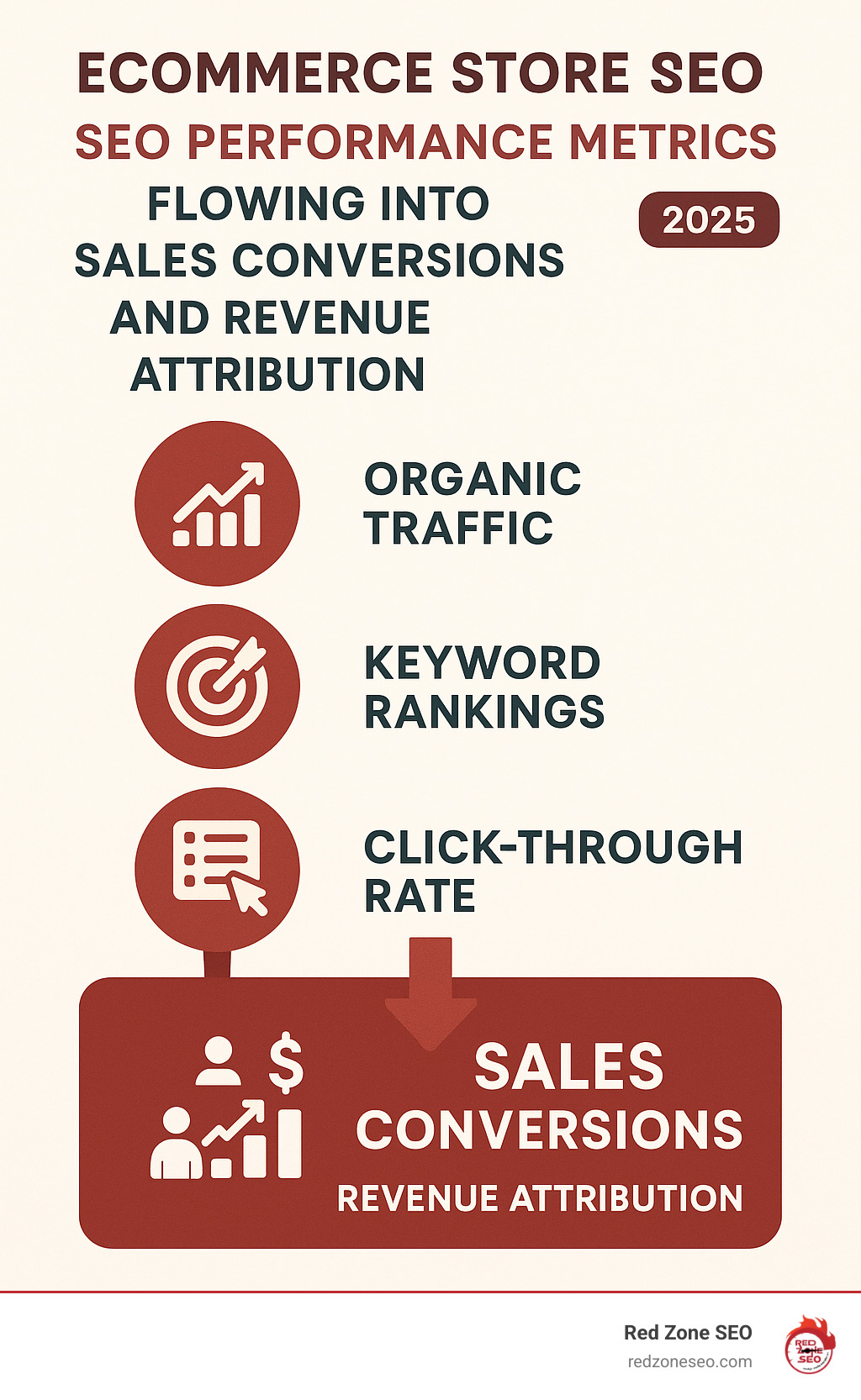
The metrics that matter most tell a complete story. Organic sessions and users show your overall reach, while keyword rankings reveal your competitive position. Click-through rates from Google Search Console tell you how compelling your search listings are.
Conversion rates separate the wheat from the chaff. A keyword that drives 1,000 visitors but zero sales isn't helping your business. Focus on average order value from organic traffic and revenue attribution that ties everything together.
Google Search Console deserves special attention because it's like having a direct line to Google's thoughts about your site. The Performance report reveals trending keywords, declining rankings, and new opportunities.
The smartest ecommerce businesses treat SEO and PPC as dance partners rather than competitors. Your PPC keyword performance data becomes a crystal ball for SEO strategy. Keywords that convert well in paid search often make excellent targets for organic optimization.
Retargeting campaigns that capture visitors from organic search extend the value of every SEO visitor. Someone who found you through Google but didn't buy immediately might need that gentle reminder ad to complete their purchase.
Budget allocation requires thinking about lifecycle coverage. PPC provides immediate results but requires ongoing investment. SEO builds long-term value that continues generating returns months or years after the initial investment.
Index bloat affects many large ecommerce sites. Combat this by regularly auditing your indexed pages and using noindex tags for low-value content like filtered views with no search demand.
Thin content challenges arise when you have many similar products. Instead of fifty nearly identical product pages, create detailed, benefit-focused descriptions that highlight what makes each product special.
Resource limitations affect many small businesses. The solution isn't to do everything - it's to do the right things exceptionally well. Focus on long-tail keywords where you can realistically compete.
Most ecommerce businesses see initial improvements within 4-6 months, with significant results typically appearing after 6-12 months of consistent effort. Technical fixes and on-page optimizations can show results relatively quickly, sometimes within weeks. However, building authority through content creation and link building requires more patience.
Ecommerce SEO focuses on driving sales rather than just traffic, requiring optimization for commercial intent keywords and conversion-focused user experiences. Ecommerce sites face unique technical challenges like duplicate content from product variations and complex site architectures with thousands of pages.
Absolutely. Small businesses have advantages that larger retailers cannot match: agility, specialized expertise, and the ability to create personalized experiences. Focus on long-tail keywords where your specialized knowledge shines. Instead of competing for "running shoes" against Amazon, target "trail running shoes for wide feet."
The journey to mastering ecommerce store SEO doesn't end with reading this guide—it begins here. You now have a comprehensive roadmap that can transform your online store from invisible to irresistible in Google's search results.
Think of SEO as planting seeds in a garden. The technical optimizations and keyword research you do today are like preparing the soil. Your on-page content and product descriptions are the seeds themselves. The authority building and link acquisition efforts? That's the watering and nurturing that helps everything grow.
Start with the foundations first. Don't try to tackle everything at once—that's a recipe for overwhelm and incomplete implementation. Begin with your technical SEO audit to fix any glaring issues that might be holding you back. A beautiful garden won't thrive if the soil is contaminated, and amazing content won't rank if your site has fundamental technical problems.
Once your technical foundation is solid, move into keyword research and on-page optimization. Focus on your highest-value product and category pages first. These are your money-makers, so they deserve priority attention. Perfect these pages before expanding to your entire catalog.
Content creation and authority building come next in your journey. This is where patience becomes your best friend. Building genuine authority takes time, but the compound effect is extraordinary. One well-researched buying guide can drive traffic and sales for years, paying dividends long after you've moved on to other projects.
The beauty of ecommerce store SEO lies in its sustainability. Unlike paid advertising that demands constant feeding with fresh budget, your SEO efforts build momentum over time. That product page you optimize today will keep working for you next month, next year, and beyond.
Data should drive every decision you make moving forward. Set up your tracking systems properly from day one—you can't improve what you don't measure. Google Analytics 4 and Search Console aren't just nice-to-have tools; they're your compass and map in the SEO journey.
Don't get discouraged if results don't appear overnight. We've seen businesses transform their entire trajectory through consistent SEO efforts, but it rarely happens in the first month. The most successful ecommerce stores we work with think in quarters and years, not days and weeks.
Your competitive advantage often lies not in having the biggest budget, but in being more focused and strategic than larger retailers. While big companies get bogged down in bureaucracy and generic approaches, you can pivot quickly, create personalized experiences, and dominate specific niches.
The ecommerce landscape continues evolving at breakneck speed. Voice search, AI-powered shopping experiences, and new Google algorithm updates will reshape how customers find and buy products online. The fundamentals covered in this guide provide a strong foundation, but staying curious and adaptable ensures long-term success.
SEO is both an art and a science. The technical aspects require precision and attention to detail, but understanding your customers' needs and creating genuinely helpful experiences requires empathy and creativity. The most successful ecommerce store SEO strategies blend both elements seamlessly.
Your next action step should be conducting a comprehensive audit of your current situation. Where do you stand today? What are your biggest opportunities? Which technical issues need immediate attention? This honest assessment guides your priority list and helps you allocate time and resources effectively.
At Red Zone SEO, we've guided hundreds of ecommerce businesses through this exact journey. We've seen tiny startups grow into seven-figure businesses and watched established retailers double their organic traffic within months. The strategies work, but only when implemented consistently and strategically.
Every day you delay implementation is another day your competitors gain ground in search results. The opportunity cost of inaction often exceeds the investment required for proper SEO implementation. Your potential customers are searching for your products right now—make sure they find you instead of your competition.
Whether you choose to implement these strategies internally or partner with experienced professionals, the important thing is to start. Perfect is the enemy of good in SEO. A decent optimization implemented today beats a perfect plan that never gets executed.
Ready to turn your ecommerce store into a search engine magnet? Find how our proven process works or reach out to discuss your specific situation. We love helping ambitious business owners open up the massive potential that ecommerce store SEO offers.
The search results are waiting. Your customers are searching. Your competitors are investing. The question isn't whether SEO works for ecommerce—it's whether you'll implement it before or after your competition does.
Start small, think big, and stay consistent. Your future self will thank you for the SEO seeds you plant today.
SEO audit cost typically ranges from $500 to $15,000 depending on your website size and audit depth. Here's what you can expect to pay:
As one business owner put it: "Have you ever wondered how much it costs for an expert in SEO to audit your website? From free to an extraordinary $30,000, it can feel like you're going through a jungle!"
The truth is, 91% of businesses are satisfied with the ROI they received from updates made based on their SEO audit. Yet many small business owners hesitate because they don't understand what drives these costs or what they should expect to pay.
Your website is like a storefront - if customers can't find it, they can't buy from you. Over 90% of searches happen on Google, and most potential customers only contact one business before deciding. This makes understanding audit costs crucial for making smart investments in your online visibility.
The cost varies dramatically because there's no industry standard. Some "audits" are just automated tool exports dressed up with fancy logos. Others involve deep strategic analysis that can transform your business. The key is knowing what you're paying for and why.
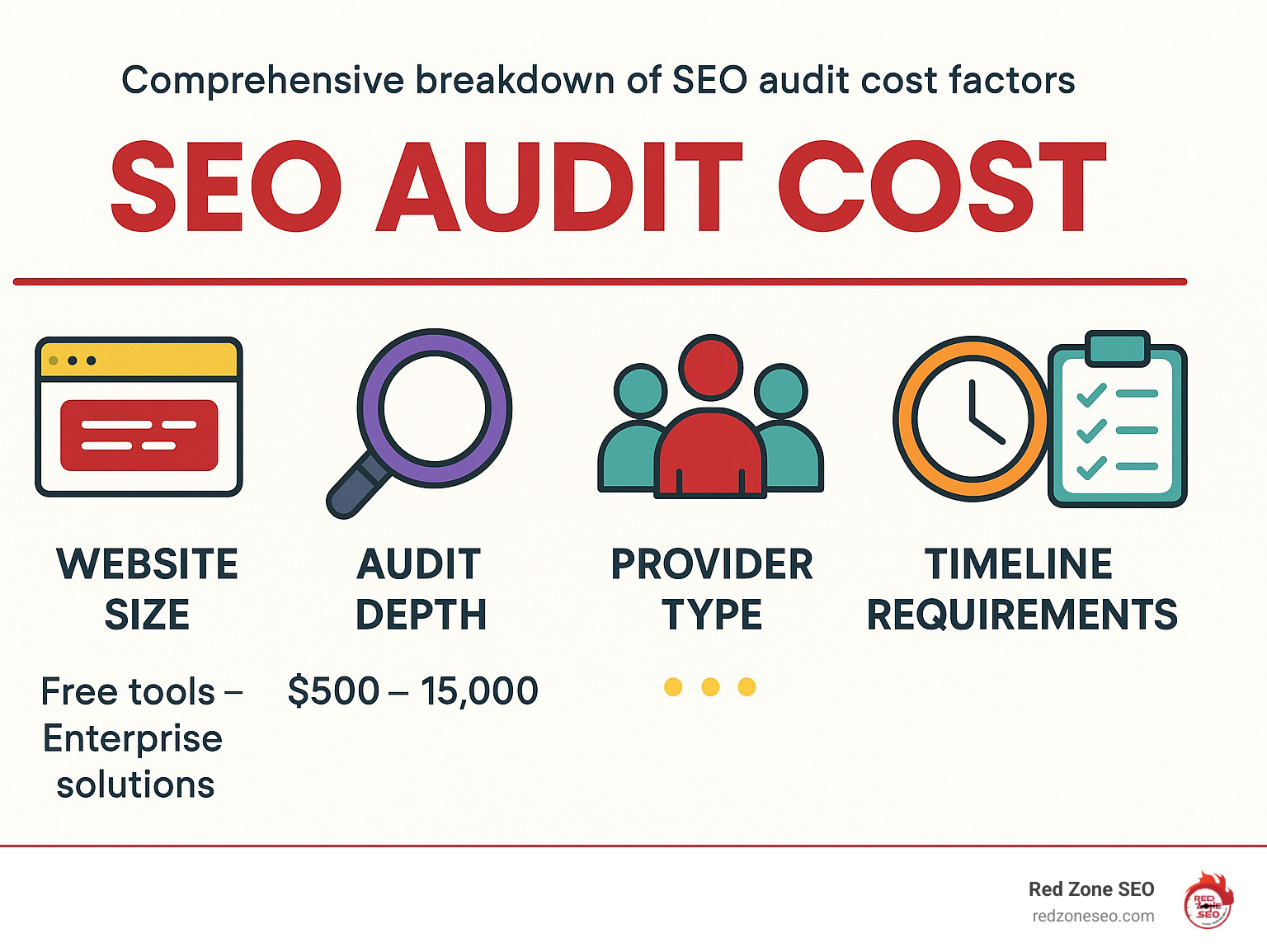
Think of an SEO audit as a comprehensive health check for your website. Just like you wouldn't skip your annual physical, your website needs regular check-ups to stay competitive in search results.
An SEO audit is like having a detective investigate every corner of your website to uncover what's working, what's broken, and what golden opportunities you're missing. It's a thorough website diagnosis that examines your site's ability to rank well in search engines.
During the audit process, we crawl your website data to analyze hundreds of ranking factors. Everything from technical issues like page speed and mobile-friendliness gets examined, along with content quality and backlink profiles. We benchmark your performance against search engine guidelines and see how you stack up against competitors.
A professional audit typically digs into 40-70 pages of your site, examining title tags, meta descriptions, site architecture, and user experience. The goal? Identify the specific roadblocks preventing higher rankings and spot the opportunities that could drive more qualified traffic to your business.
Here's a reality check: with Google's dominance in search (over 90% of all searches happen there), your website's search visibility directly impacts your revenue. The average person conducts 3-4 searches daily, and if they can't find you, they're finding your competitors instead.
Search engines update their algorithms constantly - Google makes thousands of changes each year. What worked six months ago might be hurting you today. That's why understanding SEO audit cost becomes crucial when planning your marketing budget.
The numbers don't lie: 91% of businesses report strong ROI from improvements made after their audit. More than 40% of online revenue comes from organic search traffic. Companies that conduct regular audits consistently outperform those flying blind.
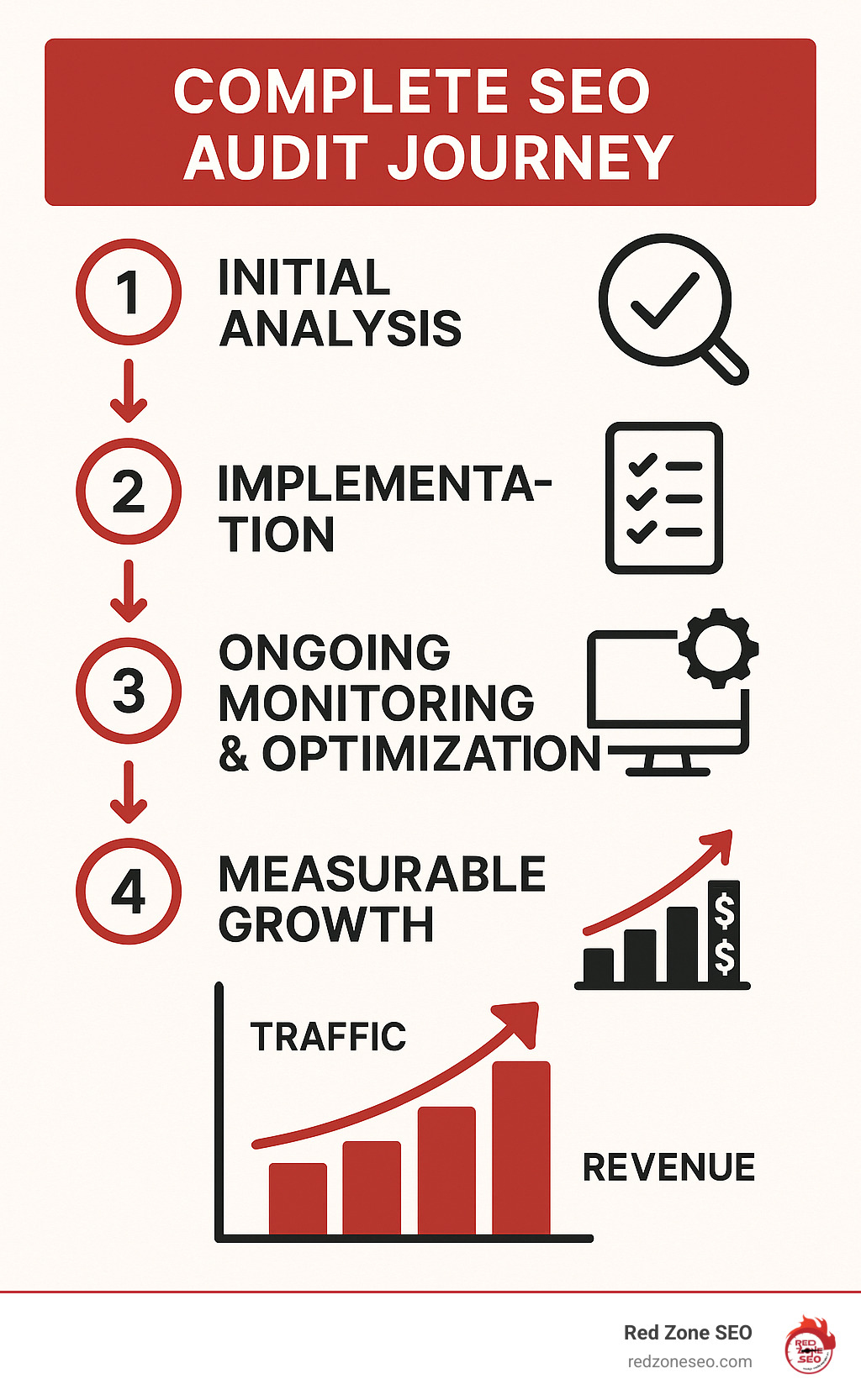
Regular audits catch technical issues before they tank your rankings, help you stay ahead of algorithm updates, reveal new keyword opportunities, and maximize your marketing ROI. For most businesses, annual audits work well, though busy e-commerce sites benefit from quarterly check-ups. Learn more about how our audit process works.
Not all audits are created equal, and understanding the different types helps you invest wisely. Technical audits examine your website's foundation - crawlability, site speed, mobile optimization, and SSL certificates. Think of it as checking your website's plumbing and electrical systems.
Content audits dive into whether your content actually helps users and search engines understand what you offer. We review content quality, keyword targeting, and user intent alignment while identifying gaps in your strategy.
Backlink audits analyze your link profile to spot toxic links that could hurt rankings and find opportunities to build high-quality connections. Quality trumps quantity every time here.
Local SEO audits are essential for businesses serving local markets, reviewing Google My Business optimization, local citations, and location-specific content. Competitive audits compare your performance against top competitors to identify gaps you might be missing.
Social audits evaluate how social signals impact your SEO and find ways to strengthen brand authority through social platforms.
The audit landscape includes various tools from Google Search Console (free but basic) to more comprehensive platforms like site crawlers and professional SEO software. However, the real value comes from human insight interpreting the data and creating actionable strategies.
Let's talk numbers. When business owners ask us about SEO audit cost, they're often surprised by how much the prices vary. One day you'll see a "free audit" offer in your inbox, and the next you're quoted $15,000 for what seems like the same service.
The truth is, the SEO audit market has become quite diverse. You've got everything from automated tools spitting out generic reports to seasoned experts spending weeks analyzing every corner of your website. Understanding what you're actually getting for your money makes all the difference.
Think of it like buying a car. You can get a basic model that gets you from point A to point B, or you can invest in something with all the bells and whistles. Both serve a purpose, but they're built for very different needs and budgets.
Here's the reality of what SEO audit cost looks like in today's market, broken down by what you actually get for your investment:
The Free-to-Cheap Range ($0-$500)
These are mostly automated scans that run your website through various tools and spit out a report. You'll get a list of issues, but don't expect much context or guidance on what to tackle first. It's like getting a printout from a medical scanner without a doctor to explain what it means.
Most of these reports look impressive with lots of charts and graphs, but they often leave you more confused than when you started. They're useful for spotting obvious problems, but won't give you the strategic insights needed to actually improve your rankings.
The Professional Lite Level ($500-$2,500)
Now we're talking about real human analysis. An SEO professional actually looks at your website, interprets the data, and provides recommendations you can understand. These audits work well for smaller websites that need clear direction without breaking the bank.
You'll typically get coverage of your most important pages, basic competitive analysis, and prioritized recommendations. The downside? You might still need to figure out the implementation details yourself.
The Comprehensive Sweet Spot ($2,500-$7,500)
This is where most growing businesses find the best value. You get thorough analysis that goes beyond just finding problems - you get a strategic roadmap for improvement. These audits typically include competitive benchmarking, detailed technical analysis, and clear action plans.
The audit process usually takes 30-45 days, and you'll often get a strategy call to walk through the findings. It's like having an experienced guide who not only shows you the mountain but also maps out the best route to the top.
The Enterprise Investment ($10,000+)
Reserved for large, complex websites with serious organic traffic and revenue at stake. These involve multiple team members, stakeholder interviews, and analysis that can take months to complete. Unless you're dealing with thousands of pages or complex technical challenges, this level is probably overkill.
| Audit Tier | Cost Range | Best For | What You Actually Get |
|---|---|---|---|
| Automated | $0-$500 | Quick health checks | Tool reports, issue lists |
| Lite Professional | $500-$2,500 | Small to medium sites | Human analysis, basic strategy |
| Comprehensive | $2,500-$7,500 | Growing businesses | Full strategy, competitive analysis |
| Enterprise | $10,000+ | Large, complex sites | Deep technical analysis, team collaboration |
Your website size directly impacts SEO audit cost because, frankly, bigger sites take more time to analyze properly. It's not just about counting pages - it's about understanding how all those pages work together.
Small Business Sites (5-20 pages): $500-$1,500
These straightforward websites are relatively quick to audit. The focus usually centers on local SEO optimization, basic technical fixes, and making sure your content clearly communicates what you do. Most issues can be spotted and prioritized within a few days.
Growing Business Sites (20-100 pages): $1,500-$5,000
Once you hit this range, things get more interesting. You've probably got multiple service pages, a blog, maybe some resource sections. The audit needs to examine how everything connects and whether your site architecture actually helps users and search engines understand your business.
E-commerce Sites (100-1,000 pages): $3,000-$10,000
Product catalogs bring their own unique challenges. Every product page needs to be crawlable and optimized, your filtering system needs to work properly, and your shopping cart functionality can't interfere with SEO. These audits often uncover technical issues that significantly impact how many of your products actually show up in search results.
Enterprise Sites (1,000+ pages): $10,000-$30,000+
Large sites often have multiple domains, international targeting, complex content management systems, and technical implementations that require serious expertise. These audits can take 45+ days and often involve coordinating with your internal teams to understand business goals and technical constraints.
The key thing to remember? A good audit should feel proportional to your business size and goals. You shouldn't pay enterprise prices for a small business site, but you also shouldn't expect enterprise-level insights from a basic audit.
Understanding what drives SEO audit cost helps you make smarter decisions about your investment. Think of it like buying a car - the price depends on features, quality, and what you actually need.
Several factors work together to determine your final cost, and knowing these upfront prevents surprises later.
Website size and complexity are the biggest cost drivers. A simple 10-page business website takes a fraction of the time to audit compared to a custom e-commerce site with thousands of products. Complex content management systems, custom functionality, and technical integrations all require more expertise and time to analyze properly.
Industry competition plays a surprising role in SEO audit cost. If you're in a highly competitive field like legal services, healthcare, or finance, the audit needs to dig deeper. The competition is fierce, and the analysis must be more thorough to find opportunities that actually work.
Timeline requirements can dramatically impact price. Most professional audits take 30-45 days, but if you need results in one week, expect to pay 50-100% more. Rush jobs require providers to shuffle their schedules and often work overtime.
Geographic scope adds complexity for businesses with multiple locations or international reach. Each market has different search behaviors and local SEO factors that need separate analysis.
The provider's expertise level directly affects cost. Experienced agencies with proven track records charge more than freelancers or newer companies. However, seasoned professionals often spot issues that others miss, making the extra cost worthwhile.
Implementation support can double your total investment but ensures recommendations actually get executed. Some audits just hand you a report and wish you luck. Others include guidance on fixing the issues they find.
Latest research shows that audit effectiveness varies significantly based on provider expertise, making the choice of provider crucial for getting real value.
Different providers use different pricing approaches, and understanding these helps you choose what works best for your situation.
One-time project fees are most common for audits. You pay a flat rate for complete analysis and reporting. This approach works well when you have a specific need and clear scope. It's predictable and straightforward.
Hourly rates typically range from $75-$250 per hour depending on expertise level. This model works for smaller projects or when the scope isn't entirely clear upfront. However, costs can spiral if the project takes longer than expected.
Package deals combine audits with other services like implementation or ongoing SEO work. These often provide better overall value but require a larger upfront investment. The benefit is getting everything done by one team who understands your site.
Monthly retainers include regular audits as part of ongoing SEO services. This spreads costs over time and ensures continuous monitoring rather than one-time fixes. It's like having a personal trainer versus a single workout session.
Value-based pricing ties cost to expected results or your site's revenue potential. It's less common for audits but sometimes used for comprehensive projects where the provider is confident about delivering specific outcomes.
For pricing custom to your specific needs, check out our pricing structure.
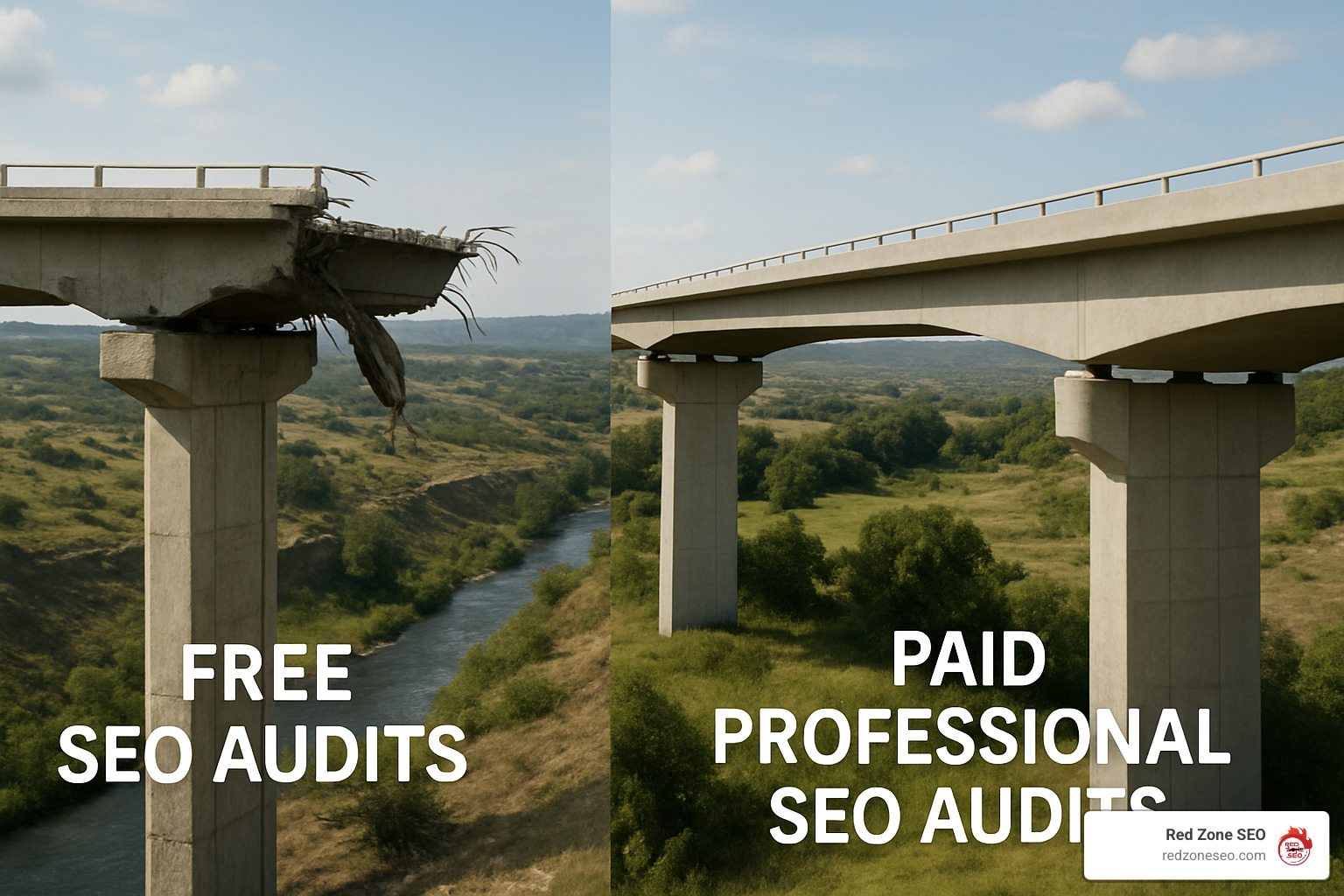
The choice between free and paid audits is like deciding between a basic health screening and a comprehensive medical examination. Both have their place, but they serve different purposes.
Free audit tools give you immediate results and work well for spotting obvious technical issues. They're perfect for regular monitoring and carry no financial risk. You can run them as often as you want without worrying about cost.
But free tools have significant limitations. They lack depth and context, miss nuanced issues, and provide no strategic recommendations. They're essentially one-size-fits-all solutions that don't understand your specific business goals or competitive landscape.
Paid professional audits bring human expertise and strategic thinking to the table. You get customized recommendations designed specifically for your business, competitive analysis that shows you what's working for others in your space, and clear prioritization so you know what to tackle first.
The downside is obvious - higher upfront cost and longer turnaround times. You also need to vet providers carefully since quality varies significantly in this space.
The ROI calculation is straightforward: if audit recommendations help you rank higher for terms that drive qualified traffic, the increased revenue typically far exceeds the audit cost within months.
Consider this real-world example: if an audit helps you improve rankings for just one keyword that drives 10 additional customers per month, and each customer is worth $500, that's $5,000 in monthly revenue. That's often 2-10 times what you paid for the audit.
With 91% of businesses reporting satisfaction with audit-driven improvements, the investment usually pays for itself quickly. The key is choosing the right level of audit for your needs and budget.
These are the questions we hear most often from business owners trying to make smart decisions about their SEO audit cost and what to expect from the process.
Here's the honest answer: most professional SEO audits take 30-45 days to complete properly. I know that might seem long, but there's good reason for this timeline.
A thorough audit isn't just running your site through automated tools. It involves manually reviewing your content, analyzing your competitors, understanding your industry, and developing strategic recommendations that actually make sense for your business.
Site size makes a big difference in timing though. A small business website with 10-15 pages can often be audited in about a week. Medium-sized sites with 50-100 pages typically need 2-3 weeks. But if you have a large e-commerce site with hundreds of products? That's going to take the full 45 days or more.
Need it faster? Expedited audits can be done in as little as one week, but expect to pay 50-100% more. The rush fee reflects the additional resources needed to prioritize your project. Just keep in mind that faster doesn't always mean better - some insights only come from taking the time to dig deep.
This depends on how much your website changes and how competitive your industry is.
For most small to medium businesses, an annual audit works perfectly. Your website probably doesn't change dramatically month to month, and yearly audits catch major issues while keeping you current with Google's algorithm updates.
E-commerce sites and highly competitive industries should consider quarterly audits. If you're constantly adding new products, running promotions, or fighting for rankings in a crowded market, more frequent check-ups help you stay ahead.
Always audit after major changes - this one's non-negotiable. Website redesigns, platform migrations, or significant content overhauls can accidentally create SEO problems. Better to catch these early than wonder why your traffic suddenly dropped.
Algorithm updates are another trigger. When Google makes major changes that impact your rankings or traffic, an audit helps you understand what happened and how to respond.
You've got several options, and the right choice depends on your budget, timeline, and how much strategic guidance you need.
SEO agencies are the most comprehensive choice, and about 55% of businesses go this route. You'll pay $2,500-$15,000+ depending on your site's complexity, but you get a full team with different specialties working on your project. Plus, most agencies can help implement their recommendations, not just hand you a report.
Independent SEO consultants offer a middle ground that 38% of businesses prefer. You get personalized attention from an experienced professional for $1,000-$7,500. The challenge is finding someone with the right expertise for your specific industry and needs.
Freelancers are the budget-friendly option at $500-$2,500, but quality varies dramatically. Some are excellent, others are just starting out. If you go this route, definitely check references and ask for examples of previous audit work.
In-house teams can handle audits if you have SEO expertise internally. You'll need tools like SEMrush or Ahrefs (around $100-$500 monthly), plus significant time investment. This works if you have the skills and bandwidth, but many businesses underestimate how time-consuming thorough audits can be.
When choosing any provider, look for proven results with case studies, clear communication about their process, and experience in your industry. Avoid anyone who promises overnight results or won't explain their methodology. Good auditors are happy to walk you through exactly what they'll analyze and why it matters for your business.
The bottom line? SEO audit cost should align with the value you expect to receive. A cheap audit that misses important issues isn't really a bargain, while an expensive one that transforms your online visibility can pay for itself many times over.
Making smart decisions about SEO audit cost comes down to understanding what you're really buying. Yes, prices swing wildly from free automated reports to $30,000+ enterprise deep-dives. But here's what matters: 91% of businesses see positive returns from the improvements they make after getting their audit results.
Think of it this way - you wouldn't buy a car without knowing what's under the hood. Your website deserves the same attention, especially when over 90% of your potential customers start their journey with a Google search.
The sweet spot for most businesses falls between $2,500 and $7,500 for a comprehensive audit. That might sound like a lot upfront, but consider this: if the audit helps you rank better for just one important keyword that brings in 10 extra customers monthly, you've likely paid for the audit several times over.
The real cost isn't the audit itself - it's missing the opportunities hiding in your website right now. Maybe it's technical issues scaring away search engines, or content that almost ranks on page one but needs a small tweak to get there.
At Red Zone SEO, we've seen small businesses transform their online presence with targeted improvements from a thorough audit. We've also worked with growing companies who finded they were sitting on goldmines of untapped search traffic.
Your website is either helping your business grow or holding it back. There's really no middle ground in today's competitive online landscape. The businesses winning online aren't necessarily the biggest or oldest - they're the ones who understand what search engines want and give it to them.
Ready to find what's possible for your website? Every day you wait is another day your competitors might be pulling ahead. Learn more about our comprehensive SEO audit process and take that crucial first step toward better search visibility.
The question isn't whether you need an audit. The question is whether you're ready to open up your website's full potential and start attracting the customers who are already searching for what you offer.
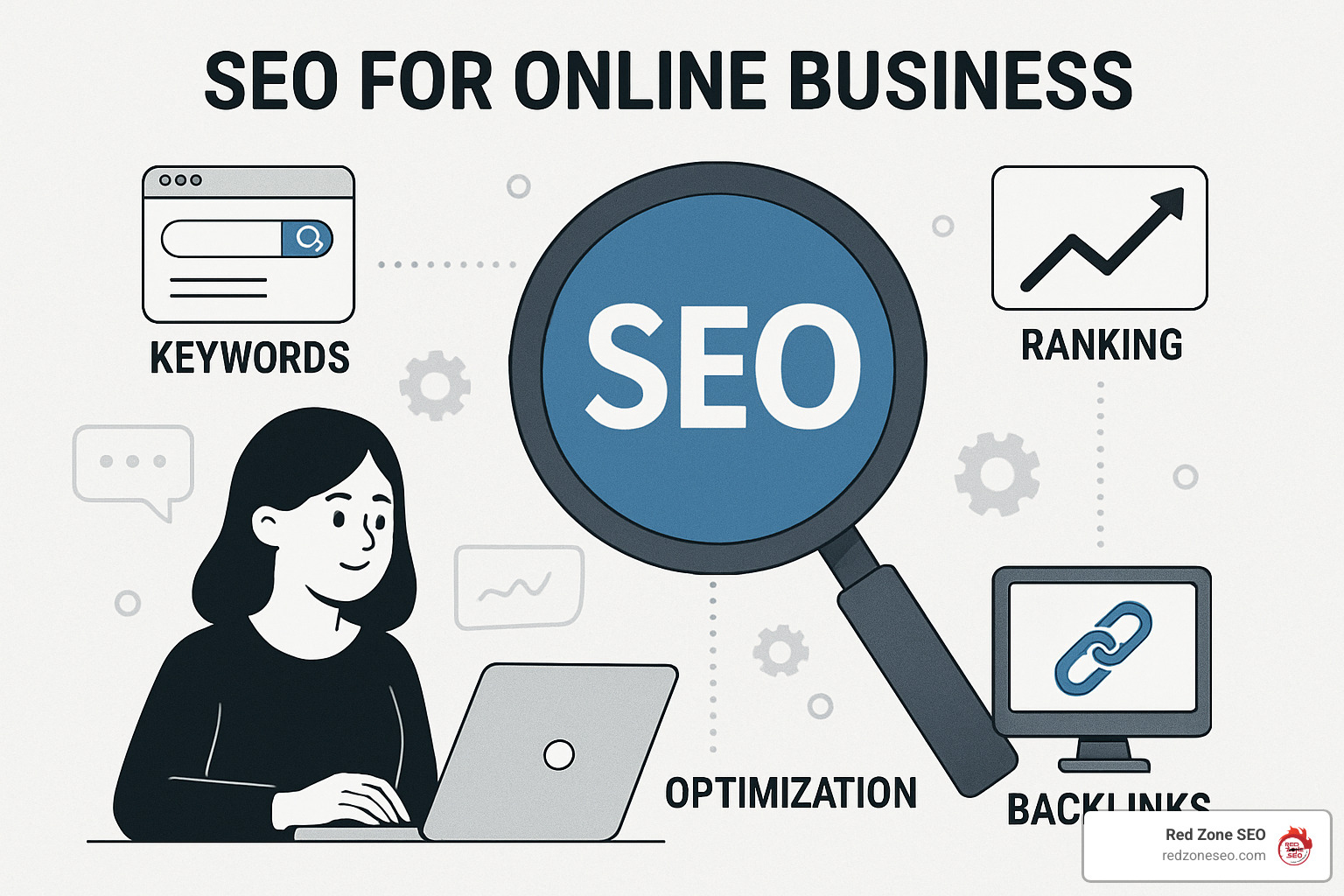
SEO for online business is the process of optimizing your website to rank higher in search results, attract more qualified visitors, and convert them into paying customers. It's not just about getting traffic - it's about getting the right traffic that actually buys from you.
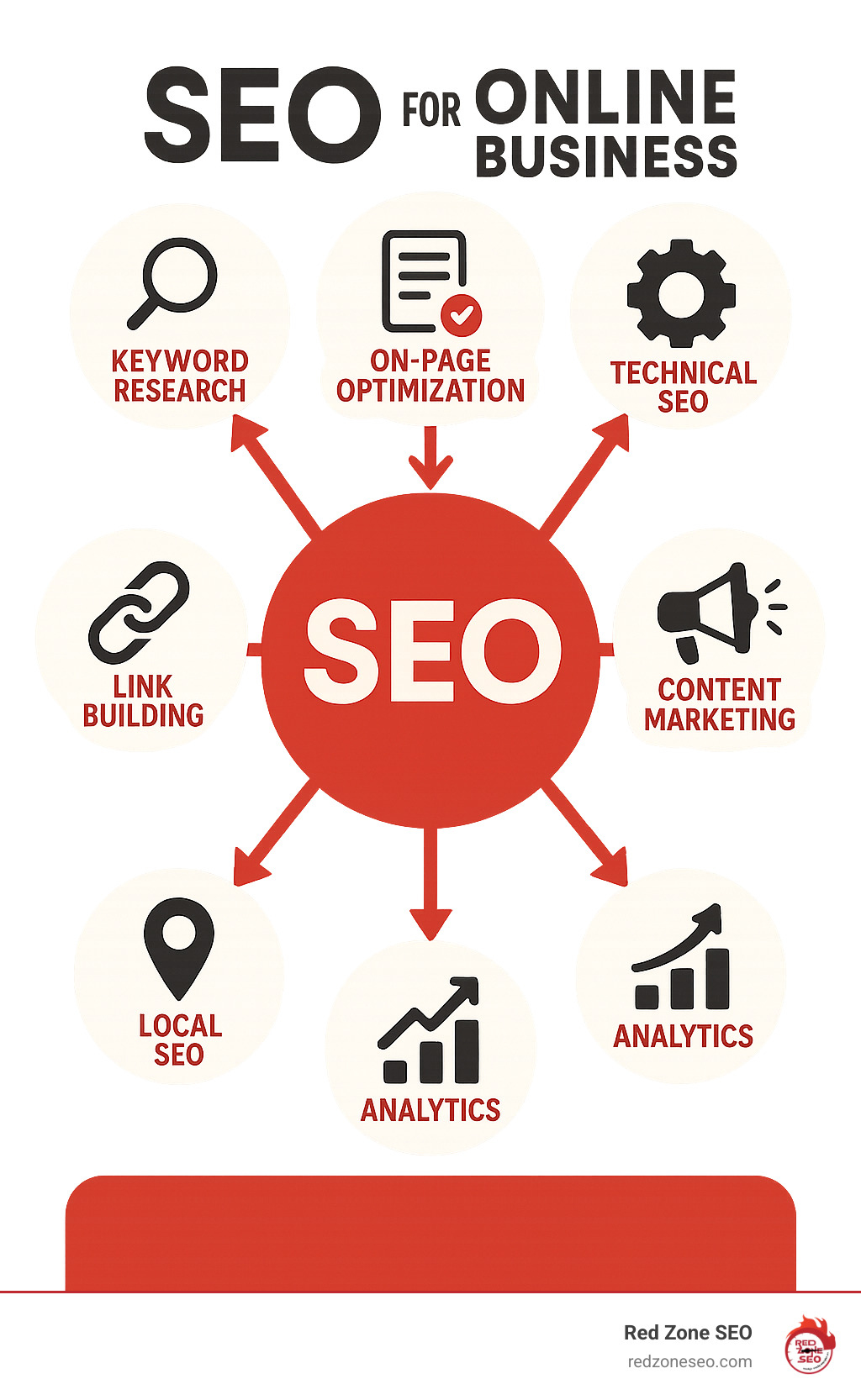
Quick Answer: Essential SEO for Online Business
1. Keyword Research - Find what your customers actually search for
2. On-Page Optimization - Optimize product pages, titles, and content
3. Technical SEO - Ensure your site loads fast and works on mobile
4. Content Marketing - Create helpful guides and resources
5. Local SEO - Optimize for "near me" searches if you serve local customers
6. Link Building - Earn quality backlinks to boost authority
7. Analytics - Track rankings, traffic, and conversions
53% of all website traffic comes from organic search, while only 0.63% of people click on page two of Google results. That means if you're not on page one, you're basically invisible to potential customers.
The businesses winning online today aren't necessarily the ones with the biggest budgets. They're the ones who understand how their customers search and what Google rewards. They create genuinely helpful content, optimize their websites properly, and build trust with both search engines and real people.
By the end of this guide, you'll have a complete roadmap for implementing SEO for online business that actually works. We'll walk you through each step with practical examples, proven tactics, and quick wins you can implement immediately.
This isn't theory - it's a step-by-step playbook based on what we've seen work for hundreds of online businesses across Austin, Florida, Henderson, Las Vegas, and Nevada.
Think about the last time you needed to buy something online. You probably started with a Google search, right? Your customers do exactly the same thing. They're searching for solutions at different stages of their customer journey - some are just finding they have a problem, others are comparing options, and many are ready to buy right now.
Here's where SEO for online business becomes your secret weapon. When your website shows up exactly when people are searching for what you sell, you're meeting customers at the perfect moment.
The numbers tell an incredible story about visibility and revenue. The first result on Google gets 27.6% of all clicks, while the second gets 15.8%. When potential customers see your business appearing in top search results, it automatically makes you look more credible and established.
Nielsen research shows that word-of-mouth recommendations are among the most trusted forms of marketing. Ranking high in Google creates a similar effect - it's like getting a recommendation from the world's most trusted source.
The most obvious benefit of SEO for online business is free traffic. Once you start ranking well, you can receive thousands of qualified visitors without paying for each click. Unlike paid ads where you're constantly feeding the meter, organic traffic keeps flowing even when you're sleeping.
SEO creates compounding returns over time. Think of it like compound interest for your business. That blog post you write today could still be bringing in customers five years from now.
There's also the brand authority factor. When customers consistently see your brand appearing in search results for industry-related topics, you become the obvious expert in their minds. This authority translates into higher conversion rates and the ability to charge premium prices.
The biggest difference between SEO and paid advertising comes down to sustainability. With pay-per-click advertising, you're essentially renting traffic. With SEO, you're building a long-term asset that continues generating traffic without ongoing costs.
| Aspect | SEO | PPC |
|---|---|---|
| Cost per click | $0 after initial investment | $1-50+ per click |
| Traffic duration | Continues indefinitely | Stops when budget ends |
| Trust level | Higher (organic results) | Lower (marked as ads) |
| Click-through rate | Higher for top results | Lower due to ad blindness |
| Long-term ROI | Excellent | Requires ongoing investment |
Smart online businesses use PPC as a sprint and SEO as a marathon. The most successful companies use both strategies - relying on SEO as their primary traffic source while using paid ads for specific campaigns.
Getting SEO for online business right starts with building something solid from the ground up. Think of your SEO foundation as the invisible infrastructure that supports everything else you'll do.
Modern SEO revolves around Google's E-E-A-T framework - Experience, Expertise, Authoritativeness, and Trustworthiness. For your online business, this means showcasing your credentials, sharing real customer experiences, and demonstrating that you actually understand your industry.
The technical side has some non-negotiables. HTTPS security isn't optional - Google explicitly favors secure sites. Mobile-first design is critical because Google primarily uses your mobile site for ranking decisions. And Core Web Vitals - essentially how fast and smooth your site feels to users - directly impact your search rankings.
Most people approach keyword research backwards. They focus on search volume numbers and ignore what really matters - search intent. Understanding what your customers actually want when they type specific queries is far more valuable than chasing high-volume keywords that don't convert.
Long-tail keywords are your secret weapon. A search for "best organic dog food for puppies" tells you exactly what someone wants, while "dog food" could mean anything. The person searching for the specific phrase is much closer to making a purchase.
Google Autocomplete is one of the most underused research tools available. Start typing your main product or service into Google's search box, and watch what suggestions appear. These are based on what real people actually search for every day.
Look for keywords with reasonable search volume but lower competition. Consider conducting an SEO Audit to uncover keyword opportunities you're already sitting on.
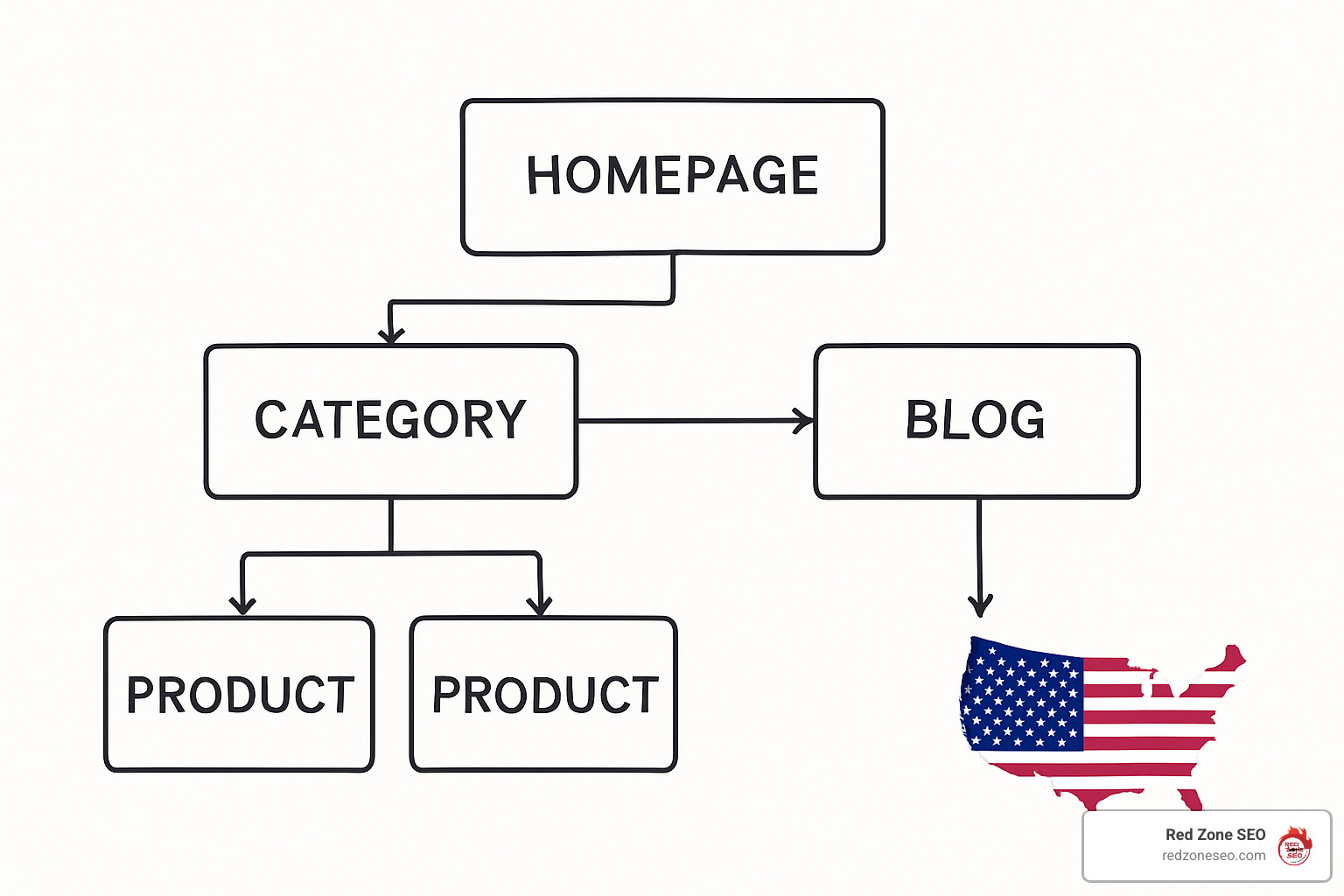
Your website's structure should make sense to both humans and search engines. Follow a clear hierarchy: Homepage leads to Categories, which lead to Subcategories, which lead to Products. Keep any page within three clicks of your homepage.
Breadcrumb navigation serves double duty - it helps users understand where they are while giving you additional keyword opportunities. Something like "Home > Electronics > Smartphones > iPhone Cases" creates a clear path that search engines love.
URL best practices are simpler than most people make them. Keep URLs short, descriptive, and keyword-rich. Use hyphens to separate words and stay consistent across your entire site.
Internal linking is how you distribute authority throughout your site. When you link from high-authority pages to important product pages using descriptive anchor text, you're telling search engines which pages matter most.
Crawlability ensures search engines can actually find and index your content. Create an XML sitemap and submit it through Google Search Console - think of it as giving Google a roadmap to all your important pages.
Your robots.txt file acts like a bouncer, directing search engine crawlers toward your best content while keeping them away from pages that don't need to be indexed.
Schema markup can display prices, reviews, and availability directly in search results, making your listings more attractive than competitors who skip this step.
The URL Inspection Tool in Search Console becomes your best friend for troubleshooting. Use it to see exactly how Google views specific pages and identify crawling issues.
Think of your product and category pages as your digital storefront windows. They need to work double duty - ranking well in search results and convincing visitors to buy.
Your product pages should target specific keywords while telling a complete story about each item. Don't just list features - explain how those features solve real problems. Include detailed descriptions, specifications, benefits, and high-quality images with descriptive alt text.
Category pages need more than just a grid of products. Add 200-500 words explaining what makes this category special, how to choose the right products, and why customers should buy from you.
Your blog hub serves as the content heart of your SEO for online business strategy. Create guides, tutorials, and helpful resources that showcase your expertise while naturally connecting to your products or services.
Unique copy isn't just nice to have - it's essential. Those generic manufacturer descriptions that appear on dozens of other websites are doing you no favors. Search engines prefer original content, and customers want to know why your version of the product is worth buying.
Focus on comprehensive, helpful content that answers every question a potential customer might have. What problem does this solve? How do you use it? What makes it better than alternatives?
Semantic keywords are your secret weapon for sounding natural while covering all your bases. If you're writing about "running shoes," naturally include related terms like "athletic footwear," "jogging sneakers," and "sports shoes."
Your CTAs should feel like helpful guidance, not pushy sales tactics. Use action-oriented language like "Shop Now," "Get Free Shipping," or "Start Your Free Trial," but place them where they make sense in the customer's journey.
The best content marketing doesn't feel like marketing at all. Create guides and tutorials that genuinely help people, even if they never buy from you. This approach builds trust and positions you as the expert in your field.
User-generated content is marketing gold because it provides fresh content while building social proof. Customer reviews, testimonials, and photos show real people using and loving your products.
Building topical authority means becoming the go-to resource for everything related to your industry. Instead of writing one article about email marketing, create a comprehensive content cluster covering email design, automation, deliverability, and analytics.
For more detailed strategies, check out our guide on Content Marketing for Small Businesses to develop a content strategy that supports your SEO goals.
Backlinks are still one of the strongest ranking factors, but quality trumps quantity every time. One high-authority link from a relevant website can be worth more than dozens of low-quality directory links.
Effective outreach is about building genuine relationships. Find websites that would actually benefit from linking to your content. When you reach out, explain specifically why your content would be valuable to their audience.
Internal linking is the easiest link building you'll ever do because you control both ends of the link. Connect your blog posts to relevant product pages and help visitors find more of your content using descriptive anchor text.
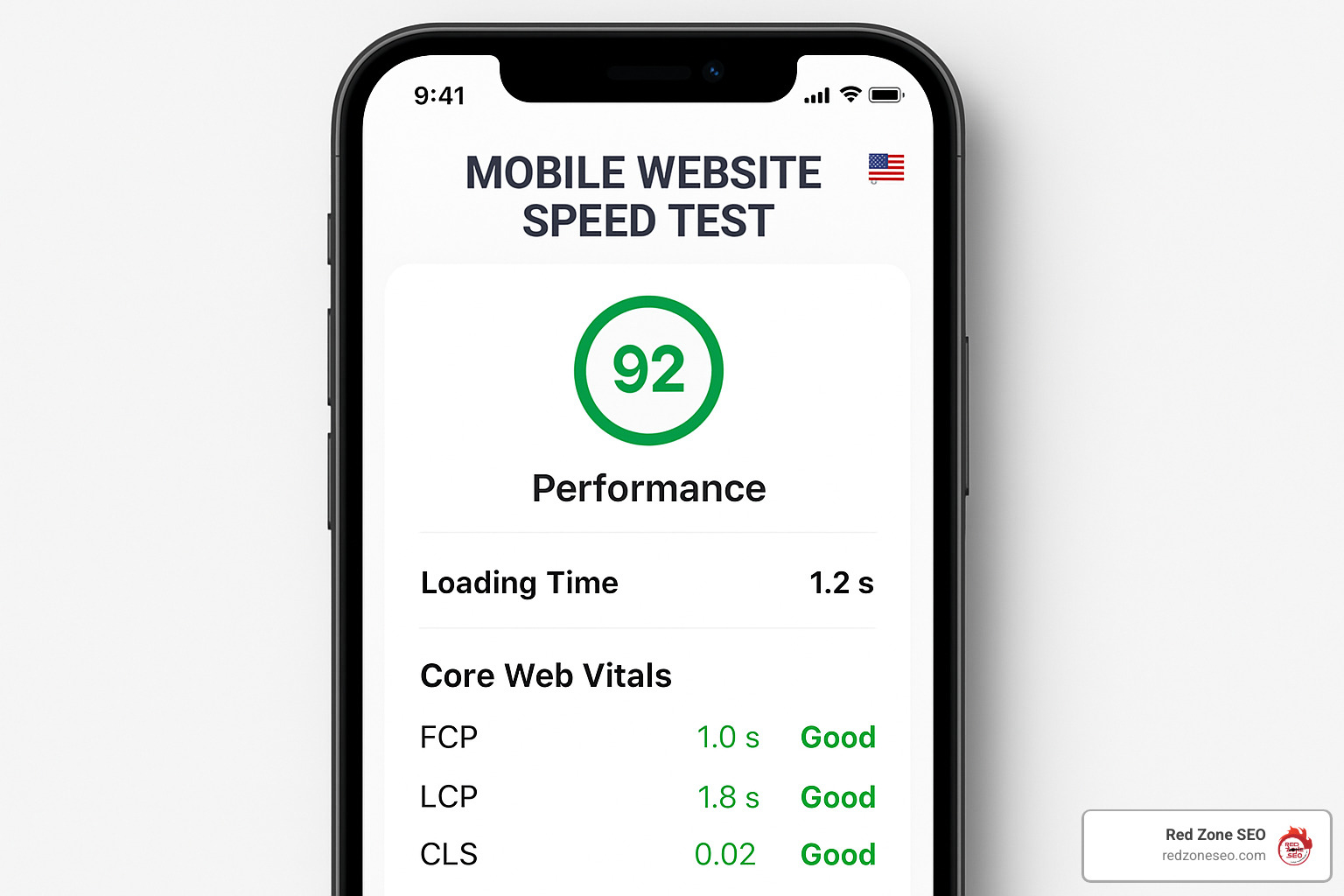
When it comes to SEO for online business, technical performance can make or break your rankings. Site speed is absolutely critical. Google's Core Web Vitals directly impact how your customers experience your website.
PageSpeed Insights will tell you exactly what's slowing down your site and how to fix it. Content Delivery Networks (CDNs) deliver your content from servers closer to each visitor, like having multiple store locations instead of making everyone drive across the country.
Image compression is one of the easiest wins you can get. You can reduce file sizes by 70% or more without anyone noticing the difference. WebP format is particularly effective.
Structured data helps Google understand what your content is actually about. When you implement schema markup for your products, reviews, and FAQs, you're giving Google the context it needs to show your content in rich snippets.
Local SEO matters even if you're primarily digital. If you serve customers in specific cities, states, or regions, local optimization can be a goldmine of untapped traffic.
Your Google Business Profile is free advertising that most businesses completely ignore. Keep your information accurate, upload photos regularly, and post updates about new products or services.
The explosion of "near me" searches has changed everything. 72% of people who do local searches visit a store within five miles of their location within 24 hours.
Even without a physical storefront, you can still capture local intent through local delivery, pickup options, or simply targeting customers in your area.
Map pack optimization requires consistency above all else. Your business name, address, and phone number (NAP) need to be identical across every directory, website, and platform where you're listed.
Customer reviews are the lifeblood of local SEO. Encourage satisfied customers to leave reviews, and always respond professionally - even to negative ones.
Duplicate content is like having multiple stores selling identical products with identical descriptions. Google gets confused about which version to show in search results. Use canonical tags to tell Google which version of similar pages you want to rank.
Thin pages with just a few sentences and no real value won't rank. Google wants to show users comprehensive, helpful content. Each page should answer questions, solve problems, or provide substantial value.
Slow hosting can undermine everything else you do right. Think of hosting like the foundation of your house - if it's weak, everything else will collapse under pressure.
JavaScript-heavy sites can create invisible barriers between your content and search engines. It's safer to ensure your important content loads without requiring complex scripts.

Measuring SEO for online business success means tracking numbers that actually matter to your bottom line, not just vanity metrics.
Your Key Performance Indicators (KPIs) should tell a story about business growth. Start with organic sessions - the number of people finding your site through search engines. But dig deeper into which keywords bring your most valuable visitors.
Conversion tracking is where the magic happens. Every lead form submission, every purchase, every phone call from your website - these metrics pay your bills. Set up proper tracking so you can see exactly which SEO efforts generate real revenue.
Bounce rate tells you if people find what they're looking for. If someone searches for something specific and immediately leaves your site, either your content doesn't match their intent or it's not engaging enough.
Google Analytics helps you understand how people interact with your site. Create custom dashboards that show your most important metrics at a glance. Separate your organic traffic from social media and paid advertising.
Google Search Console shows you what's happening before people even click to your site. You'll see which searches show your pages, how often people click through, and your average position for different keywords.
Third-party tools like SEMrush or Ahrefs give you the bigger picture. They show you how you stack up against competitors, reveal new keyword opportunities, and track your backlink profile.
Set up automated alerts for major changes in your traffic or rankings. Quick response times can save you significant traffic and revenue.
SEO typically takes 3-6 months to show significant results. Good SEO is like growing a garden - it takes time, but the results are worth the wait.
Seasonality plays a huge role in many businesses. Track your performance year-over-year rather than getting discouraged by monthly dips that are completely normal for your industry.
Algorithm updates can cause temporary ranking fluctuations, but don't panic. Google's updates generally reward sites that provide genuine value to users.
The most successful online businesses treat SEO as an ongoing process. Continuous testing means trying different approaches to see what works best for your specific audience.
For detailed guidance on tracking your SEO performance, check out more info about our analytics services.
Most businesses start seeing meaningful results within 3-6 months, but the real magic happens over 6-12 months of consistent effort. Think of SEO like planting a garden - you can't plant seeds today and expect tomatoes tomorrow, but once those plants start growing, they'll keep producing fruit for years.
New websites face a steeper climb because they're starting from zero authority. If you already have an established website with some traffic, you'll likely see improvements faster.
Some changes show immediate results though. Fix a slow-loading page, and you might see improvements within days. Add proper title tags, and rankings can shift within weeks. But ranking on page one for competitive keywords takes patience and persistence.
Technical SEO is like the foundation of your house. It's all the behind-the-scenes stuff that makes sure search engines can find and understand your website. This includes making your site load fast, work properly on mobile phones, and have clean code.
On-page SEO is like arranging and decorating each room. It's about optimizing individual pages so both visitors and search engines understand what each page offers. This means writing compelling titles, creating helpful content, and organizing everything logically.
You need both to succeed. Start with technical SEO first - it creates the foundation everything else builds on. Once that's solid, focus on optimizing your individual pages for the keywords that matter most.
You absolutely can do effective SEO on a startup budget. Start with free tools that actually work: Google Analytics, Google Search Console, and Google Keyword Planner give you 80% of what you need without spending a dime.
Focus on being the big fish in a small pond. Instead of trying to rank for "marketing software," target "email marketing software for yoga studios." These longer, more specific searches are easier to rank for.
Create one piece of truly helpful content each week rather than churning out daily posts that don't add value. A single comprehensive guide can attract traffic and links for years.
Look for free link opportunities in your industry. Local business directories, industry associations, and resource pages often link to helpful businesses without charging fees.
Learn the basics yourself before hiring help. Understanding how SEO works helps you make smarter decisions about where to invest your limited budget.
SEO for online business isn't just about climbing search rankings - it's about creating a reliable system that brings the right customers to your door, day after day.
The strategies we've covered form the backbone of every successful online business: understand your customers, optimize your website, and create genuinely helpful content.
Here's what makes SEO so powerful - it's the gift that keeps on giving. That blog post you write today could still be bringing in customers five years from now. It's like compound interest for your marketing efforts.
Start with what matters most: keyword research to find how your customers actually search, technical optimization to make sure search engines can find your site, and content creation that answers real questions. These three pillars will give you the biggest bang for your buck.
Don't expect overnight miracles. SEO is more like tending a garden than flipping a switch. The businesses that understand this patience are the ones that dominate their markets.
At Red Zone SEO, we've guided businesses across Austin, Florida, Henderson, Las Vegas, and Nevada through this exact process. We've seen how the right SEO strategy can transform a struggling website into a customer-generating machine.
The best time to start your SEO journey was six months ago. The second-best time is right now. Every day you wait is another day your competitors are building their advantage.
Ready to turn your website into your best salesperson? Find more info about our process and see how we can help you implement these proven strategies. Your future customers are searching for you right now - let's make sure they can find you.
Keyword research is the process of finding and analyzing search terms that people enter into search engines to find what topics to create content around and which keywords to target for better rankings.
What keyword research involves:
- Finding relevant search terms your audience actually uses
- Analyzing search volume and competition levels
- Understanding search intent behind each query
- Identifying opportunities competitors are missing
- Mapping keywords to your content strategy
Most keyword research feels like guesswork. You throw some words into a tool, hope for the best, and wonder why your content isn't ranking. But here's the thing - 70% of successful SEO campaigns start with solid keyword research, not hunches.
The businesses winning online today aren't just creating more content. They're creating smarter content based on what people actually search for. They know that "best coffee maker" gets 33,100 monthly searches with high competition, while "best mini coffee maker" gets 1,300 searches with much lower competition - making it easier to rank.
Long-tail keywords often convert better than broad terms because they capture specific buyer intent. When someone searches "affordable running shoes for flat feet," they're much closer to buying than someone just searching "shoes."
The challenge? Picking the right keyword research tools from the hundreds available. Some give you search volume ranges instead of exact numbers. Others charge $139+ per month for basic features you might not need.
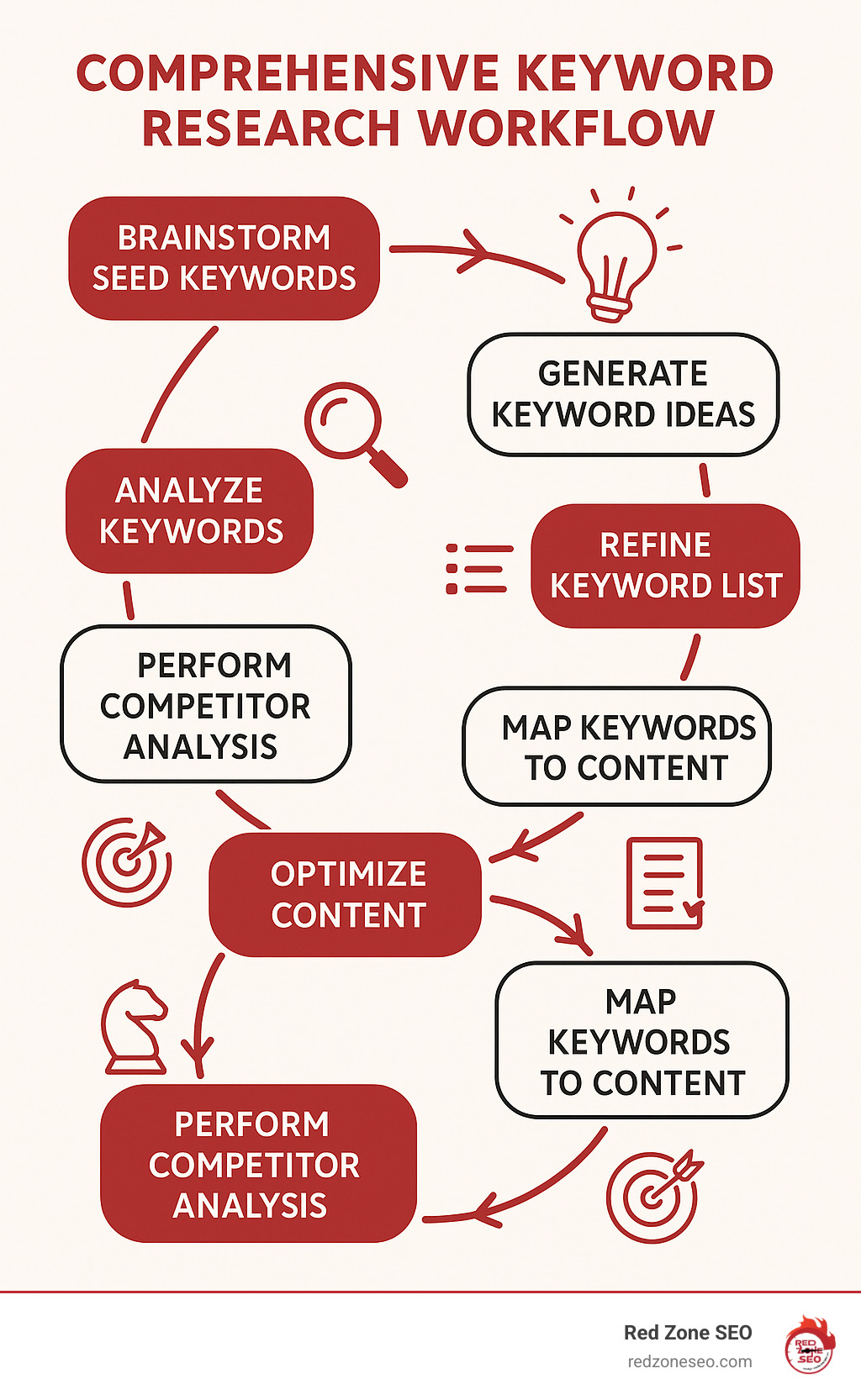
Despite all the talk about AI and algorithm updates, keyword research remains the backbone of successful SEO campaigns. Data-driven SEO strategies consistently outperform gut-feeling approaches by wide margins.
Today's consumers are pickier than ever - 61% want custom content that speaks directly to their specific needs. This means targeting broad, generic keywords just doesn't work anymore.
Both organic and PPC campaigns benefit from solid keyword research. One of the most exciting findies is finding low-competition wins - search terms with decent volume but fewer competing pages, essentially your fast track to better rankings.
Seasonality patterns also emerge through keyword research. "Christmas gift ideas" explodes in November and December, while "tax software" peaks from January through April. Understanding these cycles helps you plan content calendars months in advance.
With voice search adoption growing rapidly, people are using longer, more conversational queries. Traditional keyword research helps you identify these natural language patterns.
Every search query falls into one of four categories, and understanding these intents is crucial for matching your content to what searchers actually want.
Informational intent drives searches where people want to learn something new. When someone types "how to change a tire," they're in learning mode. Your content should educate and explain without pushing for a sale.
Navigational intent happens when users hunt for a specific website or brand. They might search "Facebook login" because they find search easier than typing URLs.
Commercial investigation intent captures that crucial research phase before buying. People search for "best project management software" when they're seriously considering a purchase but aren't ready to buy. This is prime territory for comparison content and buying guides.
Transactional intent represents users ready to take action right now. Searches like "buy iPhone 15" show clear buying intent and deserve your conversion-focused landing pages.
Short-tail keywords are broad, 1-2 word phrases with massive search volume and equally massive competition. While tough to rank for, they're important for brand visibility.
Long-tail keywords are the unsung heroes - longer, specific phrases like "best SEO agency for small businesses in Austin" have lower search volume but much higher conversion potential and are easier to rank for.
Branded keywords include your company name, while non-branded keywords help you reach new audiences who've never heard of your brand.
Geo-modifiers add location specificity that's crucial in our mobile-first world. Question phrases mirror how people naturally ask questions and align perfectly with voice search trends.
Choosing the right keyword research tools can feel overwhelming with hundreds of options available. The key is understanding what each category delivers so you can pick tools that match your goals and budget.
Free tools like Google Keyword Planner give you solid baseline data but often come with limitations - search volume ranges instead of exact numbers, daily search limits, or requiring an active ad account for full features.
Paid platforms remove these limitations and add intelligence that free tools can't match. More precise data, advanced filtering, competitor insights, and detailed metrics like keyword difficulty scores become available.
Forecasting capabilities separate basic tools from strategic platforms. Advanced platforms predict seasonal trends, estimate potential traffic, and forecast revenue based on your keyword choices.
Google Keyword Planner remains the go-to free option for most businesses starting their keyword research journey. Since it's built by Google for Google Ads, the data comes straight from the source.
The tool provides search volume estimates, competition levels, suggested bid estimates, and historical performance data. However, detailed search volume data requires an active Google Ads campaign with recent spending.
Google Trends fills gaps by showing search interest over time, related queries, and geographic distribution. While it displays relative search volume rather than absolute numbers, the trend data proves invaluable for content planning.
Find your campaign keyword page Google Keyword Planner
Comprehensive SEO platforms transform keyword research from a standalone activity into part of a complete optimization strategy. These tools combine keyword research with rank tracking, competitor analysis, and site auditing.
The data quality typically surpasses free tools significantly. Database coverage can include over 25 billion keywords across 142 countries. Keyword difficulty scores help you prioritize targets by estimating ranking challenges.
Complete dashboards centralize your entire SEO workflow. Track keyword rankings, monitor competitors, and identify content gaps without juggling multiple browser tabs.
| Tool Type | Data Depth | Monthly Cost | Best For |
|---|---|---|---|
| Free Tools | Basic volume ranges | $0 | Small businesses, beginners |
| Mid-tier Suites | Exact volumes, basic metrics | $50-150 | Growing businesses, agencies |
| Enterprise Platforms | Full datasets, advanced analysis | $300+ | Large businesses, enterprise SEO |
Artificial intelligence is reshaping keyword research by automating brainstorming and organizing related terms. However, current AI tools work best as creative partners rather than replacements for dedicated keyword research platforms.
Chatbot ideation excels at brainstorming seed keywords and variations you might overlook. Clustering capabilities group related keywords into topical themes, making content planning more strategic.
The limitations remain significant though. AI chatbots lack access to real-time search volume data, keyword difficulty scores, and SERP analysis. Think of AI as your creative brainstorming partner, not your primary research tool.
Specialized tools focus on uncovering question-based keywords and long-tail phrases that traditional keyword research often misses.
People Also Ask scraping extracts questions from Google's "People Also Ask" boxes. Forum mining analyzes real conversations on Reddit, Quora, and industry forums, revealing more natural, conversational search terms.
Voice search phrases tend to be longer and more conversational than typed queries. Zero-volume gems are keywords showing little search volume in traditional tools but actually receiving searches, providing significant competitive advantages when found early.
The most expensive keyword research tool isn't always the best choice for your business. The secret lies in understanding what metrics actually matter for your goals and how different tools measure them.
Search volume accuracy varies wildly between tools. Recent studies found accuracy rates ranging from just 20% to 60% when compared against real Google Search Console data. The best tools use multiple data sources rather than relying solely on Google's API.
Keyword difficulty scores use completely different methods across platforms. Some focus on domain authority of ranking pages, others analyze content quality. This means a keyword might show as "easy" in one tool but "hard" in another.
CPC data reveals valuable information about keyword intent. When businesses pay $15 per click for "business insurance," it signals serious commercial value. Even for organic search, CPC insights help prioritize which keywords are worth your time.
The foundation of good keyword research starts with reliable volume data - both monthly search numbers and trend information showing whether interest is growing, shrinking, or seasonal.
Competition analysis needs to dig deeper than simple "high, medium, low" labels. The best tools show exactly what you're up against: domain authority of ranking sites, content length, backlink profiles, and page types.
Trend data often reveals golden opportunities. A keyword with steady 1,000 monthly searches might be more valuable than one with 2,000 searches but a declining trend.
Understanding SERP features can make or break your strategy. When Google shows featured snippets, local packs, or shopping results, it dramatically changes how many clicks organic results receive.
| Metric | Free Tools | Mid-Tier Tools | Enterprise Tools |
|---|---|---|---|
| Search Volume | Ranges (1K-10K) | Exact numbers | Exact + confidence scores |
| Keyword Difficulty | Basic competition | Scored 0-100 | Multi-factor analysis |
| CPC Data | Limited/outdated | Current estimates | Real-time bidding data |
| SERP Analysis | Manual research needed | Basic SERP overview | Full SERP breakdown |
Free tools give you enough data for basic validation and small-scale keyword research. Mid-tier tools provide the precision most growing businesses need. Enterprise platforms offer sophisticated analysis required for competitive markets and large-scale campaigns.
The smart approach is matching tool capabilities to your actual needs rather than assuming more expensive equals better.
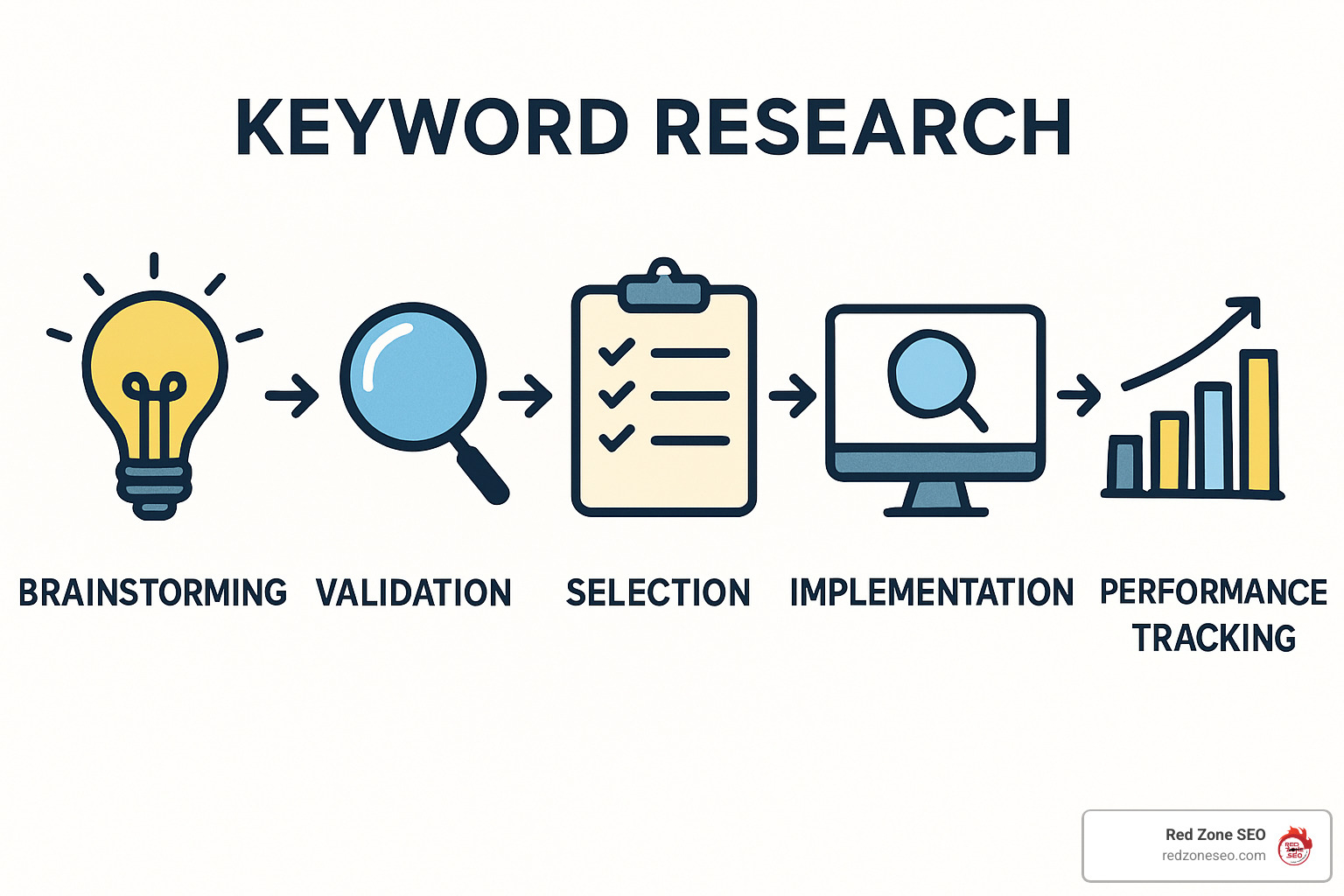
Effective keyword research follows a systematic process from broad findy to specific implementation and ongoing optimization.
Brainstorming starts with understanding your business, audience, and goals. List your main products and services. Think about how customers describe their problems and your solutions.
Validation involves running brainstormed keywords through research tools to get actual search volume, competition, and trend data. This separates realistic targets from wishful thinking.
Grouping organizes validated keywords into logical clusters based on search intent and topic relevance. This grouping informs your content structure and internal linking strategy.
Content calendar planning maps keyword groups to specific content pieces with publication dates. Consider seasonal trends, business priorities, and content production capacity.
Topic clusters organize related keywords around central themes. For example, a cluster around "keyword research" might include "keyword research tools," "how to do keyword research," and "free keyword research."
Parent topics represent the main theme connecting related keywords. Tools that identify parent topics help you understand which keywords can be covered in comprehensive guides versus those needing separate pages.
Silo planning organizes your website structure around keyword themes. Related keywords and content live in the same section with clear hierarchies and internal linking patterns.
More info about Content Marketing services
The grouping process:
1. Export all validated keywords into a spreadsheet
2. Add columns for search volume, difficulty, and intent
3. Sort by topic relevance and search volume
4. Create groups of 10-20 related keywords
5. Assign each group to a content type
6. Plan internal linking between related groups
Page-2 targets represent your biggest opportunities for quick ranking improvements. These are keywords where you rank positions 11-20, meaning small improvements to content or internal linking can move these keywords to page 1.
SERP volatility analysis identifies keywords where rankings frequently change, indicating Google hasn't settled on the best results. These unstable SERPs present opportunities for well-optimized content.
Tools that offer competitor gap analysis typically show:
- Keywords competitors rank for that you don't
- Keywords where competitors rank higher than you
- Content gaps in your coverage compared to competitors
- Opportunities where competitor content is outdated or thin
Rank monitoring tracks your positions for target keywords over time. Focus on tracking keywords that drive business results, not just vanity metrics.
GSC insights from Google Search Console provide the most accurate data about your actual search performance, including which keywords drive clicks, impressions, and click-through rates.
Mobile vs desktop splits show how your rankings and traffic differ across devices. With mobile-first indexing, mobile performance often matters more.
Adjusting content based on performance data involves updating existing pages to better target keywords or creating new content to capture missed opportunities.
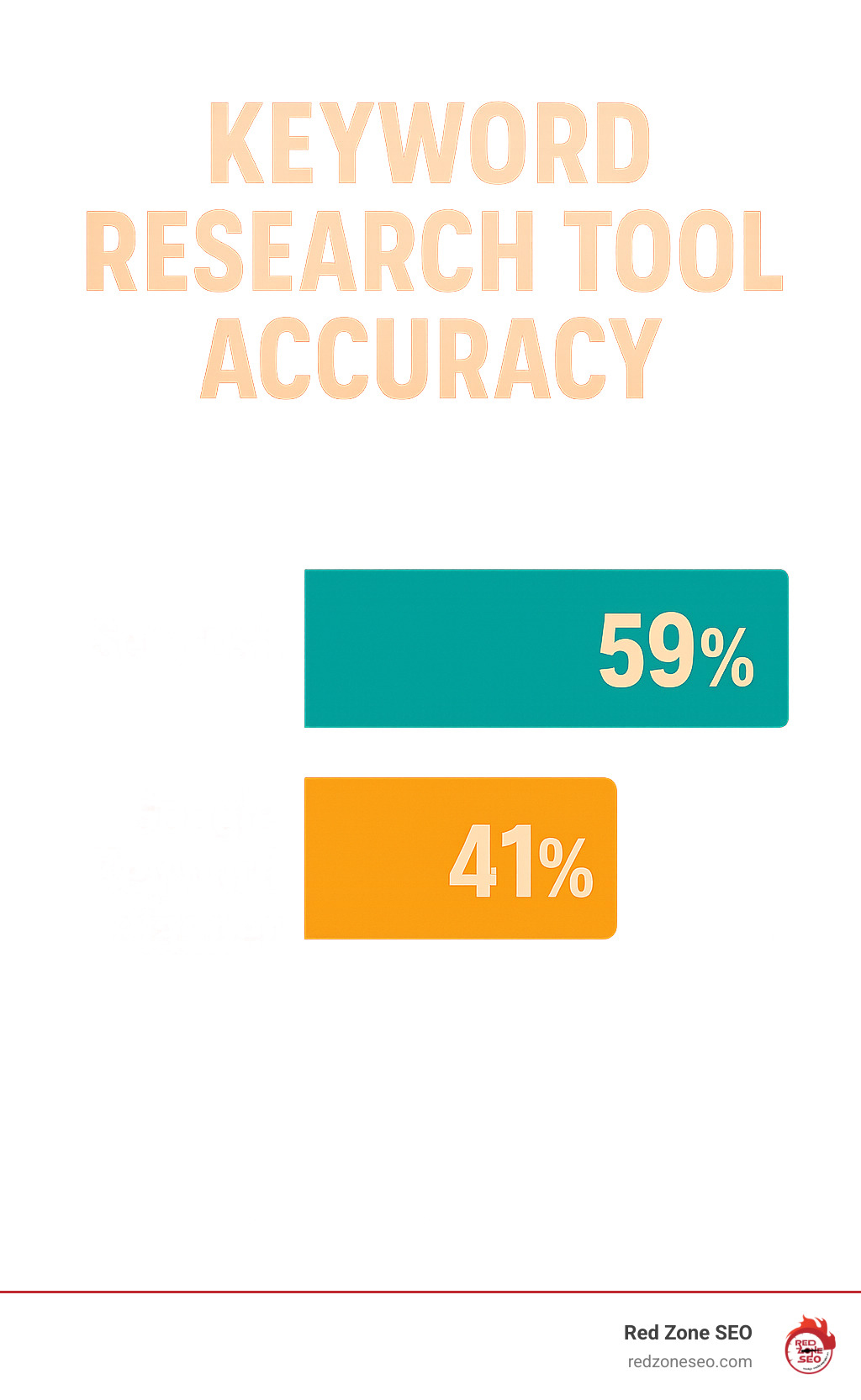
This is one of the most common misconceptions in keyword research. Search volume shows how many people search for a term each month, but traffic potential tells you how many of those searchers might actually click on your website.
Think of it this way: if 1,000 people search for "best coffee makers" each month, you might assume ranking #1 would bring 1,000 visitors. But that's rarely what happens.
Featured snippets often answer the question directly in search results, so people don't need to click through. Google Ads at the top capture clicks from commercial searches. Local map results grab attention for location-based queries. By the time organic results get their turn, maybe only 300-400 of those original 1,000 searches result in clicks to websites.
Traffic potential considers your realistic ranking position too. If you're likely to rank #5 instead of #1, you'll capture an even smaller percentage of those searches. Click-through rates drop significantly after the first few positions.
Some keywords punch above their weight though. A keyword with 500 monthly searches but minimal SERP competition might drive more traffic than a 2,000-volume keyword dominated by ads and featured snippets.
The best keyword research tools now show both metrics. Search volume helps you understand demand, while traffic potential helps you set realistic expectations and prioritize efforts based on actual business impact.
Free tools work great when you're starting out or doing basic research for a small website. But you'll know it's time to upgrade when you keep hitting walls that slow down your progress.
Daily search limits become frustrating when you're researching multiple topics or client projects. Free tools often cap you at 10-50 searches per day, which isn't enough for comprehensive keyword research.
Search volume ranges instead of exact numbers make it hard to prioritize keywords and plan content strategies. Knowing a keyword gets "1K-10K" searches isn't helpful when you need to decide between targeting it or something else.
Missing competitor insights leave you guessing about what's working in your industry. When you can see exactly which keywords your competitors rank for and how they're structured their content, you make better strategic decisions.
You'll definitely want to upgrade if you're managing multiple websites, working with clients, or scaling your content production. Rank tracking becomes essential when you need to prove ROI and identify which content is working.
Most small businesses find the sweet spot with mid-tier tools in the $50-150 range. They provide exact data and useful features without enterprise-level complexity. The investment typically pays for itself quickly through better keyword targeting and content performance.
AI tools are incredibly helpful for brainstorming and getting creative with your keyword research, but they can't replace dedicated platforms yet. Here's why: AI doesn't have access to real search data.
When you ask an AI chatbot for keyword suggestions, it's making educated guesses based on its training data. It might suggest "best coffee maker for small kitchens" as a great long-tail keyword, and it sounds reasonable. But without checking actual search volume and competition data, you don't know if anyone actually searches for that phrase.
AI excels at creativity though. It's fantastic for generating keyword variations you might not think of, especially question-based phrases that align with voice search trends. It can also help cluster related keywords into content themes and suggest natural ways to incorporate keywords into your writing.
The winning combination uses both approaches. Start with AI to brainstorm creative angles and long-tail variations. Then validate those ideas with traditional keyword research tools that provide real search volume, competition scores, and SERP analysis.
AI is getting better at understanding search intent and suggesting content structures based on keyword analysis. We expect more integration between AI capabilities and keyword research platforms over time. But for now, you need both tools in your toolkit for the most effective results.
Keyword research isn't just about finding words people search for - it's about understanding your audience so well that you can create content they actually want to read. When you stop guessing what might work and start using real data to guide your decisions, everything changes.
The difference between businesses that struggle online and those that thrive often comes down to this simple truth: successful companies know exactly what their customers are searching for, while struggling ones are still throwing content at the wall hoping something sticks.
You now have a complete toolkit for keyword research that actually works. Free tools like Google Keyword Planner give you a solid foundation without spending a dime. All-in-one suites provide the deep analysis growing businesses need to compete effectively. Specialized tools fill those specific gaps that can make or break your strategy.
The secret isn't having the most expensive tools - it's using the right tools for your specific situation. A local restaurant owner doesn't need the same keyword research depth as a national e-commerce site. Start where you are, use what you have, and upgrade when your growth demands it.
But here's what really matters: tools don't create results, strategy does. You could have access to every premium platform available, but without understanding search intent, ignoring what your competitors are doing, or failing to track what actually works, you're still just guessing with fancier data.
The workflow we've outlined transforms keyword research from an overwhelming task into a systematic process. Brainstorm, validate, group, create, track, and optimize. This cycle never stops because search behavior constantly evolves, new competitors emerge, and your business grows into new opportunities.
At Red Zone SEO, we've watched businesses completely transform their online presence by implementing these exact strategies. When you combine the right tools with proven processes, keyword research becomes the foundation for measurable growth instead of just another marketing expense.
Your competitors are already using these tools and strategies. The question isn't whether you should start doing serious keyword research - it's whether you'll start today or keep wondering why your content isn't getting the traffic it deserves.
Link building services help businesses earn high-quality backlinks from other websites to improve search rankings and drive more organic traffic. Here's what you need to know:
Top Link Building Service Types:
- Guest Posting Services - Place articles on relevant blogs with backlinks ($100-$500 per link)
- Digital PR Agencies - Secure coverage in major publications ($2,000-$15,000/month)
- HARO Link Building - Connect with journalists for media mentions
- Authority Link Services - Target high-DR websites (70+ domain rating)
- Monthly Packages - Ongoing campaigns with 10-50 links per month
Key Quality Indicators:
- Sites with 500+ monthly organic visitors
- Relevant to your industry/niche
- Dofollow links from real editorial content
- No "write for us" pages or guest post farms
Let's be honest: finding trustworthy link building help feels overwhelming. As one marketing manager shared, "We were skeptical as we've tried a number of other services and were greatly disappointed."
The link building industry is packed with providers promising quick results. Some deliver amazing outcomes - like the client who saw 7x more keywords on Google's first page. Others waste your money on spammy links that can actually hurt your rankings.
52% of businesses say link building is the toughest part of SEO. That makes sense when you consider the time investment. Manual outreach for quality links can eat up dozens of hours per month.
The good news? Quality link building services exist. They use proven strategies like broken link building, journalist outreach, and content-driven campaigns to earn links that actually move the needle.
This guide breaks down everything you need to evaluate providers, avoid red flags, and find a partner who delivers real results.
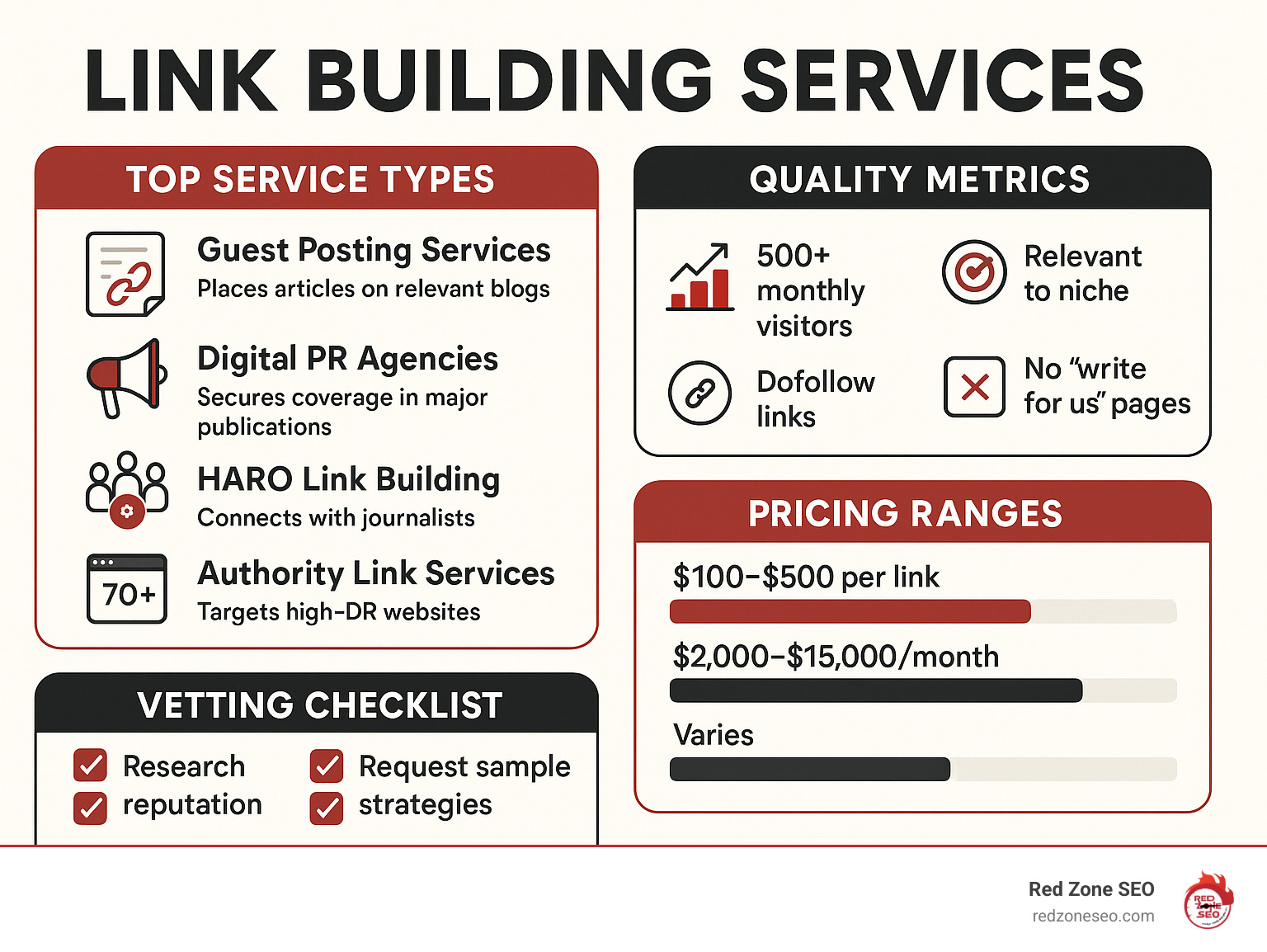
Picture this: you're looking for a good restaurant in a new city. A friend recommends one place, but five different friends all rave about another spot. Which one are you more likely to trust?
That's exactly how search engines think about backlinks. When multiple websites link to your content, it's like getting recommendations from trusted sources. The more quality recommendations you have, the more authority Google assigns to your site.
The numbers don't lie here. Research shows that the top-ranking page on Google has 3.8x more backlinks than pages sitting in positions 2-10. This isn't just correlation - backlinks are one of the strongest ranking factors in Google's algorithm.
But not all backlinks are created equal. Think of it this way: a recommendation from a respected industry expert carries more weight than a casual mention from someone with no expertise. The same principle applies to link building services and the backlinks they help you earn.
High-authority sites - like major publications, established industry blogs, or respected organizations - pass along more of what SEO folks call "link juice." When these sites link to you, they're essentially vouching for your credibility with search engines.
Relevance matters just as much as authority. A link from a gardening website to your landscaping business tells Google that your content is topically relevant and valuable to people interested in outdoor spaces. That's worth way more than a random link from an unrelated tech blog.
Here's something many business owners don't realize: quality backlinks don't just help your search rankings. They also drive real people to your website. When someone reads an article and clicks a link to learn more, that's targeted traffic from an engaged audience.
Google's Webmaster Guidelines make it clear that earning links through valuable content is the way to go. The search giant wants to see organic traffic flowing to sites that genuinely deserve it.
But here's the reality check: building authority takes time and consistent effort. Websites typically lose about 25% of their backlinks every seven years as content gets updated, sites change, and links naturally break over time.
The businesses that treat link building as an ongoing investment see remarkable results. We've watched clients grow their organic search revenue from $525,000 to $918,000 in just 12 months. Another achieved a 601% organic traffic increase after systematically building 250 high-authority backlinks.
This is why user trust and sustained link building efforts go hand in hand. When you consistently earn quality backlinks, you're not just improving rankings - you're building long-term credibility that compounds over time.
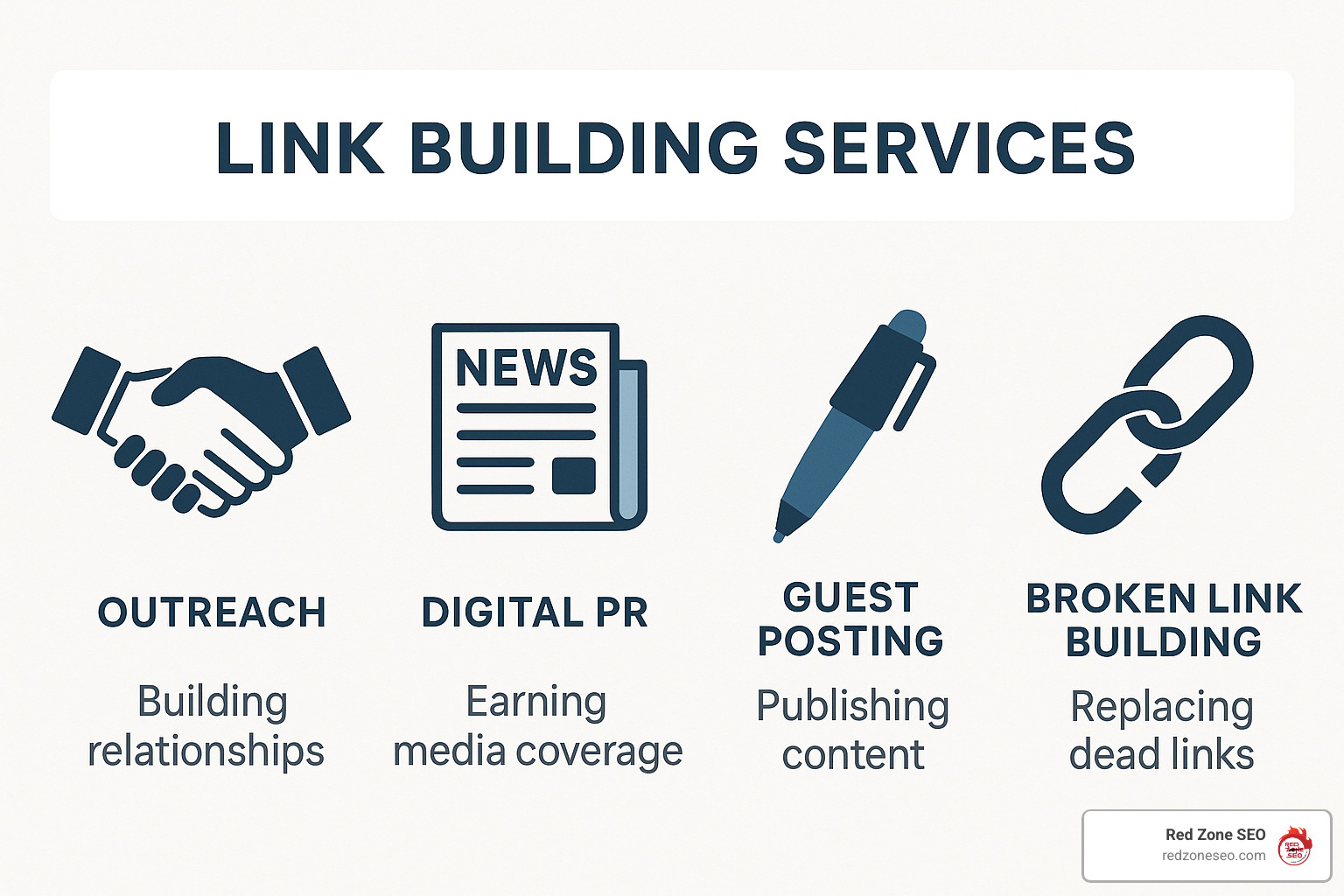
Choosing the right link building services feels like picking from a buffet - lots of options, but which ones actually fill you up? Let's break down what's available and help you find the perfect fit for your business goals.
Guest posting services dominate the market for good reason. You're paying $100-$500 per link to get quality content published on relevant blogs. The trick is finding providers who actually write compelling 1,000+ word articles instead of thin content stuffed with keywords. Look for services that target sites with genuine organic traffic and avoid those obvious "write for us" pages that scream low editorial standards.
If you want the big leagues, digital PR agencies charge anywhere from $2,000-$15,000 monthly to get your brand featured in major publications. These aren't just backlinks - you're getting real brand exposure alongside SEO juice. The best agencies have established relationships with journalists and know exactly how to craft stories that editors actually want to publish.
HARO link building connects you directly with journalists hunting for expert sources. It's budget-friendly, but you need to be ready to respond fast with compelling pitches. Many news sites use no-follow links now, but the referral traffic and credibility boost make it worthwhile.
For businesses serious about rankings, authority link services target websites with Domain Rating 70+ and at least 10,000 monthly visitors. These premium placements cost more upfront but deliver the kind of ranking power that moves the needle. The best providers guarantee specific DR ranges or offer replacements when links don't meet their promises.
Niche edit services take a shortcut by inserting your links into existing content on relevant sites. They work faster than guest posts, but there's higher risk since the content wasn't originally created with your link in mind. Google's getting better at spotting these insertions.
Press release distribution sounds impressive - hundreds of sites picking up your news - but most of these links are no-follow now and provide minimal SEO value. They're better for brand awareness than ranking power.
Content marketing agencies play the long game by creating genuinely linkable assets like original research, comprehensive guides, and shareable infographics. They charge $1,000-$20,000+ monthly for full campaigns that combine content creation with strategic outreach.
The link building world splits into two camps: those who play by the rules and those who try to game the system. Understanding the difference could save your business from a Google penalty nightmare.
White-hat services focus on earning links through genuine value and real relationships. They follow search engine guidelines even when results take longer to materialize. These providers create shareable research that people actually want to reference. They build authentic relationships with industry publications and contribute meaningful expert commentary to relevant discussions.
The white-hat approach means developing resources that naturally attract links because they're genuinely useful. It's slower, but it builds lasting authority that search engines reward.
Black-hat services promise quick results through manipulative tactics. While tempting for impatient business owners, these approaches carry serious risks that can destroy years of SEO progress.
Private Blog Networks (PBNs) represent the biggest red flag. These are networks of sites built solely for selling links. Google actively hunts down PBNs and hammers sites that use them. As one industry expert put it: "PBNs are a huge waste of money."
Link farms and automated spam submissions to directories and forums might seem harmless, but Google's algorithms have become incredibly sophisticated at detecting unnatural link patterns. Research shows that excessive link growth in short timeframes triggers spam detection systems.
Some black-hat providers even engage in negative SEO - building toxic links to competitor sites to harm their rankings. This practice is not only unethical but can backfire spectacularly.
The bottom line? Black-hat tactics eventually catch up with you. Google's updates consistently target manipulative link schemes, and recovery from penalties can take months or years.
Deciding between ongoing link building services and one-time purchases depends on your goals, budget, and patience level.
Monthly packages provide consistent link building over time, typically delivering 10-50 links per month based on quality and budget. This approach offers steady authority growth that looks natural to search engines. You're building ongoing relationships with publishers, which often leads to better placement opportunities over time.
Monthly packages also provide better cost efficiency for long-term campaigns. You get regular reporting and strategy adjustments as your provider learns what works best for your industry. Most importantly, the gradual link building pattern mimics how authority naturally develops.
One-off purchases work perfectly for testing new providers or running specific campaigns. You pay per link or buy bundles upfront, giving you more control over individual placements. This approach lets you test provider quality before making larger commitments and offers flexibility to adjust strategy based on immediate results.
The reality is that new sites benefit most from gradual link building. Starting with 5-15 high-authority links in month one, then ramping up to 25-35 by month three creates a natural growth pattern. Established sites in competitive niches might need 50+ links monthly just to maintain their current rankings.
Most successful businesses use monthly packages for consistent growth, then supplement with one-off campaigns for specific product launches or seasonal promotions. It's like having a steady workout routine with occasional intensive training sessions.
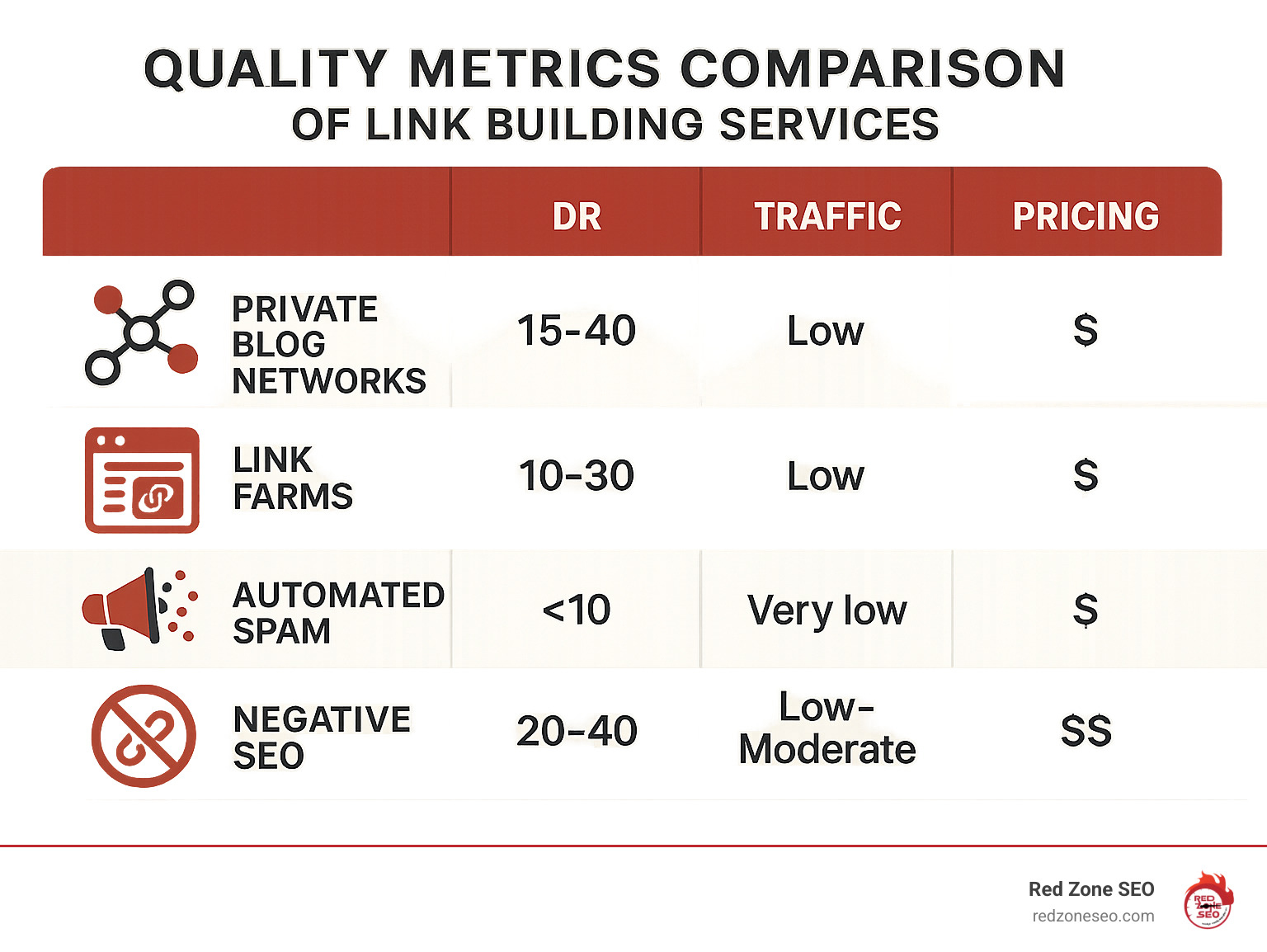
Shopping for link building services feels like navigating a minefield. One wrong choice can waste your budget or even hurt your rankings. The good news? Quality providers have clear standards you can verify.
Let's start with what actually matters. Domain Rating (DR) gets all the attention, but it's just one piece of the puzzle. Reputable services typically target DR 40+ for basic campaigns and DR 60+ for competitive niches. The premium providers focus on DR 80+ placements that pack real authority.
But here's what many businesses miss: a high DR means nothing without real traffic. The best link building services verify that target sites get at least 500 monthly organic visitors. Some premium services require 1,000 to 50,000+ monthly visits because these sites have engaged audiences who might actually click through to your business.
Content quality separates the pros from the pretenders. Professional services create substantial 1,000+ word articles rather than thin posts that scream "paid placement." They use native English writers, include relevant images, and make sure your link appears naturally within valuable content.
The pricing reflects these quality standards. Small budgets of $500-$1,000 monthly typically get links at $30-$40 each. Medium budgets of $1,000-$3,000 push into $40-$100 per link territory. Large campaigns over $3,000 can cost $100+ per link but target the highest-authority sites.
Smart providers also maintain blacklist policies to avoid known PBN networks, guest post farms, and previously penalized domains. They offer link replacement guarantees if placements get removed within 12 months and provide refunds for undelivered work.
Watch out for red flags that signal trouble ahead. Guaranteed #1 rankings are impossible to promise. Packages under $100 usually mean low-quality links that won't help your site. Bulk directory submissions and automated outreach systems are outdated tactics that can actually hurt your rankings.
Before building new links, consider getting an SEO Audit to identify any toxic links that need removal. Starting with a clean backlink profile makes your new link building efforts much more effective.
The best agencies don't just promise quality - they prove it through systematic processes you can verify.
Comprehensive quality checks separate serious providers from fly-by-night operations. Leading agencies use 23-point review systems that examine domain authority, traffic verification, content quality, technical factors like page load speed, and overall site reputation. This isn't marketing fluff - it's how they avoid placing your links on sites that could hurt your rankings.
When evaluating potential partners, ask to see sample portfolio examples from recent campaigns. Quality agencies will show you live links on real sites with diverse anchor text, relevant content, and genuine organic traffic. If they only provide screenshots or refuse to share examples, that's a warning sign.
Communication standards matter more than you might think. Professional agencies assign dedicated account managers, provide regular progress updates, and offer transparent reporting with live URLs. You shouldn't have to chase them down for basic information about your campaign.
The best agencies can clearly explain their entire process - how they find target sites, their content creation workflow, quality control checkpoints, and measurement systems. If they're vague about their methods or claim "proprietary secrets," they might be hiding something.
Don't rely solely on testimonials when choosing a provider. Ask for specific case studies in your industry, measurable results data showing traffic and ranking improvements, and client references you can actually contact. Real success stories include concrete numbers and honest discussions of what worked.
Our How It Works page outlines exactly how we approach each link building campaign, with quality controls at every step to ensure your investment delivers real results.
The link building services world keeps changing, but smart businesses adapt their strategies to stay ahead. What worked five years ago might hurt your rankings today - while new opportunities emerge constantly.
Content-driven campaigns dominate successful link building now. Instead of chasing any link possible, top agencies create resources people actually want to share. Think original research studies, comprehensive industry guides, or interactive tools that solve real problems. When your content genuinely helps people, links happen naturally.
The HARO pitching game has evolved too. Journalists receive hundreds of responses daily, so generic pitches get ignored. The winning approach involves crafting personalized responses that directly answer their questions with specific data or unique insights. Quick response times matter - most journalists pick sources within hours of posting requests.
Broken link building remains one of the most effective strategies when done right. You find broken links on relevant sites, create better replacement content, then reach out with helpful suggestions. The key is positioning yourself as solving their problem, not asking for favors.
Unlinked mentions offer easy wins that many businesses miss. Tools can identify when sites mention your brand without linking. A simple, friendly email often converts these mentions into valuable backlinks.
AI tools are changing outreach efficiency dramatically. Smart agencies use them to research target sites and personalize initial pitches. But as one expert noted: "AI can only get you halfway; manual expertise and established networks remain essential." The human touch still matters for building genuine relationships.
Influencer outreach works best with nano and micro-influencers having 10,000-50,000 followers. These partnerships create authentic content that naturally generates backlinks as it spreads across social platforms.
Anchor text diversity has become crucial for avoiding penalties. Successful campaigns mix branded anchors, generic terms like "click here," and natural long-tail variations. The days of exact-match anchor text are long gone.
Research confirms that backlinks and content quality correlate with higher Google rankings. This reinforces why the best agencies focus on both factors simultaneously rather than treating them separately.
Crowd marketing through platforms like Reddit and industry forums creates opportunities for subtle link building. The trick is contributing genuinely helpful responses rather than obvious promotional content. When done authentically, these links carry significant weight.
The most sustainable approach focuses on gradual link building that looks natural to search engines. Sudden spikes in backlinks trigger spam filters, while steady growth over months builds lasting authority. Quality providers understand this timing and structure campaigns accordingly.
Thought leadership positioning generates the highest-value links. When you become known as an industry expert, journalists and bloggers naturally reference your insights. This requires consistent content creation and active participation in industry discussions.
The businesses seeing the best results combine multiple strategies rather than relying on single tactics. They might use HARO pitching for media coverage, content assets for organic link attraction, and broken link building for targeted outreach - all working together toward sustainable growth.
Here's the honest truth: link building services don't deliver overnight miracles. Most businesses start seeing initial improvements around the 3-6 month mark, with really significant gains taking 6-12 months or longer.
Think of it like planting a garden. You can't throw seeds in the ground today and expect tomatoes tomorrow. Link building works the same way - it takes time for search engines to find your new links, evaluate them, and adjust your rankings accordingly.
Your competition level plays a huge role in timing. If you're a local plumber competing against a handful of other businesses, you might see movement in 2-3 months. But if you're selling supplements online against massive e-commerce sites? That's going to take considerably longer.
Your starting point matters too. Brand new websites need more time to build trust with search engines. If your site launched last month, expect a longer journey than an established business that's been around for years.
The quality of your links also affects speed. One high-authority link from a major industry publication can move the needle faster than ten links from smaller blogs. That's why focusing on quality over quantity always wins in the long run.
According to research from MOZ, the average time to see ranking effects is around 10 weeks - though this varies wildly by industry and competition level.
A quality backlink is like getting a recommendation from someone respected in your field. It carries weight because of who's giving it and how they're presenting it.
Domain authority serves as your first filter. Look for sites with a Domain Rating of 40 or higher for basic campaigns. If you're in a competitive space, aim for DR 60+. The most premium placements come from sites with DR 80+.
But here's what many people miss: traffic trumps metrics. A site with DR 50 and 10,000 monthly visitors beats a DR 70 site with only 100 visitors. Real people visiting the site means real potential for referral traffic and genuine authority.
Context is everything. Your link should appear naturally within relevant editorial content - not stuffed in an author bio or buried in a footer. The content around your link should actually relate to what you're linking to. A landscaping company getting linked from a gardening article makes perfect sense. Getting linked from a random tech blog? Not so much.
Anchor text variety keeps things natural. Avoid the temptation to use your exact target keyword every time. Mix in your brand name, generic phrases like "click here," and natural variations. Search engines are smart enough to spot patterns that look manipulative.
The linking site should have real editorial standards and serve an actual audience. Steer clear of obvious link farms, sites covered in "write for us" pages, or anything that feels like it exists solely to sell links.
This question comes up constantly, and the answer isn't black and white. You can build links yourself - but whether you should depends on your situation.
Let's talk about the time reality first. Effective manual outreach typically eats up 20-40 hours per week for meaningful results. That's basically a part-time job. One survey found that 52% of businesses consider link building the toughest part of SEO, and time investment is a big reason why.
The skill factor is real too. Successful link building requires content creation abilities, relationship building skills, technical SEO knowledge, and understanding of quality metrics. It's not just about sending emails - though many people think that's all there is to it.
Then there's the tool investment. Professional-grade tools like Ahrefs and SEMrush cost $200-500+ monthly. You'll also want outreach platforms, email verification tools, and other software that adds up quickly.
Success rates tell an interesting story. Experienced agencies typically achieve 5-15% response rates on cold outreach. People just starting out? Often see 1-3% rates. That means you need to send a lot more emails to get the same results.
DIY makes sense if you're a small local business with a tight budget, you already have strong industry relationships, or you genuinely enjoy the process and have time to invest. Some business owners find link building rewarding once they get the hang of it.
Professional services become worth it when you're in competitive national markets, have limited internal resources, need faster results, or face complex technical requirements. The math often works out in favor of hiring pros when you factor in time savings, higher success rates, and reduced risk of costly mistakes.
The bottom line? Start by honestly assessing your time, skills, and goals. There's no shame in either approach - just pick what makes sense for your business.
Finding the right link building services partner can feel daunting, but focusing on quality over quantity makes the decision far simpler.
Great providers share clear traits: they enforce traffic and authority minimums, follow rigorous quality control, and offer transparent pricing without impossible guarantees. They back up claims with verifiable case studies and straightforward reporting.
Sustainable SEO growth takes patience. Backlinks and high-value content work together to build lasting authority, so five relevant links from sites your customers actually visit will always beat fifty random placements.
At Red Zone SEO, our data-driven approach earns links that generate measurable business results. We operate as an extension of your team, aligning every campaign with your goals and bottom line.
Ready to see what strategic link building can do for your search visibility? Visit our SEO Services Las Vegas page to learn more.
Bottom line: choose partners committed to your long-term success, not quick wins—your future self will thank you.
Content optimization is the process of improving and updating your website content to make it more visible in search engines, easier to read for humans, and more likely to convert visitors into customers.
Here's what content optimization involves:
Think of it this way: creating great content is just the first step. Without optimization, even amazing content can get lost in the "Google vortex" where no one finds it.
The good news? Research shows that updating existing content is faster and more cost-effective than creating new content from scratch. One study found that optimized content can see an average 106% boost in organic views.
Content optimization isn't a one-time task - it's an ongoing cycle of improvement. You write content, optimize it for search engines and readers, publish it, then continue refining based on performance data.
As one expert put it: "Content is a living, breathing asset that must be continually improved." This approach helps small businesses compete with larger competitors by making every piece of content work harder.
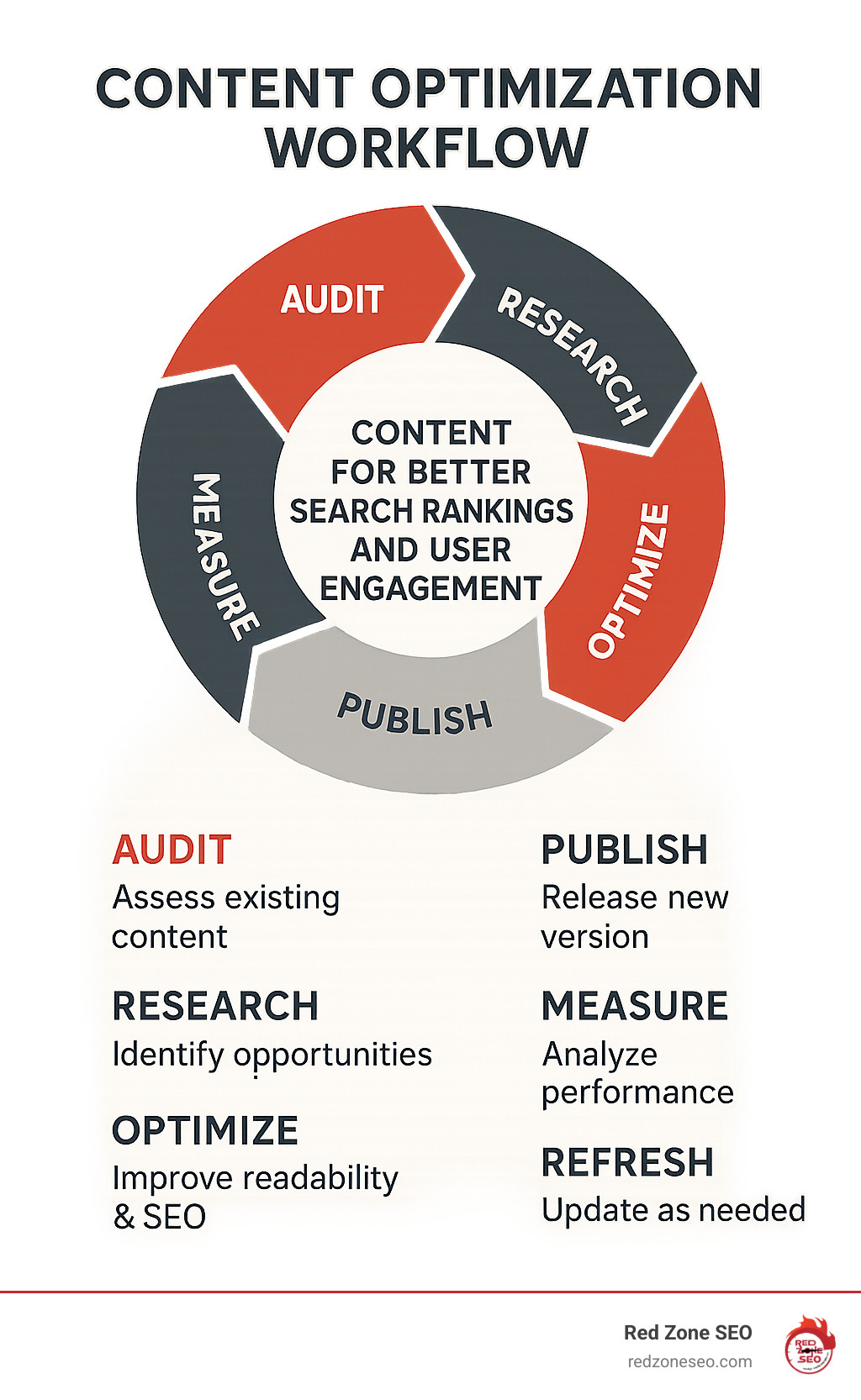
Content optimization is like giving your existing content a powerful makeover. It's the art of taking what you've already written and making it work harder for your business - attracting more visitors, ranking higher in search results, and converting better.
Think of it this way: you wouldn't buy a car and never change the oil or tune it up. Your content needs the same kind of regular maintenance to keep performing at its best.
The magic happens when you find that sweet spot between what search engines want to see and what your human readers actually need. It's not about cramming keywords into every sentence (that actually hurts your rankings). Instead, it's about making your content genuinely useful while ensuring both people and search algorithms can find and understand it.
The impact goes far beyond just climbing the search rankings. When you optimize content properly, you're building real trust with your audience. This is where Google's E-E-A-T guidelines come into play.
E-E-A-T stands for Experience, Expertise, Authoritativeness, and Trustworthiness. Scientific research on E-E-A-T shows that content demonstrating real-world experience and expertise performs significantly better in search results.
Here's where content optimization gets really exciting from a business perspective: the ROI is fantastic. Instead of constantly churning out new blog posts, you can breathe new life into what you already have. Research shows that optimized content can more than double their monthly lead generation.
Content freshness acts like a ranking booster shot. Search engines love content that stays current and relevant. You don't need to rewrite everything from scratch - sometimes updating a few statistics or adding recent examples can make a huge difference.
Search engines look at hundreds of different signals to decide which content deserves those coveted top spots. Understanding how content optimization influences these signals helps you work smarter, not harder.
Backlinks still reign supreme as one of the top three Google ranking factors. When your optimized content provides real value, other websites naturally want to link to it. Research from Ahrefs consistently shows a strong connection between quality backlinks and organic traffic.
User engagement tells the real story about your content's quality. When people land on your page and actually stick around to read it, that sends powerful positive signals to search engines. Dwell time - how long people spend on your page - has become increasingly important for rankings.
Core Web Vitals have become major ranking factors. These metrics measure how fast your content loads, how stable it appears visually, and how quickly visitors can interact with it. Poor Core Web Vitals can tank your rankings, no matter how great your content is.
Many businesses fall into the "content hamster wheel" trap - constantly creating new blog posts while their existing content sits there gathering digital dust.
Content optimization often delivers better results than starting from scratch. When you update and improve existing pieces, you're building on work that's already proven itself. You can expand successful articles, update outdated information, and improve their search optimization without reinventing the wheel.
The cost-efficiency factor makes optimization particularly attractive for small businesses. Research consistently shows that updating existing content takes less time and fewer resources than creating entirely new pieces - while often delivering better results.
Content longevity improves dramatically when you maintain and refresh your existing library. Some of our clients have blog posts that continue attracting thousands of monthly visitors years after publication, simply because they've been consistently optimized and updated.
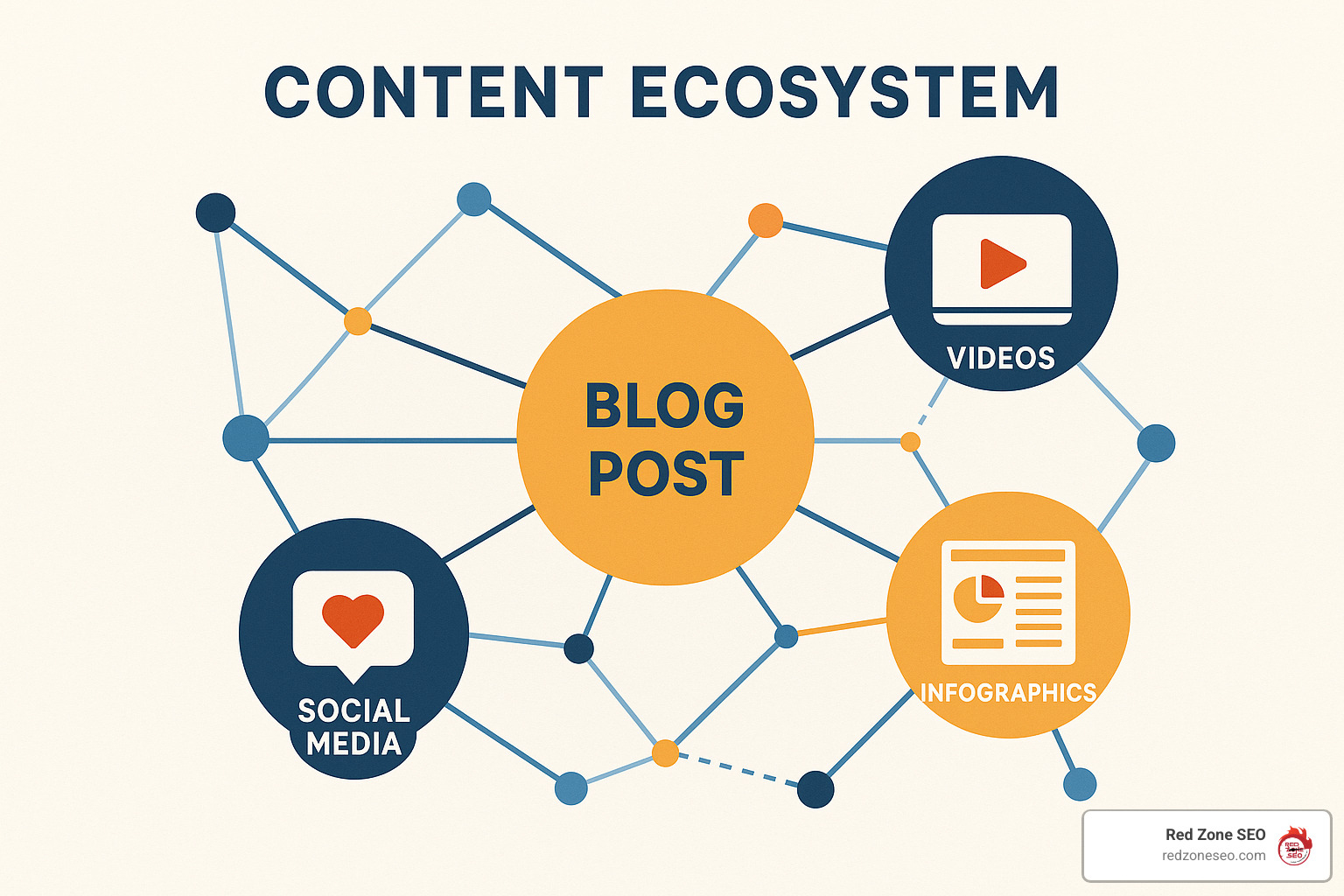
An optimized ecosystem is the sum of many small wins working together. Start with solid keyword research, match every piece to clear search intent, and layer on-page, technical, and UX best practices so visitors (and Google) instantly understand your value.
Keyword research goes beyond monthly volume. Map terms to each stage of the customer journey and fill the gaps your competitors miss.
Search-intent alignment is crucial. Users typically look for four things: information, comparisons, a specific site, or a transaction. Creating content that mirrors the dominant intent is half the battle.
Clean structure keeps people reading. Logical headings (H1-H3), short paragraphs, and visuals break up text walls and improve accessibility.
Technical elements—title tags, meta descriptions, URL slugs, schema—tell search engines how to display your pages and can lift click-through rates even before rankings move.
Multimedia (images, video, interactive tools) increases dwell time and shares. Compress files, add descriptive alt text, and keep load times fast.
Internal and external links build topical authority. A simple topic-cluster spreadsheet ensures every new piece supports a pillar page and prevents orphan content.
More info about content marketing services
Research shows articles with several visuals earn far more traffic. Keep images under 150 KB, use descriptive file names, and add captions when context helps the reader.
For video, optimize the title, description, and tags, then embed above the fold so users engage quickly.
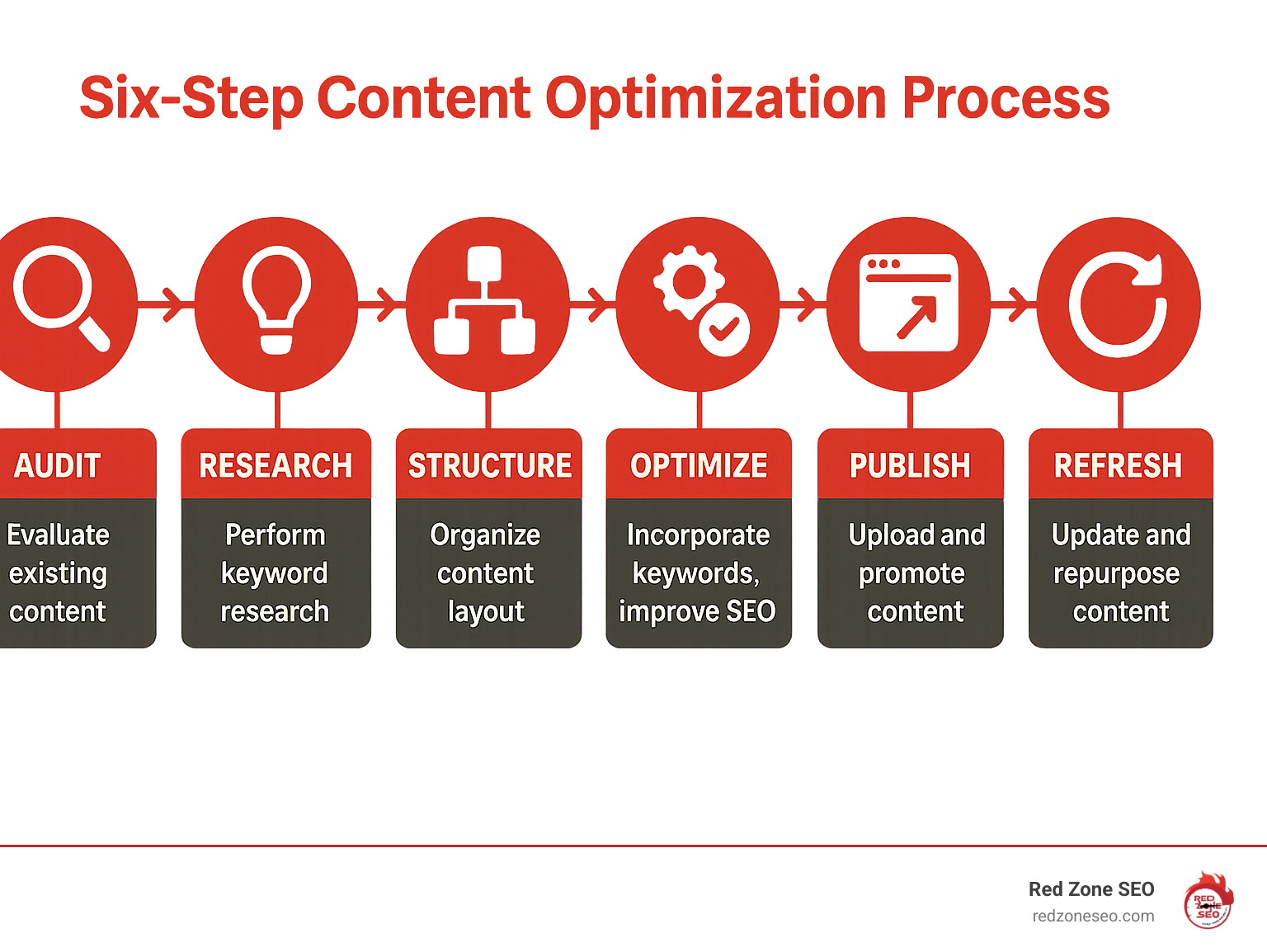
Treat optimization like renovating a house: inspect first, fix what matters, then maintain. Here’s the condensed six-step system we use to lift organic traffic for clients in Austin, Florida, Henderson, Nevada, and Las Vegas.
Inventory every URL, note traffic, conversions, and keywords. Identify content gaps and any pages cannibalizing the same terms.
Use search volume and difficulty to prioritize topics. Layer in semantic entities so Google fully grasps your coverage. Review competitor pages to set a quality bar.
Lead with the Bottom Line Up Front (BLUF) so readers get value fast. Use active voice, short paragraphs, bullet lists, and an eighth-grade reading level.
Tighten title tags, meta descriptions, headings, and URLs. Compress images, add keyword-rich alt text, and apply relevant schema markup.
Share new or updated content via social channels and email. Build internal links from related pages and reach out for relevant external links.
Quarterly audits keep winners winning and flag under-performers for tweaks. Repurpose top pieces into new formats—videos, infographics, or podcasts—to extend their lifespan.
Here's the truth about content optimization: you can't improve what you don't measure. The good news is that when you track the right metrics and avoid common mistakes, the results can be dramatic.
| Metric | Pre-Optimization | Post-Optimization | Improvement |
|---|---|---|---|
| Organic Impressions | 5,000/month | 12,000/month | +140% |
| Click-Through Rate | 2.1% | 4.3% | +105% |
| Average Position | 7.8 | 15.2 | +49% |
| Time on Page | 1:23 | 2:47 | +101% |
| Conversion Rate | 1.2% | 2.8% | +133% |
These numbers represent real improvements we see when businesses take a systematic approach to optimization. But here's what many people miss: measuring consistently matters more than obsessing over daily fluctuations.
The key is setting up your tracking systems correctly from the start, then making data-driven decisions about future optimizations. When you can clearly see what's working and what isn't, optimization becomes much more strategic and less guesswork.
Click-through rate (CTR) tells you whether people find your search listings compelling enough to click. This metric often improves faster than rankings themselves, giving you quick traffic wins when you craft better titles and meta descriptions.
Your time on page and engagement metrics reveal the real story about content quality. When visitors spend more time reading your content and explore other pages on your site, search engines take notice. These engagement signals often predict ranking improvements weeks before they actually happen.
Backlink growth remains one of the most reliable indicators of content success. When other websites reference your optimized content, it signals genuine value that search engines reward with better visibility.
Core Web Vitals measure the technical user experience factors that directly impact rankings. Your loading speed, visual stability, and interactivity scores affect how both users and search engines perceive your content quality.
Conversion metrics ultimately determine whether your optimization efforts contribute to real business growth. The best-ranking content means nothing if it doesn't help generate leads, sales, or other meaningful actions for your business.
Setting up automated reports through Google Search Console, Google Analytics, and other SEO tools helps you spot trends without getting lost in daily data noise.
Even well-intentioned optimization efforts can backfire when you fall into these common traps.
Keyword stuffing still happens surprisingly often, even though it's been counterproductive for years. Instead of cramming keywords into every paragraph, focus on natural integration that serves your readers first. Search engines have gotten remarkably good at detecting forced keyword usage.
Thin content and surface-level coverage fails to meet modern search expectations. Users want comprehensive answers, not brief summaries. When your content barely scratches the surface of a topic, it rarely outcompetes more thorough resources.
Ignoring mobile optimization is particularly damaging since mobile-first indexing means your mobile experience determines your rankings across all devices. If your content doesn't work well on smartphones, you're essentially invisible to most searchers.
Neglecting E-E-A-T signals misses crucial opportunities to build trust and authority. Adding author bios, citing credible sources, and demonstrating real-world experience can significantly impact how search engines evaluate your content quality.
Overusing stock images provides minimal SEO value while making your content feel generic. Original screenshots, custom graphics, and authentic photos typically perform better in both user engagement and image search results.
The biggest mistake of all is focusing solely on search engines while ignoring user experience. Content that ranks but doesn't convert visitors into customers ultimately fails to serve your business goals.
More info about SEO audits can help identify and fix these issues before they hurt your performance.
Content update frequency isn't one-size-fits-all, but there are some reliable guidelines based on what we've seen work consistently.
Quarterly audits work well for most content libraries. This gives you enough time to see performance trends while catching issues before they become serious problems. During these reviews, look for content that's losing traffic or rankings.
Monthly reviews make sense for your highest-traffic, most competitive pieces. These are often your biggest revenue drivers, so closer monitoring helps you maintain their performance.
Immediate updates become necessary when industry changes affect your content accuracy. Outdated information can quickly hurt your credibility and search performance.
Annual overhauls work well for comprehensive guides and cornerstone content that need substantial refreshing rather than minor tweaks.
The key is monitoring performance data rather than following arbitrary schedules. Content that's declining should get priority attention regardless of when you last updated it.
You can accomplish a lot with free tools, though paid options do accelerate your progress as you scale up.
Free tools like Google Search Console, Google Analytics, and Google PageSpeed Insights provide essential optimization data. These cover keyword performance, traffic patterns, and technical issues that affect most optimization decisions.
Paid tools offer more detailed competitor analysis, advanced keyword research, and workflow automation. They become more valuable as your content library grows and your optimization efforts become more sophisticated.
Priority features to consider include comprehensive keyword research, rank tracking across multiple search engines, technical SEO auditing, and content performance analysis.
Start with free resources to learn the fundamentals, then invest in paid solutions when you can clearly see how they'll improve your results or save significant time.
Content optimization timelines vary significantly based on several factors you should understand upfront.
Indexing time for updated content typically ranges from a few days to several weeks. You can speed this up by submitting updated URLs through Google Search Console and ensuring your site has good crawl efficiency.
Competitive landscape heavily influences how quickly you'll see ranking improvements. Less competitive keywords might show movement within weeks, while highly competitive terms often require months of consistent effort.
Iterative testing and refinement usually produces the best long-term results. Expect to make ongoing adjustments based on performance data rather than achieving perfect optimization immediately.
Most businesses notice initial improvements within 4-8 weeks of implementing systematic optimization. More significant results typically develop over 3-6 months of consistent effort and refinement based on performance data.
Here's the truth about content optimization: it's not just another marketing buzzword or quick fix. It's the bridge between having great ideas and actually getting them in front of the people who need them most.
Think of it this way - you could write the most helpful, insightful content in the world, but if it's buried on page 10 of Google, it might as well not exist. Content optimization transforms your hidden gems into traffic magnets that work for your business 24/7.
We've walked through the entire process together - from understanding what optimization really means to implementing a step-by-step system that delivers results. The businesses that accept this approach don't just see better search rankings. They build genuine connections with their audience and create content that continues paying dividends months and years after publication.
At Red Zone SEO, we've helped businesses across Austin, Florida, Henderson, Nevada, and Las Vegas turn their content from afterthoughts into their biggest lead generation assets. The pattern is always the same: start with solid research, create genuinely helpful content, optimize systematically, and measure relentlessly.
What makes the difference between businesses that succeed and those that struggle? Consistency and commitment to the process. Content optimization isn't a sprint - it's a marathon that rewards those who stay the course.
Your competitors are already working on their content strategy. Some are probably reading guides just like this one right now. The question isn't whether you should optimize your content, but how quickly you can implement a system that outperforms what everyone else is doing.
The beautiful thing about content optimization is that it compounds over time. Every piece you optimize makes your entire site stronger. Every improvement builds on the last one. Small, consistent efforts create momentum that becomes harder and harder for competitors to match.
Ready to stop leaving traffic and leads on the table? More info about how our process works shows you exactly how we apply these principles to deliver measurable results for our clients.
Remember: great content that nobody finds is just expensive journaling. But great content that's properly optimized? That's how you build a business that grows while you sleep.
SEO for small business is the practice of optimizing your website and online presence to rank higher in search results, attract more customers, and compete with larger companies - all without breaking the bank.
Here's what you need to know about SEO for small businesses:
With over 90% of consumers using the internet to make buying decisions, your online visibility directly impacts your bottom line. You don't need a massive budget or technical degree to compete. While larger competitors might have bigger marketing budgets, they often overlook the community connections and personalized service that give small businesses a real SEO advantage.
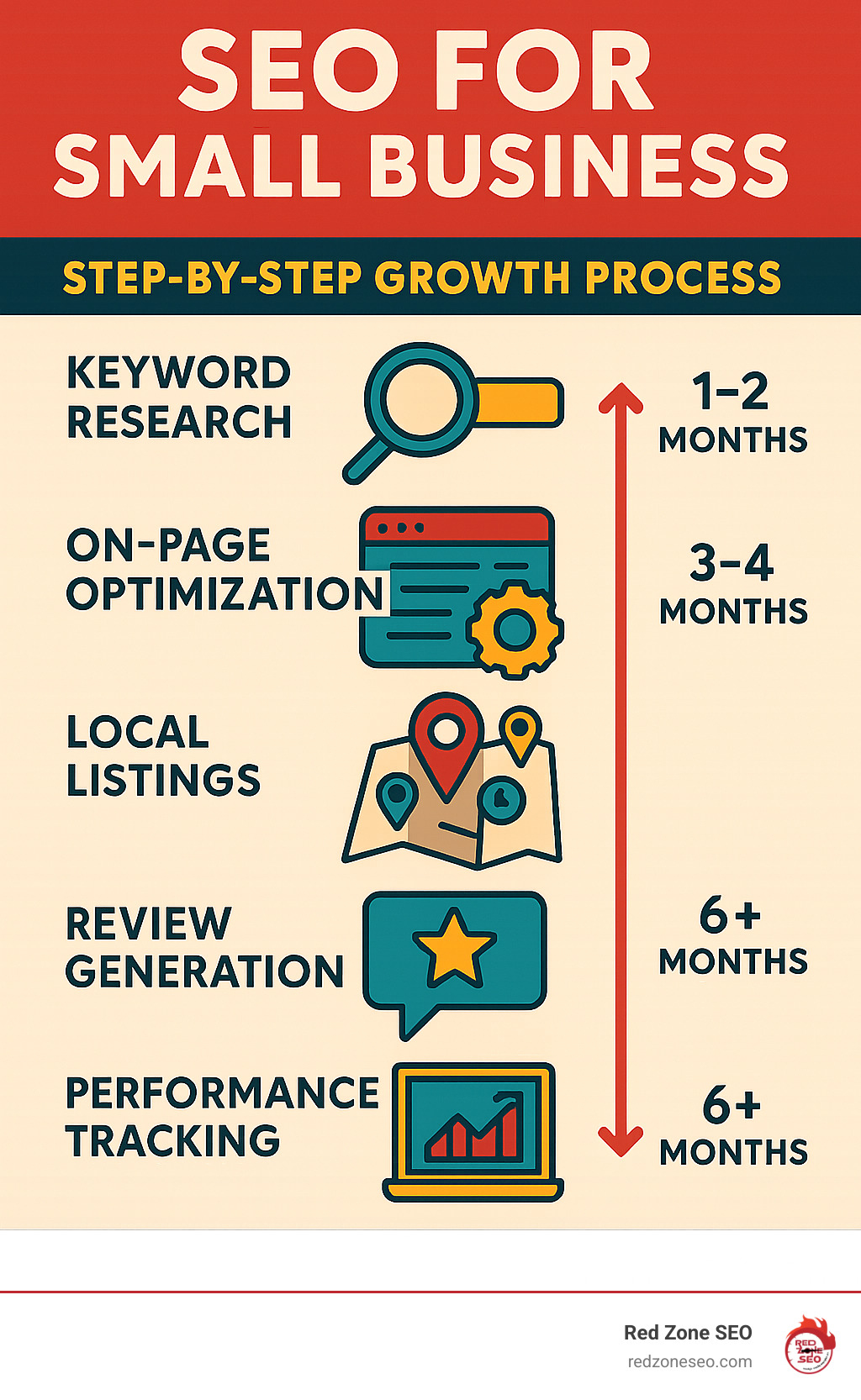
SEO for small business is your digital storefront's secret weapon. Search Engine Optimization helps your website show up when potential customers are actively looking for what you offer. When someone searches for "emergency plumber near me" at 2 AM, they're not window shopping - they need help now.
Organic search drives 53% of all website traffic and contributes to nearly half of online revenue. Google controls over 90% of global search traffic, and almost half of all searches have local intent. 72% of people who do a local search visit a nearby store within five miles.
Small businesses have natural advantages with E-E-A-T - Experience, Expertise, Authoritativeness, and Trustworthiness. Search Quality Raters use these criteria to evaluate content. You know your local community, have solved real problems for customers, and possess specialized knowledge that big corporations can't replicate.
Google works like a sophisticated librarian matching people with exactly what they need through three steps:
Crawling: Digital robots hop from link to link across the internet, finding new pages and checking for updates.
Indexing: Google reads everything on your page and files it in its digital library, understanding what your page is about.
Ranking: When someone searches, Google uses hundreds of signals to decide which pages will be most helpful - relevance, page speed, mobile compatibility, and trustworthy backlinks.
Keyword research helps you understand how customers talk about their problems and your solutions. On-page SEO makes each page clear to search engines and visitors through compelling titles and organized content. Technical SEO keeps your website running smoothly with fast loading, mobile compatibility, and HTTPS security.
Link building earns respect from other websites through backlinks. Local SEO optimizes your Google Business Profile and local directories. Content strategy creates helpful, relevant content that answers customers' questions and showcases your expertise.
SEO for small business targets anyone who might need your services anywhere, while local SEO focuses on customers in specific geographic areas. Small business SEO works for online stores or consulting services reaching clients nationwide. Local SEO is perfect for businesses with physical locations or those serving customers in person.
| Aspect | SEO for Small Business | Local SEO |
|---|---|---|
| Target Audience | Niche customers regardless of location | Customers in specific geographic areas |
| Key Strategies | Long-tail keywords, expertise content | Google Business Profile, local citations |
| Success Metrics | Organic traffic, niche keyword rankings | Local pack rankings, "near me" visibility |
| Content Focus | Industry expertise, how-to guides | Location pages, community involvement |
Long-tail keywords are perfect for small businesses competing nationally. Instead of targeting "marketing," focus on "email marketing for small veterinary practices." These specific phrases have lower competition and higher purchase intent.
Someone searching "shoes" might be browsing, but "waterproof hiking boots women size 8 wide" indicates ready-to-buy intent. Ecommerce businesses can reach customers nationwide by targeting product-specific keywords and building niche expertise.
Your Google Business Profile is your digital storefront window. Maintain NAP consistency (name, address, phone) across platforms, upload quality photos, and post regular updates.
Location pages should speak directly to customers in specific areas, mentioning local landmarks and community events. Reviews are ranking factors and trust signals - encourage them and respond professionally to all feedback.
More info about SEO services can help you balance both local and broader SEO strategies effectively.
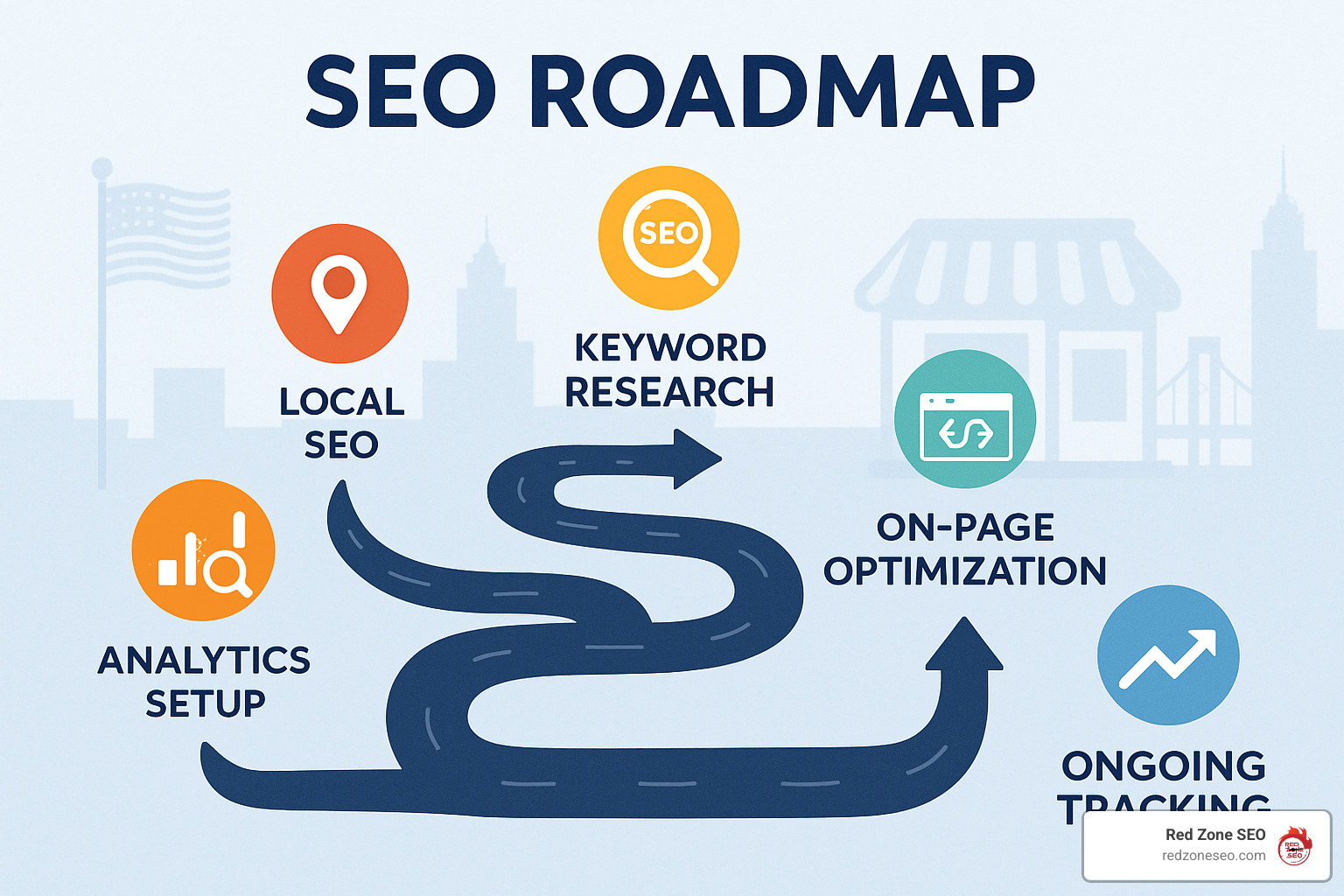
Successful SEO follows a predictable pattern. Your first month focuses on foundation setup: connecting Google Analytics and Google Search Console, optimizing your Google Business Profile, and reviewing website structure.
Month two shifts to research and strategy: keyword research, competitor analysis, and content calendar creation. Implementation begins in month three with page optimization, technical fixes, and content creation. Month four and beyond focuses on building authority through reviews and backlinks.
Real keyword research focuses on search intent. "Wedding cakes" suggests browsing, while "custom wedding cake bakery Austin delivery" indicates someone ready to buy.
Start with seed keywords describing what you do, then expand using AnswerThePublic to find actual questions people ask. Search volume matters, but intent matters more. 100 searches from ready buyers beats 1,000 browsers.
Target long-tail variations with buying signals like "buy," "near me," "best," or specific product names. Create a keyword map connecting each phrase to specific pages.
Title tags are your headline - keep under 60 characters and include your main keyword naturally. Meta descriptions are your elevator pitch in 160 characters, convincing people to click your result.
Google recommends using headers to organize content. Use one H1 per page, H2s for major sections, H3s for subsections. Internal linking helps visitors find related content using descriptive anchor text.
Image optimization includes descriptive file names and alt text. Write content like you're helping a friend - answer questions thoroughly using natural language.
Mobile-friendliness is essential with 60% of searches on phones. HTTPS security prevents "Not Secure" warnings. Page speed affects rankings and user experience - use Page Speed Insights for improvement recommendations.
Core Web Vitals measure real user experience. XML sitemaps help search engines find your pages. Clean URL structure like "yoursite.com/wedding-cakes-austin" is descriptive and shareable.
Reviews influence rankings and customer decisions. Ask for reviews after delivering great service and respond professionally to all feedback. Supplier and partner links are often the easiest backlinks to earn.
Community involvement leads to local backlinks and visibility. Create link-worthy resources that other websites want to share. Focus on providing value when requesting backlinks.
More info about Content Marketing helps develop comprehensive content strategies that naturally attract links and build authority.
Key Performance Indicators: organic traffic growth, keyword rankings, local pack visibility, conversion rates, and revenue from organic search. Focus on trends over time rather than daily fluctuations.
Google Search Console: Shows which keywords bring traffic and identifies technical issues. Google Analytics: Tracks website traffic and user behavior. Google Analytics setup is straightforward and essential.
Google Keyword Planner: Provides search volume data with a free Google Ads account. Bing Webmaster Tools: Don't ignore Bing, especially for older demographics. Schema markup generators: Create structured data without coding.
More info about How It Works explains our tool implementation process.
SEO is long-term: Initial results appear in 3-6 months, significant improvements take 6-12 months. DIY costs: 5-10 hours weekly initially, then 2-5 hours for maintenance, plus $50-200/month for tools.
Professional services: $75-100/hour or $750-2,000+ monthly. Budget allocation: 60% content creation, 20% technical improvements, 15% link building, 5% analytics tools.
Ask potential SEO providers: What specific work will you perform monthly? Can you provide similar business case studies? What's your link-building strategy? How do you measure progress?
Red flags: Guaranteed #1 rankings, extremely cheap services, vague strategies, focus only on rankings not business results.
Affordable SEO Las Vegas provides transparent, results-focused services for small businesses.
Algorithm updates cause unnecessary panic. If you focus on genuinely helping customers and following basic SEO principles, most updates won't hurt you. Content gaps plague every small business, but the secret is creating better content that answers real customer questions, not just more content.
Limited resources feel challenging but are actually your advantage. While corporations throw money at generic strategies, you win through personal relationships, local expertise, and authentic customer service.
Automation handles social media posting, review monitoring, and basic reporting automatically. Batching tasks works better than scattered efforts - dedicate specific time blocks for SEO activities.
Repurposing content maximizes your efforts. One comprehensive blog post becomes social media content, email newsletters, FAQ answers, and downloadable resources.
A fitness blogger focused on specific content like "30-minute home workout for busy moms" instead of competing for "fitness." She built 180,000 monthly organic visitors within two years and created a six-figure business.
A small Austin café couldn't compete with chain restaurants on budget but had genuine community connections. They optimized their Google Business Profile and encouraged customer reviews. Within six months, they consistently appeared in Local Pack results, increasing foot traffic by 40%.
An eco-friendly pet retailer implemented detailed schema markup that competitors ignored. This earned them rich snippets in search results, increasing click-through rates by 35% and organic revenue by 60% within one year.
Your Google Business Profile provides the fastest results for local businesses - proper optimization can boost local search visibility within 2-4 weeks. Technical quick fixes like adding missing title tags, meta descriptions, and fixing broken links also show immediate improvements.
Getting your first handful of genuine customer reviews can improve local search visibility almost immediately while building trust with potential customers.
The first two months involve laying groundwork - setting up analytics, optimizing pages, creating content. Months three and four bring first improvements in keyword rankings and organic traffic.
Month six to eight shows noticeable improvements in both traffic and rankings. Month twelve and beyond is where SEO really shines with significant organic growth. Many clients see their best results in year two and beyond.
SEO works beautifully alone for many small businesses, especially those with tight budgets, local customers, or long-term focus. Paid ads make sense as additions when you need immediate results, are launching new services, or running seasonal promotions.
Many successful businesses use a hybrid approach - SEO for steady long-term growth while using targeted ads for specific campaigns. Start with what makes sense for your budget and timeline.
SEO for small business doesn't have to be overwhelming or expensive. The most successful small businesses understand that SEO isn't about beating giant corporations - it's about being exactly where your customers are looking when they need what you offer.
The fundamentals matter most. Your Google Business Profile, clear website content, and genuine customer reviews will take you further than fancy technical tricks. Local bakeries outrank national chains by consistently sharing what makes them special and staying connected with their community.
Start where you are, not where you think you should be. Optimize one page this week, ask three happy customers for reviews next week, write one helpful blog post the week after. Small, consistent actions create big results over time.
The beauty of SEO for small business lies in your natural advantages. You know your customers personally, understand local needs, and can adapt quickly. Large companies spend millions trying to seem authentic and local - you already are.
Results take time, but they're worth the wait. Most clients start seeing improvements around month three, with significant growth by month six. Unlike paid ads that disappear when you stop paying, your SEO efforts keep working and growing stronger.
At Red Zone SEO, we've helped small businesses transform their online presence across Austin, Florida, Henderson, Las Vegas, and Nevada. Whether you tackle SEO yourself or work with professionals, the most important step is simply beginning.
Your customers are searching right now. Every day you wait is another day they might find your competitor instead. Ready to claim your share of those searches? More info about WordPress SEO Services can help you implement everything we've covered and start seeing real results faster than going it alone.
An SEO audit is a comprehensive evaluation of your website that identifies technical issues, content problems, and missed opportunities that prevent you from ranking higher in search results. Think of it as a health checkup for your website - it reveals hidden problems before they cost you traffic and revenue.
What an SEO audit covers:
The stakes are higher than most business owners realize. Research shows the average website has over 4,500 SEO issues that hurt search visibility. Even worse, 29% of pages have duplicate content problems and 34% are missing meta descriptions - basic fixes that could boost your rankings immediately.
Google makes around 9 algorithm changes per day, which means yesterday's perfectly optimized site could be struggling today. That's why SEO professionals perform audits roughly every 3 months to catch new problems before they tank your traffic.
The good news? Websites that fix issues found in regular audits see up to a 61% increase in organic traffic. One travel company achieved a 278% traffic boost after addressing technical and content problems finded in their audit.
If your website traffic has plateaued or your rankings keep dropping, hidden SEO issues are likely the culprit. The question isn't whether you need an audit - it's how quickly you can identify and fix the problems holding you back.
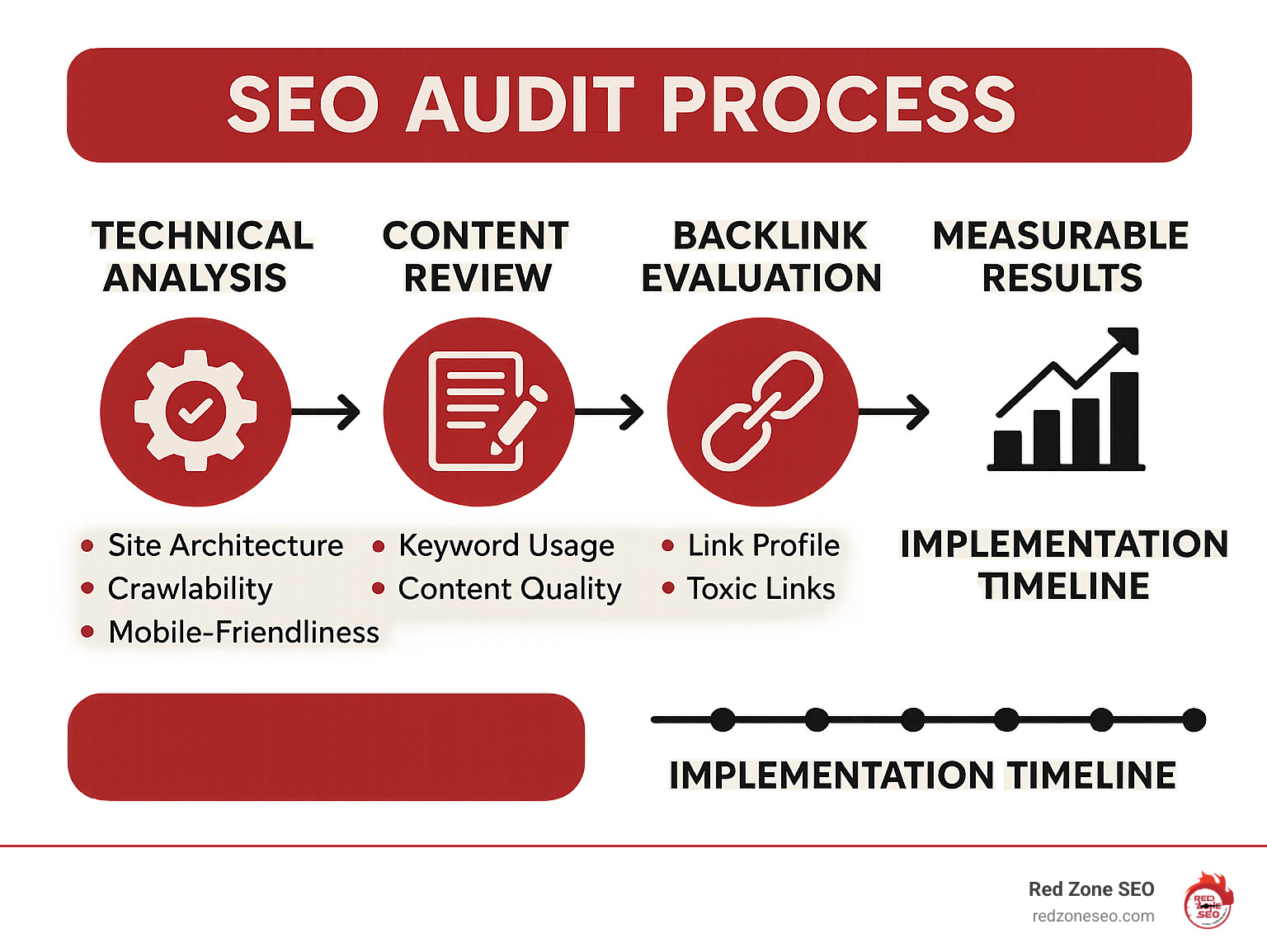
Think of an SEO audit as a detective investigation for your website. A Website audit examines every corner of your site to uncover what's helping you rank - and more importantly, what's holding you back from reaching your full potential in search results.
An SEO audit is your comprehensive health check that reveals everything from technical crawlability problems to content gaps and user experience issues that prevent search engines from showing your site to potential customers.
Search engine visibility depends on Google being able to find, crawl, and understand your content. If technical barriers block search engines from accessing your pages, you're essentially invisible - no matter how amazing your products or services are.
The rankings impact is significant. The top 3 Google results capture 68.7% of all clicks. That means small improvements in your search position can create dramatic increases in website traffic and revenue.
Revenue loss compounds daily - every day your SEO problems go unfixed, potential customers are finding your competitors instead of you. Research shows that for every additional second of page load time, conversion rates drop by 7-10%.
Algorithm changes happen constantly - Google makes updates almost daily. What worked perfectly last year might actually be hurting you today. Regular audits help you stay ahead of these shifts.
Traffic growth potential from systematic auditing is remarkable. Websites that commit to routine audits see up to 61% increases in organic traffic as they methodically fix issues and optimize their content.
The cost of neglect hits harder than most people realize. Businesses skipping regular audits typically lose 15-20% of their potential organic traffic. If your business generates $100,000 monthly from organic search, that's $15,000 to $20,000 in lost revenue every month.
A quarterly schedule works best for most businesses, allowing you to catch new issues quickly while giving enough time to implement changes and measure their impact.
Google penalties can devastate your traffic overnight. We've witnessed sites lose 80% of their organic traffic because they didn't catch penalty-triggering issues early enough.
Crawl errors create a domino effect that gets worse over time. Duplicate content problems plague nearly 29% of websites, diluting their ranking power. Toxic links accumulate like digital rust, slowly corroding your domain authority and triggering penalties.
Running an SEO audit without a systematic approach is like trying to fix a car with your eyes closed. Technical problems get fixed first because they affect everything else. Content and on-page issues come next, followed by off-page factors like backlinks, and finally user experience metrics.
Here's how different audit types stack up:
| Audit Type | Focus Area | Time Required | Impact Level |
|---|---|---|---|
| Technical | Crawlability, Speed, Mobile | 2-4 hours | High |
| On-Page | Content, Keywords, Meta Tags | 3-6 hours | Medium-High |
| Off-Page | Backlinks, Citations, Brand Mentions | 2-3 hours | Medium |
| UX/CWV | Core Web Vitals, User Experience | 1-2 hours | High |
Crawl errors are usually the first red flag we investigate. Google Search Console shows exactly which pages Google can't crawl and why. Common culprits include broken internal links, redirect chains, and overly restrictive robots.txt files.
XML sitemaps should list every important page on your site. A clean, accurate sitemap helps search engines understand your site structure and prioritize their crawling efforts.
Site speed and Core Web Vitals have become make-or-break factors for rankings. The Latest research on Core Web Vitals shows these metrics directly impact how Google evaluates your site. Only 12% of mobile sites currently meet Google's standards.
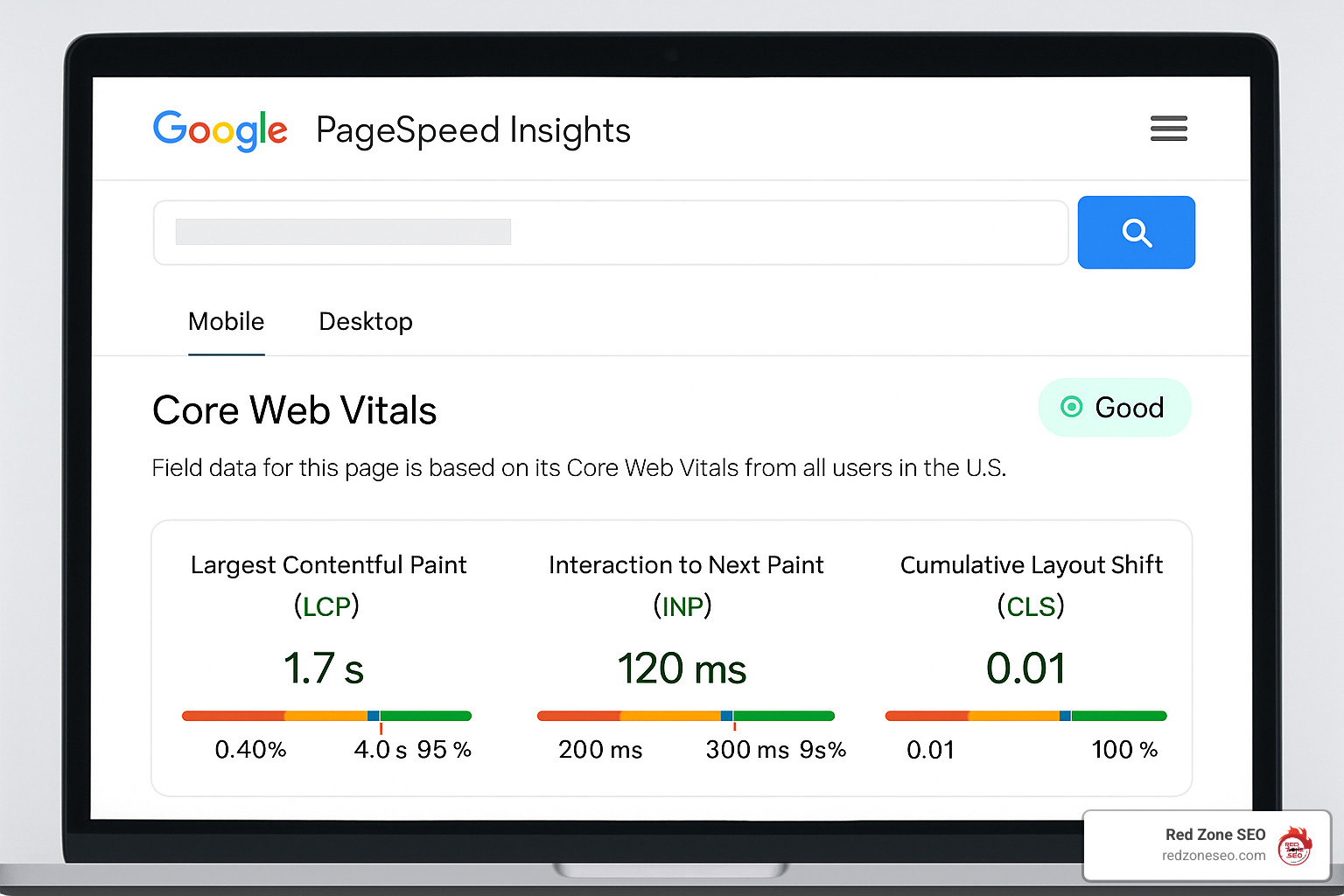
Largest Contentful Paint should happen within 2.5 seconds, Interaction to Next Paint needs to stay under 200 milliseconds, and Cumulative Layout Shift should be less than 0.1.
Mobile-first indexing means Google primarily looks at your mobile site to make ranking decisions. HTTPS security is non-negotiable now - Google has made it clear that security is a ranking factor.
We evaluate every piece of content against Google's E-E-A-T guidelines - Experience, Expertise, Authoritativeness, and Trustworthiness.
Keyword cannibalization happens when multiple pages target the same keyword, causing your own pages to compete against each other. Title tags need to be 55-60 characters with your primary keyword, while meta descriptions should be 130-150 characters and compelling.
Duplicate content affects 29% of pages we audit, making it one of our biggest quick-win opportunities. This includes identical content across multiple URLs and pages that need proper canonical tags.
You can learn more about our systematic approach at How It Works where we detail exactly how we tackle these content challenges.
Your backlink profile is like your website's reputation score. High-quality links from authoritative sites boost your credibility, while toxic links can drag down your rankings.
We analyze your total referring domains, the domain authority of sites linking to you, anchor text diversity, and how quickly you're gaining new links.
Toxic link identification requires a trained eye. Warning signs include links from penalized domains, excessive exact-match anchor text, irrelevant low-quality sites, and paid link networks.
Google increasingly rewards sites that provide excellent user experiences.
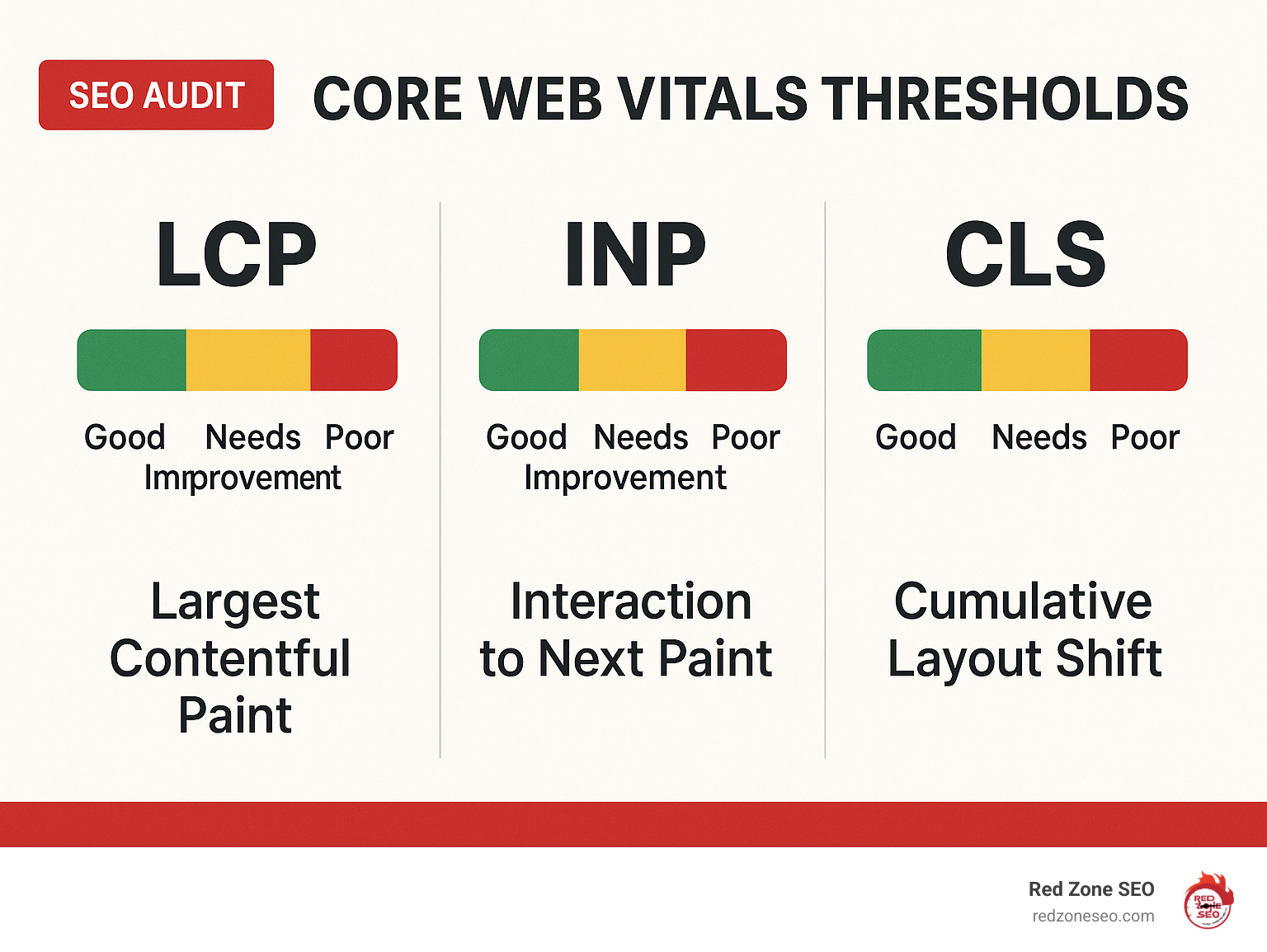
Mobile usability goes beyond just being responsive. Touch targets need proper size and spacing, content must fit the viewport without horizontal scrolling, and intrusive pop-ups that block content on mobile devices can hurt your rankings.
Structured data is like giving search engines a cheat sheet to understand your content better. Only 20% of websites implement it properly, creating a significant competitive advantage.
Schema.org markup helps your content earn rich snippets in search results. We implement organization schemas for business information, product schemas for e-commerce, article markup for blog content, and FAQ schemas for common questions.
We prefer JSON-LD format because Google recommends it. Every implementation gets tested with Google's Rich Results Test tool.
The right tools transform an SEO audit from an overwhelming manual process into a streamlined analysis that delivers actionable insights.
Google Search Console should be your starting point - it's free and shows you exactly what Google sees when crawling your site. Pair this with Google PageSpeed Insights for detailed performance analysis and Google's Rich Results Test to validate your structured data.
For comprehensive site crawling, Screaming Frog remains the gold standard. Semrush Site Audit runs over 170 technical checks automatically, while Ahrefs Site Audit excels at identifying how technical issues impact your search visibility.
Your website crawler forms the foundation of technical auditing. Screaming Frog handles most situations perfectly, but Sitebulb offers superior visual site architecture analysis.
Speed testing requires multiple perspectives. PageSpeed Insights gives you Google's official Core Web Vitals scores, but GTmetrix provides detailed waterfall charts. WebPageTest offers advanced testing scenarios.
Backlink analysis protects your site from toxic links while identifying growth opportunities. Whether you use Ahrefs or Majestic, the key is regularly monitoring your link profile.
24/7 monitoring acts like a security system for your SEO. We set up alerts that notify us immediately when new crawl errors appear or when page speed drops below thresholds.
AI-powered analysis helps identify patterns that humans might miss. Machine learning can analyze your content gaps compared to competitors and suggest improvements to existing pages.
Automated reporting keeps everyone informed without consuming hours of manual work. We create custom dashboards that automatically pull data from multiple sources into comprehensive reports.
Our Las Vegas SEO Experts team uses these advanced automation tools to deliver faster, more accurate audits while catching problems that manual reviews often miss.
Finding problems is only half the battle - knowing which issues to fix first determines your success. We use a systematic approach to prioritize audit findings based on impact and effort required.
Impact vs. Effort Matrix:
- High Impact, Low Effort: Quick wins that should be implemented immediately
- High Impact, High Effort: Strategic projects for long-term planning
- Low Impact, Low Effort: Nice-to-have improvements for slow periods
- Low Impact, High Effort: Generally avoided unless required
Quick Wins We Target First:
- Missing meta descriptions (affects 34% of pages)
- Broken internal links
- Unoptimized images without alt text
- Pages with duplicate title tags
- Missing or incorrect canonical tags
A successful audit implementation requires careful planning and resource allocation.
Error Severity Classification:
- Critical: Issues preventing indexation or causing penalties
- High: Problems significantly impacting rankings or user experience
- Medium: Optimization opportunities with moderate impact
- Low: Minor improvements with limited impact
Timeline Development:
- Week 1-2: Critical technical fixes
- Week 3-4: High-priority on-page optimization
- Month 2: Content improvements and creation
- Month 3: Link building and off-page optimization
Tracking the right metrics proves the value of your SEO audit:
Primary Success Metrics:
- Organic traffic growth (target: 20-40% increase within 6 months)
- Keyword ranking improvements
- Core Web Vitals scores (aim for "Good" status)
- Crawl error reduction (target: 90% reduction in critical errors)
Revenue Impact Tracking:
- Organic conversion rate changes
- Revenue per organic visitor
- Cost per acquisition improvements
Most businesses thrive with comprehensive audits every 3 months, but your specific needs might be different.
High-traffic websites with over 100,000 monthly visitors should consider monthly audits. These sites change rapidly and have more to lose from problems.
E-commerce sites face unique challenges with constantly changing product pages. We recommend quarterly comprehensive audits with monthly technical health checks.
Small business websites typically do well with quarterly audits paired with basic monthly monitoring.
New websites need extra attention during their first year. Monthly audits help catch issues early when they're easier to fix.
Between full audits, monitor your Core Web Vitals scores, crawl errors in Google Search Console, and ranking positions for your most important keywords.
Google Search Console should be your first stop. It's free, connects directly to Google's data, and shows you exactly what issues Google has found on your site.
Google PageSpeed Insights makes Core Web Vitals analysis simple. Just enter your URL and get a detailed report with specific suggestions.
Screaming Frog's free version crawls up to 500 URLs and identifies basic technical issues like broken links, missing meta descriptions, and duplicate content.
When you're ready to invest in paid tools, SEOptimer offers excellent value at $29 monthly with comprehensive audits and clear explanations.
Start simple with the free tools, master those basics, then gradually add more sophisticated options as your expertise grows.
An SEO audit is absolutely essential for penalty recovery, but it's just the beginning of what can be a long journey back to good standings with Google.
Manual penalties show up directly in Google Search Console with specific explanations. These are easier to address because Google tells you exactly what's wrong.
Algorithmic penalties are trickier because Google doesn't send you a notification. Your traffic just drops, sometimes dramatically.
Recovery timelines vary significantly. Manual penalties can be lifted in 2-8 weeks after Google reviews your reconsideration request. Algorithmic recovery typically takes 3-6 months to show meaningful improvement.
The success rate is encouraging - about 70-80% of properly executed penalty recovery efforts succeed, assuming the site owner commits to making all necessary changes.
Think of your SEO audit as the foundation of everything else you do online. Without it, you're building your digital marketing strategy on quicksand. The websites thriving in today's competitive landscape regularly peek under the hood to see what's working and what isn't.
Companies conducting regular audits experience up to 61% increases in organic traffic. Meanwhile, those flying blind watch their visibility slowly slip away, one algorithm update at a time. With Google tweaking its algorithm 9 times every single day, hoping for the best isn't a strategy.
Your journey starts with a single step. Begin by logging into Google Search Console and seeing what Google is already telling you about your site. Those red flags and warnings are your roadmap to improvement.
Next, work through our comprehensive checklist systematically. Focus on the high-impact, low-effort wins first - those missing meta descriptions, broken links, and unoptimized images that are easy to fix but deliver real results.
Create your implementation roadmap with realistic timelines and clear priorities. This isn't a sprint - it's a marathon. The businesses that succeed make SEO audits part of their regular business rhythm.
Set up your monitoring systems so you catch new issues before they become traffic-killing problems. The best time to fix an SEO problem is before it impacts your rankings.
At Red Zone SEO, we've guided businesses across the country through this exact process. Our data-driven approach takes the guesswork out of SEO, replacing hope with measurable results. We've seen small local businesses double their online leads and established companies reclaim their market dominance - all starting with a thorough audit.
An SEO audit isn't the finish line - it's the starting pistol. The businesses that understand this, that accept continuous improvement over one-time fixes, are the ones that don't just survive Google's constant changes but thrive because of them.
Your competitors are making their moves right now. Every day you wait is another day they're pulling ahead. Don't let hidden technical issues, content gaps, or toxic backlinks keep sabotaging your success.
Ready to find what's really holding your website back? Contact our team today. Let's turn your SEO audit findings into your competitive advantage.