
"How much should a technical SEO audit cost?" stumps even seasoned marketers because the term "audit" is used for wildly different services. Some vendors rely on a free crawler and email you a 50-page error list. Others spend dozens of expert hours reverse-engineering how Googlebot experiences your site and then map fixes to revenue goals.
The confusion stems from the fact that technical SEO audits can range from basic automated scans to comprehensive enterprise-level analyses. Understanding what you're actually paying for is crucial to making an informed decision that aligns with your business needs and budget.
Quick reference for realistic price ranges:
The spread exists because the depth of work differs dramatically. A $500 audit might catch broken links and missing meta descriptions; a $5,000 audit uncovers hidden rendering issues that block 40% of your catalog from Google. More importantly, higher-tier audits provide strategic context, prioritized recommendations, and implementation roadmaps that can directly impact your bottom line.
The market reality is that most businesses underestimate the complexity of modern technical SEO. With Google's emphasis on Core Web Vitals, mobile-first indexing, and sophisticated crawling algorithms, what constituted a "complete" audit five years ago barely scratches the surface today. In Red Zone SEO's experience, 91% of companies see a positive ROI once they match audit depth to business size.
Why should you care? Because the first organic result captures roughly 30% of search clicks, and technical issues are often the invisible barriers keeping you from those top positions. If technical flaws keep you off page one, you're donating customers to competitors each day. The cost of inaction often far exceeds the investment in a proper audit.
Consider this: if your e-commerce site generates $100,000 monthly in organic revenue, and technical issues are suppressing your rankings by just 20%, you're losing $20,000 per month. In this context, even a $10,000 comprehensive audit pays for itself in weeks, not months.
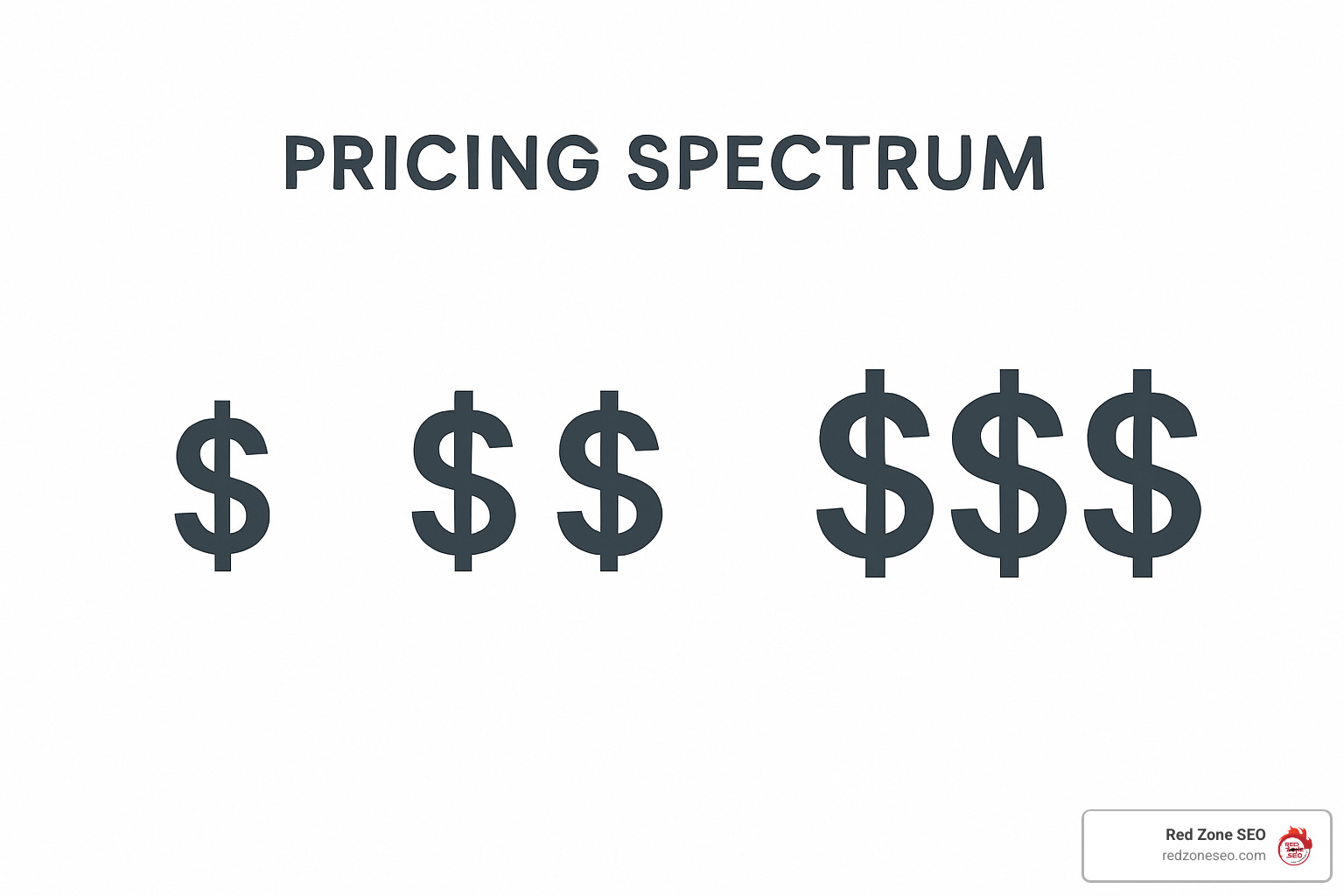
Great for a first glance. You’ll see broken links, missing meta descriptions and maybe a speed score. What you won’t get is context, prioritization, or instructions that a developer can follow.
This is the sweet spot for most local companies and online stores with fewer than 10 k pages. Expect:
Large catalogs, multiple subdomains, or international sites need deeper work:
The rule of thumb: complexity, scale and risk drive cost. Fixing pagination on 100 pages is simple; auditing dynamic faceted navigation on 100 k SKUs requires far more firepower.

Site Size & Complexity
Scope of Analysis
Provider Model
Tool Costs
Enterprise licenses for DeepCrawl, Ahrefs or WebPageTest run into thousands per year. Agencies amortize these fees across clients, which is why DIY audits often miss what pro tools surface.
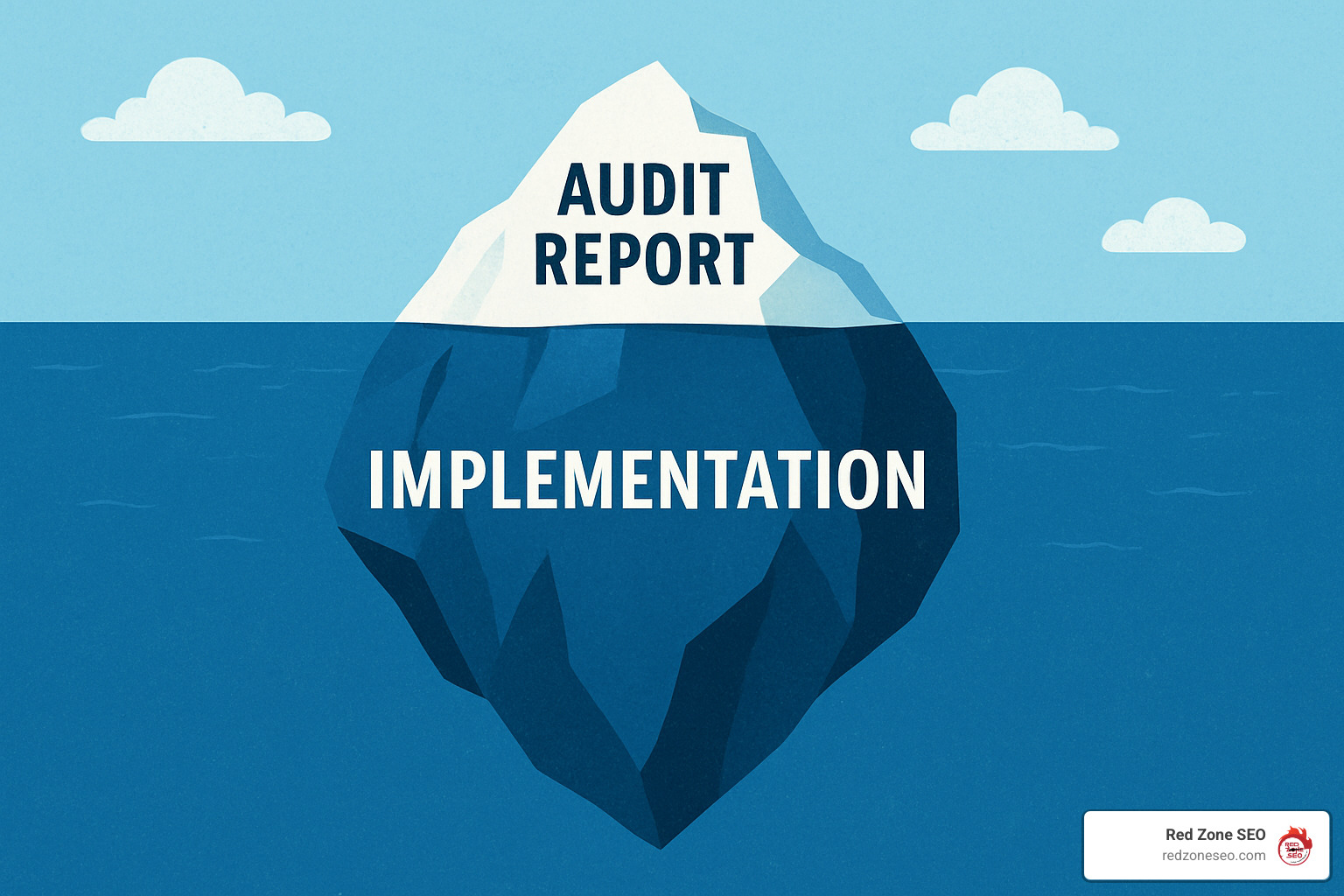
The PDF you receive is only the beginning. Implementation - developers fixing code, writers improving meta data, designers refining mobile UX - usually costs two to five times the audit itself. Budgeting for execution avoids the common pitfall of a great report gathering digital dust.
Ongoing maintenance also matters. Algorithm updates, site redesigns and new product launches can re-introduce technical debt. Quarterly health checks prevent small hiccups from turning into ranking drops.
Is it worth it? In most engagements Red Zone SEO manages, technical clean-up delivers:
Early detection is cheaper than emergency triage after a Google core update.
Quality takes time; rush jobs often skip critical tests like log-file sampling or Core Web Vitals validation.
Technical SEO is the plumbing of digital marketing - unseen but mission-critical. Asking how much should a technical SEO audit cost is really asking how much clarity and growth you want.
Expect to invest more as complexity grows, but also expect compounding returns. A clean, fast, crawlable site keeps paying dividends long after ad budgets end.
Red Zone SEO delivers data-driven audits from our teams in Austin, Las Vegas, Henderson NV and across Florida, customized to your tech stack and revenue targets. Ready to explain your site’s foundation? Explore how we work at https://redzoneseo.com/how-it-works/ and start your growth journey today.
BACKGROUND
Silvernest Furnishings is a U.S.-based, mid-market e-commerce retailer that sells roughly 85,000 SKUs of custom furniture and décor. Prior to the audit they averaged 1.9 million organic sessions per month and $16 million in annual revenue from Google Search alone. In Q3 of last year traffic slid 34 percent after a core update, wiping out approximately $800,000 in monthly sales.
PROJECT SCOPE
• 85k product URLs across two domains and four language subfolders
• React + Node.js tech stack with heavy client-side rendering
• Complex faceted navigation (color, size, fabric, price)
• International shipping rules that created thousands of thin pages
WHAT WE DID
KEY FINDINGS
• 43 percent of product URLs were generated only after client-side JavaScript executed, but Googlebot never rendered them because of timeouts.
• The faceted navigation created 1.1 million crawlable URLs, yet only 7 percent had unique inventory. Crawl budget was being squandered.
• Canonical tags conflicted with pagination parameters on 18,400 category pages, leading to indexation bloat.
• Largest Contentful Paint (LCP) averaged 6.1 seconds on mobile — double Google’s recommended threshold.
• hreflang mis-application triggered 28,000 duplication warnings in Search Console.
RECOMMENDATIONS
RESULTS (Six-Month Window)
• Organic sessions +52 percent (net new 990,000 visits/month)
• Revenue directly attributed to organic traffic +$3.2 million
• Crawl requests reduced 38 percent while indexed pages dropped 71 percent (bloat removed)
• Average LCP now 2.9 seconds on mobile; CLS improved from 0.34 to 0.09
• International impressions up 61 percent due to correct hreflang implementation
WHY IT MATTERS
This case study highlights that a $14,000 enterprise-level audit paired with $32,000 in development work delivered a 10× return within half a year. The lesson? When scale, JS frameworks and international SEO collide, only a deep-technical audit can surface the hidden performance drains that generic scans miss.
Is a technical audit still necessary if I just redesigned my website?
Absolutely. Most redesigns focus on aesthetics and marketing copy. Even seasoned dev teams inadvertently introduce new redirect chains, render-blocking scripts or broken structured-data markup. An audit after launch is insurance that your shiny new site is also search-engine friendly.
Can’t I just run Screaming Frog myself and save money?
You can — and should—run your own crawler to catch obvious 404s or missing meta tags. The value gap arises when issues require interpretation: why is Googlebot spending 40 percent of its crawl budget on parameter junk? Why are rendered HTML snapshots missing key content? Tools surface symptoms; experts diagnose root causes and tie them to business KPIs.
How long does it take before I see results after fixes?
For small-to-mid sites, positive movement often appears in 4-6 weeks once fixes roll out and Google recrawls affected URLs. Enterprise ecosystems with millions of pages can take 2-3 months for full re-indexation. Speed of implementation is the single biggest variable.
Why do enterprise audits cost so much more?
Scale, risk and tooling. Parsing 50 million server logs or validating 12 language versions across subdirectories requires compute power and niche software that sub-$1,000 audits do not include. Add collaboration with devops, product and legal teams and the billable hours multiply.
Is an audit a one-time expense or ongoing engagement?
Think of a comprehensive audit as a full medical work-up. After you get healthy, quarterly check-ups (mini-audits) keep you in shape — especially when algorithm updates drop. Many providers bundle annual monitoring retainers at reduced rates once the heavy lift is complete.
What should a good audit deliverable look like?
Expect more than a 300-row spreadsheet. A modern report should include: executive summary, prioritized issue list, severity scoring, visual examples, recommended fixes with effort estimates, and impact projections. Video walkthroughs and direct Q&A sessions are hallmarks of top-tier providers.
Do Core Web Vitals really justify paying thousands for an audit?
If organic traffic produces meaningful revenue, then yes. Retail data shows every 100 ms shaved off mobile LCP improves conversion rate 2-4 percent. On a $5 million store that’s real money. Core Web Vitals are now part of Google’s ranking system, so performance pays twice — with better rank and higher on-page conversions.
How do I calculate ROI before green-lighting an audit?
Take current organic revenue × the traffic-lift percentage other sites in your niche gained after similar clean-ups (usually 15-40 percent). Subtract estimated implementation cost. If the delta is higher than the audit price, your business case is clear.
Should I choose an agency, freelancer or SaaS platform?
• Freelancers excel at focused audits on smaller sites for budget-conscious owners.
• Agencies bring cross-disciplinary talent (dev, data, UX) suited for complex ecosystems.
• SaaS platforms automate monitoring but rarely deliver bespoke analysis.
Align the pick with site size, internal resources and how much hand-holding you need.
What are the hidden costs people overlook?
Implementation manpower (engineering hours), potential downtime for large code pushes, and opportunity cost if fixes bottleneck behind other priorities. Budget 2–5× the audit fee for execution to avoid half-finished roadmaps languishing in Jira.
THE ALLURE OF DIY
Modern crawlers like Screaming Frog, Sitebulb and the free tier of Ahrefs make it feel as though anyone can knock out a technical assessment over a weekend. For micro-sites (<100 URLs) that’s often true. You’ll find 404s, duplicate titles and even basic Core Web Vitals scores without spending a dollar on consultants.
WHERE DIY HITS THE WALL
ECONOMIC BREAK-EVEN
If your site earns less than $5,000/month through organic search, a paid audit may outstrip short-term ROI. On the flip side, any business clearing six figures annually from Google traffic risks far costlier losses by ignoring unseen technical debt. One 20-percent ranking drop can erase years of audit savings.
THE HYBRID MODEL
Many companies achieve the best of both worlds by:
• Running quarterly in-house crawls for low-hanging fixes.
• Commissioning a deep professional audit every 12–18 months or after major site launches.
• Maintaining a retainer for ad-hoc questions so small issues never snowball.
CHECKLIST: KNOW WHEN TO UPGRADE
✓ Your CMS switched to a JS front-end.
✓ You’re expanding into new language markets.
✓ Organic growth plateaued despite content additions.
✓ Core Web Vitals warnings persist after basic optimizations.
✓ You observe sharp traffic drops after algorithm updates.
BOTTOM LINE
DIY audits are perfect diagnostic tools for straightforward websites with limited revenue exposure. But as scale, revenue stakes and technical complexity rise, the marginal cost of professional expertise quickly flips from liability to profit center.