Introduction: Why SEO is the Ultimate Growth Engine for Small Businesses
SEO for small companies is the strategic practice of optimizing your website and online presence to rank higher in search engine results pages (SERPs). It’s about making your business highly visible to the exact people who are actively searching for your products or services. For any small business, from a local bakery to a specialized consulting firm, mastering SEO is the key to being finded in a crowded digital marketplace.
Why is SEO not just important, but absolutely essential?
- It Drives High-Quality Traffic: A staggering 53.3% of all website traffic originates from organic search. This isn't just any traffic; it's composed of individuals with a specific need or question, making them far more likely to convert than someone who stumbles upon a random ad.
- Visibility is Your Digital Real Estate: If you're not on the first page of Google, you're practically invisible. Research consistently shows that only 0.63% of users ever click through to the second page. Securing a top spot is like having a storefront on the busiest street in town.
- It's Incredibly Cost-Effective: Unlike paid advertising (PPC), where you pay for every single click and the traffic stops the moment you turn off your budget, SEO is an investment. Once you earn your rankings through quality content and a solid technical foundation, your website generates a continuous stream of potential customers for free. It's a marketing asset that appreciates over time.
- You Can Genuinely Outrank the Giants: SEO is the great equalizer. A local, family-owned business can compete with and even outrank large national chains by focusing on local relevance, superior customer value, and targeting specific niche keywords that bigger companies often overlook. Google's goal is to provide the best answer, not the answer from the biggest company.
Every single day, potential customers in your area are typing phrases into Google like "best pizza near me," "emergency plumber in downtown," or "accountant for small businesses." The fundamental question for your business is: will they find you, or will they find your competitors? A well-executed SEO strategy ensures the answer is you. It connects your business with customers who have high purchase intent. Someone searching for an "emergency plumber" isn't just browsing; they have an urgent problem and are ready to hire someone now.
While your competitors might be pouring money into ad campaigns for temporary visibility, your optimized website works tirelessly as your best salesperson—24/7, 365 days a year—attracting, informing, and converting customers without any ongoing advertising costs. It is, without a doubt, the most sustainable and powerful way to grow your business in the modern digital age.
Explore more about seo for small companies:
The Three Pillars of a Winning SEO Strategy
A successful SEO for small companies strategy is built upon three interconnected and equally important pillars: On-Page SEO, Off-Page SEO, and Technical SEO. Mastering each is essential, as they work in concert to support your online growth and visibility. To make it simple, think of it this way: On-Page SEO is your beautifully organized and helpful storefront, Off-Page SEO is your stellar reputation throughout the town, and Technical SEO is ensuring the doors are open uped, the foundation is solid, and the lights are always on.
Underpinning all three of these pillars is the critical concept of User Experience (UX). Google's algorithms are increasingly sophisticated, designed to reward websites that are fast, intuitive to steer, and genuinely enjoyable for visitors. This is directly linked to Mobile-First Indexing. Google now predominantly uses the mobile version of your content for indexing and ranking. With over half of all web traffic coming from mobile devices, a clunky or slow mobile experience is a surefire way to become invisible in search results.
Understanding these pillars allows you to build a powerful, systematic SEO foundation that delivers lasting results. That's how we approach SEO Strategies for Start Ups—with a step-by-step, data-driven process that addresses every facet of search optimization.

On-Page SEO: Optimizing What's on Your Site
On-Page SEO involves all the measures taken directly within your website to improve its position in the search rankings. It's about creating content that is valuable to users and easy for search engines to understand. Key elements include:
- Title Tags & Meta Descriptions: These are your digital billboard in search results. A compelling title tag should include your primary keyword and create intrigue, while the meta description acts as a short ad, persuading the user to click. For example, a title like "Emergency Plumbing Services in Springfield | 24/7 Response" is far more effective than just "Plumbing."
- Header Tags (H1, H2, H3): These act as an outline for your content, creating a logical hierarchy that makes your articles and pages easier for both users and search engine crawlers to read and understand. Your main title should be an H1, with subheadings as H2s and further sub-points as H3s. Google recommends using headers to structure your content logically.
- Content Quality & E-E-A-T: Creating genuinely helpful, expert content that thoroughly answers your customers' questions is the absolute heart of modern On-Page SEO. This aligns with Google's concept of E-E-A-T (Experience, Expertise, Authoritativeness, and Trustworthiness). Your content must demonstrate that you are a credible source of information.
- Keyword Placement: Once you've identified your target keywords, they should be integrated naturally into your titles, headers, body content, and image alt text. The goal is to sound natural and helpful, not robotic or stuffed with keywords.
- Internal Linking: This is the practice of linking to other relevant pages on your own website. It helps users find more of your content and helps search engines understand the relationship between your pages, spreading ranking power (or "link equity") throughout your site.
- Image Alt Text: This is a short, descriptive text for each image on your site. It serves two purposes: it improves accessibility for visually impaired users using screen readers, and it provides another opportunity to signal to search engines what your content is about.
- URL Structure: URLs should be clean, simple, and descriptive. A URL like
yoursite.com/services/emergency-plumbing is much better for users and SEO than a messy one like yoursite.com/p?id=123.
Our On-Page SEO Checklist provides a systematic guide to mastering these crucial elements.
Off-Page SEO: Building Authority Beyond Your Website
Off-Page SEO refers to all the activities you and others do away from your website to raise its authority and reputation. It’s essentially about building trust and demonstrating your relevance through external signals.
- Backlinks: These are links from other websites to yours, and they act as votes of confidence. A single backlink from a highly respected, relevant website (like a local news outlet or a major industry blog) is worth more than hundreds of low-quality links from irrelevant sites. Quality always trumps quantity. You can earn these links by creating exceptional content that others want to cite, guest blogging on reputable sites, and building relationships in your industry.
- Brand Mentions: Even when a website mentions your brand name without linking to you, search engines like Google can recognize it as a positive signal of authority and relevance.
- Local Citations: For any business with a physical location, consistent listings of your Name, Address, and Phone Number (NAP) across online directories like Yelp, Yellow Pages, and industry-specific sites are vital for local search rankings.
- Social Media Signals: While likes and shares are not a direct ranking factor, a strong social media presence drives traffic to your website, increases brand visibility, and can indirectly lead to valuable backlinks and brand mentions when your content gets shared.
- Online Reviews: Positive reviews on platforms like Google Business Profile, Yelp, and Trustpilot are incredibly powerful. They build social proof and trust with potential customers and are a known ranking factor, especially for local SEO.
Building your site's page authority through these off-page methods is essential for ranking for competitive keywords. Our Link Building Services focus on ethical, sustainable strategies to build your brand's authority.
Technical SEO: Ensuring Search Engines Can Read Your Site
Technical SEO is the foundation upon which your entire SEO strategy is built. If search engines can't efficiently crawl, render, and index your site, all your on-page and off-page efforts will be wasted.
- Site Speed: In an age of impatience, page speed is a direct ranking factor. A slow-loading website leads to high bounce rates, frustrates users, and signals poor quality to Google. This is closely tied to Core Web Vitals (CWV), which measure loading performance, interactivity, and visual stability.
- Mobile Responsiveness: With Google's Mobile-First Indexing, your site must function perfectly and look great on smartphones and tablets. This is non-negotiable.
- Crawlability & Indexability: Your site's architecture and files like
robots.txt must allow search engine crawlers to access and understand all your important pages. You need to ensure there are no "crawl traps" or incorrect noindex tags blocking valuable content. Learn how search engines crawl and index websites.
- XML Sitemaps: This is a file that acts as a roadmap of your website, listing all your important URLs to help search engines find and index your content more efficiently.
- HTTPS Security: A secure site (using HTTPS) is a confirmed, albeit small, Google ranking signal. More importantly, it encrypts user data, builds trust with visitors, and prevents the "Not Secure" warning in browsers.
- Structured Data (Schema Markup): This is a type of code that you add to your website to help search engines better understand the context of your content. It can lead to eye-catching "rich snippets" in search results, such as star ratings, event details, or FAQ dropdowns, which can significantly increase your click-through rate.
- Duplicate Content: Having multiple pages with the same or very similar content can confuse search engines and dilute your ranking potential. Technical SEO involves using tools like canonical tags to tell Google which version of a page is the primary one.
Your Step-by-Step Guide to SEO for Small Companies
Implementing SEO for small companies is a marathon, not a sprint. It requires a clear, strategic roadmap and consistent, dedicated effort. The beauty of SEO is that every improvement you make, no matter how small, compounds over time to drive sustainable, long-term growth. This guide focuses on practical, foundational steps to put your business firmly on the digital map.

Successful small businesses don't need the biggest marketing budgets; they need the smartest and most consistent approach. Let's explore our proven SEO for Small Business methodology, broken down into actionable steps.
Step 1: Master Keyword Research to Understand Your Customers
Keyword research is the cornerstone of any successful SEO campaign. It's not about guessing what people search for; it's about using data to understand the exact language, questions, and problems your ideal customers have. The key is to grasp search intent—the why behind a search query. Is the user looking to learn something (informational), find a specific website (navigational), compare options (commercial), or make a purchase right now (transactional)?
- Long-Tail Keywords: These are your secret weapon as a small business. Instead of targeting the highly competitive, broad term "pizza," focus on longer, more specific phrases like "best gluten-free pizza delivery in downtown." These keywords have lower search volume but attract highly motivated buyers, resulting in much higher conversion rates.
- Short-Tail Keywords: These are broad, one or two-word terms like "plumber" or "bakery." They are extremely competitive and should typically be targeted only after you've built authority by ranking for more specific long-tail keywords.
- Analyze Volume & Difficulty: The sweet spot is finding keywords with a reasonable monthly search volume and a manageable keyword difficulty score. You want to target terms you have a realistic chance of ranking for.
- Competitor Analysis: One of the best ways to find keyword opportunities is to analyze what your direct competitors are ranking for. Tools can show you their top-performing pages and keywords, revealing gaps in their strategy that you can exploit.
Tools like Google Keyword Planner (free), Ahrefs, and SEMrush are invaluable for this process. Our comprehensive Keyword Research process transforms these raw data insights into a powerful competitive advantage for your business.
Step 2: Create High-Quality Content That Ranks and Converts
Google and your customers ultimately want the same thing: valuable, helpful, and authoritative information that solves a problem or answers a question. Your content strategy should pivot away from selling and towards helping. When you do this effectively, rankings and conversions will naturally follow.
- Focus on E-E-A-T: Demonstrate your Experience, Expertise, Authoritativeness, and Trustworthiness. Don't just say you're an expert; prove it. Share real-world case studies, detailed project walkthroughs, customer testimonials, and professional insights that only you can provide.
- Write for Humans First, Search Engines Second: Use clear, conversational language that your target audience understands. Structure your content with clear headings, short paragraphs, and bullet points to make it easy to scan. The goal is to answer common customer questions directly and comprehensively. Turn your expertise into ultimate guides, detailed service pages, and insightful blog posts.
- Blog Consistently: A regularly updated blog is one of the most powerful tools for SEO. Each post is a new opportunity to rank for long-tail keywords, showcase your expertise, answer customer questions, and attract new visitors to your site year-round. Create a content calendar to stay organized and consistent.
- Avoid Content Stuffing at All Costs: Never sacrifice the quality and readability of your content for the sake of cramming in more keywords. This outdated practice creates a poor user experience and can lead to penalties. Google actively penalizes sites with irrelevant or stuffed content.
- Use AI as an Assistant, Not an Author: AI tools can be fantastic for brainstorming ideas, creating outlines, and checking grammar. However, they cannot replicate your unique human experience, brand voice, and knowledge. Always add your personal perspective to make your content stand out.
Our Content Marketing for Small Businesses approach is designed to help you create content that both search engines and, more importantly, your customers will love.
Step 3: Dominate Your Neighborhood with Local SEO
For most small businesses with a physical location or service area, the most valuable customers are the ones right in their neighborhood. Local SEO is the specialized practice of ensuring you appear prominently in front of these local searchers the moment they're ready to buy.
- Optimize Your Google Business Profile (GBP): This is your most important local SEO asset. Think of it as your digital storefront. It's free and essential. You must completely fill it out: add high-quality photos, keep your hours updated, list all your services, use the Q&A feature to answer common questions, and regularly create GBP Posts. If you haven't, Claim your Google Business page immediately.
- Ensure NAP Consistency: Your business's Name, Address, and Phone number must be 100% identical across your website and all online directories. Even small variations can confuse search engines and hurt your local rankings.
- Build Local Citations: A citation is any online mention of your NAP. Get your business listed accurately in relevant local and industry directories (e.g., Yelp, Angie's List, trade-specific sites). Consistency is key.
- Encourage and Respond to Customer Reviews: Positive reviews are a massive trust signal and a powerful local ranking factor. Actively encourage satisfied customers to leave reviews on your GBP. Crucially, respond to all reviews, both positive and negative, to show that you are engaged and value customer feedback. 76% of local searchers visit a business within a day, and reviews are often the final deciding factor.
- Target "Near Me" and Geo-Specific Searches: Proper local SEO optimizes your site to be visible for high-intent searches like "coffee shop near me" or "landscaper in [Your Town]." This involves creating location-specific service pages and embedding local signals throughout your website.
Our Local SEO Packages are specifically designed to connect your business with your local community and drive foot traffic.
Step 4: Optimize Your Website for Speed and Mobile Devices
A slow, clunky, or broken website will send potential customers running straight to your competitors. In today's world, website performance, especially on mobile, is non-negotiable for both user experience and SEO.
- Prioritize Page Load Time: Every second counts. Studies show that even a one-second delay in page load time can significantly increase your bounce rate. Focus on optimizing images, leveraging browser caching, minifying code (CSS, JavaScript), and ensuring you have a fast web host.
- Meet Google's Core Web Vitals: These are a specific set of metrics Google uses to measure a page's overall user experience. They include Largest Contentful Paint (LCP) for loading speed, Interaction to Next Paint (INP) for interactivity, and Cumulative Layout Shift (CLS) for visual stability. Passing the CWV assessment is a direct ranking signal.
- Accept Responsive Design: This is a fundamental requirement. Your website must automatically adapt to look great and function flawlessly on any device, from a large desktop monitor to the smallest smartphone screen. With more than 60% of website traffic now coming from mobile devices, a poor mobile experience is a critical failure.
- Optimize Your Images: Large, uncompressed image files are often the biggest culprit for slow page speeds. Compress all images before uploading them to ensure they load quickly without a noticeable loss in visual quality. Use modern image formats like WebP where possible.
Use free tools like Google PageSpeed Insights to analyze your site's performance. It will provide a detailed report and actionable recommendations for improvement.
Measuring Your SEO Success and Avoiding Common Mistakes
Effective SEO for small companies is not a "set it and forget it" activity; it requires continuous monitoring and refinement. You can't improve what you don't measure. Tracking your progress is essential to understand what's working, identify areas for improvement, make data-driven adjustments, and ultimately demonstrate a clear return on your investment (ROI).
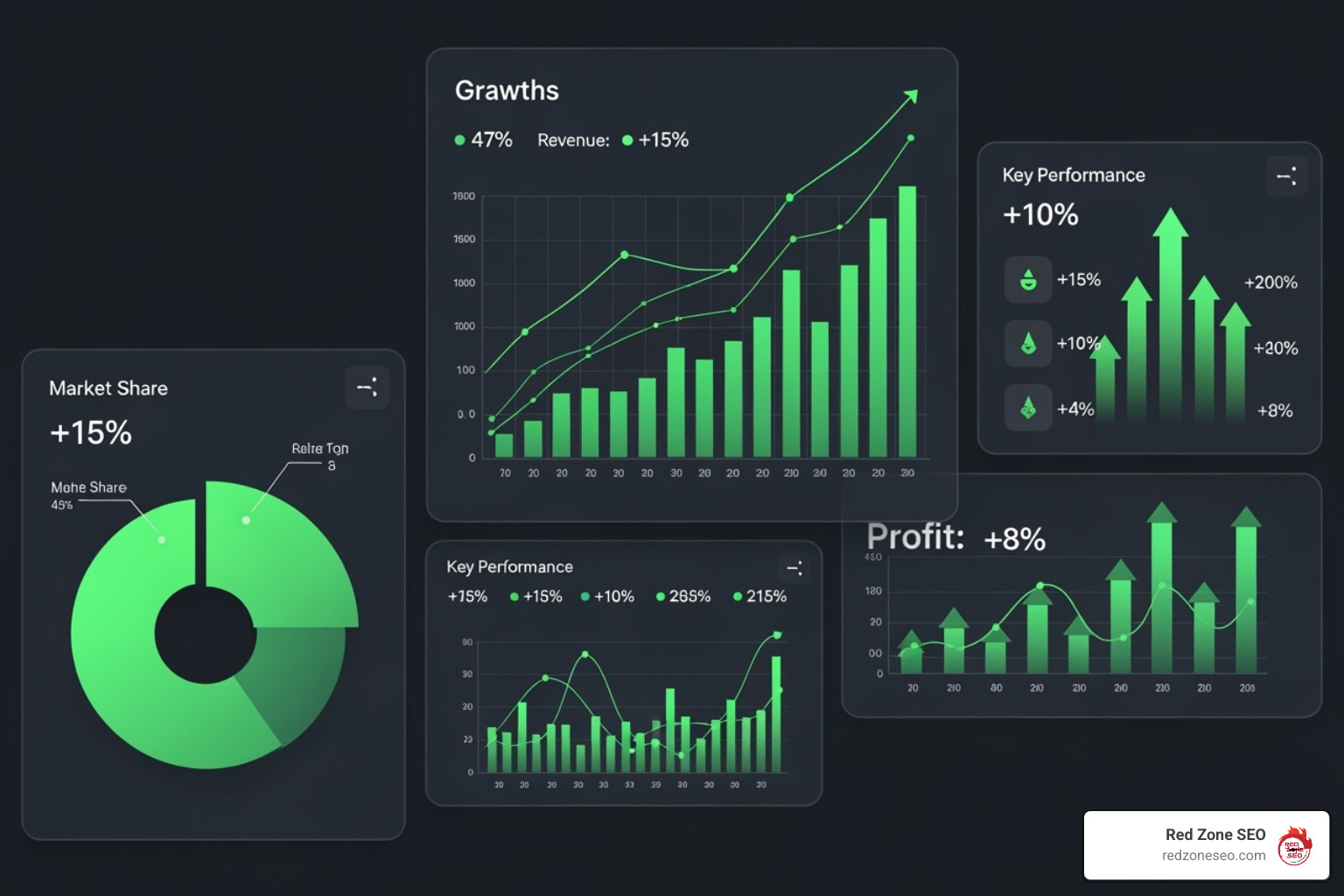
Regular SEO audits and transparent reporting are central to our process. We believe in focusing on the key metrics that actually matter to your business's bottom line and helping you avoid the common pitfalls that can derail your growth.
To measure success, you must focus on Key Performance Indicators (KPIs) that reflect actual business growth, not just vanity metrics like social media likes. The two most important free tools for this are provided by Google itself:
- Google Analytics 4 (GA4): This is your window into how visitors interact with your website. It shows you where your traffic comes from (organic, direct, social, etc.) and what they do once they arrive. Key metrics to track include:
- Organic Traffic: The number of visitors arriving from search engines. Is this number growing month-over-month?
- Conversions: This is the most important metric. A conversion is a desired action, such as a form fill, a phone call, or a product purchase. You must set up conversion tracking to measure your ROI.
- Engaged Sessions: A session that lasts longer than 10 seconds, has a conversion event, or has at least 2 pageviews. This is a better indicator of user interest than the old "bounce rate."
- Google Search Console (GSC): This is your direct line of communication with Google. It provides invaluable data on how your site performs in Google Search. Key metrics to monitor include:
- Keyword Rankings (Queries): See which search terms are driving traffic to your site and your average ranking position for them.
- Impressions & Clicks: Impressions are how many times your site appeared in search results. Clicks are how many times people actually clicked on your listing.
- Click-Through Rate (CTR): This is the percentage of impressions that result in a click (Clicks ÷ Impressions). A low CTR might indicate that your title tags and meta descriptions aren't compelling enough.
Tracking these KPIs consistently tells the true story of your SEO efforts and their direct impact on your business's growth. A regular analysis, like the one included in our SEO Audit Cost, is essential for identifying new opportunities and staying ahead of the competition.
Common Mistakes in SEO for Small Companies and How to Avoid Them
Many well-intentioned small business owners inadvertently make simple mistakes that sabotage their SEO efforts. Being aware of these common pitfalls is the first step to avoiding them:
- Ignoring Technical SEO: You can have the most beautiful website with the best content in the world, but if it's too slow or search engines can't crawl it properly, it's all for nothing. A solid technical foundation is an absolute prerequisite for success.
- Focusing on Quantity Over Quality: In the early days of SEO, churning out lots of thin articles might have worked. Today, it's the opposite. One piece of high-quality, comprehensive, expert-driven content is worth more than ten generic, low-value articles. Always prioritize value for the user.
- Having Unrealistic Timelines: SEO is a long-term investment, not a quick fix. You should expect to see initial traction and some early wins in 3-6 months, with significant growth compounding over time. Anyone promising #1 rankings overnight is selling snake oil.
- Neglecting Mobile Users: With the majority of searches happening on mobile devices, a poor mobile experience is a critical failure. Test your site on your own phone. Is it easy to steer and read? If not, you're losing customers.
- Using Black-Hat SEO Tactics: Desperate for fast results, some may turn to forbidden shortcuts like buying spammy links, stuffing keywords unnaturally, or using hidden text. These tactics are a one-way ticket to a severe Google penalty, which can be incredibly difficult to recover from. Stick to ethical, sustainable "white-hat" strategies.
- Inconsistent NAP for Local SEO: For local businesses, having even minor variations in your Name, Address, and Phone number across different online directories can confuse search engines and severely damage your ability to rank in local search results and map packs.
Frequently Asked Questions about SEO for Small Companies
Starting on an SEO for small companies strategy can bring up a lot of valid questions. It's a complex field, and it's natural to want clarity before investing your time and resources. Here are straightforward, honest answers to the questions we hear most often from business owners just like you.
How long does it take for SEO to work for a small business?
This is the most common and important question, and the honest answer is: it's a long-term strategy. SEO is not like flipping a switch. While you might see some early positive signals (like increased impressions in Google Search Console) within the first few weeks, most small businesses begin to see meaningful, consistent, and impactful results within 3 to 6 months.
Results don't happen overnight because SEO has a powerful compounding effect. Each piece of high-quality content you publish, every authoritative backlink you earn, and every technical improvement you make builds on the last. This creates a growing momentum that becomes more powerful over time. After a full year of consistent, strategic effort, the impact on your traffic and leads is often dramatic and transformative.
Several factors influence this timeline, including:
- Your Industry's Competition Level: Ranking for "bakery in a small town" will be faster than ranking for "personal injury lawyer in a major city."
- Your Website's History: A brand new website often takes longer to gain traction than an established site with some existing authority.
- Your Budget and Resources: The speed at which you can produce high-quality content and implement technical fixes will affect the timeline.
The good news is that small businesses can often be more agile and nimble than large corporations, allowing them to pivot quickly and capture niche and local opportunities much faster.
Can I do SEO on my own or should I hire an agency?
Yes, DIY SEO is absolutely possible, especially for the basics. Any motivated business owner can and should take foundational steps like claiming and optimizing their Google Business Profile, encouraging customer reviews, and writing helpful blog content about their area of expertise. These actions alone can make a significant difference.
However, the primary challenge for most business owners is the time commitment and the steep learning curve. Effective SEO requires consistent effort in keyword research, content creation, technical optimization, link building, and performance analysis—often requiring 5-10 hours per week, or more, to be truly effective. The real question you must ask is whether that is the best use of your valuable time as a business owner.
Hiring an SEO agency provides you with a team of specialists, access to expensive professional tools, and years of experience. We live and breathe SEO, which means we stay on top of the constant algorithm changes so you don't have to. A task that might take you a full day to research and implement, an experienced team can often handle in a fraction of the time. This allows you to focus on what you do best: running and growing your business, while we focus on what we do best: growing your online presence.
When you're ready to explore professional help, our SEO Packages Pricing offers transparent solutions customized for the unique needs and budgets of small businesses.
How is AI changing SEO for small businesses?
Artificial Intelligence is rapidly changing the search landscape, but for authentic small businesses, it's creating more opportunities than threats. It's forcing a shift away from old-school SEO tricks and towards what has always mattered most: genuine value.
AI Overviews (the AI-generated summaries appearing at the top of some search results) are becoming more common. While they may answer simple, factual questions directly, they cannot replicate the personality, trust, real-world experience, and unique expertise that make a customer choose your business over a competitor. This shift makes your unique value proposition and brand story more important than ever.
This leads to a few key strategic adjustments:
- Double Down on Expert Content: AI can't fake real-world experience. Your unique case studies, personal stories from the field, detailed project breakdowns, and deep industry knowledge are now your biggest competitive advantages. This is content that AI cannot generate.
- The Rise of Answer Engine Optimization (AEO): This means structuring your content to provide clear, direct, and comprehensive answers to the specific questions your customers are asking. This makes your content more likely to be featured or referenced in search results, including AI Overviews.
- The Need for Strong Brand Authority: In a world potentially filled with generic AI-generated answers, customers will increasingly seek out brands they know, recognize, and trust. Building your brand's reputation through exceptional service, community involvement, and high-quality, trustworthy content is the ultimate defense.
In short, AI is pushing SEO away from technical loopholes and towards its rightful place: building genuine trust and providing real, demonstrable value to your audience.
Conclusion: Your Journey to Sustainable Growth Starts Now
Your small business deserves to be found by the customers who are actively looking for you. Throughout this guide, we've detailed how a strategic approach to SEO for small companies is the most powerful and sustainable way to achieve that critical goal. It's not about chasing fleeting trends or using short-term tricks; it's about building a valuable, long-lasting digital asset for your business.
By committing to a solid SEO strategy built on the three pillars—On-Page, Off-Page, and Technical SEO—you can achieve transformative results:
- Dramatically Increased Visibility: Appearing exactly when and where your ideal customers are searching.
- Highly Cost-Effective Marketing: Earning a continuous stream of free, organic traffic that works for your business 24/7, unlike paid ads that stop when you stop paying.
- A Powerful Competitive Advantage: Outmaneuvering larger, slower competitors by focusing on local relevance, niche expertise, and superior customer value.
- Improved Credibility and Trust: Building the authority that turns casual searchers into confident, loyal customers.
While your competitors may be burning through their ad budgets for temporary attention, a well-executed SEO strategy is a true investment that compounds over time. Every piece of content you create, every link you earn, and every technical improvement you make builds upon the last, creating a strong, defensible foundation that is incredibly difficult for others to overcome.
At Red Zone SEO, we specialize in helping businesses just like yours steer the complexities of the digital landscape. Our data-driven approach is customized to the unique challenges and opportunities that small businesses face in competitive markets like Austin, Florida, Henderson NV, Nevada, and Las Vegas. We understand that you don't need the biggest budget to win; you need the smartest strategy.
The online world will undoubtedly continue to evolve, but one fundamental truth will never change: customers must be able to find you in order to choose you. Your competitors are already investing in their online visibility. The only question is, when will you? The sooner you start, the faster you can claim your rightful share of the market.
Ready to take the first, most important step? Learn how our process works and find how we can partner with you to put your business on a clear path to sustainable, long-term online growth. Your journey begins now.