SEO Strategies for Start-ups: Heroic 2025
Why Your Startup Can't Afford to Ignore SEO
Search-engine traffic is the fuel that lets young companies punch far above their weight. While paid ads disappear when the credit card stops, an optimized page can generate qualified visitors for years. According to Search engine optimization research, 68 % of all online journeys begin with a search query, and 93 % of marketers say SEO delivers measurable lift.
For founders balancing burn rate against growth, those numbers matter. Organic acquisition costs are roughly 40 % lower than paid channels, and long-term ROI often exceeds 300 %. In other words, every article you publish today is an appreciating asset that compounds rather than depreciates.
The competitive landscape has shifted dramatically in favor of nimble start-ups. Traditional enterprises often struggle with legacy technical debt, slow approval processes, and risk-averse content strategies. Meanwhile, start-ups can implement modern SEO best practices from day one, publish authentic expert content quickly, and pivot based on real user data.
Consider the success stories: Canva dominated design-related searches before Adobe could react. Slack captured "team communication" keywords while Microsoft was still focused on enterprise sales. HubSpot built an inbound marketing empire by consistently answering the questions their prospects were actually asking.
The window of opportunity is narrowing as more founders recognize SEO's potential. Early movers in emerging niches can establish topical authority before well-funded competitors enter the space. This first-mover advantage compounds over time—each month of delay means facing stronger competition and higher content production costs.
Key take-aways for start-ups:
- Target clear problems rather than vanity terms.
- Build technical best-practice into the site on day one (fast, secure, mobile).
- Publish expert content that answers real questions.
- Earn authoritative links through genuine relationships.
- Track performance so you can double-down on what works.
- Start before you feel ready—technical foundations can be built in parallel with product development.
- Focus on long-tail keywords where you can realistically compete.
- Document your journey—founder stories and behind-the-scenes content often rank well and build brand affinity.
Done right, SEO becomes a self-funding engine that frees you from the constant cycle of ad spend. The rest of this guide shows how to build that engine step by step.
The Startup Dilemma: Busting Myths & Setting Realistic Expectations
Common Objections—and the Reality
"SEO is dead." Search engines evolve, but they are very much alive. Even with AI chat tools exploding in popularity, Google still processes 3.5 billion searches every day. Those answers come from websites—which means the crawl-and-rank model endures. In fact, AI tools like ChatGPT and Claude often cite and link to authoritative web content, creating new opportunities for well-optimized sites to gain visibility.
"It's too expensive." Basic tools such as Google Search Console, Google Analytics, and answer-driven content cost little more than time. A solid 2,000-word article from a freelance writer often costs less than a single day of PPC spend. Compare this to paid advertising where costs continue indefinitely—a $500 article can generate traffic for years.
"Results take forever." It's true that competitive terms can take a year. Yet most start-ups see movement on low-competition, high-intent keywords within 60–90 days, especially when technical SEO is dialed-in and content is laser-focused. The key is setting realistic expectations and celebrating incremental wins.
"We need to focus on product first." This creates a false dichotomy. SEO research actually informs product development by revealing how prospects describe their problems, what features they prioritize, and which competitors they consider. Many successful start-ups use keyword research to validate product-market fit and refine their messaging.
"Our industry is too niche." Niche markets often present the best SEO opportunities. Lower competition means faster results, and highly specific content can achieve remarkable conversion rates. A start-up serving "inventory management for craft breweries" faces far less competition than one targeting "business software."
The Resource Reality Check
Most start-ups operate with constraints that actually favor SEO over other channels:
- Limited budget: Organic traffic costs significantly less than paid acquisition over time.
- Small team: One person can manage SEO fundamentals; paid ads often require dedicated specialists.
- Uncertain messaging: SEO research reveals how prospects actually describe problems, informing all marketing efforts.
- Long sales cycles: Content marketing nurtures prospects throughout extended decision processes.
When Should You Start?
Foundational work—site speed, indexing, clean URL structure—should begin the moment a staging site exists. This technical groundwork requires minimal ongoing maintenance but prevents major headaches later.
Deeper content sprints make sense after you confirm product-market fit so that every page speaks the language prospects actually use. However, don't wait for perfect clarity—start with broad educational content and refine based on user behavior data.
The ideal timeline looks like this:
- Pre-launch: Technical SEO foundations, basic keyword research
- Months 1-3: Core service pages, initial blog content
- Months 4-6: Consistent publishing schedule, link building outreach
- Months 7-12: Content optimization based on performance data, scaling successful topics
Defining Success
Set one or two business-level KPIs per quarter:
- Q1 goal: "Rank top-10 for five bottom-funnel keywords that generate trials."
- Q2 goal: "Lift organic conversions 30 % while holding CAC flat."
- Q3 goal: "Generate 25% of qualified leads through organic search."
- Q4 goal: "Achieve $X in revenue directly attributed to organic traffic."
Map those goals to AARRR pirate metrics so you can see exactly how search visibility drives revenue, not just traffic. Track leading indicators (keyword rankings, click-through rates) alongside lagging indicators (conversions, revenue) to maintain momentum during slower periods.
The Core Pillars of Effective SEO Strategies for Start-ups
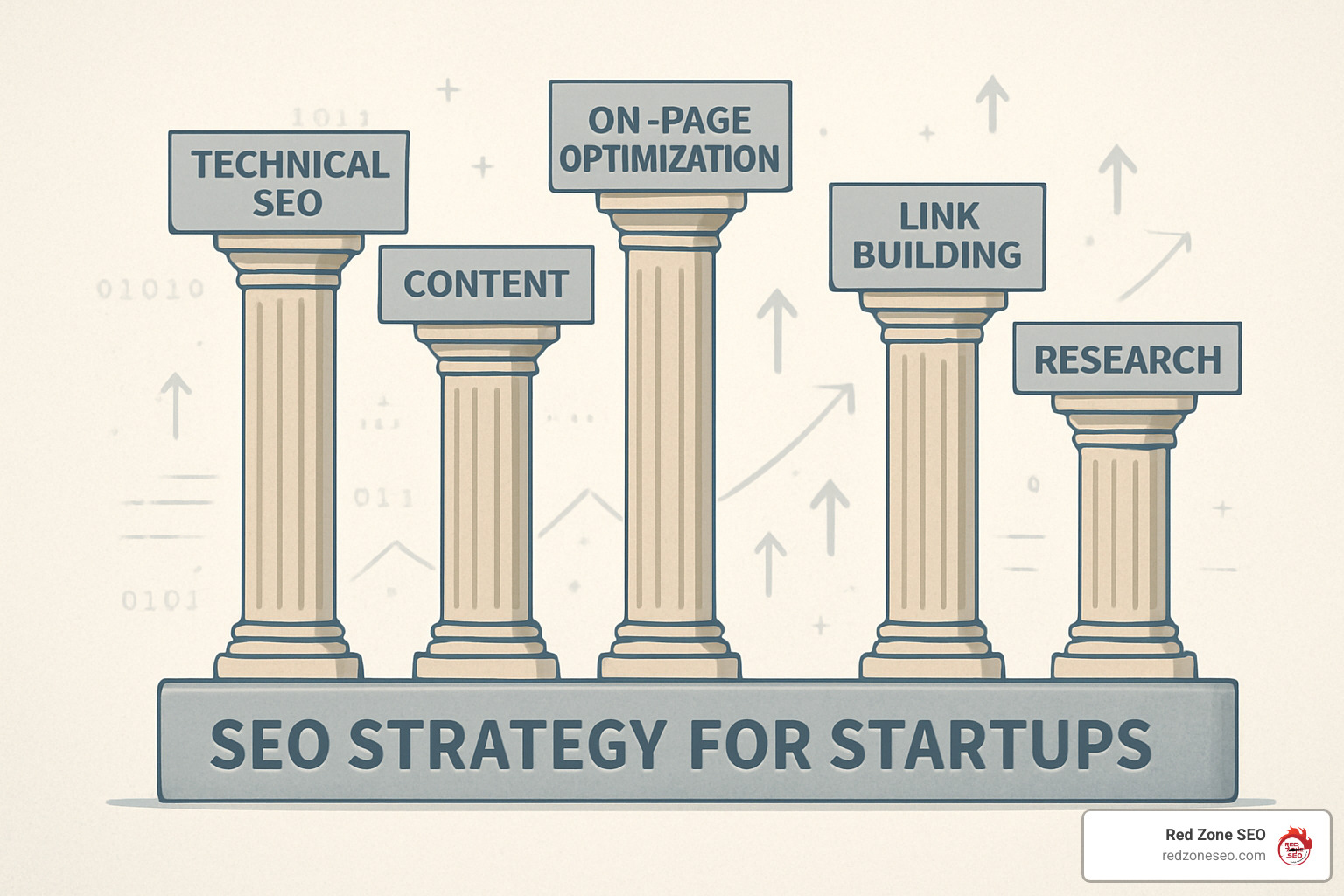
1. Research: Know the Market Better Than the Market
Effective keyword research goes far beyond plugging terms into tools. Start-ups need to understand the complete customer journey and identify opportunities competitors have missed.
Customer Interview Framework:
- Interview five customers; note exact phrases they use.
- Ask: "How did you describe this problem before finding us?"
- Document the progression: awareness → consideration → decision
- Identify emotional triggers and pain points that drive searches
- Map technical jargon to everyday language
Competitive Intelligence:
- Audit competing blogs—where are the unanswered questions?
- Use tools like Ahrefs or SEMrush to identify competitors' top-performing content
- Look for content gaps: topics they mention but don't fully explore
- Analyze their comment sections for unaddressed concerns
- Study their internal linking structure to understand their content priorities
Keyword Findy Process:
- Use Google autocomplete, "People also ask," and low-difficulty filters in your keyword tool to assemble an opportunity list.
- Prioritize by intent and business value, not just volume. A 200-search term that converts beats a 10k vanity keyword every time.
- Create keyword clusters around core topics rather than targeting individual terms
- Consider seasonal trends and emerging terminology in your industry
- Build a content calendar that balances quick wins with long-term authority building
Advanced Research Techniques:
- Monitor industry forums, Reddit, and social media for emerging questions
- Use Google Trends to identify rising topics before they become competitive
- Analyze your sales team's FAQ document for content ideas
- Study customer support tickets for common confusion points
- Track competitor mentions and brand searches to understand market positioning
Learn more in our SEO Audit services.
2. On-Page: Make Relevance Obvious
On-page optimization has evolved beyond keyword stuffing to focus on user experience and semantic relevance. Modern search engines understand context, so your optimization should feel natural while clearly communicating topical focus.
Essential On-Page Elements:
- One descriptive H1 per page that includes your primary keyword naturally
- Title tags under 60 characters with a benefit statement that encourages clicks
- Meta descriptions around 155 characters urging the click with a clear value proposition
- Logical header hierarchy (H2/H3) so both bots and humans can skim effectively
- Descriptive, short URLs:
/project-management-remote-teams/ not /p1234/
- Internal links that guide users deeper into the topic cluster
- Compress images and supply alt text that describes the graphic contextually
Content Structure Best Practices:
- Lead with the most important information—many users scan before reading
- Use bullet points and numbered lists to break up dense text
- Include relevant keywords in the first 100 words naturally
- Add schema markup for articles, FAQs, and products to improve rich snippets
- Optimize for featured snippets by answering questions concisely
- Include related keywords and synonyms throughout the content
User Experience Optimization:
- Ensure content loads quickly on all devices
- Use white space effectively to improve readability
- Add a table of contents for longer articles
- Include relevant internal links to keep users engaged
- Optimize for voice search with conversational, question-based content
- Test different calls-to-action to improve conversion rates
A complete checklist lives in our WordPress SEO services.
3. Technical: Build on Bedrock
Technical SEO forms the foundation that allows your content to perform. Start-ups have an advantage here—they can implement best practices from day one rather than fixing legacy issues.
Core Web Vitals Optimization:
- Pages should hit Google's Core Web Vitals benchmarks—start by optimizing Largest Contentful Paint and Interaction to Next Paint
- Compress images using modern formats like WebP
- Minimize JavaScript and CSS files
- Use a content delivery network (CDN) for faster global loading
- Implement lazy loading for images below the fold
- Optimize server response times through quality hosting
Mobile-First Requirements:
- Mobile-first design: 60 %+ of B2B searchers research on phones during commutes or between meetings
- Ensure buttons and links are easily tappable
- Test forms on mobile devices for usability
- Optimize images for smaller screens without losing quality
- Consider mobile-specific features like click-to-call buttons
Site Architecture:
- Simple architecture: any page reachable in ≤4 clicks; XML sitemap submitted; robots.txt free of accidental blocks
- HTTPS everywhere. Free SSL certificates remove excuses
- Structured data (Article, FAQ, Product) to help rich results stand out
- Clean URL structure that reflects site hierarchy
- Proper 301 redirects for any changed URLs
- Regular technical audits to catch issues before they impact rankings
Advanced Technical Considerations:
- Implement proper canonical tags to avoid duplicate content issues
- Set up Google Search Console and monitor for crawl errors
- Create and maintain an XML sitemap
- Optimize robots.txt to guide search engine crawling
- Monitor site speed regularly and address issues promptly
- Ensure proper handling of JavaScript-rendered content
4. Content: Publish What No One Else Will—or Can
Content remains the primary way search engines understand your expertise and value proposition. Start-ups can compete with larger companies by creating more focused, authentic, and actionable content.
Content Strategy Framework:
- Anchor each topic cluster with a definitive "pillar" guide (2,000–3,000 words) then support it with focused sub-pages
- Demonstrate E-E-A-T: cite sources, add author bios, include screenshots or data from your own platform
- Refresh top pages at least twice a year—update stats, embed new media, answer emerging questions
- Use visuals: posts that include seven+ images earn 55 % more links; adding a short explainer video can boost dwell time
Content Types That Work for Start-ups:
- Behind-the-scenes content showing your process or methodology
- Data-driven studies using your platform's unique insights
- Comprehensive guides that consolidate scattered information
- Case studies featuring real customer success stories
- Tool comparisons that position your solution appropriately
- Industry trend analysis based on your market observations
Content Production Process:
- Develop a consistent publishing schedule you can maintain
- Create content briefs that outline target keywords, user intent, and key points
- Establish a review process to ensure quality and accuracy
- Repurpose successful content into multiple formats
- Update existing content based on performance data and user feedback
- Build relationships with industry experts for quotes and collaboration
Explore our Content Marketing for Small Businesses to scale production without losing quality.
5. Authority: Earn Links That Matter
Link building for start-ups requires creativity and relationship-building rather than large budgets. Focus on earning links through genuine value creation and industry participation.
Sustainable Link Building Strategies:
- Pitch data studies or insightful commentary to journalists covering your niche
- Publish free calculators or templates visitors genuinely need
- Guest-post on respected, non-competing blogs—quality over quantity always
- Track your backlink profile monthly; disavow spam and double-down on sources sending referral traffic
- Never pay for links—Google penalties are brutal and slow to recover
Relationship-Based Approaches:
- Participate actively in industry forums and communities
- Attend virtual and in-person industry events
- Collaborate with complementary businesses on content projects
- Offer expert commentary for industry publications
- Build genuine relationships with journalists and bloggers in your space
- Create linkable assets like industry reports or research studies
Measuring Link Building Success:
- Track referring domains and their authority scores
- Monitor referral traffic from link sources
- Assess the relevance and context of earned links
- Watch for improvements in target keyword rankings
- Calculate the ROI of different link building tactics
- Build systems to maintain relationships with link sources
Need help? Our SEO Audit services flag risky links and surface white-hat opportunities.
From Data to Decisions: Tracking, Integrating & Scaling
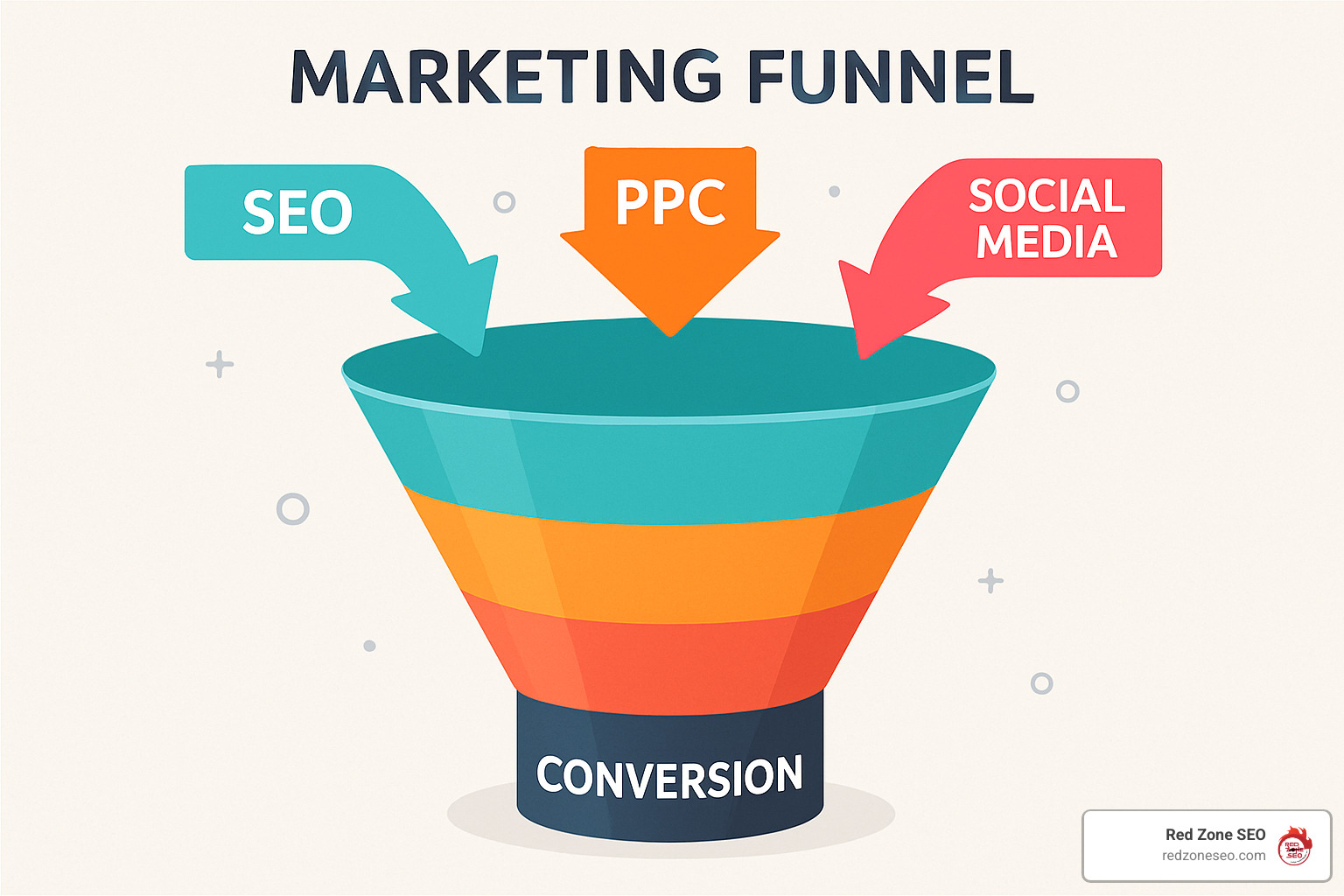
Measure What Moves Revenue
- Install Google Analytics 4 and Search Console on launch day.
- Build a simple Looker Studio dashboard that tracks:
- Organic sessions (leading indicator)
- Click-through rate on primary keywords
- Conversions or trial sign-ups attributed to organic
- Top linking domains and new links acquired
- Review monthly; adjust content topics or on-page hooks in response.
Blend SEO with Other Channels
- PPC as R&D – run low-budget ads to validate keyword-to-offer fit before committing months of content work.
- Social amplification – share new guides thread-by-thread on LinkedIn or X; invite comments to spark micro-influencer shares.
- Email capture loops – add an in-content opt-in so blog readers join your nurture sequence; this extends organic reach beyond the first visit.
Level-Up as You Grow
- Team decisions – hire in-house once content needs exceed 4–5 long-form pieces a month; agencies fill gaps until then.
- Repurpose at scale – break a 3,000-word guide into six short videos, one slide deck, and a podcast outline.
- Programmatic SEO – for marketplaces, generate location or category pages from a structured data set, but add unique copy so pages stay valuable.
- Internationalization – separate sub-folders (
/de/, /es/ ) with hreflang tags once 10 %+ traffic comes from non-English locales.
Our Digital Marketing Agency Las Vegas services support each stage, from dashboard setup to global expansion.
The Startup SEO Playbook: Do’s & Don’ts
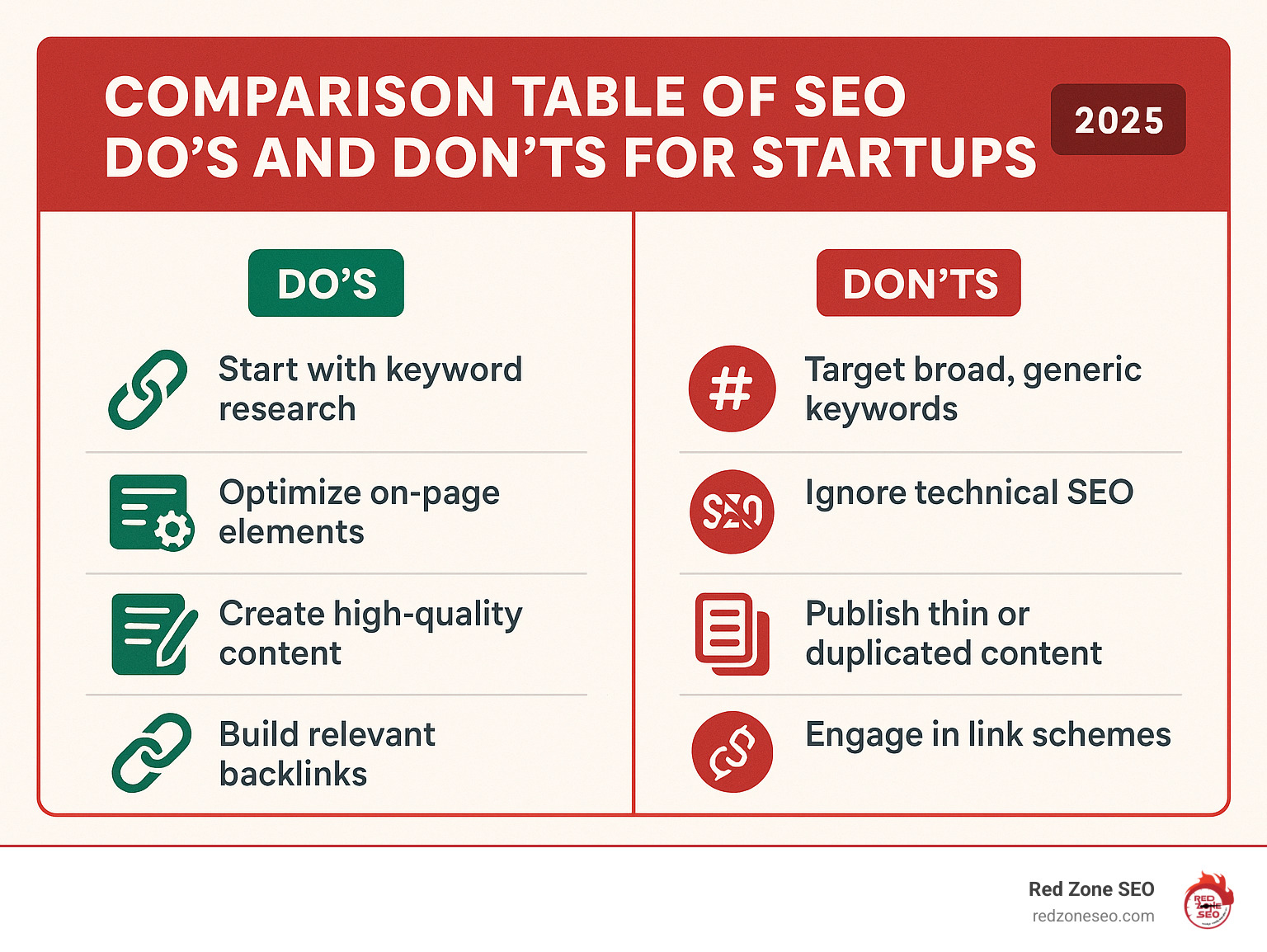
| ✅ Do |
🚫 Don’t |
| Lay technical foundations early (speed, mobile, SSL). |
Ignore site speed and hope content compensates. |
| Target narrow, high-intent keywords first. |
Chase vanity terms you’ll never rank for. |
| Publish expert content consistently. |
Post ten articles, then go silent for months. |
| Build relationships that naturally earn links. |
Buy backlinks or use automated link farms. |
| Track conversions, not just traffic. |
Celebrate traffic spikes that never translate to revenue. |
| Refresh top-performing pages twice a year. |
“Set and forget” content once it’s live. |
| Use PPC data to refine organic targets. |
Treat SEO and paid as siloed channels. |
Follow the left column religiously and you’ll avoid 90 % of the mistakes we see in audits.
Frequently Asked Questions
How long until we see results?
Most start-ups observe keyword movement and small traffic lifts in 3 – 4 months. Meaningful revenue impact tends to arrive between months 6 and 12, provided you publish regularly and keep technical health in check. However, the timeline varies significantly based on competition level, content quality, and technical implementation.
Early indicators of success include:
- Improved crawl rate in Google Search Console
- Increased impressions for target keywords
- Higher click-through rates on existing rankings
- More pages indexed by search engines
- Gradual improvement in average ranking positions
What should we budget?
- DIY tools & hosting: $0 – $300/mo
- Freelance writers & basic consulting: $1k – $3k/mo
- Full agency partnership: $3k – $8k/mo depending on scope
The right spend level is the one that lets you create quality content every month without starving other growth functions. Consider starting with a smaller budget and scaling based on results. Many successful start-ups begin with founder-led content creation and gradually invest more as they see ROI.
Can founders handle SEO themselves?
Absolutely—especially research, on-page fixes, and initial content. Bring in specialists when you hit technical walls, need scale, or must outrank entrenched incumbents quickly. Founders often have unique insights into customer problems and industry trends that create compelling, authentic content.
Founder advantages in SEO:
- Deep understanding of customer pain points
- Authentic voice and industry expertise
- Ability to create unique, insider content
- Direct access to customer feedback and data
- Flexibility to pivot quickly based on results
How do we compete with established companies?
Start-ups can compete effectively by:
- Targeting long-tail, specific keywords larger companies ignore
- Creating more focused, actionable content
- Moving quickly to cover emerging topics
- Building authentic relationships in niche communities
- Leveraging founder stories and behind-the-scenes content
- Focusing on user experience and page speed
Should we hire an agency or build in-house?
This depends on your budget, timeline, and internal capabilities. Agencies provide immediate expertise and established processes, while in-house teams offer deeper product knowledge and long-term commitment. Many start-ups begin with agency support and gradually build internal capabilities.
How do we measure SEO ROI?
Track both leading and lagging indicators:
- Leading: Keyword rankings, organic traffic, click-through rates
- Lagging: Conversions, revenue, customer acquisition cost
Set up proper attribution in Google Analytics to understand the customer journey and SEO's role in conversions. SEO often assists conversions that other channels get credit for.
For cost-conscious options, explore our Affordable SEO Las Vegas packages.
Conclusion: Your Path From Zero to SEO Hero
Start-up success is rarely about the loudest ad—it’s about showing up exactly when a prospect searches for a solution. By following the five-pillar framework—research, on-page, technical, content, and authority—you turn your website into a round-the-clock sales rep that gets smarter every quarter.
Remember: perfect is the enemy of live. Publish the first authoritative post today, measure, iterate, and watch compounding gains follow. Ready for a partner who lives and breathes search? Find how our proven process works and let’s build the growth engine your investors—and future customers—expect.
Your audience is already searching. Make sure they find you.