In a digital world saturated with content, getting your message heard is tougher than ever. Every day, millions of blog posts, videos, and social media updates compete for a finite amount of audience attention. This overwhelming flood of information is the "digital noise" that drowns out most marketing messages. Authority building content is your solution—a strategic approach designed to lift your brand above the chaos. It is specialized, high-value content that positions you not just as a participant in your industry, but as a trusted expert and leader. It achieves this by demonstrating deep knowledge, providing unique, actionable insights, and backing every claim with solid, verifiable evidence. Unlike standard blog posts that chase fleeting traffic spikes, authority content is an investment in building long-term credibility that methodically turns curious browsers into confident buyers.
This type of content is carefully crafted around several key components:
Standard content competes for attention; authority content earns it. This distinction is critical for any business serious about growth. When you establish authority, you change the dynamic of the buyer's journey. Instead of you chasing them, they seek you out. The data supports this: research consistently shows that a majority of B2B decision-makers, with some studies citing as high as 54% of companies, made a purchase after engaging with thought leadership content. When you establish authority, people don't just read your content—they trust it, they share it, and they act on it.
This strategic shift also has a profound impact on your visibility in search engines. Google's core mission is to provide users with the most helpful and reliable answers to their queries. By creating in-depth, valuable content that demonstrates expertise and trustworthiness, you directly align your marketing with Google's objectives. This signals to both algorithms and customers that you are the go-to source in your field. In an era defined by short attention spans and widespread skepticism, authority content builds the foundational trust needed to create meaningful connections, foster loyalty, and drive sustainable business growth.
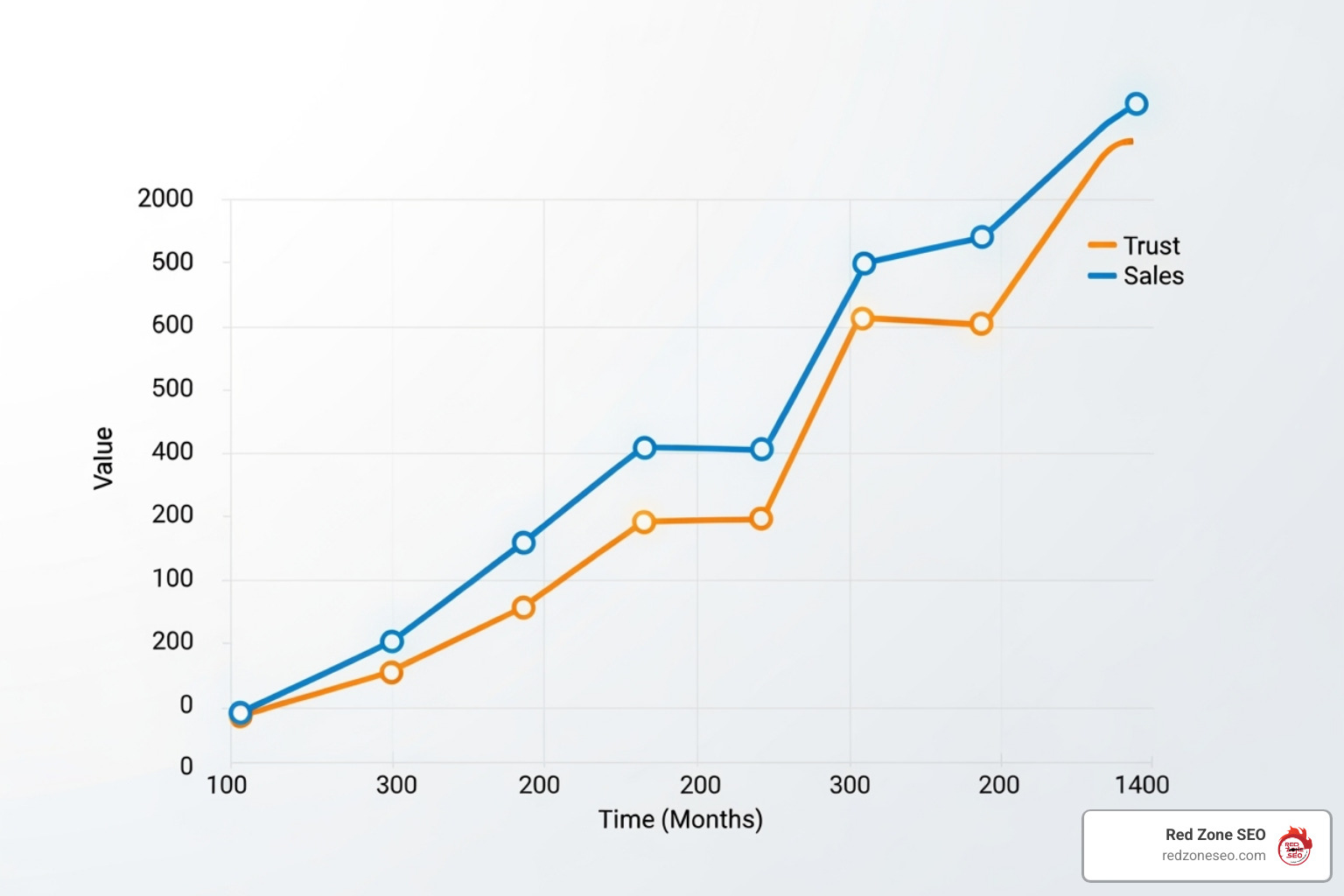
Think of authority building content as your business's lighthouse in a stormy digital sea. It's the carefully researched, consistently accurate, and genuinely helpful content that serves as a guide, guiding your ideal customers through the fog of online information directly to your expertise. When you commit to consistently delivering valuable insights, you earn a level of trust that translates directly into tangible business results. This trust is a powerful asset that improves brand credibility, fosters unwavering customer loyalty, dramatically improves search engine rankings, and generates a steady stream of high-quality, pre-qualified leads. Prospects who have already learned from you and benefited from your expertise arrive with built-in confidence in your capabilities. This fundamentally changes the sales conversation, leading to shorter sales cycles, higher conversion rates, and a clear, defensible differentiation from competitors who are still focused on shouting about features and prices. The research confirms this unequivocally: a landmark study by Edelman and LinkedIn found that 54% of B2B buyers make purchasing decisions based on the authority demonstrated through content.
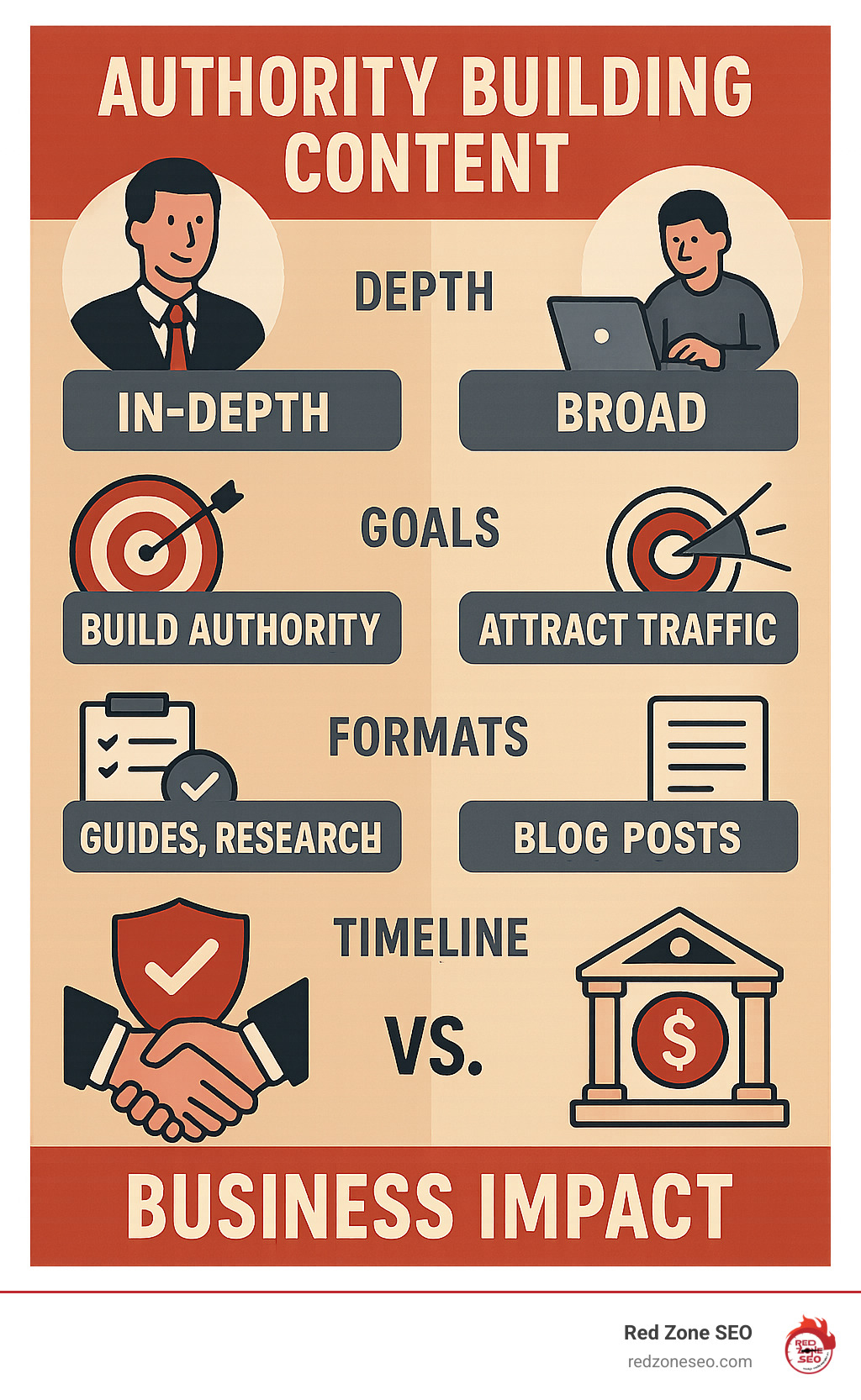
Many businesses fall into the trap of approaching content marketing as a numbers game, publishing a high volume of quick blog posts on trending topics in the hope of generating immediate traffic. While this strategy might produce occasional short-term gains, it rarely builds lasting value or a defensible brand asset. Authority building content takes a fundamentally different approach, prioritizing the cultivation of long-term trust and unshakeable credibility over the pursuit of fleeting traffic spikes.
Standard content often skims the surface, providing a quick overview or a list of tips without much context. Authority content, in contrast, dives deep. It explores the "why" and the "how" in exhaustive detail, providing comprehensive answers that leave the reader feeling truly informed and empowered. A standard post might list "5 Tips for Better SEO," while an authority piece would be titled "The Definitive Guide to On-Page SEO in 2024," complete with detailed explanations, examples, and data. While standard posts on trending topics can become outdated within weeks, evergreen authority content is designed for longevity, remaining a valuable asset that attracts, educates, and converts readers for years to come.
| Metric | Authority Building Content | Regular Blog Posts |
|---|---|---|
| Depth | Comprehensive, in-depth, covers all facets of a topic | Often surface-level, covers many topics briefly |
| Goal | Establish expertise, build trust, long-term influence | Drive traffic, immediate engagement, general awareness |
| Typical Format | Long-form articles, white papers, case studies, pillar pages | Shorter articles, news updates, listicles |
| Focus | Empowering audience, unique insights, problem-solving | Information dissemination, trending topics |
| Longevity | Evergreen, consistently valuable | Often timely, can quickly become outdated |
| Impact | Builds brand authority, deep relationships, high-quality leads | Increases visibility, drives short-term traffic |
Authority building content is arguably the most powerful SEO asset a business can develop. While Google's algorithm undergoes hundreds of changes a year, its core preference for content that demonstrates real expertise, authoritativeness, and trustworthiness remains constant. When your website consistently publishes comprehensive, high-quality content on a specific set of topics, you build topical authority. This signals to search engines that you are not just a casual commentator but a definitive, reliable source for that subject matter.
This strategy directly aligns with Google's rigorous E-E-A-T guidelines, which stand for Experience, Expertise, Authoritativeness, and Trustworthiness. Authority content inherently showcases these qualities. Furthermore, truly high-quality authority content naturally attracts backlinks from other reputable sites—journalists, industry bloggers, and academic institutions—that want to reference your work as a source. Each of these backlinks acts as a vote of confidence, further bolstering your site's authority in the eyes of Google. Positive user engagement signals—such as longer time on page, lower bounce rates, and higher click-through rates—also send a powerful message to Google that your content is satisfying searcher intent. This creates a virtuous cycle, a powerful SEO flywheel: great content earns backlinks and high engagement, which boosts your authority and rankings, which in turn drives even more traffic to your expert content. For any business serious about achieving and maintaining long-term SEO success, this strategic approach is not just beneficial; it's essential. To learn more about developing effective SEO content strategies that incorporate these principles, check out our detailed guide on SEO Content Strategies.

To build true authority, your content must be constructed upon three unshakeable pillars: Expertise, Evidence, and Experience. These foundational elements are what separate genuinely authoritative content from the vast sea of generic, forgettable information flooding the internet. When you consciously and consistently master the integration of these pillars into every piece of content you create, you transform your website from a simple digital brochure into a trusted resource that turns casual readers into loyal, lifelong customers.
Anyone can claim to be an expert; true authorities prove it through their work. The key principle here is to show, don't tell. Instead of littering your content with self-congratulatory statements about your expertise, you must demonstrate it with in-depth analysis that goes far beyond surface-level facts. This means breaking down complex topics into their constituent parts, clearly explaining the "why" behind your recommendations, and sharing unique insights gleaned from your specific vantage point. A powerful strategy for demonstrating expertise is niche specialization. It is far better to be the undisputed, go-to expert on a narrow topic like "SEO for local plumbers" than to be just another generalist talking about "digital marketing." This focus allows you to achieve a depth of knowledge that is impossible for broader competitors. By confidently and comprehensively answering the difficult, nuanced questions that others in your space avoid, you prove your knowledge beyond a doubt and become the definitive resource your audience actively seeks. To uncover these critical questions your audience is asking, you need a robust strategy for Keyword Research.
Expertise without proof is merely opinion, and in an online world rife with misinformation, opinions are cheap. Hard evidence is the currency of trust. It's what transforms your assertions from vague statements into powerful, undeniable facts. You can achieve this by weaving statistics and data from credible sources throughout your content. Citing reputable third-party sources, such as industry reports, academic studies, or government data, allows you to borrow their established authority to strengthen your own. Case studies are particularly potent, as they offer concrete, narrative proof of your ability to deliver real-world results. For instance, showing exactly how you helped a client increase their organic traffic by 150% with a detailed breakdown of the process is infinitely more compelling than simply claiming you can improve SEO. Other forms of evidence include original research (like conducting your own industry survey), data visualization through charts and infographics to make complex data digestible, glowing customer testimonials, and quotes from other recognized experts in your field. When you build a strong case supported by a variety of evidence, you make skepticism nearly impossible and build a foundation of trust with your audience. Our Content Optimization services can help ensure your evidence is presented for maximum clarity and impact.
While expertise and evidence provide the logical foundation for your authority, it is your unique experience and perspective that create the emotional connection necessary to build a loyal, engaged following. This is where you move beyond the data and transform dry information into engaging, memorable storytelling. Use personal anecdotes and brand stories to illustrate your points, making your content more relatable and human. Don't be afraid to share lessons learned from past failures; this vulnerability and authenticity can build tremendous trust and rapport with your audience. A crucial element here is developing a distinct brand voice and a unique "content tilt"—the specific, consistent lens through which you view your industry's challenges and opportunities. Is your voice witty and irreverent, or academic and serious? Is your tilt focused on sustainability, small business empowerment, or cutting-edge technology? This unique perspective is what makes your content instantly recognizable and uniquely valuable in a crowded marketplace. The goal is to empower your audience. When you shift your focus from selling your services to genuinely helping them succeed, you transcend the role of a mere vendor and become a true, indispensable partner in their journey.
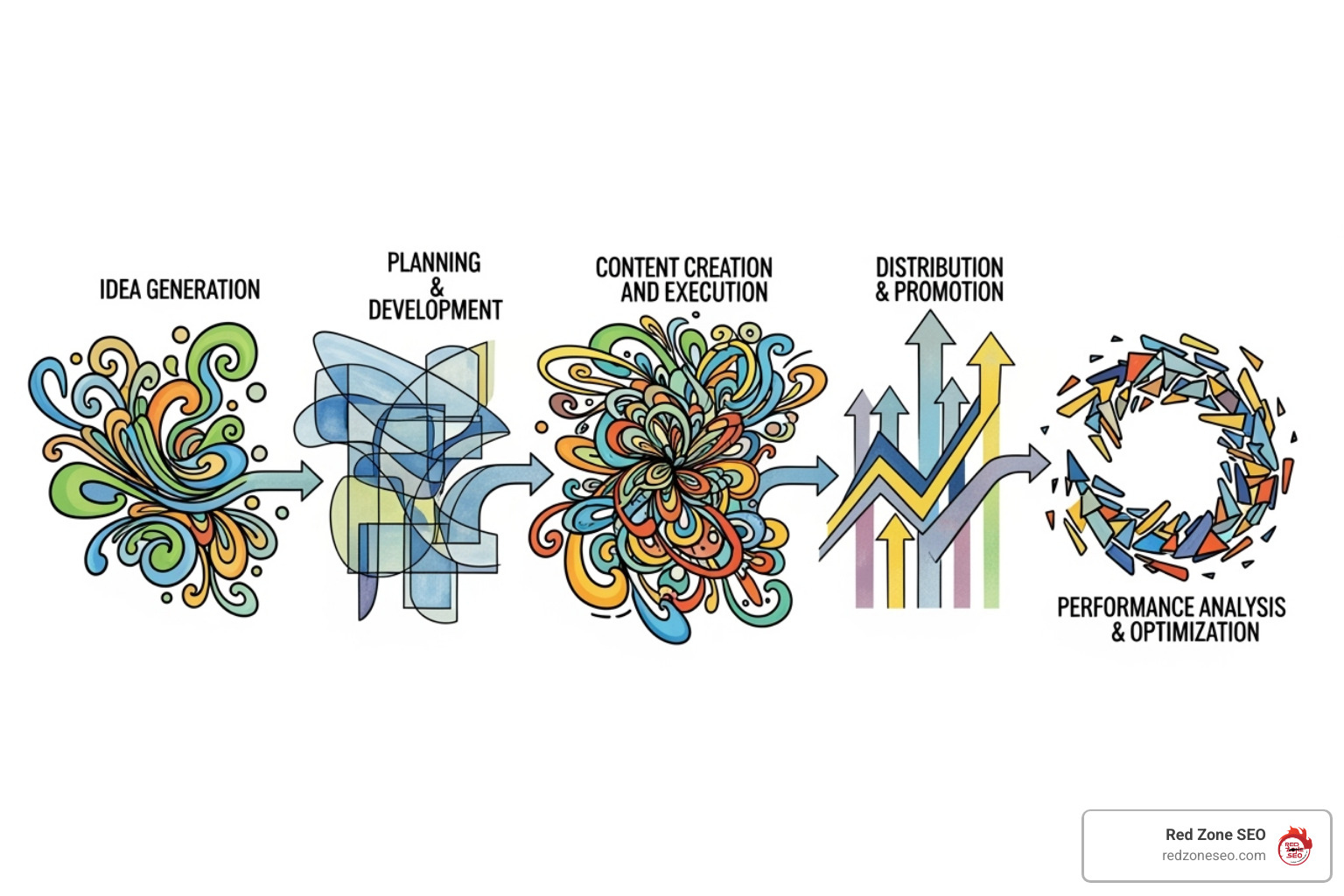
Building authority isn't an accident; it requires a deliberate, strategic approach, not scattered, random acts of content. This blueprint will guide you through a systematic process, from initial idea to measurable impact, ensuring that every piece of authority building content you produce serves a clear and strategic purpose. A well-executed plan transforms your content from a simple marketing expense into a powerful, lead-generating asset—a magnet for your ideal customers that builds the deep trust necessary to convert casual browsers into committed buyers.
Before you write a single word, you must achieve absolute clarity on who you're talking to and what specific problem you are uniquely positioned to solve for them. Avoid the temptation to cast a wide net. Instead of a broad topic like "digital marketing," laser-focus on a specific niche where you can realistically become the leading expert, such as "content marketing strategies for B2B SaaS startups" or "SEO for family-owned restaurants." This specificity makes every subsequent content decision simpler and more effective. Next, go beyond basic demographics to develop a profound understanding of your audience's world. Create detailed buyer personas that feel like real people, documenting not just their job titles but their deepest pain points, aspirations, daily frustrations, and primary goals. What keeps them up at night? What does success look like for them? Use tools like AnswerThePublic, Quora, and Reddit forums to find the exact questions they're typing into search engines. Finally, conduct a thorough competitive content analysis. Identify the top-ranking content for your target topics and look for gaps. What questions have they failed to answer? Where is their advice superficial? Your opportunity lies in filling those gaps with superior, more comprehensive value. This targeted, empathetic approach is the non-negotiable foundation for creating content that truly resonates. For businesses looking to master this crucial first step, our insights on SEO for Small Business can provide a targeted framework.
To demonstrate comprehensive authority to both users and search engines, you must structure your content strategically. The pillar and cluster model is the gold standard for this. Pillar pages are massive, comprehensive, long-form guides (often 3,000+ words) that act as the ultimate, one-stop resource on a broad topic within your niche. For example, an HVAC company might create a pillar page titled "The Complete Guide to Commercial HVAC Maintenance." This page would cover every major aspect of the topic at a high level.
Topic clusters are a series of more specific, shorter articles that dive deep into individual subtopics mentioned in the pillar page. For our HVAC example, cluster topics might include "5 Warning Signs Your Commercial HVAC System Needs Attention," "How to Choose the Right HVAC Filter," and "Calculating HVAC Tonnage for Your Commercial Space." Crucially, each of these cluster articles links back up to the main pillar page. This creates a dense web of internal links centered around your core topic, which signals immense topical authority to search engines and improves the user experience by making it easy for readers to find related information. If you prefer a distribution-first framework for atomizing long-form content into platform-specific assets, you might also consider the GaryVee Content Model, which focuses on repurposing a single pillar piece into dozens of smaller assets. Long-form pillar content also naturally attracts more traffic, social shares, and high-quality backlinks, making your pillar pages your most powerful SEO assets. Strategic internal and external linking is crucial, and our Link Building Services can help build the authoritative profile needed to support your content strategy.
Brilliant content is utterly useless if it never reaches your intended audience. A multi-format production and distribution plan maximizes your reach and caters to different learning preferences. Long-form articles, white papers, and ebooks should form the backbone of your strategy, as they are perfect for demonstrating deep expertise and serving as valuable lead magnets to capture contact information. However, don't stop at text. Video marketing, whether through short-form tutorials or in-depth explainers, builds trust and human connection far faster than text alone. Podcasts and webinars offer a platform for deeper engagement, expert interviews, and live Q&A sessions, positioning you as a central figure in your industry. And case studies are absolutely essential for providing concrete proof of your results, masterfully combining data-driven evidence with compelling storytelling.
Your distribution strategy is just as important as your production plan. Don't just publish and pray. Use email marketing to nurture your existing audience directly, delivering your best content straight to their inbox. Leverage social media to amplify your reach and engage in conversations around your topics. Consider guest blogging on reputable industry sites to tap into new audiences and build valuable backlinks. The key to all of this is consistency. Authorities show up regularly and reliably with valuable content, reinforcing their position as a trustworthy source. Create a content calendar and stick to it.
Ongoing measurement and optimization are what separate good content strategies from great ones. You must track key performance indicators (KPIs) to understand what's working, what isn't, and where to focus your efforts for improvement. Monitor website traffic, paying special attention to organic traffic growth for your pillar pages and topic clusters. Track search rankings for your primary and secondary keywords to see if your authority is tangibly growing in the eyes of Google. A critical indicator of true authority is backlink growth; use tools to monitor how many new, high-quality sites are linking to your content. Analyze on-page user engagement signals like time on page, scroll depth, and social shares to gauge whether your content is truly resonating with your audience. Finally, and most importantly, measure lead quality and conversion rates originating from your content. These are often significantly higher than from other marketing channels. Use tools like Google Analytics and Google Search Console to gather this data, but don't just collect it. Use the insights to continuously learn, adapt, and improve your strategy over time. A regular, comprehensive SEO Audit can provide a holistic analysis of your performance and help refine your strategy for maximum long-term impact.
One of the fastest ways to master any skill is to study those who have already achieved excellence. By analyzing brands that have successfully mastered authority building content—and, just as importantly, those who have stumbled along the way—you can gain invaluable insights and fast-track your own path to success. Learning from their victories and their mistakes can help you build a more resilient and effective strategy from day one.
Some companies have so effectively executed this strategy that they have become synonymous with expertise in their respective fields, building massive businesses on the back of their content.
These brands all succeeded because they prioritized authentic helpfulness over aggressive selling and chose to go deep in their niche rather than wide, becoming the definitive, indispensable resource.
Even well-intentioned businesses can inadvertently derail their authority-building efforts with a few common missteps. Be vigilant and avoid these traps to ensure your content effectively builds trust and credibility.
The journey through the principles and practices of authority building content reveals a powerful and enduring truth: this is not just another marketing tactic to be added to your checklist. It is the very foundation for building lasting, trust-based business relationships and achieving sustainable, long-term growth. It represents a strategic choice to be the clear, trusted voice your audience seeks for real solutions, rather than contributing another shout to the deafening roar of the digital crowd.
By carefully constructing your content on the three pillars of Expertise, Evidence, and Experience, you create something that is not only informative but also memorable, relatable, and genuinely valuable. This reader-centric approach does more than just generate traffic; it transforms skeptical browsers into confident buyers and satisfied customers into passionate brand advocates. Authority is not a short-term campaign; it is a long-term asset that compounds over time, working tirelessly to attract high-quality leads, improve your reputation, and build your brand 24/7, long after the content is published.
The strategic blueprint we've outlined provides a clear roadmap, but true success requires unwavering commitment. The brands that win with authority content, as we've seen, do so through patience, consistency, and an unwavering focus on making their audience more successful. When trust is the ultimate currency, authentic, generously shared expertise is the most valuable commodity you can offer.
At Red Zone SEO, we have witnessed how this strategic shift can transform businesses, elevating them from obscurity to industry leadership. We specialize in helping companies cut through the noise by identifying and packaging their unique expertise in ways that search engines love and audiences trust. Your hard-won expertise has immense value, and your audience is actively searching for a guide they can depend on. The only remaining question is whether you're ready to share it strategically and reap the rewards.
The digital landscape will undoubtedly continue to evolve, but the fundamental human need for trustworthy guidance is constant and unchanging. By committing to authority building content, you are not just future-proofing your marketing; you are building a timeless, invaluable asset for your brand.
Ready to transform your content strategy and become the trusted voice in your industry? Learn more about our Content Marketing for Small Businesses services and find how we can help you build the authority your business deserves.