If you want your business to stand out online, mastering SEO blog writing is a game-changer. It’s the art and science of creating content that ranks high in search engines like Google, attracting customers who are actively looking for your solutions.
The purpose is simple: drive organic traffic, boost conversions, and build your brand's authority. With billions of daily Google searches, your blog can be the answer people are seeking.
Consider this: the first five search results capture nearly 70% of all clicks. Getting to the top means getting seen. SEO blog writing isn't just about stuffing keywords; it's about creating genuinely helpful content. When you solve a user's problem, you build trust, which helps your site rank higher and convert visitors into loyal customers.
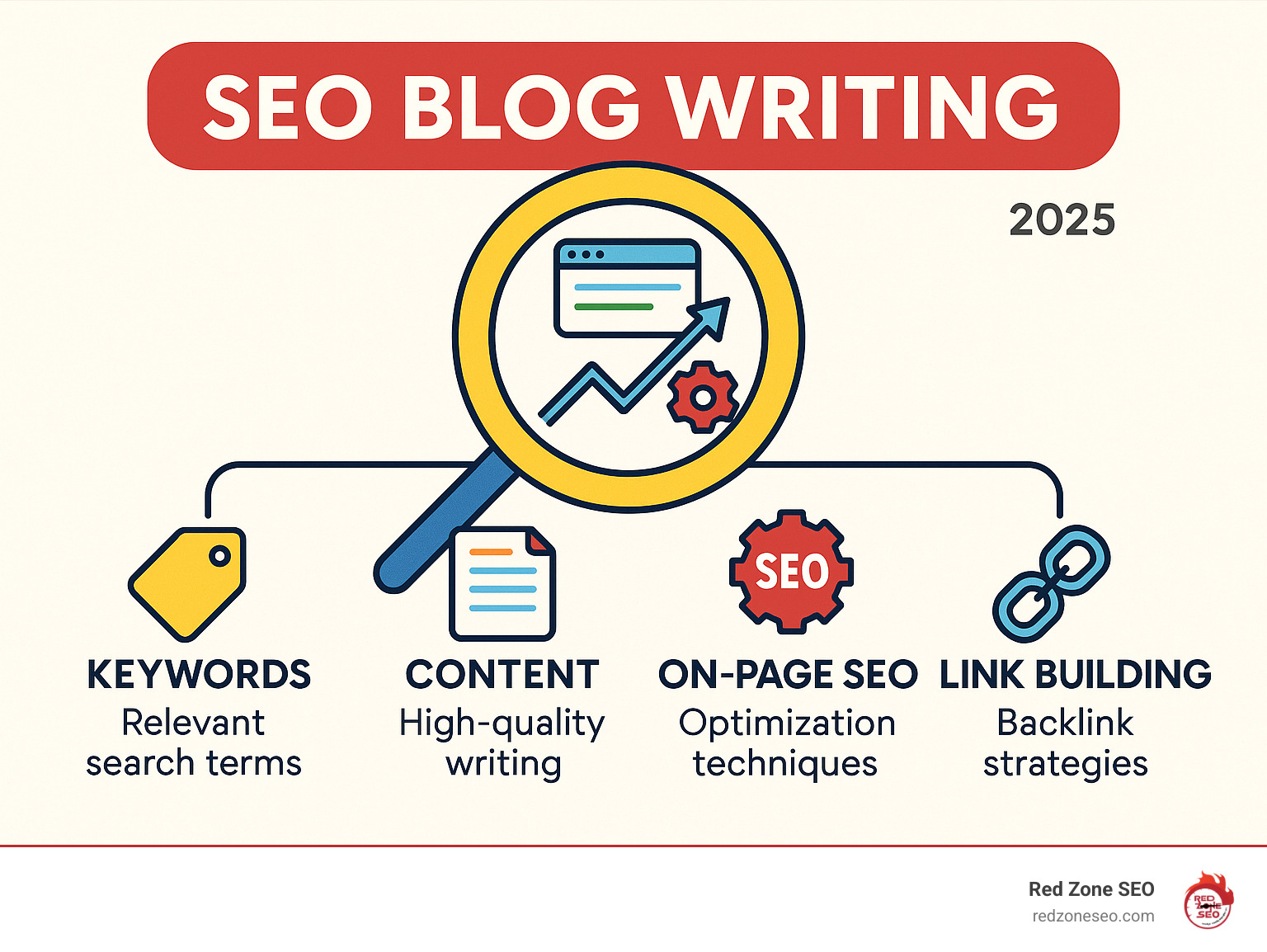
Think of Google as the world's most helpful librarian. To get your blog post recommended, you need to understand how it thinks. Successful SEO blog writing isn't just about creating great content; it's about creating content that Google can find, understand, and trust enough to show its users.
Google's main goal is to provide the best answers. It uses a complex system to crawl the web for new content, index it in a massive digital library, and rank it when someone performs a search.
To rank well, you need to align with Google's key ranking factors:
New websites often experience a "sandbox effect," where content can take 3-6 months to reach its full ranking potential. This is Google's way of testing your commitment to quality. Google's goal is to end the search journey. If your post provides such a complete answer that the user doesn't need to search again, you've hit the SEO jackpot.
Search intent is the "why" behind every search. If your content doesn't match what users want, it won't rank. There are four main types:
To figure out the intent for your keyword, just Google it. Study the first page of results. Are they how-to guides, product lists, or comparison articles? Google is showing you the blueprint for what works. Also, pay attention to SERP features like "People Also Ask" boxes or shopping ads, as they provide more clues about what users are looking for. Match your content format to user expectations, and you'll be on the right track.

Getting these fundamentals right—understanding Google's priorities and matching search intent—is the foundation for all successful SEO blog writing.
Keyword research is your treasure map for SEO blog writing success. It's about understanding what your audience is actually searching for, so you're not just shooting in the dark.
Successful SEO blog writing starts with data, not guesswork. Keyword research tools are your best friend. While Google Keyword Planner is a good free starting point, professional tools like KeySearch offer deeper insights into search volume, competition, and related terms.
Every post needs a primary keyword—the main phrase you're targeting. But don't stop there. You also need related keywords (or LSI keywords) to show Google you have a comprehensive understanding of the topic. For instance, a post about "coffee makers" should naturally include terms like "brewing," "filters," and "espresso." Tools like LSIGraph can help you find these semantic relatives.
At Red Zone SEO, we recommend a content mix of roughly 70% informational content (to build trust and attract a wide audience) and 30% commercial content (to capture leads and drive sales). For a deeper dive, check out our comprehensive keyword research guide.
If your site is new, you can't compete for highly competitive keywords like "best laptops." You need to be strategic and find keywords where you have a fighting chance.
Authority in SEO means being a trusted source. Google needs to believe you know your stuff before it will consistently send users your way.
Topical authority is built by covering a subject comprehensively. Don't just write one article on a topic; create a network of content that covers it from all angles. The content cluster model is the best way to do this. You create a central pillar page on a broad topic (e.g., "The Ultimate Guide to Small Business Marketing") and link it to more specific cluster content (e.g., "Email Marketing for Restaurants," "Local SEO for Plumbers").
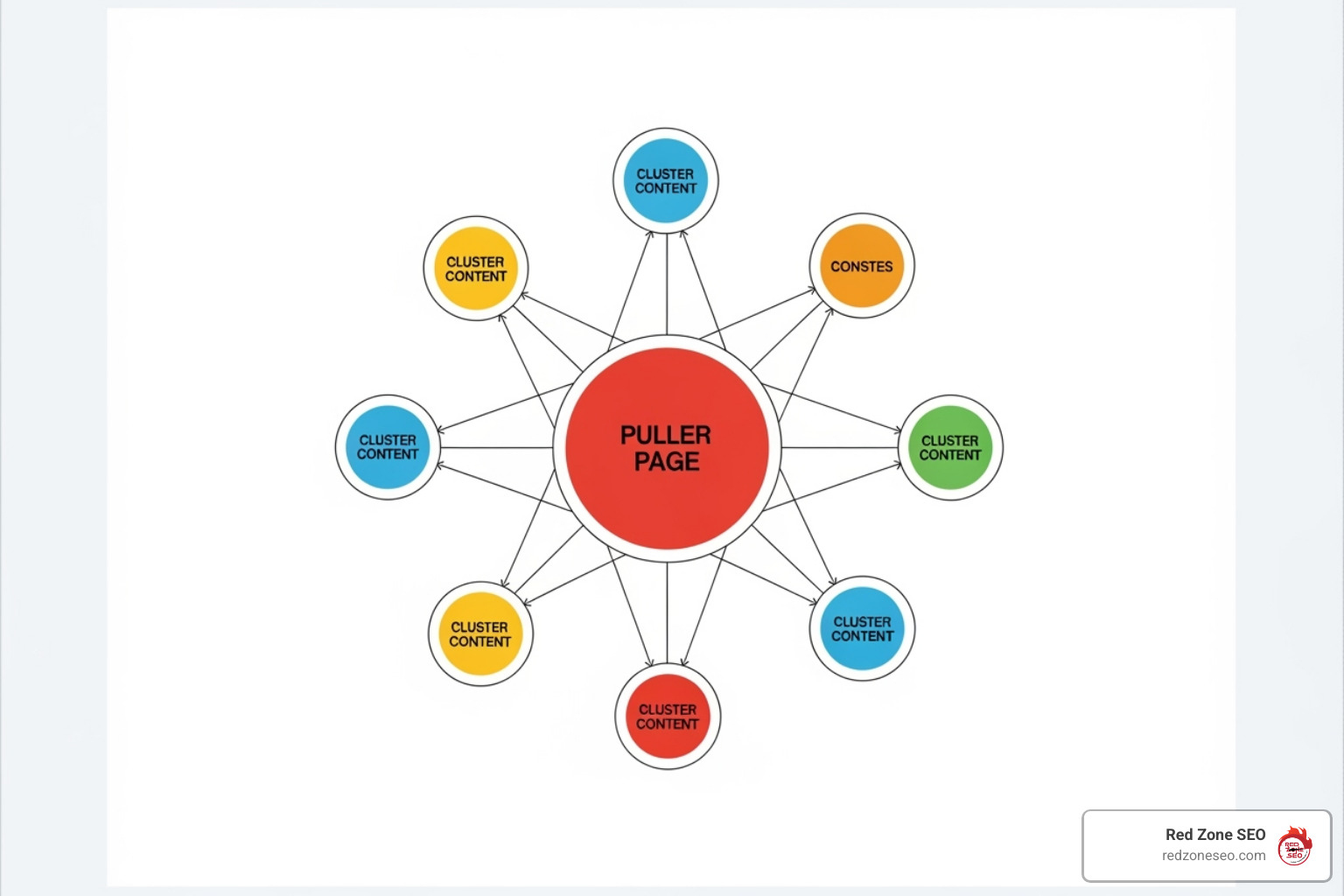
Each cluster post links back to the pillar, creating an interconnected web of content that signals deep expertise to Google. This consistent, high-quality SEO blog writing also builds your Domain Authority (DA), your site's overall reputation score. As our own blog demonstrates, authority is built over time, but every quality post you publish is a step in the right direction.
Now it's time to turn your research and strategy into content that ranks. This is where your SEO blog writing skills come to life. Follow this playbook for content creation success.
Online readers are impatient and scan content. Your structure must cater to this behavior. Start with a solid outline to ensure your post flows logically and covers all key points. Your H1 (main title) must include your primary keyword. Use H2s and H3s for subheadings to break up the text and incorporate related keywords, making the content easy to steer.
Write for scannability. Most people scan before they commit to reading. Make it easy for them:
Content length should be determined by what's needed to be comprehensive. While many top-ranking posts are 2,100-2,400 words, the real goal is to provide a more complete answer than your competitors. Don't fixate on word count; fixate on providing overwhelming value.
Readability is crucial for keeping users on your page. Use clear, simple language and avoid jargon. Vary your sentence structure to keep it engaging. Tools like Hemingway can help you spot overly complex sentences. For a full breakdown, see our On-Page SEO Checklist.
Your title and meta description are your ad in the search results. They are your first and only chance to earn a click.
A high click-through rate (CTR) signals to Google that your result is highly relevant, which can give your rankings a nice boost over time.
Beyond the text, other on-page elements play a key role in SEO blog writing.
seo-blog-writing-tips.jpg instead of IMG_1234.jpg). Always add alt text to describe the image for visually impaired users and to give search engines context. Compress images with tools like TinyPNG to improve page speed, a critical ranking factor.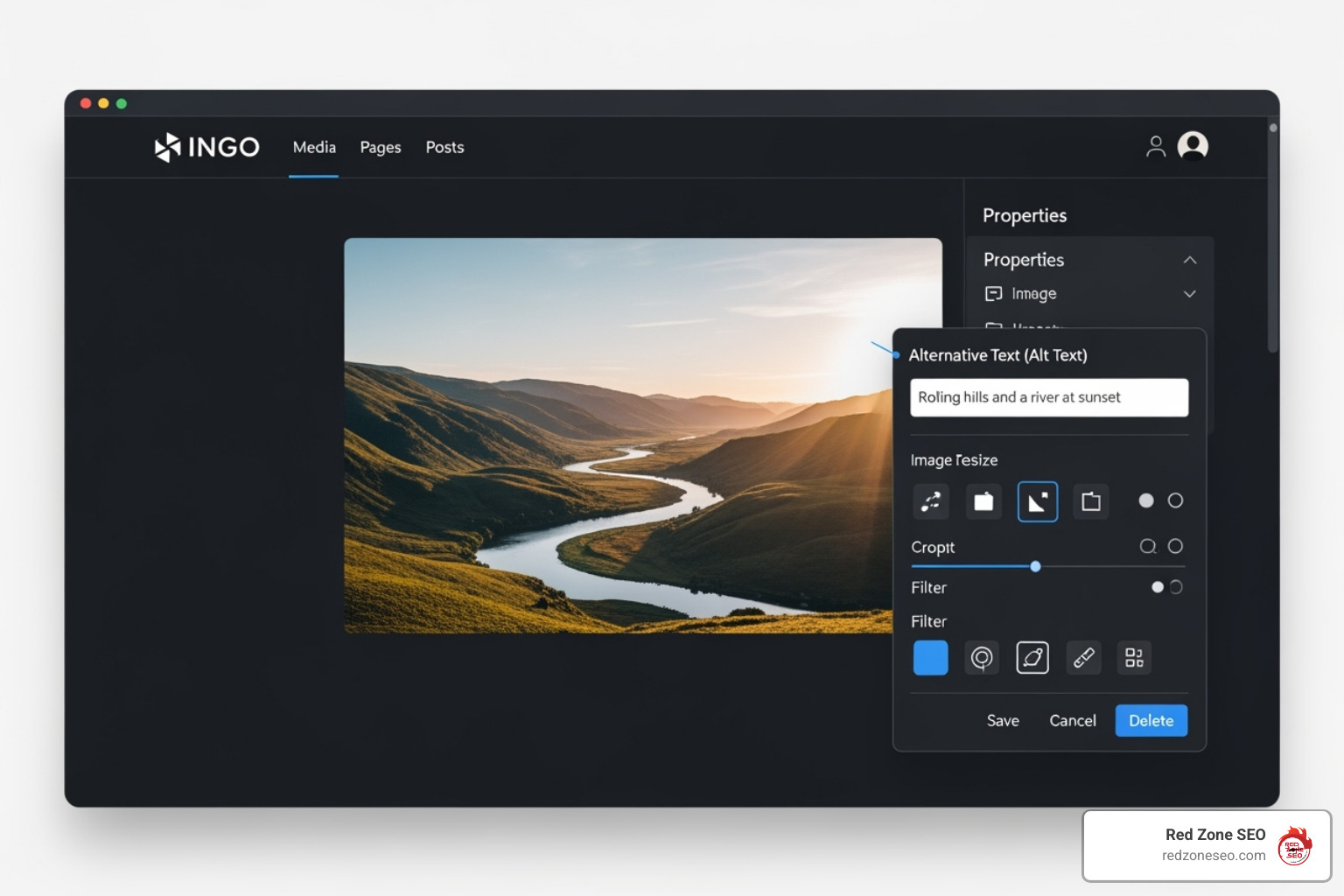
yoursite.com/seo-blog-writing-guide is far better than yoursite.com/p=123. Keep them short, descriptive, and focused on your main keyword.Publishing your SEO blog writing is just the start. To maximize your results, you need to nurture, promote, and maintain your content long after it goes live.
Links are the pathways of the internet, guiding users and search engines while building authority.
Your published posts aren't set in stone. Historical optimization—updating existing content—is one of the most effective and fastest ways to boost your SEO.
Use Google Analytics or Search Console to find posts that are ranking on page two (positions 4-10) or have declining organic traffic. These are prime candidates for an update because a small push can have a big impact.
When refreshing content, update statistics and facts, replace outdated information, and add new sections to make the article more comprehensive than competitors. You can also improve on-page elements like headings, images, and internal links to newer content. This often delivers faster results than creating new content from scratch. For more ideas, explore our Content Optimization Strategies.
While not a direct ranking factor, social media is a powerful amplifier for your content. There's a strong correlation between social shares and higher rankings, likely because social visibility leads to more clicks, engagement, and opportunities for other sites to find and link to your content.
Make it easy for readers to share by including prominent social sharing buttons on your posts. When you share your content, craft compelling updates and use engaging images. Building an engaged community on social media creates a loyal audience that will consistently visit and share your content, signaling to Google that your site is a valuable and active resource.
SEO blog writing can seem complex. Here are concise answers to the questions we hear most often from business owners.
Typically, it takes 3-6 months for a new post to reach its full ranking potential. This is partly due to Google's "sandbox effect," where it takes time to evaluate new content and websites. Google needs to see how users interact with your post before trusting it with a top spot. Consistency is key; a steady stream of high-quality content can speed up this process. Be patient and focus on building a library of valuable content.
While many studies point to an average of 2,100-2,400 words for top-ranking content, there is no magic number. The real answer is: your post should be as long as it needs to be to comprehensively answer the user's query. Analyze the top-ranking pages for your target keyword. Your goal is to provide more value and a more complete solution than they do. Prioritize comprehensiveness over an arbitrary word count.
Yes, but as an assistant, not a replacement. AI is a fantastic tool for brainstorming ideas, creating outlines, and overcoming writer's block. However, for content that builds trust and ranks well, human oversight is non-negotiable. You must ensure the content is accurate, original, and aligns with Google's E-E-A-T (Experience, Expertise, Authoritativeness, Trustworthiness) guidelines. Use AI to improve your creativity, but infuse the final piece with your unique expertise, insights, and voice. That human touch is what makes content stand out.
We've covered the roadmap to transform your online presence through SEO blog writing. The key pillars are mastering search intent, conducting smart keyword research, creating helpful content, and promoting it strategically. This isn't about gaming an algorithm; it's about becoming genuinely useful to people searching for answers.
SEO rewards patience and consistency. It's a long-term strategy that builds a valuable digital asset for your business. Each post you publish strengthens your authority, creating a compound effect where future content ranks more easily. The websites dominating search results today earned their spots through years of providing exceptional value.
At Red Zone SEO, we've seen this change countless times. Businesses that commit to a strategic content plan see more qualified leads, stronger brand recognition, and sustainable growth. It often becomes their most reliable source of new customers.
Your journey to mastering SEO is an investment in your business's future. Ready to turn this knowledge into measurable results? Our team specializes in executing content strategies that drive real growth. Explore our content marketing services for small businesses and let us help you become the go-to authority in your industry.