On Page SEO Definition: Essential 2025
What is On-Page SEO and Why Does It Matter?
If you're aiming to grow your business online, you've likely encountered the term SEO. But what exactly is the on page seo definition and why is it so critical? In short, it’s the practice of optimizing the elements on your website to help search engines like Google understand your content and show it to the right audience.
Here's a more detailed breakdown:
- On-Page SEO involves optimizing individual web pages to rank higher in search results and attract more relevant traffic.
- This includes adjusting your content, headlines, images, and underlying HTML code.
- The primary goal is to make your pages clear and valuable for both search engine algorithms and human visitors.
Consider this: 72% of marketers believe high-quality content is the most effective SEO tactic. On-page SEO is the process that ensures your great content gets finded. It's your direct line of communication with Google, telling it precisely what your page is about.
Google's algorithms evolve, but their core focus on user experience and "people-first content" remains. A strong on-page SEO strategy improves your site for visitors, which in turn sends positive signals to Google. This guide will walk you through the essentials of on-page SEO, explaining why it's the backbone of your online visibility and how you can use it to attract more customers.
On page seo definition terminology:
Understanding the Core Concept: The On-Page SEO Definition
At its heart, the on page seo definition is about making your web pages as clear and useful as possible for both search engines and human visitors. It is the practice of fine-tuning all the elements on your web pages—from the text and images to the underlying code—to improve their relevance and visibility in search results. Think of it as preparing a book for a library; on-page SEO gives your content a clear title, a compelling summary, and an organized table of contents so the right readers can find it.
Why On-Page SEO is Your Most Powerful Tool
On-page SEO is the foundation of any successful digital strategy for several key reasons:
- Direct Control: Unlike off-page factors like backlinks, you have 100% control over your on-page elements. You can implement changes and see their impact relatively quickly.
- Foundation for All SEO: Without well-optimized pages, other efforts like link building or social media promotion will be less effective. On-page SEO helps search engines understand your content, making it easier to rank for relevant queries.
- Improves UX and Rankings: Good on-page SEO naturally leads to a better user experience (UX). A well-organized, informative page keeps visitors engaged, which is a strong positive signal to Google. As Google's own "How Search Works" report notes, the presence of keywords on the page is a basic signal of relevance.
- Aligns with Google's Goals: Google prioritizes Creating people-first content. By optimizing your pages for users, you align your website with Google's primary objective, which is crucial for long-term success.
On-Page vs. Off-Page vs. Technical SEO
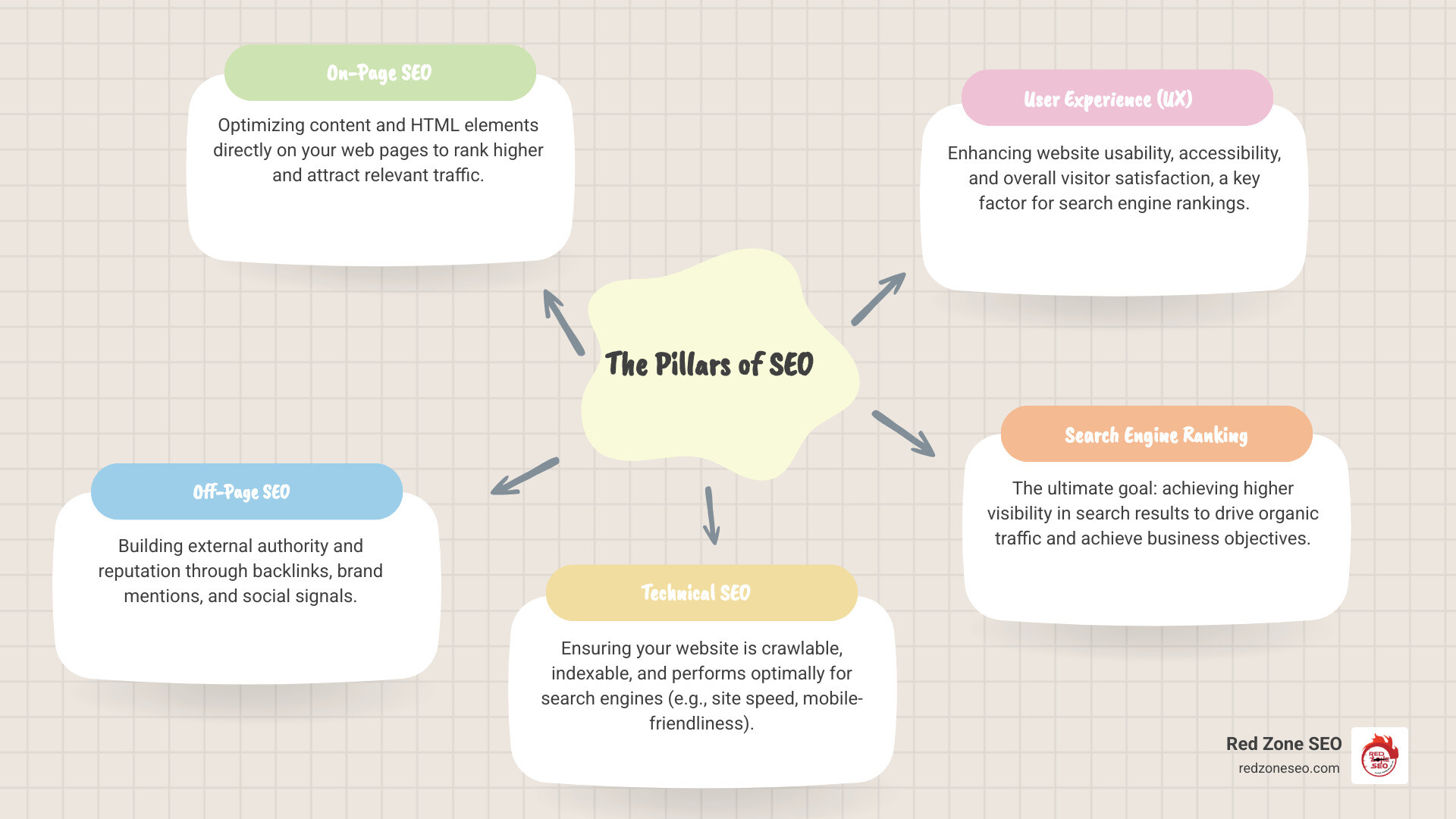
To fully grasp on-page SEO, it's helpful to see how it fits with its counterparts: off-page and technical SEO. They are three distinct pillars that work together to support your overall search visibility.
- On-Page SEO: Focuses on the content and HTML source code of a page. This includes optimizing keywords, Optimizing title tags, headings, and internal links. You have full control here.
- Off-Page SEO: Involves actions taken outside of your own website to impact your rankings. This is about building your site's authority and reputation through external signals like backlinks, brand mentions, and social media engagement.
- Technical SEO: Concerns the non-content aspects of your site. It ensures your website has a solid foundation, focusing on elements like site speed, mobile-friendliness, crawlability, and security. A technically sound site allows your great content to be found and indexed efficiently.
This table provides a clear comparison:
| Feature |
On-Page SEO |
Off-Page SEO |
Technical SEO |
| Focus |
Optimizing individual web pages and content |
Building website authority and reputation |
Ensuring website crawlability and performance |
| Location of Action |
Directly on your website |
External to your website |
Website infrastructure and backend |
| Key Elements |
Content, keywords, meta tags, headings, URLs, internal links, images |
Backlinks, social signals, brand mentions, online reviews |
Site speed, mobile-friendliness, SSL, sitemaps, robots.txt, structured data |
| Control Level |
High (we control everything on our site) |
Medium (we can influence, but not fully control) |
High (we control our server and code) |
| Goal |
Improve relevance and user experience |
Improve credibility and domain authority |
Improve findability and user experience |
All three are essential. On-page SEO tells search engines what your page is about, technical SEO ensures they can access and understand it, and off-page SEO demonstrates its importance and authority. At Red Zone SEO, we integrate all three pillars into our comprehensive strategies, such as SEO for Online Business, to achieve the best results.
The Building Blocks: Fundamental On-Page SEO Factors
Now that we've clarified the on page seo definition, let's get practical. On-page SEO is built upon several fundamental factors that you can control directly on your web pages. Each element sends important signals to users and search engines about your content's value and relevance.
Content: The Heart of Your On-Page SEO Strategy

Content is the cornerstone of on-page SEO. Without high-quality, helpful content, all other optimizations will fall flat. Following Google's emphasis on "people-first content," your goal is to create material that demonstrates E-E-A-T, as detailed in Google's quality rater guidelines.
- Demonstrate E-E-A-T: This stands for Experience, Expertise, Authoritativeness, and Trustworthiness. Experience means showing you have first-hand knowledge. Expertise refers to your skill in the subject. Authoritativeness is about your reputation among other experts. Trustworthiness relates to your transparency and accuracy.
- Satisfy User Intent: Understand what your audience is looking for. Your content must directly address the underlying need behind their search. There are four main types of search intent:
- Informational: The user wants to learn something (e.g., "what is on-page SEO").
- Navigational: The user wants to find a specific website (e.g., "Red Zone SEO blog").
- Commercial: The user is researching before a purchase (e.g., "best SEO tools for small business").
- Transactional: The user is ready to buy (e.g., "hire SEO agency Las Vegas").
- Conduct Keyword Research: Identify the specific phrases your ideal customers use. Focus on long-tail keywords (e.g., "best waterproof running shoes for trail running") which often have clearer intent and less competition.
- Strategic Keyword Placement: Integrate your primary keyword naturally into your title, headings, and the first paragraph. Sprinkle it and related semantic terms (LSI keywords) throughout the text to provide context, but avoid keyword stuffing, which can harm your rankings.
- Improve Readability: Make your content easy to consume. Use short paragraphs, bullet points, subheadings, and images to break up text. Writing in an active voice also makes your content more direct and engaging.
For more strategies, explore our guides on Content Optimization and Content Marketing for Small Businesses.
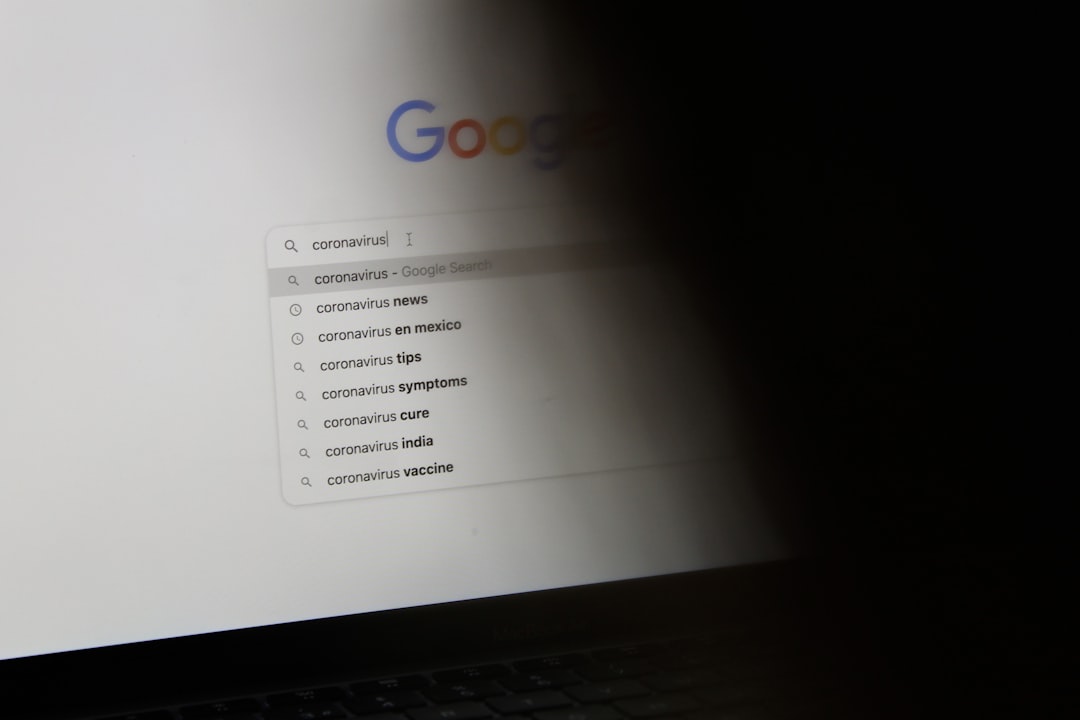
Your title tag and meta description are your digital storefront in the search engine results pages (SERPs). They are the first things a user sees and are critical for earning clicks.
- Title Tags: This is the clickable blue headline in search results and a significant ranking factor. Google has confirmed that title tags help a lot with understanding a page's topic. Keep titles under 60 characters, include your primary keyword, and make them compelling to improve your click-through rate (CTR).
- Meta Descriptions: This is the short descriptive text under the title tag. While not a direct ranking factor, a well-written meta description acts as an advertisement for your page, persuading users to click. Keep it under 160 characters, include your keyword, and end with a clear call-to-action.
Header tags (H1, H2, H3, etc.) create a logical structure for your content, making it easier for both users and search engines to understand. Think of them as an outline for your page.
- H1 Tag: This is your main headline. Use only one H1 per page, and ensure it includes your primary keyword and accurately describes the page's content. Google uses H1s to helps Google understand structure.
- H2 and H3 Tags: Use these as subheadings to break your content into logical sections. This improves readability and allows you to naturally incorporate secondary keywords, giving search engines more context about your topic.
URLs and Linking: Building Pathways for Users and Crawlers
A well-organized URL and linking structure acts as a roadmap for your site, guiding both users and search engine crawlers.
- URL Structure: Create short, descriptive URLs that include your target keyword. For example,
yourdomain.com/on-page-seo-guide is much better than yourdomain.com/p?id=123. Google recommends using simple URLs.
- Internal Linking: Link to other relevant pages on your own website. This helps search engines find your content, understand the relationship between pages, and pass authority throughout your site. It also keeps users engaged by guiding them to more helpful information.
- External Linking: Linking out to reputable, authoritative sources can build trust and credibility. Citing your sources shows that your content is well-researched, which is a positive signal for both users and search engines.
Image Optimization: More Than Just a Pretty Picture

Images are essential for user engagement, but they must be optimized to avoid slowing down your site and to contribute to your SEO.
- Compress Images: Large image files are a primary cause of slow page load times, a known ranking factor. Use tools to compress images before uploading them.
- Choose the Right File Format: Use modern formats like WebP for the best balance of quality and size. Otherwise, use JPEG for photographs and PNG for graphics that require transparency.
- Use Descriptive File Names and Alt Text: Change generic filenames like
IMG_1234.jpg to something descriptive like on-page-seo-checklist.jpg. Alt text is even more important; it describes the image for screen readers and helps search engines understand its content. Write clear, descriptive alt text that includes your keyword when relevant.
- Implement Lazy Loading: This technique defers the loading of off-screen images until the user scrolls down to them, significantly improving initial page load speed.
- Use Original Images: Whenever possible, use original images instead of stock photos. One stock image ranking experiment suggested that unique images can perform better in search results, aligning with Google's preference for original content.
Leveling Up: Advanced On-Page SEO Techniques
Once you've mastered the fundamentals, you can gain a competitive edge by implementing advanced on-page SEO techniques. These strategies fine-tune your pages for maximum performance and visibility, helping you not just to rank, but to dominate your niche.
The Technical Side of On-Page SEO: Speed and Mobile-Friendliness
While often considered part of technical SEO, page speed and mobile-friendliness have a direct and significant impact on the performance of individual pages.
- Page Speed: How fast your page loads is a Confirmed Google ranking factor. Slow pages lead to high bounce rates and a poor user experience. Google measures this with Core Web Vitals (CWV), which include:
- LCP (Largest Contentful Paint): Measures how long it takes for the largest content element (like an image or text block) to become visible. This signals loading performance.
- INP (Interaction to Next Paint): Measures how quickly your page responds to user interactions, like clicks or taps. This signals interactivity.
- CLS (Cumulative Layout Shift): Measures unexpected shifts in the page layout as it loads. This signals visual stability.
Use Google's PageSpeed Insights tool to analyze and improve your page speed.
- Mobile-Friendliness: With Google's mobile-first indexing, the mobile version of your site is the primary one used for ranking. Your website must use responsive design, meaning it automatically adapts to look and function perfectly on any device, from smartphones to desktops. This is non-negotiable for modern SEO. Our Red Zone SEO’s WordPress SEO Services are built with a mobile-first approach.
Winning Position Zero: Optimizing for Featured Snippets
A Featured Snippet is a special box that appears at the top of Google's search results, providing a direct answer to a user's query. Earning this "position zero" spot can dramatically Boost click-through rate (CTR) and provide incredible visibility.
To optimize for featured snippets:
- Answer Questions Directly: Identify common questions your audience asks and provide clear, concise answers (ideally in a short paragraph of 40-60 words).
- Use Question-Based Headings: Structure your content with H2 or H3 tags that pose the questions you are answering.
- Use Structured Formatting: Employ bulleted lists, numbered lists, and tables. This structured data is easy for Google to pull into a snippet.
This is a powerful strategy for informational content, and one we often recommend in our SEO Strategies for Startups.
Speaking the Search Engine's Language with Schema Markup
Schema Markup is a code vocabulary (structured data) that you add to your website's HTML to help search engines understand your content on a deeper level. While users don't see it, it allows search engines to create rich snippets—improved search results that include elements like star ratings, prices, or FAQ dropdowns.
These rich snippets make your listing stand out in the SERPs, which can significantly improve your CTR. While not a direct ranking factor, this increased engagement is a positive signal to Google. Common types of schema include:
- Review Schema: Displays star ratings for products or services.
- Product Schema: Shows price, availability, and review information.
- FAQ Schema: Creates interactive dropdowns for questions and answers.
- Article Schema: Helps search engines understand the content is an article, which can help it appear in news carousels.
- BreadcrumbList Schema: Defines the page's position in the site hierarchy, which can be displayed in SERPs.
- Local Business Schema: Highlights your address, hours, and phone number for local searches.
Implementing schema can seem technical, but resources like Schema.org provide the necessary documentation, and you can test your implementation with Schema.org’s markup validator. For e-commerce sites, schema is a game-changer, as we explore in our Ecommerce Store SEO guide.
Tools and Maintenance: Putting Your On-Page SEO Definition into Practice
Understanding the on page seo definition is the first step; consistent implementation is what drives results. The right tools and a regular maintenance schedule can make your on-page SEO efforts more efficient and effective, turning theory into practice.
Essential Tools for Your On-Page SEO Toolkit
An effective SEO strategy relies on a solid toolkit. These tools help you analyze, optimize, and track your on-page efforts.
- All-in-One Suites: Platforms like Semrush, Ahrefs, and Moz offer comprehensive features for keyword research, competitor analysis, and site audits.
- Specific-Use Tools: Google Search Console is a free, indispensable tool for monitoring your site's performance directly from Google. Screaming Frog SEO Spider is a powerful crawler for finding on-page issues at scale.
- Content Tools: Grammarly helps ensure your writing is clear and error-free, while plagiarism checkers confirm your content is original.
- Checklists: A structured guide, like our Free on-page SEO checklist, ensures you cover all the bases for every page you optimize.
Here are five essential free tools to get you started:
- Google Search Console
- Google PageSpeed Insights
- Google Keyword Planner
- Yoast SEO / Rank Math (WordPress Plugins)
- Small SEO Tools
How Often Should You Perform and Monitor On-Page SEO?
On-page SEO is not a one-time task. The digital landscape is constantly changing, requiring ongoing attention to maintain and improve your rankings.
- Initial Optimization: Every new page or piece of content should be fully optimized before it's published.
- Ongoing Monitoring (Monthly): Use Google Analytics and Search Console to track key metrics like organic traffic, keyword rankings, and click-through rates. This helps you spot trends and identify issues early.
- Content Refreshes (Quarterly): Review and update your most important content every few months. Add new information, update statistics, and improve readability to keep it fresh and relevant.
- Regular Audits (Annually): Perform a comprehensive SEO Audit every 6-12 months. This deep dive helps you identify technical issues, content gaps, and new optimization opportunities. You can learn more about what's involved by reading about SEO Audit Cost.
Consistent monitoring and adaptation are crucial for long-term SEO success.
Frequently Asked Questions about On-Page SEO
Here are concise answers to some of the most common questions we receive about the on page seo definition and its implementation.
What are the most important on-page SEO factors?
While all on-page elements contribute, the most critical factors are:
- High-quality content that thoroughly satisfies user intent.
- A compelling title tag that includes your primary keyword and encourages clicks.
- A positive user experience (UX), including good readability and clear navigation.
- Strong technical performance, especially page speed and mobile-friendliness.
These elements signal to Google that your page provides significant value to users.
Can I do on-page SEO myself?
Yes, absolutely. On-page SEO is one of the most accessible parts of search optimization because you have direct control over your website's content and code. This guide provides a solid foundation, and free tools like Google Search Console can help you get started. For WordPress users, plugins like Yoast SEO or Rank Math offer real-time guidance.
However, for complex sites, competitive industries, or business owners short on time, professional help can provide a significant advantage. An agency like Red Zone SEO can implement advanced strategies and fine-tune every element for maximum impact, offering specialized services like SEO for Small Business.
How long does it take to see results from on-page SEO?
The timeline for seeing results varies. It's a continuous process, not an instant fix.
- Short-Term (Days to Weeks): Simple changes, like optimizing a title tag, can sometimes yield quick improvements in rankings or click-through rates.
- Medium-Term (Weeks to Months): More significant efforts, such as major content rewrites or internal linking overhauls, typically take longer for search engines to re-crawl and re-evaluate.
On-page SEO is a long-term strategy. Its effects are cumulative, building authority and trust over time to deliver sustainable organic traffic.
Conclusion: Making On-Page SEO Work for Your Business
We've covered the on page seo definition from the ground up, exploring the fundamental elements and advanced techniques that can lift your website in search results. While it may seem complex, every optimization is a step toward connecting with more customers.
Here are the key takeaways:
- Prioritize User Experience: Great on-page SEO starts with creating helpful, engaging, and easy-to-read content for people. When you satisfy your audience, you satisfy search engines.
- Optimize Key Elements: Use title tags, headers, URLs, and alt text to give search engines clear signals about your content's topic and relevance.
- Build a Strong Foundation: On-page SEO is the bedrock of all your digital marketing. It ensures your other efforts, like link building, have a solid base to build upon.
- Take Control: You have direct power over your on-page elements. This allows you to make impactful changes and continuously refine your strategy for better results.
At Red Zone SEO, we understand that navigating SEO can be challenging. We specialize in providing data-driven, proven SEO solutions that deliver measurable results. Whether you need help with keyword research, content creation, or technical optimization, our team is ready to be your trusted partner.
Don't let potential customers pass you by. Start applying these powerful on-page SEO principles today to take charge of your online visibility. For businesses in the Las Vegas area, our local experts are here to help you stand out. Learn how Red Zone SEO can lift your Las Vegas business with expert search engine optimization and start achieving your goals.