
Learning how to learn technical SEO is the critical first step toward achieving sustainable, high search engine rankings. It serves as the non-negotiable bedrock of any successful digital marketing and SEO strategy. You can invest heavily in creating amazing, insightful content and spend years building authoritative backlinks, but if search engines cannot effectively crawl, index, and render your website, all those efforts will be largely wasted. Your content will remain invisible to the audience you want to reach.
While the term "technical" can sound intimidating and complex, it's crucial to understand that you don't need to be a professional developer to master it. The goal isn't to write production-level code but to understand the mechanics of how a website functions and communicates with search engines. As one expert aptly notes, "What's important is that you understand how Websites are built, and can 'read' HTML/CSS & the fundamentals of JavaScript." This knowledge allows you to diagnose problems and communicate effectively with development teams. The key is to build a strong foundation by focusing on the fundamentals:
This comprehensive guide provides a systematic, step-by-step path to build your skills. We'll take you from the basic mechanics of search engines to conducting your first technical audit and collaborating productively with developers to get your recommendations implemented.
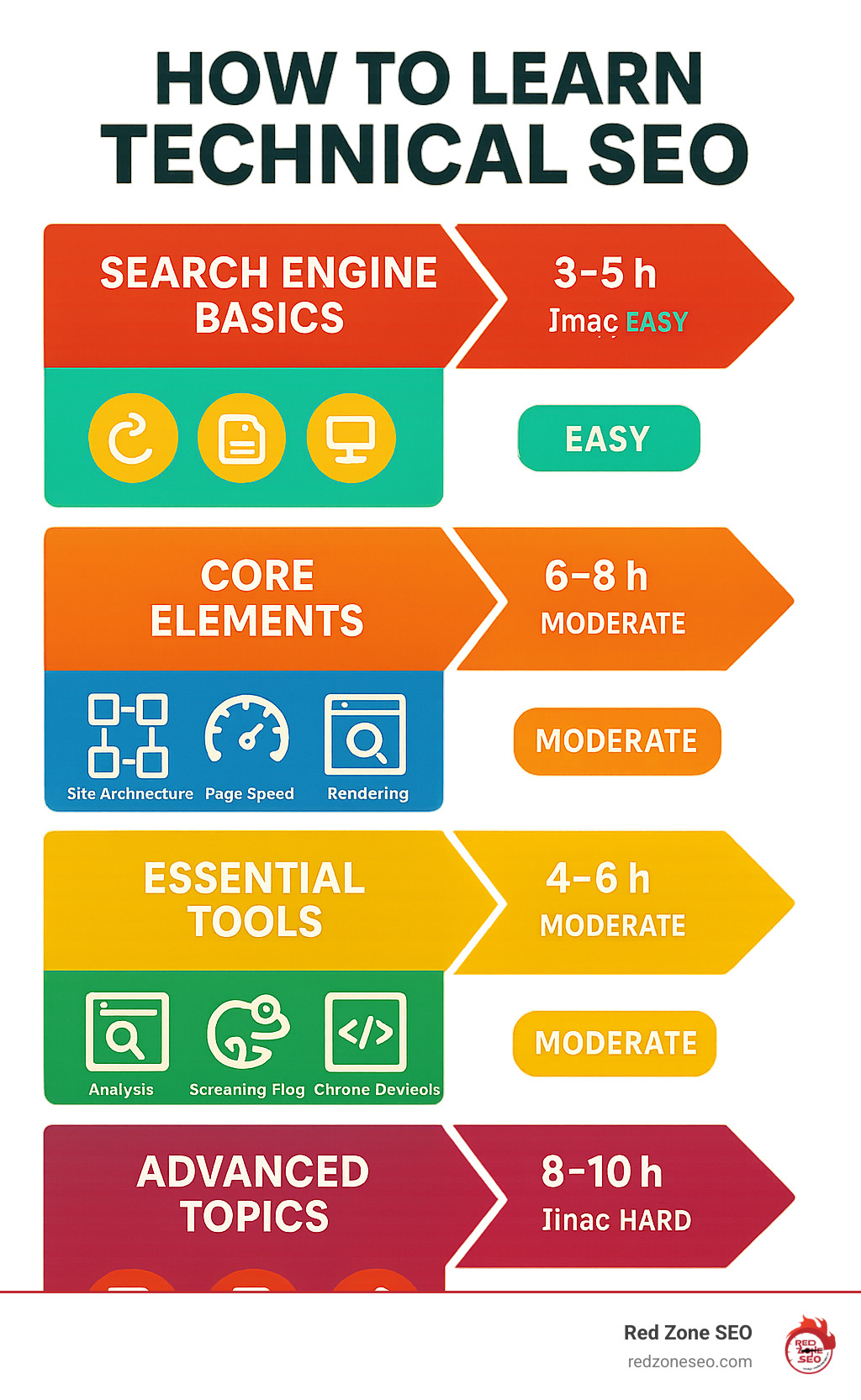
Relevant articles related to how to learn technical seo:
Technical SEO is the practice of optimizing your website's infrastructure and backend to ensure search engines can efficiently find, understand, and rank your content. It isn't directly about keywords or backlinks; it's about building a flawless foundation that allows your other SEO efforts to succeed. Without a technically sound website, even the most brilliant content and authoritative link profile may fail to achieve their ranking potential. As one expert bluntly states, "If your technical SEO is messed up? Then you're not going to rank."
The three core elements of technical SEO that you must master are:
Mastering these elements is non-negotiable for achieving and maintaining online visibility. For businesses that need to ensure this crucial foundation is expertly built, Red Zone SEO provides data-driven SEO services designed to drive measurable growth.
To fully appreciate how to learn technical SEO, it’s essential to understand its place within the broader SEO landscape. Search Engine Optimization is generally divided into three distinct but interconnected pillars:
| Pillar | Focus |
|---|---|
| Technical SEO | The website's foundation and infrastructure. This includes site speed, crawlability, security (HTTPS), indexing, site architecture, structured data, and mobile-friendliness. It's about making your site easy for search engines to process. |
| On-Page SEO | The content and HTML source code of your pages. This covers keyword research and implementation, content quality, title tags, meta descriptions, header tags (H1, H2s), image alt text, and user experience on the page. |
| Off-Page SEO | Your site's authority and reputation across the web. This is primarily built through backlinks from other reputable websites, but also includes brand mentions, social media signals, guest posting, and digital PR. |
Think of it like building a house: Technical SEO is the strong, stable foundation and framework. On-Page SEO is the interior design, room layout, and furnishings that make the house functional and appealing to live in. Off-Page SEO is the house's reputation in the neighborhood—the word-of-mouth recommendations and curb appeal that draw people to it. All three pillars must be strong and work in harmony for a stable, successful, and highly-visible online presence.
Learning how to learn technical SEO is a logical, systematic process. Once you understand the fundamental mechanics of how search engines interact with the billions of pages on the web, you can begin to build your skills layer by layer, from basic controls to advanced optimization strategies.

Before you can optimize a website, you must deeply understand the three-phase process that search engines like Google use to organize the world's information:
<a href=...> tags) on those pages to find new ones. It acts like a digital explorer, constantly navigating the web's pathways. If a page has no links pointing to it or is blocked from being crawled, it will remain invisible.For a comprehensive overview, review Google's official guide to how search works.
Next, you must learn how to use the specific tools and signals that control how search engines crawl and index your website. These are your primary levers for technical SEO.
yourdomain.com/robots.txt). It provides instructions to search engine bots about which parts of your site they should not crawl. It's primarily used to prevent access to non-public sections (like admin logins) and to help manage your crawl budget—the amount of resources a search engine will dedicate to crawling your site.<head> section of a specific page. They give page-level instructions. The most common are noindex, which tells Google not to add the page to its index, and nofollow, which tells Google not to follow any of the links on that page.rel="canonical" tag is an HTML element that solves duplicate content issues. When you have multiple URLs with the same or very similar content, the canonical tag tells search engines which version is the "master" or preferred one that should be indexed and ranked.A logical, well-organized site structure is crucial for both user experience and SEO. It helps search engines understand the relationship between your pages and helps distribute authority (or "link equity") throughout your site.
domain.com/services/service-a, also provides context./blog/how-to-learn-technical-seo is far more user-friendly and informative than a dynamic one like /articles.php?id=789123.With the fundamentals of crawling, indexing, and site structure in place, you can now focus on the specific technical elements that directly impact your search engine rankings and, just as importantly, your users' experience.
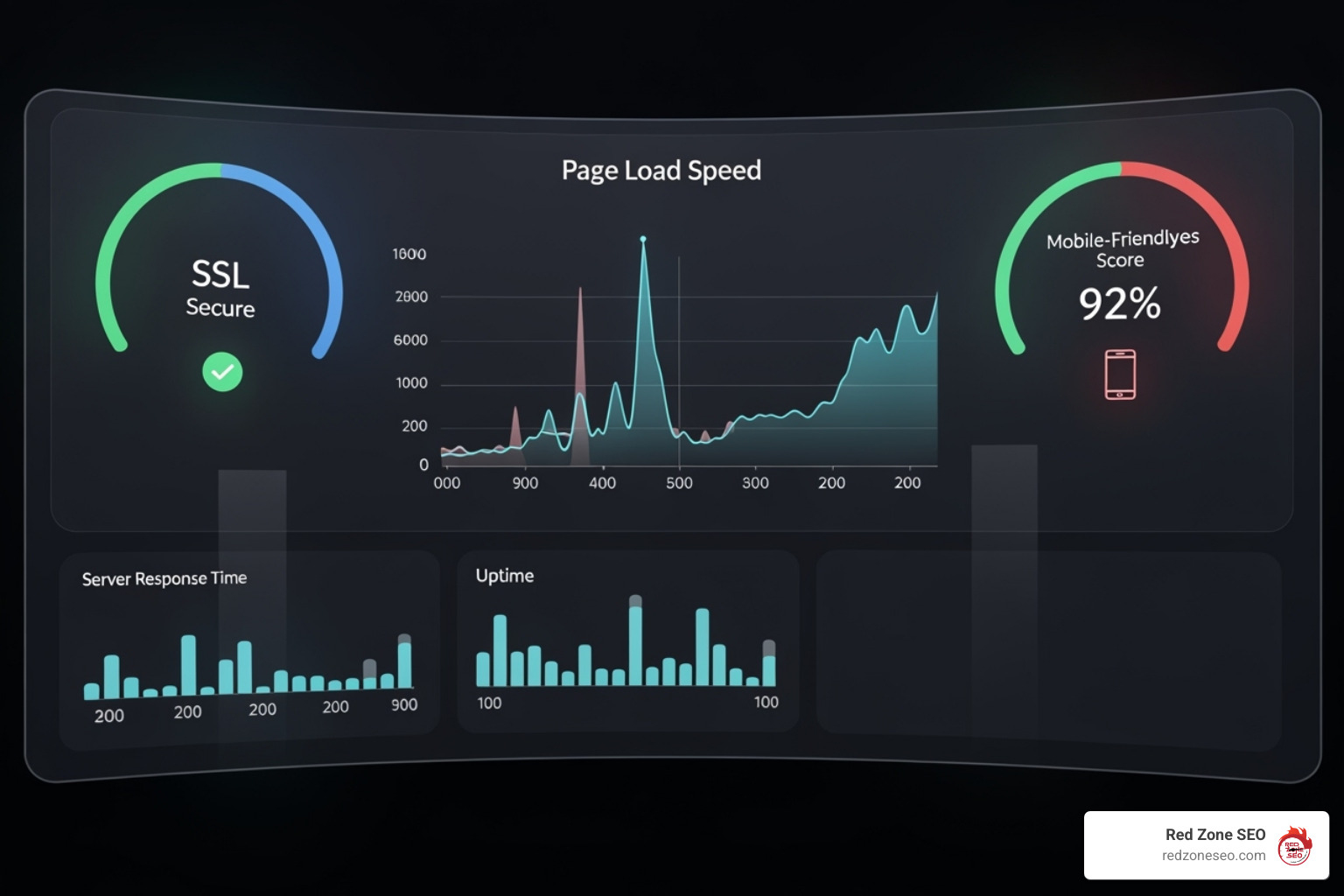
Page speed has been a confirmed Google ranking factor since 2010, and its importance has only grown. Google's Core Web Vitals (CWV) are a set of specific metrics designed to measure the real-world user experience of a page:
Use Google's PageSpeed Insights tool to diagnose issues. Common fixes include compressing images, using a Content Delivery Network (CDN), enabling browser caching, minifying CSS and JavaScript files, and reducing the impact of third-party scripts. A page's total size is often the biggest factor, so focus on reducing it without sacrificing quality.
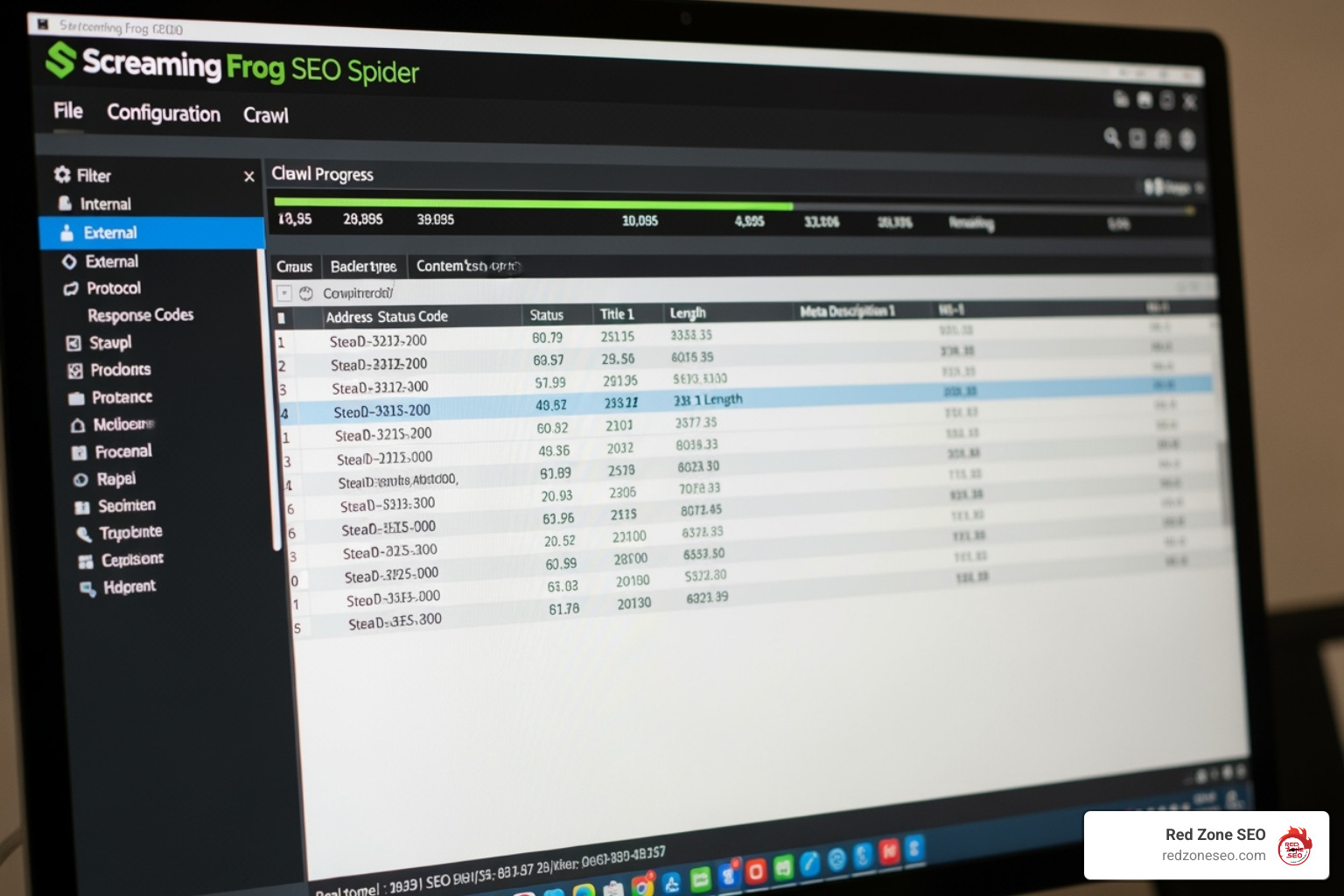
Duplicate content occurs when the same or substantially similar content exists on multiple URLs. This confuses search engines, forcing them to choose which version to rank and diluting your ranking potential. It can arise from http vs. https versions, www vs. non-www URLs, or parameters used for tracking and filtering. Use the canonical tag (rel="canonical") to point Google to the single, preferred version you want to be indexed. For pages with very little value ("thin content") or pages you don't want in search results (like internal search pages), use the "noindex" tag. Tools like Screaming Frog or Copyscape can help you find instances of duplicate content on your own site and across the web. For more on creating valuable pages that avoid thin content issues, see our guide on content optimization.
Many modern websites rely heavily on JavaScript to create dynamic and interactive experiences. However, this can create challenges for SEO because content is often loaded after the initial HTML file. This can cause delays or, in worst-case scenarios, prevent search engines from seeing critical content and links. It's vital to understand the difference between rendering methods:
Use the URL Inspection Tool in Google Search Console or Chrome DevTools to inspect the rendered HTML and ensure all your important content and links are visible to Google.
Structured data, often implemented using the Schema.org vocabulary, is code you add to your HTML to help search engines understand the context of your content in a more sophisticated way. It's what powers the rich snippets you see in search results—features like star ratings for products, cooking times for recipes, and dropdowns for FAQs. Google prefers the JSON-LD format because it's easier to implement. Use markup that is relevant to your content (e.g., Product, LocalBusiness, Article, FAQPage) and always validate your implementation with Google's Rich Results Test. While structured data is not a direct ranking factor, it can significantly improve your visibility and click-through rates from the search results page.
Theory is important, but the most effective way for how to learn technical SEO is through hands-on practice. Performing a technical SEO audit is the single best way to apply your knowledge, understand how theoretical issues manifest on real websites, and learn how to prioritize fixes. An audit is a comprehensive health check for your website's technical foundation, designed to identify and resolve any issues that could be hindering its performance in search engines.
At Red Zone SEO, our SEO Audit services follow a systematic methodology to uncover critical roadblocks and opportunities for growth. You can use a similar, structured approach to guide your learning.
site:yourdomain.com search operator in Google to get a rough idea of how many pages are indexed. Compare this to the number of valid pages in your sitemap and the Coverage report in Google Search Console. Are there major discrepancies?Finding issues is only half the battle; getting them fixed is what counts. Effective communication with developers is a critical skill for any technical SEO. To build a productive relationship:
For the biggest and quickest impact, especially on a site that hasn't been optimized before, focus on these three areas:
There are different levels of proficiency. You can learn the fundamentals of how to learn technical SEO—what the core concepts are and why they matter—in a few months of dedicated study (e.g., 5-10 hours per week). Reaching proficiency, where you can confidently conduct an audit, diagnose common issues, and recommend solutions, typically takes 6 to 12 months of consistent learning and hands-on practice. Achieving true mastery is a continuous journey that takes years. The field is constantly evolving with Google updates, new technologies, and changing user behavior, so a commitment to ongoing learning is essential. Think of it like driving: you can learn the basics to get your license quickly, but becoming an expert driver who can handle any condition takes years of experience on the road.
No, you do not need to be a professional coder or developer. However, you do need to achieve a certain level of technical literacy. You should be comfortable reading HTML to identify key tags like titles, meta tags, canonicals, and links. You should understand the basics of how CSS styles a page and how JavaScript can add or change content. The goal is not to write the code yourself but to understand how it works so you can identify problems (e.g., "This important paragraph is loaded via JavaScript and may not be visible to Google") and communicate the required fix clearly to a developer.
Some of the best and most authoritative learning materials are completely free:
Learning how to learn technical SEO is a rewarding journey that empowers you to build and maintain the invisible, yet absolutely critical, foundation for online success. By moving from understanding the core mechanics of search engines to mastering key elements like site speed and architecture, and finally to auditing a site and collaborating effectively with developers, you gain a skill set that is essential for any modern marketing professional.
Mastery in this field is not a destination but a continuous process. It requires a commitment to ongoing learning and curiosity, as the digital landscape and search engine algorithms are in a constant state of flux. The most effective approach will always be a practical one: start auditing, get your hands dirty with the tools, find real issues, and learn by fixing them. Don't be afraid to experiment and make mistakes on a test site—it's a rite of passage for every skilled technical SEO.
While learning these skills yourself is incredibly valuable, executing a comprehensive technical SEO strategy at scale can be a significant challenge, requiring time, expertise, and resources that many businesses don't have in-house. For businesses ready to implement advanced strategies and achieve measurable, long-term growth, the expert team at Red Zone SEO can build the powerful technical foundation your website needs to thrive in competitive search results.
Our data-driven approach ensures that technical improvements are not just about checking boxes on a list, but about translating those fixes into more organic traffic, a better user experience, and ultimately, more customers for your business.