SEO for enterprise companies is fundamentally different from traditional SEO. While small businesses might optimize a few hundred pages, enterprises manage thousands or millions across multiple business units, international markets, and complex technical infrastructures. This isn't just SEO made bigger; it's an entirely different discipline.
Key differences between enterprise and traditional SEO:
Enterprise websites face unique challenges. For example, GitHub has over 78 million pages indexed in Google. The stakes are also higher, as a single technical error can impact thousands of pages, and a poor content strategy can waste millions. As one expert notes, "Enterprise SEO is not just about optimizing web pages; it's about creating a cohesive strategy that aligns with the overall business goals."
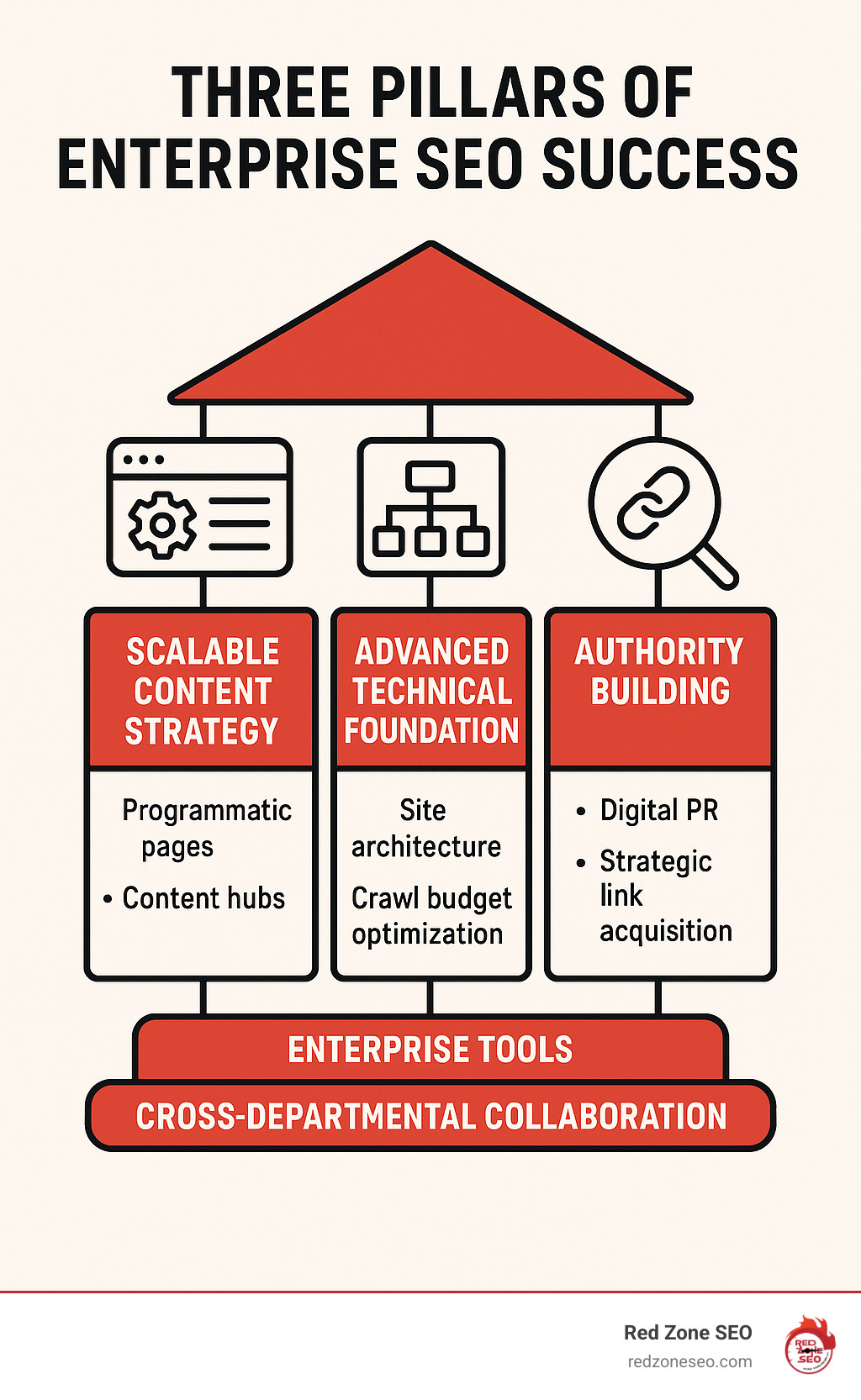
Success requires three core elements: scalable content strategies, advanced technical foundations, and systematic authority building. It also demands navigating complex organizations, securing executive buy-in, and coordinating across departments. When done right, enterprise SEO delivers results at scale, with companies often seeing a significant uptick in organic traffic over 9-12 months.
Common seo for enterprise companies vocab:
SEO for enterprise companies is a fundamentally different discipline than traditional SEO. While the core principles of content, technical health, and backlinks remain, the application becomes exponentially more complex. It's the difference between managing a home office and orchestrating the global logistics of a multinational corporation, where a single misstep can have cascading effects across the entire supply chain.
Enterprise SEO is the science of optimizing massive websites that serve multiple audiences across various markets. Key characteristics include:
These factors create a high-stakes environment where brand reputation is paramount and every ranking position against other Fortune 500 companies matters.
The operational challenges for enterprise sites exist in a different universe compared to smaller businesses.
| Factor | Traditional SEO | Enterprise SEO |
|---|---|---|
| Website Size | <1,000 pages | 10,000+ pages, often millions |
| Keyword Strategy | Long-tail, niche focus | Competitive head terms & programmatic |
| Team Structure | Small integrated team | Siloed departments |
| Tools | Standard tools | Enterprise platforms and custom solutions |
| Budget | Limited | Significant investment |
| Time to Results | 3-6 months | 6-12+ months |
This difference in scale introduces unique and complex problems. Page bloat from low-quality or outdated pages (e.g., old marketing campaigns, unused tags, thin user-generated content) can dilute site authority and waste precious crawl budget. Duplicate content issues multiply exponentially, arising not just from similar product pages but also from tracking parameters, printer-friendly page versions, and improperly configured international site versions. G2's category pages show how to handle this by creating unique, valuable content for each category, avoiding the duplication trap.
Furthermore, internal linking becomes a complex architectural puzzle. At scale, it's impossible to manually ensure that new, high-value content receives links from authoritative pages or that orphan pages aren't being created daily. This requires intelligent, automated systems to manage link flow effectively. Most importantly, securing stakeholder buy-in is critical. You must demonstrate clear, forecastable ROI to IT directors, legal teams, and CFOs, each of whom has different priorities and requires a custom business case. Success in seo for enterprise companies requires not just SEO tactics, but a deep understanding of organizational dynamics and scalable systems.
Building a successful seo for enterprise companies program is like constructing a digital empire. It rests on three foundational pillars: scalable content, a bulletproof technical foundation, and systematic authority building. Mastering all three creates a powerful, sustainable competitive advantage.
Enterprise content isn't about a few blog posts; it's about orchestrating a content ecosystem that demonstrates unparalleled expertise. This starts with content hubs and topic clusters, where a central, authoritative pillar page on a broad topic is supported by numerous specific sub-topic pages. This structure signals deep expertise to search engines and keeps users engaged within your site.
Programmatic SEO is a key tactic for scaling content. It allows for the automated generation of thousands of unique, optimized pages targeting specific long-tail queries. To be successful, this must be built on a foundation of unique data points to avoid creating thin, templated pages. G2's category pages are a masterclass in this, using unique review data to create comprehensive pages for countless software categories.
Other critical elements of an enterprise content strategy include:
Scaling content production while maintaining quality requires streamlined editorial workflows, AI-assisted writing tools for efficiency, and robust content frameworks and templates.
Technical SEO for an enterprise site is like maintaining a city's infrastructure—small, hidden problems can cause massive outages. The goal is flawless performance and crawlability at scale.
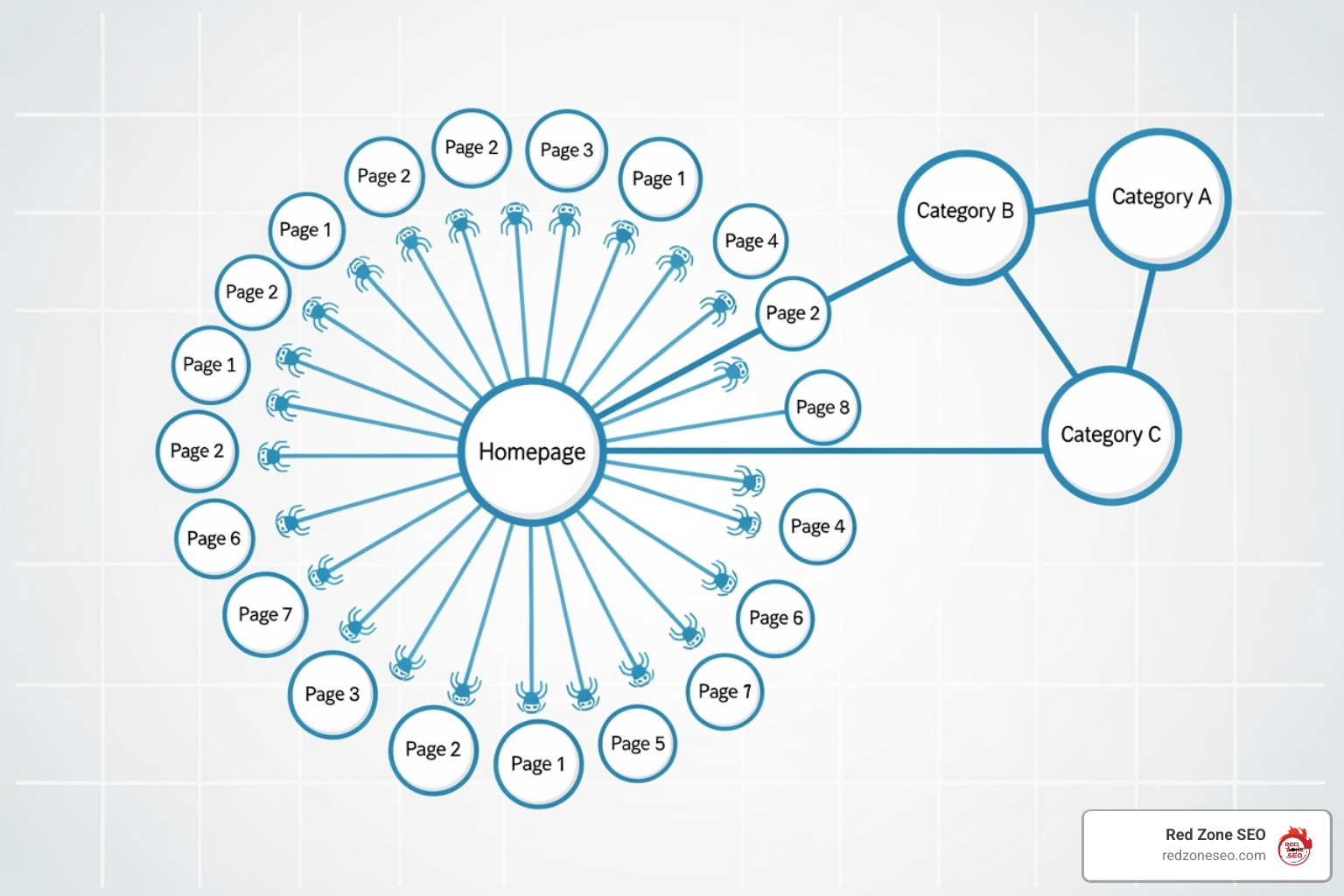
Key technical priorities include:
A comprehensive Technical SEO Audit is the non-negotiable foundation for identifying and fixing critical issues like broken links, redirect chains, and indexing errors before they cause widespread damage.
In the hyper-competitive world of enterprise SEO, authority is the ultimate moat. It requires a sophisticated, brand-aligned approach that goes far beyond basic link building.
An excellent strategy is worthless without flawless execution and rigorous measurement. For large organizations, this means building the right team structure, leveraging enterprise-grade technology, and implementing a measurement framework that proves the business value of SEO to the C-suite.
Choosing the right team structure is a critical strategic decision with long-term implications. While a dedicated in-house team offers deep institutional knowledge and direct control, it's expensive to build and maintain, requiring significant investment in salaries, ongoing training, and enterprise-level tools.

Hiring an expert SEO partner like Red Zone SEO provides battle-tested experience, immediate access to premium tools, and specialized expertise that is difficult to hire for. An external perspective can also spot opportunities and challenge internal assumptions that may be holding back growth.
A hybrid model is often the ideal solution for enterprises. The internal team manages day-to-day operations, stakeholder communication, and brand alignment, while the agency partner provides high-level strategic guidance, handles specialized projects like technical audits or large-scale campaigns, and brings an outside-in view of the competitive landscape.
Regardless of the model, a centralized SEO lead or Center of Excellence is crucial to unify strategy and prevent initiatives from fragmenting across departments. This lead acts as an evangelist and translator, showing each department how SEO directly benefits their specific goals—translating technical fixes into improved site stability for IT, or increased visibility for product marketing's latest launch.
Managing seo for enterprise companies requires industrial-strength platforms designed for data processing and automation at scale.
The real power comes from integrating SEO data with business intelligence tools. Connecting Google Search Console and SEO platform APIs to tools like Tableau, Power BI, or Google Data Studio allows you to visualize the direct relationship between SEO activities, rankings, traffic, and most importantly, revenue.
Success in enterprise SEO is defined by demonstrating clear business impact, not reporting on vanity metrics. We focus on KPIs that resonate with your CFO and board of directors.
Creating custom dashboards for C-suite reporting is key. We translate technical metrics into business language, showing revenue generated, market share gained, and pipeline influenced instead of just traffic and rankings. For multi-location businesses, tracking local search performance is also critical. As research from Google shows, 78% of local mobile searches lead to an in-store visit. Our Local SEO Packages are designed to optimize performance and drive foot traffic across all your locations.
The path to enterprise SEO success is complex, and what seems like a minor hiccup can quickly cascade into a major crisis impacting millions in potential revenue. Awareness of these common pitfalls is the first step toward building a resilient and effective program.
The Pitfall: This is the single biggest hurdle in enterprise SEO. Without C-suite support, SEO remains a low-priority "marketing thing," starved of resources. Initiatives stall due to friction between marketing, IT, and product teams who have competing priorities, different KPIs, and speak different professional languages.
The Solution: Speak the language of business results and build a compelling business case. We align SEO goals directly with overarching business objectives like revenue growth, market share, and customer acquisition cost reduction. We create forecast models that project potential revenue growth from specific SEO initiatives, framing SEO not as a cost but as a capital investment in a durable business asset. Fostering cross-departmental communication with shared goals and demonstrating how SEO makes other teams' work more successful helps break down silos and turns colleagues into advocates.
The Pitfall: Over years of development, migrations, and redesigns, large websites accumulate significant technical debt. This includes slow page speed from legacy code, complex redirect chains, an insecure mix of HTTP/HTTPS pages, and thousands of low-quality, "zombie" pages. This debt drains crawl budget, dilutes authority, and silently kills performance.
The Solution: A proactive, systematic approach to technical hygiene is essential. We conduct regular, comprehensive SEO Audit to diagnose issues before they become critical. We implement a strategic content pruning and consolidation plan to remove low-value pages while redirecting their equity to more important content. To secure resources from IT, we prioritize technical fixes using an impact/effort matrix. This 2x2 grid clearly identifies high-impact, low-effort quick wins (e.g., fixing a critical robots.txt error), providing a data-driven roadmap that development teams can act on.
The Pitfall: Manual processes that work for small sites break spectacularly at the enterprise level, creating impossible bottlenecks and inconsistent results. Relying on manual optimization for thousands of pages, manual reporting, or manual technical checks leads to wasted effort and missed opportunities. The mantra "Boring = $$$” applies here, as the consistent, automated execution of fundamentals drives the most significant results.
The Solution: Accept enterprise-grade tools and intelligent automation as a core competency. We invest in systems for rank tracking, site monitoring, and internal linking that can handle massive data sets. We develop automated workflows and custom scripts for tasks like running weekly on-page audits, finding and reporting new broken internal links, or generating alerts for significant ranking drops. This doesn't replace human experts; it empowers them by freeing them from repetitive tasks to focus on high-impact strategic work that drives competitive advantage. Success in seo for enterprise companies comes from anticipating these challenges and building robust systems to prevent them.
SEO for enterprise companies is a marathon, not a sprint. While quick wins from technical fixes can appear in the first few months, meaningful, business-moving results typically take 6 to 12 months to materialize. This timeline is due to the scale involved; Google needs time to crawl millions of pages, process changes, and recognize growing authority. The impact is cumulative, like compound interest, building on itself over time. Factors like industry competition, your site's current health, and resource allocation will influence the exact timeline.
Without a doubt, the biggest challenge is managing scale and complexity. This appears in three main areas:
Mastering these complexities is difficult, but the rewards are proportionally massive, often leading to 30% or higher increases in organic traffic.
Absolutely. This is often called enterprise local SEO. If your business has dozens or hundreds of physical locations, you face the same challenges of scale, automation, and systematic management.
Enterprise principles are applied to local search through:
Given that 78% of local mobile searches result in a visit within a day, scaling local SEO is a powerful revenue driver. Our specialized Local SEO Packages are designed to solve these multi-location challenges, combining a systematic approach with the high-conversion potential of local search.

Mastering seo for enterprise companies requires a fundamental shift in thinking. It's not about doing more of the same; it's about moving from manual tasks to systematic automation, building robust strategies for content and technical excellence, and leveraging data to execute flawlessly at scale.
When done right, enterprise SEO transforms from a cost center into a powerful revenue engine that builds a sustainable competitive advantage. It's a marathon, not a sprint, but the investment pays compounding dividends, creating a moat around your business that competitors will struggle to cross.
At Red Zone SEO, we've guided countless enterprise clients through these complexities. We provide the data-driven, proven solutions needed to turn strategy into measurable results. We act as your strategic partner, working alongside your team to build a system for long-term revenue growth and market dominance.
Ready to transform your enterprise SEO into your biggest growth driver? Learn how our process works and let's start scaling your success together.
SEO pricing can feel like navigating a maze blindfolded. You ask three different agencies for quotes, and you get three wildly different answers—often with the frustrating response, "it depends."
Here's a quick look at typical SEO costs:
While SEO pricing does depend on many factors, you shouldn't have to accept vague answers when making critical business decisions. Quality SEO is an investment in specialized expertise, advanced tools, and the consistent work required to build your website's authority and compete effectively.
The good news is that SEO delivers measurable ROI. Businesses spending over $500/month on SEO report significantly higher satisfaction, proving that a smart investment pays off.
This guide will explain SEO pricing. You'll learn what drives costs, how to compare pricing models, and how to spot the difference between a smart investment and a waste of money, empowering you to choose an SEO partner who delivers real results.
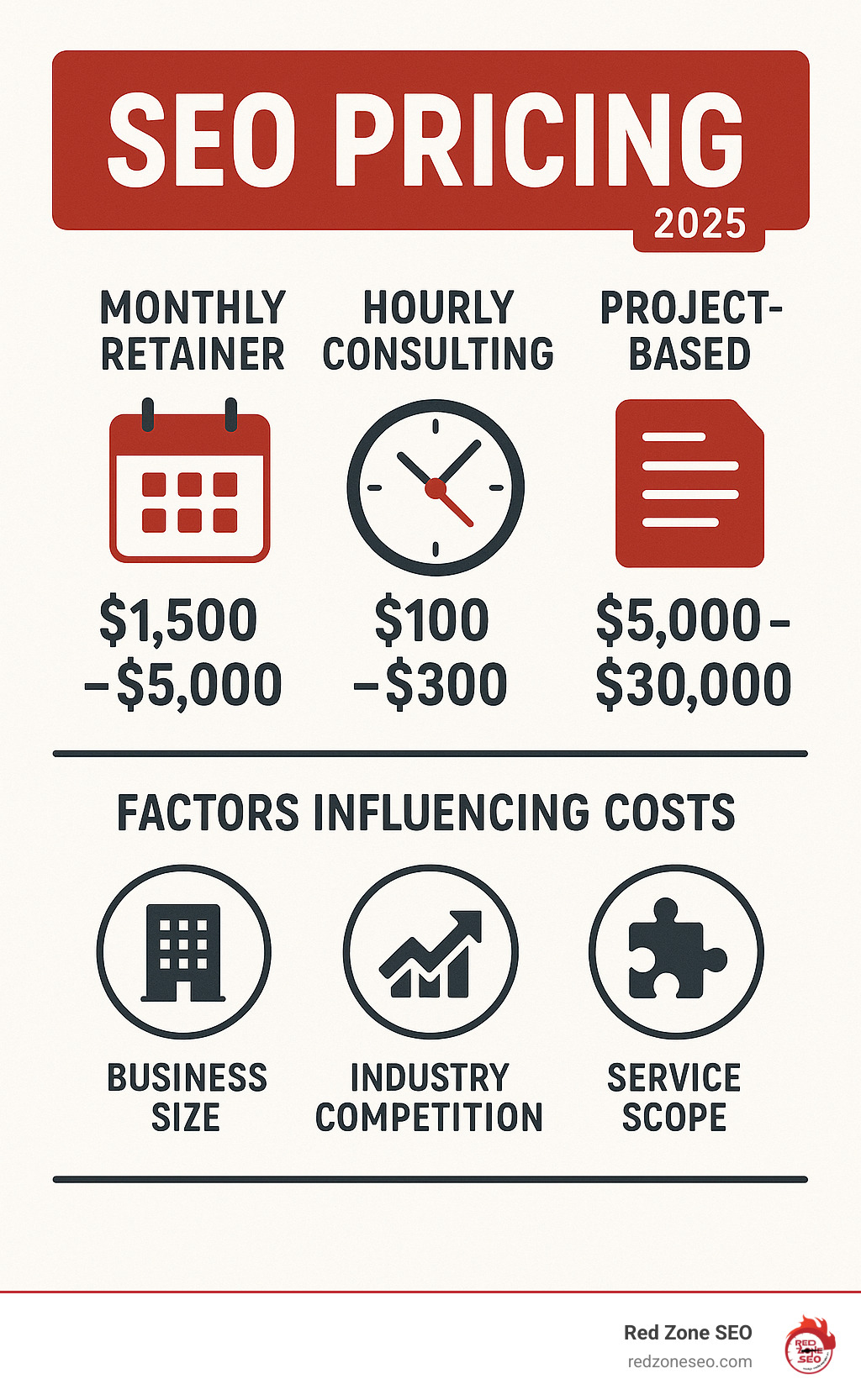
Quick look at seo pricing:
The numbers behind SEO pricing reflect the genuine expertise and strategic effort required to climb search rankings. It's an investment that pays off: 92% of businesses report satisfaction with their SEO ROI. As Brian Dean notes, higher spend correlates with higher satisfaction. Businesses investing over $500 monthly see better outcomes than those on shoestring budgets. Quality SEO, like any professional service, requires a quality investment.
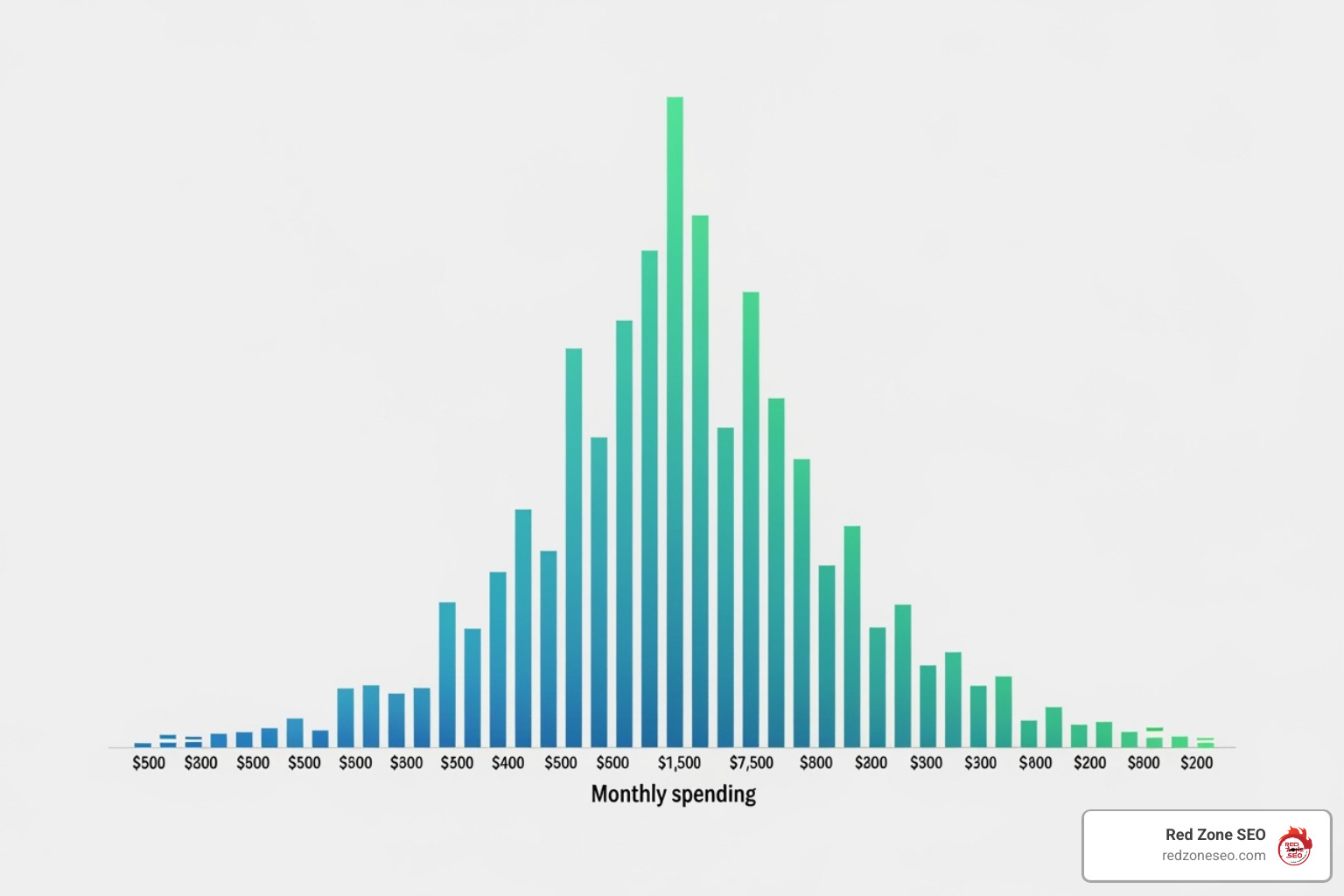
The monthly retainer is the most common SEO pricing model, preferred by 75% of agencies according to Ahrefs. SEO requires continuous effort—like tending a garden—to adapt to algorithm updates and competitor moves. This model covers ongoing work like keyword research, content optimization, and performance tracking. Small businesses typically invest in this range, with local companies often seeing great results with focused packages like our Affordable SEO Las Vegas services. Enterprise SEO involves a larger investment for broader markets, fiercer competition, and more complex strategies.
For specific needs like strategic guidance or technical troubleshooting, hourly consulting is ideal. Rates vary by experience, with survey data showing a clear correlation between years of experience and higher hourly fees. Agency rates are typically higher, reflecting access to a team's collective resources. This model offers flexibility for short-term projects, training, or strategy development.
Project-based pricing is perfect for tasks with a defined start and end, such as a technical audit, website migration, or a targeted content campaign. Common projects include:
This model offers clarity on scope, timeline, and cost for specific, focused objectives.
Choosing the right seo pricing model is crucial for success. There's no single best option, which is why 40% of agencies offer multiple models to fit different business needs. Let's break down the most common ones.
| Pricing Model | Pros | Cons | Best Use Cases |
|---|---|---|---|
| Monthly Retainer | - Predictable budgeting | - Can feel expensive if results aren't immediate | - Ongoing SEO campaigns |
| - Consistent, ongoing optimization | - Requires long-term commitment | - Businesses seeking continuous organic growth | |
| - Builds long-term partnership | - May include services you don't immediately prioritize | - Companies in competitive industries | |
| Project-Based | - Clear scope and deliverables | - Limited to specific tasks | - One-time needs (e.g., website redesign, technical audit, penalty recovery) |
| - Fixed cost | - Doesn't cover ongoing optimization | - Businesses with a defined problem to solve | |
| - Ideal for specific, measurable goals | - Requires clear definition of scope upfront | - Launching a new website | |
| Hourly Consulting | - Flexibility | - Costs can add up quickly | - Strategic guidance or training |
| - Access to specialized expertise | - Less predictable budgeting | - Troubleshooting specific issues | |
| - Good for ad-hoc advice or training | - Focus on hours, not necessarily results | - Businesses with an in-house team needing expert consultation | |
| Performance-Based | - Pay only for results | - Can lead to misaligned goals (e.g., ranking for low-value keywords) | - Businesses with high confidence in a provider's ability to deliver specific, measurable outcomes (e.g., leads, sales), but often discouraged due to potential for short-cuts. |
| - Low upfront risk | - May incentivize "black hat" tactics | - Often unsuitable for long-term, holistic SEO due to focus on easily manipulated metrics. | |
| - Provider is highly motivated | - Difficult to define and track true performance metrics (e.g., "rankings" vs. "revenue") | - Rarely recommended for comprehensive SEO due to inherent risks and focus on vanity metrics. |
As the most popular model, the monthly retainer is ideal for long-term, sustainable growth. SEO is an ongoing process of adapting to algorithm changes and competitor actions. This model provides a predictable budget for a comprehensive suite of services—technical SEO, content, and link building—ensuring all elements work together for the best results.
Project-based pricing is for specific, one-time needs. It's like a surgical strike to solve a defined problem, such as a technical audit (see our SEO Audit process), website migration, or penalty recovery. You get a fixed scope, timeline, and cost. The main drawback is that it doesn't cover the ongoing optimization needed to maintain momentum.
This model offers maximum flexibility, giving you access to specialized expertise on an as-needed basis. It's perfect for businesses with in-house teams that need strategic guidance, training, or help troubleshooting a specific issue. While it provides great cost control for small tasks, be mindful that hours can add up quickly.
While paying for results sounds great, this model is the least popular for a reason and comes with major red flags. Defining "performance" is difficult, and it can incentivize providers to chase low-value keywords or use risky "black hat" tactics for quick wins that can harm your site long-term. A transparent, value-driven retainer focused on sustainable growth is almost always a safer and more effective approach.
Just like a home renovation, the final seo pricing depends on many variables. Understanding these key cost drivers will help you evaluate proposals intelligently and know why one costs more than another. A local Henderson restaurant has different needs than a national e-commerce store, and that's reflected in the strategy and investment.
The 8 key factors that influence your SEO costs:
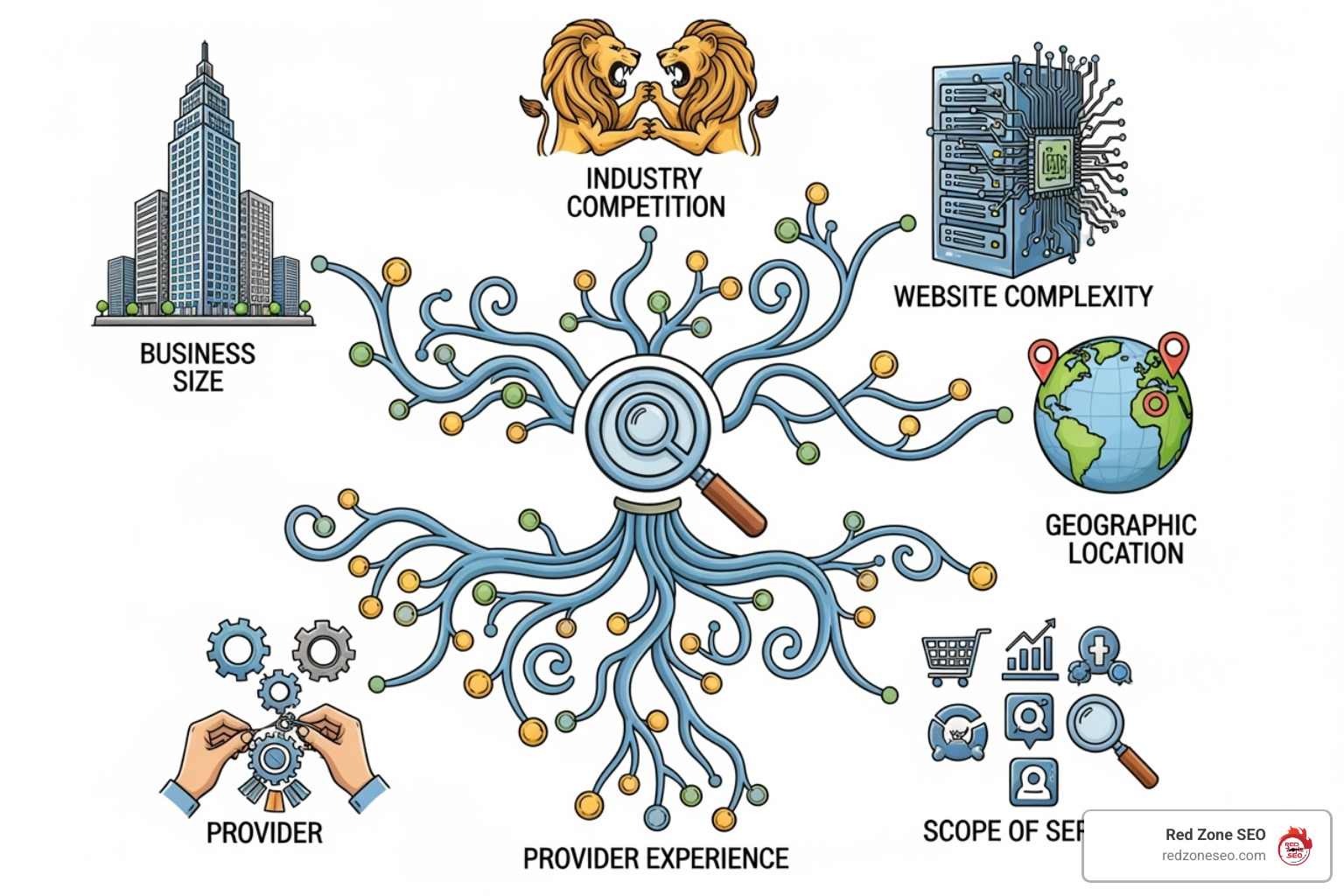
Your business size and industry are foundational. A small local business has vastly different needs and competition than a large enterprise. For example, a Henderson business might thrive with focused Local SEO Packages, while a national Ecommerce Store SEO campaign requires a much larger investment to compete against major players. Highly competitive industries like law or finance naturally demand higher budgets to gain traction.
The scope of work is a direct cost driver. A 10,000-page e-commerce site requires more optimization than a 10-page brochure site. The website's platform also matters; a site built on an SEO-friendly platform like WordPress (our WordPress SEO Services are popular for this reason) is often more efficient to work on than a custom-built site with technical limitations. The site's current technical health, content needs, and the aggressiveness of the required link building campaign all significantly influence the final price.
The type of provider you hire heavily influences cost. An agency with a team of specialists will have a different price structure than a solo freelancer. Experience is paramount; a seasoned professional who has steerd algorithm updates and delivered consistent results provides immense value and commands a higher rate. This is why businesses searching for the Best SEO Company Las Vegas or Best SEO Company Henderson are willing to invest in proven expertise. Finally, a provider's location can affect costs, with US-based services generally priced higher than overseas options.
The specific outcomes you want to achieve directly shape the SEO strategy and its cost. Are you focused on generating local leads for a service-based business? The strategy will prioritize Google Business Profile optimization, local citations, and geographically targeted keywords. Are you an e-commerce brand aiming for national or international sales? The campaign will be far more complex, requiring extensive content marketing, a robust link-building strategy to compete with established brands, and sophisticated technical SEO for a large product catalog. A goal of increasing brand awareness will have different KPIs and tactics than a goal of driving direct online transactions. Clear goals allow an agency to tailor a plan, and the more ambitious the goal, the greater the required investment.
The starting point of your website's SEO health is a major pricing factor. A brand-new website is a blank slate; it has no authority, but it also has no existing penalties or technical debt. An older website might have some authority but could be riddled with issues from past, poorly executed SEO, such as a bad backlink profile, duplicate content, or a manual penalty from Google. A thorough SEO audit is the first step to diagnose these issues. The cost will be higher if significant cleanup and recovery work is needed before any growth-focused initiatives can even begin. Fixing a penalty or disavowing thousands of toxic links is a time-intensive process that adds to the initial project scope.
While SEO is inherently a long-term strategy, the aggressiveness of the campaign can be scaled, which impacts cost. If you have an urgent need to gain market share or have a specific timeline for a product launch, you may opt for a more aggressive approach. This translates to a higher monthly investment to support more content creation, a larger volume of outreach for link building, and more intensive technical monitoring. A more aggressive timeline requires more resources to be deployed simultaneously. Conversely, a business with a longer-term outlook can opt for a slower, more methodical pace, which can be accommodated with a lower monthly budget spread out over a longer period.
SEO is not a single service but a collection of specialized disciplines. The price of a package will depend on what's included. A basic package might only cover on-page optimization and technical monitoring. A more comprehensive, and therefore more expensive, retainer will include technical SEO, on-page SEO, content strategy and creation (e.g., blog posts, case studies, videos), and off-page SEO (link building and digital PR). Some agencies bundle services like conversion rate optimization (CRO), social media management, or PPC management with their SEO offerings. When comparing proposals, it's critical to look at the line-item deliverables to ensure you're making an apples-to-apples comparison.
Professional SEO agencies invest heavily in a sophisticated suite of tools to perform their work effectively. These platforms are essential for keyword research, competitor analysis, backlink tracking, rank monitoring, and technical site audits. Industry-leading tools like Ahrefs, Semrush, Moz Pro, and Screaming Frog can cost thousands of dollars per month for agency-level subscriptions. This overhead is factored into the pricing. An agency that uses these premium tools has access to better data, which leads to more informed strategies and better results. A provider with unusually low pricing may be cutting corners by not investing in the necessary technology, which will ultimately limit the campaign's effectiveness.
When evaluating seo pricing, you must know what services are included. It's like checking a car's features before looking at the sticker price. A quality SEO package is a comprehensive strategy, not a collection of random tasks. At Red Zone SEO, we're transparent about our process; you can see exactly How It Works when you partner with us.
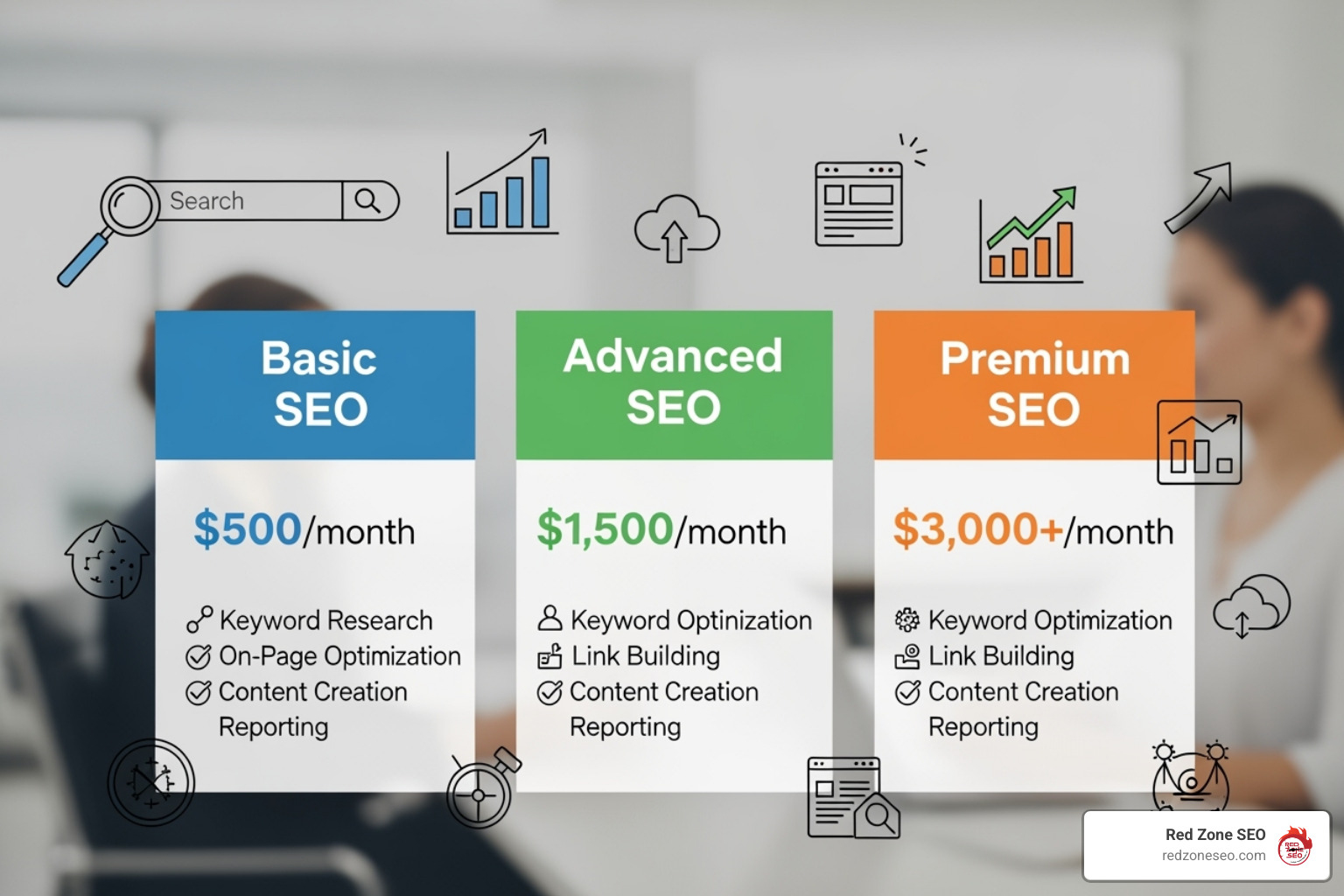
Technical SEO is the foundation that ensures search engines can efficiently crawl, index, and understand your site. Key deliverables include:
Content is where you connect with your audience. This service pillar focuses on creating and optimizing content that answers user questions and drives conversions. It includes:
Off-page SEO builds your site's authority and reputation across the web. For local businesses, this is especially critical. Key activities are:
Investing in SEO is a strategic decision that, when executed correctly, can yield significant long-term returns. However, it's crucial to approach seo pricing with a clear understanding of its value, how to budget effectively, and what warning signs to look out for.
Quality SEO is an investment, not an expense. Here’s what you're paying for:
Set your budget by working backward from your goals. Determine the value of a lead or customer, then project potential ROI. A simple formula is Monthly SEO Value = Monthly Organic Traffic × Conversion Rate × Customer Lifetime Value. This helps justify an investment, which for many businesses is 6-15% of their total marketing budget.
When comparing providers, watch for these red flags:
Before making a decision, we encourage you to watch this short video by Google on hiring an SEO to help you choose wisely.
When businesses start exploring seo pricing, they often have similar concerns and questions. We've been helping companies across Las Vegas, Henderson, and beyond steer these decisions for years, and these are the questions that come up most frequently in our conversations.
For a small business, a realistic budget for effective SEO from a reputable agency is typically $1,500 to $5,000 per month. This range covers the core services needed for growth: technical SEO, content creation, and link building. The exact cost depends on your industry's competitiveness and your specific goals. A local business in Henderson might start at the lower end of that range for a focused campaign. Be very wary of services under $500/month. Such low prices often indicate a lack of expertise or risky tactics that can harm your site in the long run. Quality SEO is an investment, and you get what you pay for.
Patience is key in SEO. While you can typically expect to see initial traction within 3 to 6 months—such as improved rankings and traffic—the most significant ROI comes later. Meaningful, compounding growth often occurs after 6 to 12 months as your website builds authority. Think of it as building a long-term asset, not renting short-term traffic. Google needs time to recognize and reward your consistent efforts, so rushing the process with shortcuts is a recipe for failure.
When comparing proposals, look beyond the price tag and focus on value and potential ROI. Here's how to evaluate them effectively:
Navigating seo pricing is no longer a mystery. You now understand the logical factors that determine cost and value. SEO is not an expense; it's a powerful long-term investment in a digital asset that drives sustainable growth. Success comes from focusing on value and partnership, not just the lowest price. A custom strategy is essential—your business is unique, and your SEO plan should be too.
At Red Zone SEO, we deliver data-driven results and transparent pricing to businesses in Las Vegas, Henderson, and beyond. Our focus is on what truly matters: driving qualified traffic that converts into customers and revenue. We're not just a service provider; we're a partner dedicated to open uping your online potential.
Ready to invest in a strategy that delivers real results? View our transparent SEO service pricing and let's discuss how we can help you rise to the top.
Why technical seo is important is a critical question for any business with an online presence. The answer is straightforward: technical SEO is the invisible foundation that allows search engines to find, understand, and rank your website. Without it, even the best content and backlinks will fail to deliver results, like a beautiful house built on quicksand.
Technical SEO directly impacts:
Consider that mobile devices account for more than half of all internet traffic, and if a website takes more than three seconds to load, most people will leave. These statistics highlight that technical SEO isn't just for search engines; it's for your customers. A solid technical foundation makes every other marketing effort more effective.
Simple why technical seo is important word guide:
Imagine building a beautiful house with stunning design, only to find the foundation is cracked and the plumbing is faulty. No matter how great it looks, it's fundamentally flawed. This is what happens when a website ignores technical SEO. Why technical seo is important becomes clear when you see it as the foundation that makes your content and link-building efforts succeed.
Technical SEO involves optimizing your website's infrastructure so search engines can efficiently crawl, index, and render your content. Without this, your brilliant content strategy will struggle.
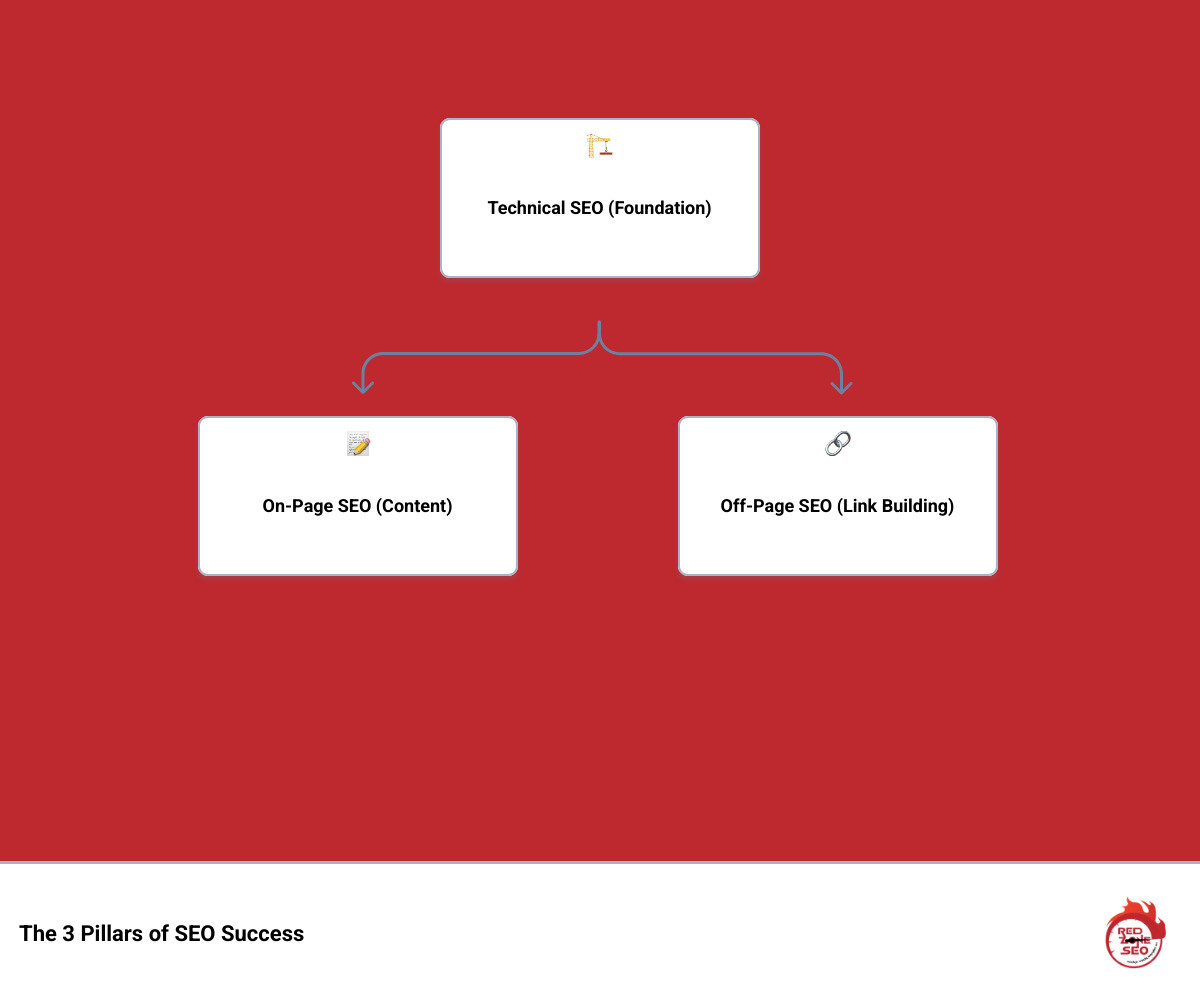
To understand technical SEO's role, it's helpful to see how it fits with the other two pillars of SEO:
On-Page SEO: This involves optimizing elements on your actual web pages. It includes keyword research, writing compelling headlines and meta descriptions, and creating high-quality content. Think of it as furnishing the rooms in your house. Our On-Page SEO Definition guide covers this in detail.
Off-Page SEO: This refers to actions taken outside of your website to build authority and trust. The primary component is link building—earning links from other reputable sites. Social media mentions and online reviews also contribute. This is like building your reputation in the neighborhood.
Technical SEO: This is the foundation supporting both on-page and off-page efforts. It covers site speed, mobile-friendliness, security, and site architecture. If your technical SEO is poor, it's like having an unstable foundation that prevents visitors from safely entering your beautifully decorated house.
Even with perfect on-page SEO and great backlinks, technical issues can render those efforts worthless. That's why technical seo is important—it enables everything else.
Search engines like Google use automated programs called crawlers (or Googlebot) to find content. They follow links from site to site to find new pages. This findy process is called crawling.
After crawling, Google must process and understand the page's content, a process called rendering. Finally, it stores this information in a massive database called the search index. This indexing process makes your page eligible to appear in search results. If a page isn't indexed, it's invisible to searchers.
Technical SEO helps manage this process with key tools:
Robots.txt: This file tells crawlers which parts of your site to access or ignore, helping you manage your crawl budget—the resources Google allocates to crawling your site. As Google notes in their guide on What crawl budget means for Googlebot, this is especially vital for large sites.
XML Sitemaps: This is a list of all important URLs on your site that you want search engines to index. Submitting a sitemap via Google Search Console helps Google find your content efficiently.
Google Search Console: This free tool is your direct line of communication with Google. It reports on crawl errors, indexing status, and other technical health issues, providing invaluable insights into how Google sees your site.
If search engines can't crawl and index your site properly, all other SEO work is wasted. This is the fundamental reason why technical seo is important.
Now we know what technical SEO is, let's explore why technical seo is important for your search rankings. It's not an optional feature; it's a make-or-break factor that determines whether your business gets found online.
Search engine algorithms aim to deliver the best user experience. Technical SEO directly influences how well your site aligns with this goal. A technically sound website gets its content found faster, grows traffic more predictably, and converts visitors into customers more effectively.
Imagine clicking a search result only to find a page that takes forever to load. You'd hit the back button immediately. This scenario highlights why technical seo is important for user engagement.

Page Speed: A confirmed Google ranking signal. Research shows a 3-second load time can increase bounce rate by 32%. Slow sites lead to high bounce rates, signaling a poor user experience to Google.
Mobile-Friendliness: With more than half of all internet traffic comes from mobile devices, Google uses mobile-first indexing. This means the mobile version of your site primarily determines your ranking.
Site Navigation: Clear navigation helps users find what they need and helps search engines understand your site's structure.
Trust is built on concrete technical signals. Both users and search engines look for signs that your website is secure and legitimate.
HTTPS and SSL: Google has used HTTPS as a ranking signal since 2014. The padlock icon builds user confidence and is essential for data protection.
Website Security: A secure, malware-free site is fundamental. A hack can destroy user trust and cause rankings to plummet.
These elements contribute to Google's E-A-T (Expertise, Authoritativeness, Trustworthiness) framework. A fast, secure site sends powerful trust signals.
Technical SEO drives business results and a strong return on investment (ROI).
Higher Rankings & Traffic: Removing technical roadblocks clears the path for your content to rank higher, leading to more increased organic traffic.
Improved Conversions: A smooth, fast user experience encourages visitors to take action, leading to better lead quality and more conversions.
Competitive Advantage: Many businesses neglect their technical foundation. By prioritizing it, you gain a significant edge. When combined with strong off-page strategies like link building, a technically optimized site delivers far greater value.
The bottom line is that why technical seo is important comes down to building sustainable business growth.
Building a technically sound website means creating a digital foundation that both search engines and users can rely on. That's why technical seo is important—without these core components, even the best marketing efforts fall flat.

Slow websites lose customers. To measure user experience, Google introduced Core Web Vitals (CWV) as ranking factors:
To improve these metrics, focus on technical optimizations like image compression, enabling browser caching, code minification (removing unnecessary characters from code), and using a Content Delivery Network (CDN) to serve assets from locations closer to the user. Use Google's PageSpeed Insights tool to monitor performance.
Google now primarily uses the mobile version of your site for ranking, a practice called mobile-first indexing explained. This means your mobile site is not just an alternative; it is the most important version of your site for SEO.
Responsive design is the industry standard, allowing your site's layout to automatically adapt to any screen size. Key technical elements include using the meta viewport tag to instruct the browser on how to control the page's dimensions and scaling. Beyond that, good mobile usability means ensuring tap targets (like buttons and links) are large enough to be easily pressed, and that text is readable without zooming. You can test your site's mobile performance with Google's Mobile-Friendly Test.
A well-organized site is easier for users and search engines to steer and understand. A logical structure helps distribute authority (or "link equity") throughout your site and establishes topical relevance.
/services/technical-seo) instead of cryptic ones with numbers and parameters (e.g., /cat.php?id=54&sid=987).Structured data is a standardized format of code (often JSON-LD) that you add to your pages to help search engines understand your content in greater detail. This understanding can lead to rich snippets in search results—improved listings that stand out and can significantly improve click-through rates.
Google supports dozens of structured data markups for different content types. Popular and effective types include:
Tools like the Schema Markup Generator can help you create the necessary code, which should then be validated with Google's Rich Results Test to ensure it's implemented correctly.
Even well-built websites develop technical issues over time. Regular maintenance is key, but knowing how to troubleshoot common problems can prevent them from sabotaging your rankings.

Crawl errors are roadblocks that stop search engines from accessing your content. The most common types are:
Use the Coverage report in Google Search Console for crawl issues to find these errors. For pages that have moved permanently, use 301 redirects to pass ranking power to the new URL. Regularly audit and fix broken internal links to prevent dead ends for users and crawlers.
Duplicate content doesn't cause a direct penalty, but it confuses search engines about which version of a page to rank. This dilutes your ranking signals and wastes your crawl budget. Common causes include:
http://, https://, www., and non-www.). You should choose one canonical version and use 301 redirects to consolidate the others.Staging or Development Sites: If your test site is accidentally indexed by Google, it can create site-wide duplication.
Canonical Tags: The primary solution is the canonical tag (rel="canonical"). It tells search engines which URL is the master version of a page. Every page should have a self-referencing canonical tag to prevent issues.
For websites serving multiple countries or languages, you need to ensure the right content reaches the right audience.
Getting hreflang implementation right is critical for global SEO. Tools like Aleyda Solis' Hreflang Generator Tool can help. Proper international SEO is why technical seo is important for global growth.
A technical SEO audit is like a health check-up for your website. It helps you find and fix issues that could be harming your rankings. Understanding why technical seo is important becomes clear when you see what an audit can uncover.
Essential tools for an audit include Google Search Console, Screaming Frog SEO Spider, Google PageSpeed Insights, and comprehensive tools like Ahrefs or Semrush Site Audit. For complex websites or if you lack the time, consider seeking professional SEO audit services.
Use a tool like the Screaming Frog SEO Spider to crawl your site just as a search engine would. Enter your URL and start the crawl. This process helps you:
Next, ensure Google can find and store your important pages.
Finally, check the technical elements that impact user experience and on-page optimization.
Technical SEO can seem complex, but understanding the basics is crucial. Here are answers to some of the most common questions we receive at Red Zone SEO.
It depends on your website's size and complexity:
Yes, to an extent. Many basic fixes are manageable, especially with the right tools, but it's important to know your limits.
This is a common point of confusion. Here's a simple way to think about it:
Both are essential, but technical SEO is the prerequisite. Your on-page efforts, including content optimization, can only succeed on a solid technical foundation. That's why technical seo is important—it enables all other SEO activities to be effective.
Think of your website as a house. You can have beautiful decor (content) and a great reputation (backlinks), but if the foundation is cracked, the entire structure is at risk. That's exactly why technical seo is important—it's the invisible but essential foundation for all of your digital marketing efforts.
Technical SEO is not a one-time fix but a continuous process of improvement. Every crawl error you fix and every millisecond you shave off your load time contributes to a better user experience. This, in turn, is rewarded by search engines with increased rankings and traffic, creating a positive feedback loop that drives business growth.
Your competitors might be focused on the more visible aspects of SEO, but by ensuring your technical foundation is solid, you gain a powerful competitive advantage. A fast, secure, and well-structured website allows your content to shine and your marketing investments to reach their full potential.
Start with the basics: check your site speed, fix crawl errors, and ensure your site is mobile-friendly. These foundational improvements can make a significant difference.
If you want to ensure your website is built on the strongest possible foundation, investing in technical excellence is a game-changer. By turning your technical foundation into a competitive advantage, you can build sustainable success on a solid, unshakeable digital base.
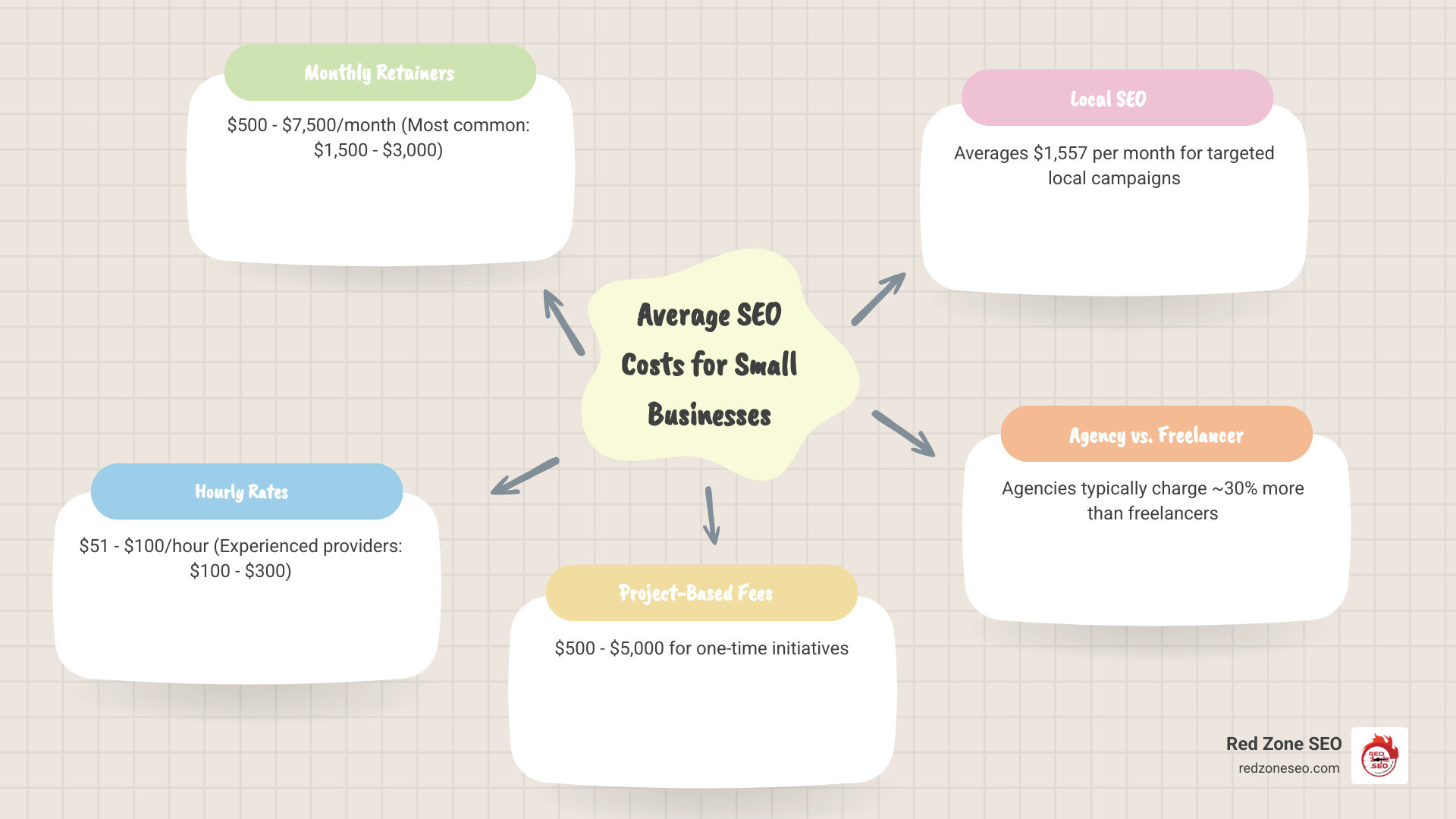
The average cost of SEO for small business typically falls between $500 and $5,000 per month. While this provides a general idea, your actual investment will depend on your specific industry, goals, and the competitiveness of your market. Understanding these costs is critical, as 93% of online experiences begin with a search engine, making visibility essential for growth.
Quick Answer: Small Business SEO Cost Breakdown
Generic pricing guides often fail because they don't consider your unique situation. A local plumber in Austin has different SEO needs than an e-commerce store in Las Vegas. SEO is not just a marketing expense; it's an investment in a long-term asset. Unlike paid ads, which stop when you stop paying, SEO builds compounding value over time.
Research shows that businesses spending over $500 monthly on SEO report 53% higher satisfaction rates, not because they're spending more, but because they're investing enough to achieve tangible results. This guide will break down what SEO costs, why it costs what it does, and how to budget for growth that moves the needle.
Terms related to average cost of seo for small business:
When small business owners ask about the average cost of SEO for small business, the honest answer is: it depends. Effective SEO is not a one-size-fits-all product. The cost is custom to your business's unique needs, goals, and competitive landscape. The industry primarily uses three pricing models, each suited for different situations.
1. Monthly Retainers
This is the most common model, used by nearly 78% of SEO professionals according to an Ahrefs' survey. A monthly retainer makes sense because SEO requires continuous effort. Search engine algorithms change constantly, and competitors are always working to outrank you. A retainer covers a comprehensive suite of ongoing services like keyword research, content optimization, technical fixes, and link building. It provides predictable monthly costs and allows for long-term strategic planning.
2. Hourly Rates
Hourly billing offers flexibility for specific, targeted tasks. It's ideal if you need an expert to diagnose a technical issue, conduct a competitor analysis, or provide consultation. You pay only for the time used, which offers transparency.
3. Project-Based Pricing
This model involves a fixed price for a well-defined project, such as a complete website audit, a keyword research initiative, or a local SEO setup. It's great for businesses that need specific improvements or want to test an SEO provider before committing to a retainer.
For sustained growth, a monthly retainer typically delivers the best long-term value. A common approach is to start with a project-based audit to identify key issues and then transition to a retainer for ongoing optimization. You can learn more about our approach and how we structure services to fit your needs.
Choosing between an agency and a freelancer also impacts your investment and the level of service you receive.
SEO Agencies
Agencies like Red Zone SEO typically charge more because you're not hiring one person; you're accessing a team of specialists in technical SEO, content, and link building. This team approach often leads to better results because each expert focuses on their area of strength. Agencies also invest in premium tools that can cost thousands per month, providing deeper data and analysis. You also benefit from dedicated account management, structured reporting, and continuity of service.
SEO Freelancers
Freelancers are often more affordable and can offer a more personal, one-on-one working relationship. Many freelancers specialize in a specific niche (e.g., local SEO for restaurants), which can be highly valuable. However, a single person has limitations in terms of scalability and the breadth of their expertise. If your project grows or requires diverse skills, you might need to hire multiple freelancers, which can complicate management and increase costs.
Making the Choice
Your decision should be based on your budget, the complexity of your needs, and how much management you want to handle. A freelancer may be perfect for a local business with straightforward needs. An agency is often a better fit for businesses aiming to dominate competitive markets or those requiring a comprehensive digital strategy. Don't choose based on price alone; consider the total value, including expertise, resources, and strategic support.

The average cost of SEO for small business isn't a fixed number because a quality strategy must be customized. A one-size-fits-all price is a red flag; a reputable provider will first seek to understand your unique business situation. The most effective SEO for Small Business is custom to several key factors that influence your investment.
Your industry is the single biggest factor determining your SEO investment. Some niches are far more competitive than others. For example, industries like legal services, healthcare providers, and online retail are incredibly competitive because a single new client or sale can be highly valuable. Businesses in these fields invest heavily to secure top rankings.
In contrast, a local artisan potter faces less direct competition from multi-million dollar corporations. The intensity of competition for your target keywords directly impacts the resources needed to rank. A look at the most expensive keywords on Google shows how valuable certain search terms are, indicating a fierce fight for organic visibility.
The size and complexity of your website and campaign goals are also major cost drivers.
Your geographic target creates a clear cost difference. For most small businesses with a physical location or service area, Local SEO is the most cost-effective approach.
Local SEO focuses on dominating search results in your immediate area (e.g., "plumber near me"). This involves optimizing your Google Business Profile, managing local citations (ensuring your name, address, and phone number are consistent online), and creating localized content. Competition is confined to a smaller geographic area, making it more affordable to achieve results. The average cost of local SEO is around $1,557 per month, making our Local SEO Packages an accessible and high-return investment for many businesses.
National SEO is far more complex and expensive. When you target broad keywords without a geographic modifier, you're competing against every business in your industry nationwide, including large corporations with huge budgets. This requires a much larger investment in content, link building, and overall strategy to make an impact.
When evaluating the average cost of SEO for small business, it's important to see it as an investment in a long-term asset, not just a monthly bill. Unlike paid advertising, where visibility vanishes when you stop paying, SEO builds compounding value. Understanding what services are included, the expected returns, and the timeline is key to setting realistic expectations.
A comprehensive SEO strategy integrates several key services working together:
The return on investment from SEO is often significant. Organic search drives over 40% of online revenue for most businesses, according to research from Brightedge. ROI is measured by:
SEO is a marathon, not a sprint. Patience is essential, and results build over time.
The timeline can be affected by your website's history, industry competition, and the level of investment. A more aggressive budget can often accelerate this process.

Determining your average cost of SEO for small business is about making a smart investment, not just finding the lowest price. Cheap SEO often leads to poor results and can even harm your business. Focusing on value and knowing how to spot red flags will protect your investment and drive real growth.
Instead of looking for a generic price, calculate a budget that fits your specific situation:
Be wary of providers who make unrealistic promises. Here are common warning signs:
Opting for the lowest price often costs more in the long run. The risks include Google penalties that can wipe out your visibility, poor quality work that fails to produce results, and damage to your brand's online reputation. You end up wasting time and money, only to have to hire a reputable provider to fix the damage. Data shows that businesses investing adequately in SEO report far higher satisfaction because that investment is what's required to generate real, sustainable results.
Figuring out the average cost of SEO for small business brings up many valid questions. Here are straightforward answers to the ones we hear most often.
For a new business, it's wise to start with a foundational approach. Instead of a large monthly commitment, begin with a one-time project. Understanding your SEO Audit Cost first will provide a clear roadmap of what needs to be fixed and what opportunities exist.
From there, a modest monthly retainer (often in the $750-$1,500 range) is a smart starting point. The strategy should focus on achievable early wins, like targeting local search and niche keywords where you can build momentum. As your business grows and you see a return, you can scale your investment.
While you can technically handle some basic SEO tasks yourself, it's important to consider the trade-offs. DIY SEO has a steep learning curve and requires a significant time commitment—often several hours per week—to stay current with algorithm changes and execute tasks effectively.
Furthermore, professional SEO tools like Ahrefs or Semrush, which are essential for data analysis, can cost hundreds of dollars per month. There's also a real risk of making costly mistakes that could harm your site's rankings, requiring an expert to fix them later. Consider the value of your own time; often, hiring an expert is more cost-effective than the hours you'd spend learning and implementing SEO yourself.
This varies significantly between providers, so it's a critical question to ask. Some agencies bundle a specific amount of content creation (e.g., two blog posts per month) and link building activities into their monthly retainers. Others offer these as separate, add-on services.
What's most important is quality over quantity. A few high-quality articles and authoritative links are far more valuable than a large volume of generic content and low-quality links. Before signing any contract, demand a detailed scope of work that clearly outlines all deliverables. Ask specific questions about who creates the content, the strategy for link building, and how success is measured. Transparency is the hallmark of a professional SEO provider.
Understanding the average cost of SEO for small business is less about finding a single number and more about shifting your perspective. SEO is not a monthly expense; it's a strategic investment in the long-term growth and visibility of your business. The cost is custom to your unique goals, industry, and competitive landscape.
Delaying this investment allows your competitors to gain ground, while your business remains invisible to customers actively searching for your services. The businesses that invest wisely in a data-driven strategy are the ones that become market leaders.
At Red Zone SEO, we focus on delivering proven SEO solutions for measurable results. We understand that every dollar counts, which is why we build custom strategies designed to deliver a clear return on your investment. We aim to be a partner in your growth, not just another vendor.
Effective SEO builds a digital asset that generates leads and sales 24/7, long after the initial work is done. The best time to start building that asset was yesterday. The second-best time is today.
Ready to move from wondering about costs to understanding your growth opportunities? Take the next step. Explore our transparent Pricing and let's discuss how we can help your business win in the search results.
Ecommerce site structure SEO is the strategic organization of your online store's pages and navigation to improve both user experience (UX) and search engine visibility. Think of it as the digital blueprint for your business. This framework, professionally known as Information Architecture (IA), dictates how logically your content is arranged and how easily customers and search engine crawlers can find what they need. A well-planned structure is the bedrock upon which all other SEO and marketing efforts are built.
This framework is absolutely critical because a staggering 88% of online shoppers won't return to a site after a bad experience. In the context of site structure, a "bad experience" means getting lost in confusing menus, being unable to find a specific product, or clicking through endless pages to get to a destination. When customers can't find products quickly, they don't just get frustrated—they leave and buy from a competitor. Simultaneously, when search engines can't crawl your site effectively due to a convoluted structure, your rankings suffer, and you become invisible to potential new customers. A logical, intuitive structure is the solution that serves both audiences, helping search engines index your products and making it effortless for customers to complete a purchase.
Key Elements for a Successful Structure:
domain.com/womens-clothing/summer-dresses/floral-print-maxi-dress).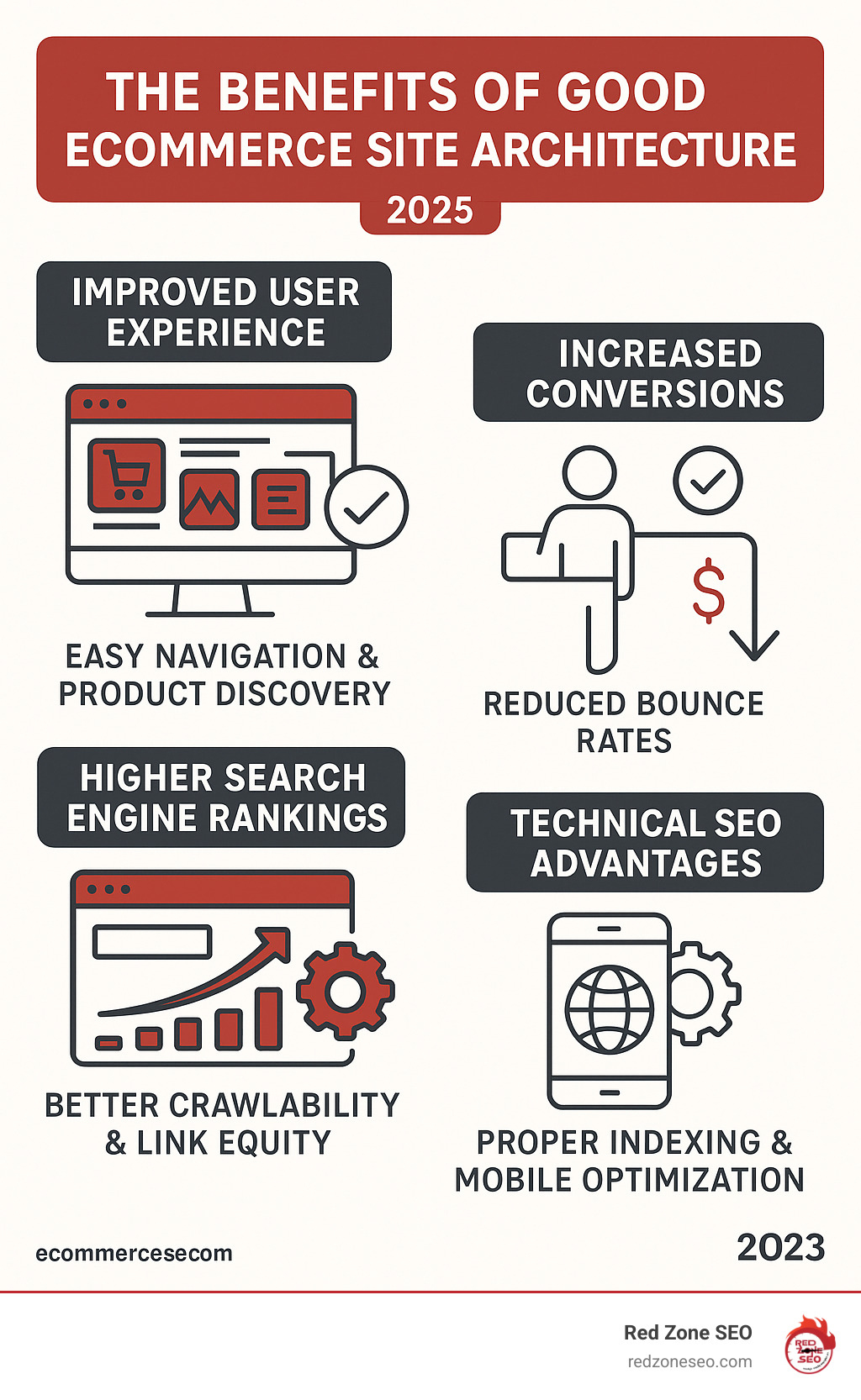
Ecommerce site structure seo helpful reading:
A well-planned ecommerce site structure SEO is essential for sustainable success. It's not just a technical task; it's a core business strategy that impacts everything from how search engines find and rank your products to how smoothly customers can steer their way to a purchase. A solid architecture creates a powerful win-win scenario where both search engine bots and human shoppers can explore your site with maximum ease and efficiency.
A clear, logical structure acts as a detailed and accurate map for search engine crawlers, making their job of understanding and indexing your site significantly easier. This directly and positively impacts your search rankings.
Homepage > Men's Apparel > Outerwear > Waterproof Jackets, they understand the relationship between these pages. This establishes topical authority and helps them match your specific product pages with highly relevant, long-tail search queries.A great site structure is fundamentally about creating an exceptional and frictionless shopping experience that encourages repeat business and builds brand loyalty.
As we've noted, 88% of online shoppers won't return after a bad experience. Your site's structure is a primary driver of that experience. Getting it right creates a virtuous cycle: better organization leads to better UX, which signals quality to search engines, driving more qualified traffic to your well-organized, high-converting store.
Building a high-performing ecommerce site starts with its foundational elements. From the logical grouping of products to the clarity of your URLs and the intuitiveness of your navigation, each component plays a critical role in creating a seamless and effective experience for both search engines and shoppers.
The way you group and classify your products is the single most crucial aspect of your ecommerce site structure seo, as it dictates how your entire inventory is organized and understood. A shallow, hierarchical structure is almost always the best approach.

We recommend a flat architecture that looks like this:
This structure ensures that no product is more than three clicks from the homepage, which is ideal for both user experience and search engine crawlability. To define these categories, conduct in-depth Keyword Research. This isn't just about search volume; it's about understanding user intent and using the same language your customers use. Analyze competitor sites to see how they organize similar products and design a structure that is both intuitive today and scalable for future growth.
Once your categories are defined, you must make them easily accessible through intuitive navigation systems.
Your URLs are a surprisingly important piece of SEO real estate. A well-structured URL should be clean, readable, and descriptive, reinforcing the page's content for both users and search engines. It should mirror your site's hierarchy (e.g., domain.com/category/product-name). Always use hyphens (-) to separate words, as Google treats them as spaces, while it often ignores underscores (_). Keep URLs as short and concise as possible, and if you ever need to change a URL, use a permanent 301 redirect to pass its SEO authority to the new location.

These navigational aids are essential for improving both UX and ecommerce site structure seo.
Breadcrumb Navigation: These are the secondary navigation links, usually at the top of a page, that show a user's location within the site hierarchy (e.g., Home > Men's > Shoes > Running Shoes). They are excellent for UX, as they allow users to easily steer back to higher-level categories. For SEO, they build a strong web of internal links that clearly defines your site's structure for crawlers. Implementing Schema markup for breadcrumbs can also improve your appearance in search results.
Internal Linking Strategy: A deliberate internal linking strategy is vital for distributing authority and guiding users. Link from your homepage to your most important categories. On product pages, cross-link to related items in sections like "Customers Also Bought..." or "Complete the Look." Most importantly, use your blog content to create contextual links that drive traffic to relevant product or category pages. Learn more in our article on Ecommerce Site Structure: SEO Contextual Links.
Beyond the foundational components, advanced technical SEO is required to ensure your site's architecture performs flawlessly at scale. This involves mastering complex navigation systems, strategically guiding search engine crawlers, and relentlessly optimizing for speed and the modern mobile-first landscape.
Faceted navigation—the array of filters for color, size, brand, price, and other attributes—is a fantastic tool for users but can be a catastrophic problem for SEO if not handled correctly. Each time a user clicks a filter or a combination of filters, a new, parameterized URL can be generated (e.g., .../dresses?color=red&size=10). This can lead to thousands, or even millions, of nearly identical pages. This wastes your finite crawl budget on unimportant pages and creates massive duplicate content issues that dilute your ranking signals and can harm your site's authority.
To solve this complex issue, you need a multi-layered approach:
rel="canonical" Tag: This is your primary tool. The filtered, parameterized URL should contain a canonical tag that points back to the main, clean category page. This tells search engines, "This page is just a filtered view; please consolidate all ranking signals to the main category page."noindex Meta Tag: For filter combinations that provide little to no search value (e.g., sorting by price), you can apply a noindex tag to tell search engines not to include them in their index at all.robots.txt: You can use your robots.txt file to block crawlers from accessing URLs with specific parameters (e.g., Disallow: /*?price=). This is a blunt instrument best used to preserve crawl budget, but it will not remove pages that are already indexed.Sitemaps are essential roadmaps you provide to search engines. An HTML sitemap is a user-facing page that acts as a table of contents for your site, improving usability. The XML sitemap, however, is the real workhorse for SEO. It's a specifically formatted file designed for search engines, providing a comprehensive list of all the URLs you want them to find and index. Once created, you must Submit your sitemap to Google Search Console.
A smart indexing strategy is just as important. You want to focus Google's limited crawl budget on pages that drive revenue and rankings—your core product and category pages. You should actively noindex pages that offer no value in search results, such as internal search result pages, checkout and cart pages, and user account pages. Furthermore, you must regularly prune thin content—pages with very little unique information, such as a category page with only one product. These low-value pages can lower Google's overall quality perception of your site. Improve them, redirect them, or noindex them.
Google uses mobile-first indexing, which means it primarily uses the mobile version of your website for ranking and indexing. A clunky, slow, or poorly structured mobile site will severely damage your rankings on all devices. Responsive design is mandatory, ensuring your site's layout, text, and buttons adapt perfectly to any screen size.
Site speed is a confirmed ranking factor and has a direct, measurable impact on your bottom line. Research consistently shows that just a one-second delay in page load time can lead to a 7% drop in conversions. Your site's architecture plays a huge role here. To improve performance, you must optimize for Google's Core Web Vitals (CWV), which measure loading performance (LCP), interactivity (INP), and visual stability (CLS). This involves compressing images, minifying code, and leveraging browser caching. Regularly conducting technical audits is the best way to identify and fix these performance bottlenecks. Our guide on How to Conduct a Technical SEO Audit can walk you through the process.
A perfect structure is only half the battle; it needs to be supported by high-quality, optimized content. To truly succeed, your category and product pages must contain unique, valuable information that satisfies user intent and distinguishes you from the competition.
Even with a flawless ecommerce site structure seo, your pages will fail to rank if they suffer from thin content. This is the biggest content-related mistake in ecommerce—pages with little to no text, or worse, descriptions copied directly from the manufacturer.
For a detailed guide, see our On-Page SEO Checklist.
It's dangerously easy to fall into common traps that can sabotage your rankings and frustrate your customers. Be vigilant in avoiding these mistakes:
.../cat/product vs. .../product-name-id123) across your site confuses users and search engines. Stick to one clean, logical convention.When it comes to implementing ecommerce site structure seo, several key questions arise frequently. Here are clear, actionable answers to the most common queries.
The three-click rule is a widely accepted best practice for user experience, suggesting that users should be able to find any product within three clicks from the homepage. While this is not a strict ranking factor used by Google, it's an excellent guideline because it forces you to create a flat, logical site architecture. The underlying principle is about minimizing psychological distance and user effort. If each click feels logical and brings the user closer to their goal, a four-click path might be perfectly acceptable. The rule's true value is in preventing convoluted, frustrating user journeys that lead to high bounce rates and lost sales. The goal is an efficient path, not just a short one.
For the vast majority of ecommerce sites, subdirectories are the clear and definitive winner. Using subdirectories (e.g., yourstore.com/blog or yourstore.com/mens-shoes) consolidates all your content and SEO authority onto a single, powerful root domain. Search engines often treat a subdomain (e.g., blog.yourstore.com) as a separate website. This means that the valuable backlinks and authority your blog earns may not fully benefit your product pages, and vice-versa, effectively splitting your SEO power. By keeping everything in subdirectories under one domain, you ensure that all your content marketing efforts contribute to the strength of your entire site. Subdomains should only be considered for distinctly separate parts of a business, like a completely different international store with its own language and currency.
Fixing a messy site structure on a live website is a high-stakes process, but it is absolutely fixable and can lead to massive SEO gains. It requires a careful, strategic approach to avoid losing traffic and rankings.
The process involves several critical steps:
A well-planned ecommerce site structure seo is a fundamental business asset, not just another task on an SEO checklist. It is the invisible framework that supports and amplifies all your digital marketing efforts. When you invest the time to create a logical, user-friendly, and technically sound structure, you empower search engines to crawl and understand your offerings efficiently, and you enable customers to find what they need without friction or frustration.
This solid foundation creates a powerful virtuous cycle: a great user experience leads to better engagement signals, which search engines reward with higher rankings. Higher rankings drive more qualified traffic to your site, where the excellent structure makes it easy for visitors to convert into loyal customers. This approach builds sustainable, organic growth that is far more valuable than temporary traffic spikes.
At Red Zone SEO, we specialize in building these data-driven foundations that deliver measurable results you can see in your analytics and, more importantly, in your bottom line. We understand that every ecommerce business is unique, so we take the time to understand your products, customers, and goals before designing an architecture built for long-term success.
Optimizing your site structure is some of the most impactful and highest-ROI work you can do for your online store. It provides a lasting competitive advantage that is difficult for others to replicate and sets the stage for growth for years to come.
Ready to build a powerful and efficient foundation for your online store? Explore our SEO services to learn how a comprehensive site architecture audit can open up your store's true potential.
SEO for CBD companies is the difference between thriving online and getting lost in a sea of competitors. As the U.S. CBD market explodes toward a projected $20 billion by 2024, the challenge intensifies. While demand skyrockets, traditional advertising doors remain shut. Google, Facebook, and Instagram all prohibit or restrict CBD promotions, leaving organic search as your primary lifeline to customers.
Quick Answer: Essential SEO Elements for CBD Companies
When a potential customer searches "best CBD oil for sleep," they have high purchase intent. They aren't scrolling social media; they are actively seeking a solution. Ranking on Google for these terms is difficult, as the CBD space is crowded and search engines classify it as a "Your Money or Your Life" (YMYL) topic, demanding the highest standards of expertise and trustworthiness.
The good news is that most CBD companies get SEO wrong. They chase impossible keywords, neglect local search, or create content that violates FDA guidelines. This guide will show you how to build a compliant SEO strategy that drives traffic, builds trust, and grows revenue.
Seo for cbd companies glossary:

In today's digital-first world, SEO for CBD companies isn't just a marketing tactic—it's a business lifeline. The Cannabis Market Growth Trends Report shows the market racing toward $20 billion by 2024. However, this gold rush means intense competition. Unlike other industries, you can't simply buy your way to the top with paid ads. Google, Facebook, and most other platforms prohibit CBD advertising, making organic search your primary source of traffic.
This advertising blackout creates a unique opportunity. While others fight expensive pay-per-click wars, smart CBD companies can dominate search results with a solid strategy. Effective SEO for Online Business does more than drive traffic; it builds the trust and credibility that customers demand in this complex industry. When your website ranks high for relevant searches, it signals authority. Customers understand this intuitively—high rankings equal credibility.
This is crucial because the CBD buyer journey involves significant research. A customer might first find you through a blog post on "CBD dosage for beginners" and return later to purchase. SEO captures customers at every stage, fostering long-term relationships. Furthermore, it's highly cost-effective. A well-ranked page can generate traffic and sales for years, providing a continuous return on your initial investment.
The CBD industry operates on a regulatory tightrope. The FDA has clear guidelines prohibiting medical claims, such as promising to cure diseases. This creates a content challenge: how do you educate customers and rank for health-related terms without violating the law?
The answer lies in understanding Google's standards for YMYL (Your Money or Your Life) topics. Because CBD content can impact a person's health, search engines require the highest level of E-E-A-T: Experience, Expertise, Authoritativeness, and Trustworthiness. Your content must be well-researched, cite reputable sources, and be written by qualified individuals. Studying the FDA Regulation of Cannabis and Cannabis-Derived Products is non-negotiable. A compliant, educational approach protects your business from FDA warning letters and builds lasting customer trust. Mastering the principles of What Are E-E-A-T and YMYL in SEO? is essential for long-term success.
The CBD market's explosive growth has led to brutal competition. With thousands of brands fighting for the same keywords, brand visibility is a matter of survival. Since over 75% of users never click past the first page of search results, ranking in the top 10 is essential. If you're not there, you're effectively invisible.
In a saturated market, consumer trust is the ultimate differentiator. Consistent high rankings build familiarity and perceived authority. This creates a snowball effect: better rankings lead to more traffic, which generates more sales and positive signals for search engines, further boosting your rankings. Breaking into this cycle requires a sophisticated strategy focused on identifying low-competition opportunities and creating content that is demonstrably better than your competitors'. The Cost of SEO for Website is an investment in your brand's long-term viability, and the good news is that most competitors are still getting it wrong.

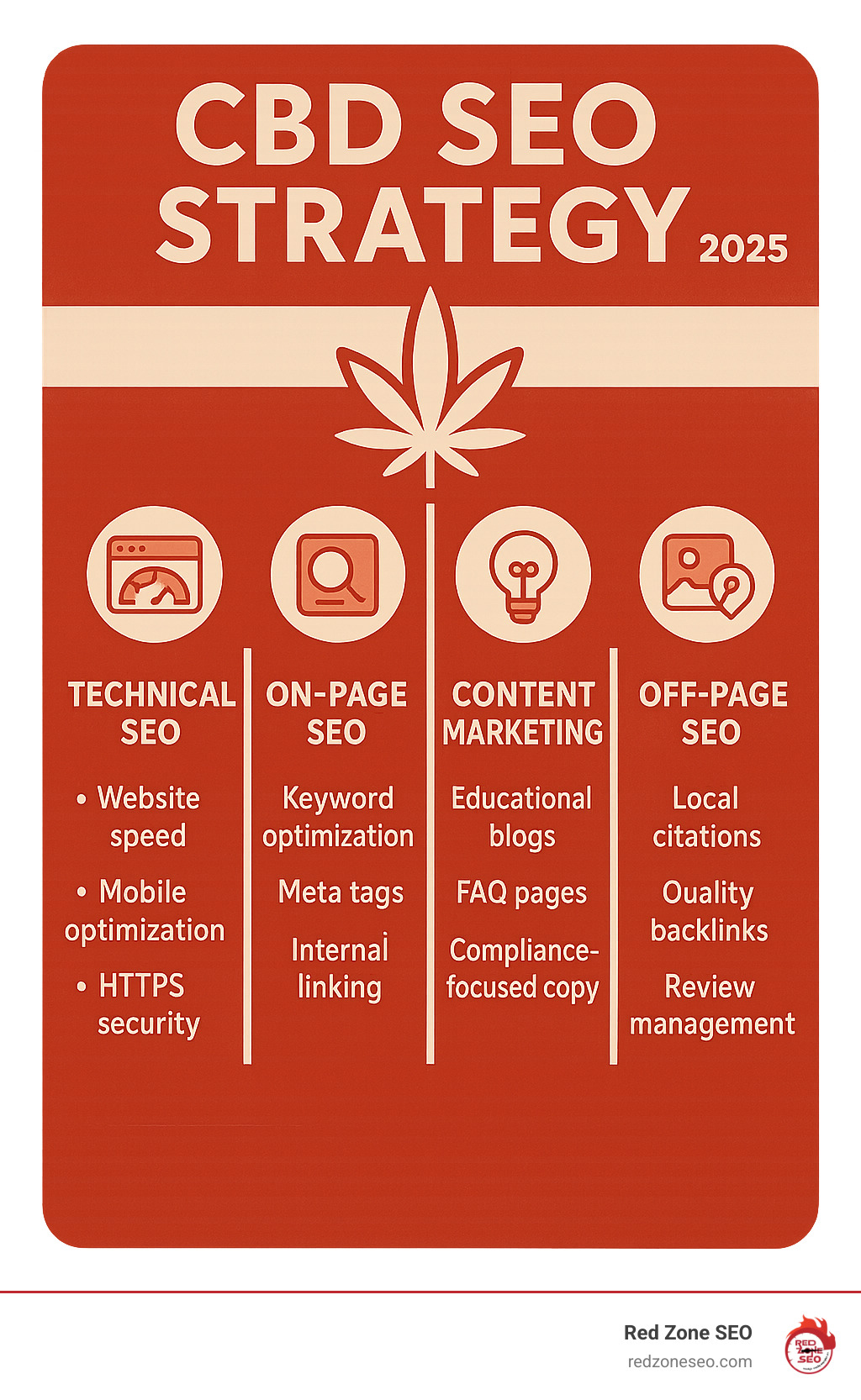
A successful SEO for CBD companies strategy requires a solid foundation where each element supports the others. Keyword research informs content, on-page SEO makes it findable, technical SEO ensures a good user experience, local SEO connects you with nearby customers, and link building amplifies your authority. Before building anything, we always start with a thorough SEO Audit to identify opportunities, roadblocks, and competitive gaps.
Effective keyword research is about understanding the customer journey, from initial curiosity to the final purchase. A search for "what is CBD" has informational intent, while "buy full-spectrum CBD oil 1000mg" is transactional. Your strategy must address both. Understanding search intent is paramount. We categorize keywords into four main types: Informational ('how does CBD work'), Navigational ('YourBrand CBD login'), Commercial Investigation ('best CBD oil for sleep'), and Transactional ('buy 1000mg CBD tincture'). A comprehensive strategy targets users at each stage, guiding them from initial curiosity to a confident purchase.
We focus on long-tail keywords (e.g., "CBD oil for senior dogs with arthritis") because they reveal specific user intent and typically have less competition than broad terms like "CBD oil." By analyzing competitors, we find keyword gaps they've missed, such as "vegan CBD gummies for travel anxiety," which can become your competitive advantage. We use a suite of tools like Ahrefs and Semrush to ensure our Keyword Research is data-driven and comprehensive.
Your product and category pages are where conversions happen. Effective on-page SEO turns them into powerful assets. Key elements include:
/organic-cbd-oil-1000mg). This not only helps search engines understand the page's content but also improves user trust; a clear URL looks more professional and less spammy than one filled with random characters or numbers.Our On-Page SEO Checklist and Ecommerce Store SEO expertise ensure every page is optimized for maximum impact.
In the CBD industry, content must build trust while adhering to strict regulations. The goal is to educate without overstepping FDA boundaries and establish authority without making unproven medical claims. We develop content that answers real customer questions. Instead of generic posts, we create specific, helpful articles like "How to Read a Third-Party CBD Lab Report" or "The Beginner's Guide to CBD Dosing." Beyond the basics, consider topics like 'A Guide to CBD Terpenes and Their Effects,' 'Full-Spectrum vs. Broad-Spectrum vs. Isolate: Which is Right for You?,' 'Cooking with CBD: Recipes and Tips,' or 'Understanding Your Pet's Endocannabinoid System.' These topics attract a highly engaged audience and position you as a comprehensive resource.
Building content around E-E-A-T principles (Experience, Expertise, Authoritativeness, Trustworthiness) is non-negotiable. Here's how we apply it: Experience: Feature content from real users or experts who have used the products. Expertise: Ensure content is written or reviewed by individuals with demonstrable qualifications, such as scientists or certified cannabis experts, and include detailed author bios. Authoritativeness: Cite scientific studies, government health resources, and industry reports, linking out to these reputable sources. Trustworthiness: Be radically transparent. Prominently display third-party lab reports (Certificates of Analysis) for every product, provide clear contact information, and have a straightforward return policy. By focusing on education over hype and adhering to Google's guidance on Creating helpful content, we build a content library that serves both your audience and your SEO goals. Our Content Optimization services ensure every piece performs at its best.
Compelling content and keywords are ineffective if your website is technically flawed or invisible to local customers. Technical SEO is the foundation that ensures your site is fast, secure, and crawlable by search engines. Local SEO connects you with high-intent customers in your area. These two pillars are the unsung heroes of a successful SEO for CBD companies strategy.
We always begin with a comprehensive technical audit to fix underlying issues. Learn more about our process with this guide on How to Conduct a Technical SEO Audit.
A poor user experience can kill conversions. With 40% of people abandoning a website that takes more than three seconds to load, you can't afford a slow site. Key technical optimizations include:
Our WordPress SEO Services are designed to handle these technical elements, creating a solid foundation for growth.
For CBD businesses with physical stores, local SEO is a powerful tool. The statistics are compelling: 88% of local searches on a mobile device either call or visit that business within the same day. These are high-intent customers ready to buy.
We optimize for location-specific keywords like "CBD store Las Vegas" to help you appear in Google's local 3-pack. Our specialized Local SEO Packages and expertise in Las Vegas Search Engine Optimization put your business on the local map.
Backlinks are endorsements from other websites. In the sensitive CBD space, a link from a respected wellness blog or industry publication is a powerful signal of trust and authority to Google. Quality always trumps quantity. A few high-authority links are far more valuable than hundreds of spammy ones.
Our strategies include guest posting on reputable wellness blogs, engaging in digital PR to earn media coverage, and creating valuable resource content that attracts passive links organically. This involves identifying non-competing, authoritative sites in the health, lifestyle, and alternative medicine spaces and building genuine relationships with them. Crucially, we avoid dangerous tactics like private blog networks (PBNs) or buying links from spammy directories. In the YMYL world of CBD, a toxic backlink profile can lead to severe penalties, making a quality-over-quantity approach the only path to sustainable success. Our Link Building Services focus on building a robust, authoritative, and compliant backlink profile that lifts your brand.
We've worked with countless CBD business owners and find that the same questions often come up. Here are direct answers to the most common inquiries.
SEO is a long-term strategy, not an overnight fix. Given the competitiveness of the CBD industry and Google's strict YMYL standards, patience is key.
The businesses that commit to a consistent, high-quality strategy are the ones that achieve strong, sustainable results.
While you can certainly handle some basic SEO tasks yourself, a comprehensive strategy is a significant undertaking. Before going the DIY route, consider the following:
A partnership with a specialized agency often provides a better ROI by leveraging expertise, advanced tools, and proven strategies to accelerate results. Our SEO Packages Pricing page outlines options for various budgets.
Don't get lost in vanity metrics. Focus on the key performance indicators (KPIs) that directly impact your bottom line:
The CBD space is filled with SEO pitfalls. The most common mistakes we see are: 1) Making explicit health claims: This is the fastest way to receive an FDA warning letter and get penalized by Google. 2) Targeting hyper-competitive keywords: Trying to rank for "CBD oil" on day one is a recipe for failure. A smarter strategy focuses on less competitive, long-tail keywords. 3) Ignoring technical SEO: A slow, clunky website with a poor mobile experience will never rank well, no matter how good the content is. 4) Buying low-quality backlinks: Purchasing links from spammy sites or PBNs is a short-term tactic that almost always leads to a long-term penalty. 5) Neglecting E-E-A-T: Failing to demonstrate expertise, authoritativeness, and trustworthiness is a critical error in a YMYL industry.
Trust is your most valuable asset. While SEO builds trust through visibility and authority, on-site elements are just as important. Here's how to build it: 1) Accessible Lab Reports: Provide up-to-date, third-party Certificates of Analysis (CoAs) for every single product batch. Make them easy to find on the product page. 2) Professional Design: An amateur-looking website erodes trust. Invest in a clean, professional, and easy-to-steer design. 3) Clear Contact Information: Display a physical address (if applicable), phone number, and email address prominently. It shows you're a real business. 4) About Us Page: Tell your story. Who are you? Why did you start your CBD company? A compelling brand story builds a human connection. 5) Customer Reviews and Testimonials: Showcase real feedback from actual customers. This social proof is incredibly powerful for hesitant buyers.
As you've seen, SEO for CBD companies is a complex discipline. It requires navigating strict regulations, intense competition, and demanding technical standards. While it's possible to go it alone, the most successful brands recognize the value of partnering with experts.
A specialized agency brings more than just generic SEO tactics; we bring deep industry knowledge. We understand the nuances of the CBD market, from compliance to consumer behavior. We stay on top of the latest FDA guidelines and Google policy changes so you can focus on running your business.
Hiring an agency saves you critical time and resources. Instead of spending countless hours on tasks you're not an expert in, you can leverage our team's experience and access to advanced tools that would otherwise cost thousands per month. This allows you to achieve better results, faster.
Most importantly, we deliver measurable results. We don't make vague promises; we set clear goals, track performance against data-driven KPIs, and provide transparent reporting. Our strategies are designed to increase your organic traffic, improve your rankings for valuable keywords, and ultimately drive revenue.
At Red Zone SEO, we have a proven track record of helping CBD companies succeed online. With expertise in markets from Austin and Florida to Henderson and Las Vegas, we craft custom, data-driven strategies custom to your unique business goals. We believe in complete transparency and a partnership approach to growth.
If you're ready to stop spinning your wheels and achieve real, sustainable growth, we're here to help. Learn why we're recognized as the Best SEO Company Las Vegas and see how our process delivers results. Let's discuss how we can help your CBD company dominate its market.
SEO for retail websites is the practice of optimizing your online store to rank higher in search results, attract more customers, and increase sales through organic traffic. With over 68.7% of all clicks going to the top three organic results, getting your retail website visible in search is no longer optional—it's essential for survival.
Quick Answer: Essential Components of Retail Website SEO
For example, one small electronics store saw its online sales jump 127% after implementing basic SEO strategies. This isn't luck—it's the power of being found when customers are actively searching for what you sell.
Your customers behave the same way you do: when they need something, they start with a Google search. They compare options and make purchase decisions before ever visiting a website directly. If your retail website isn't ranking on the first page, you're essentially invisible, as only 0.63% of searchers click on websites listed on page two of Google's results.
Modern retail SEO combines three critical pillars:
This creates a massive opportunity. With 76% of U.S. adults shopping on smartphones and 87% of consumers researching local businesses with Google, the potential reach is enormous for businesses that get SEO right.
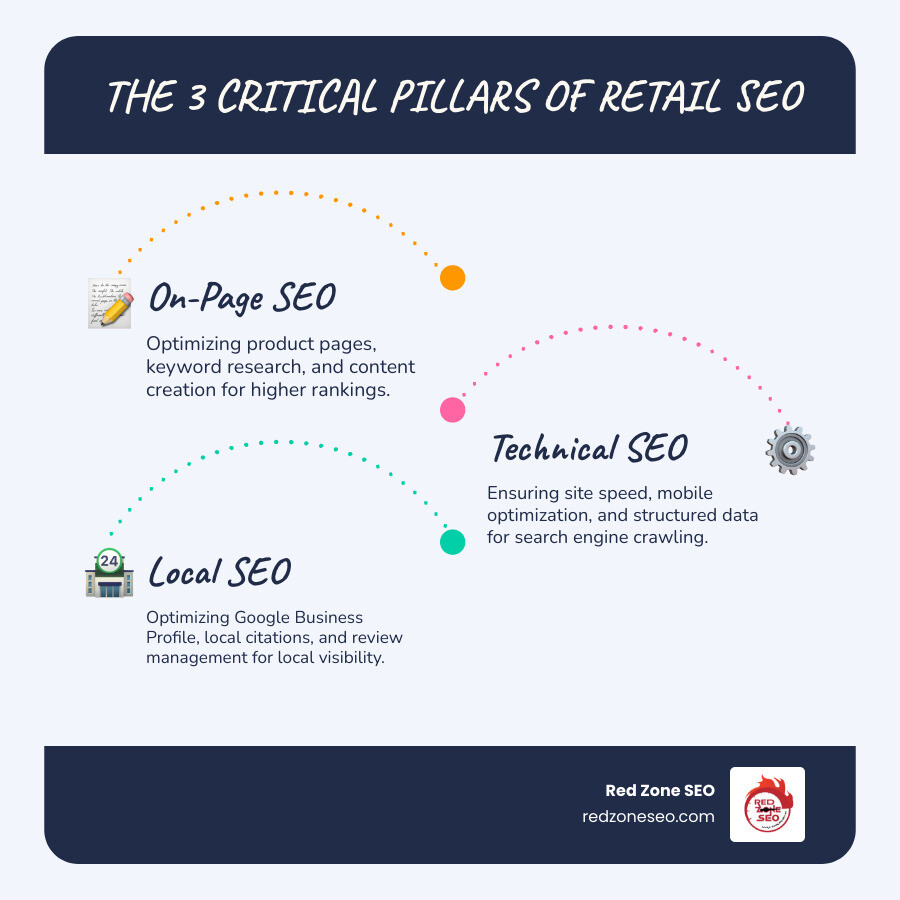
Find more about seo for retail websites:
Building a successful retail website is like constructing a house: you need a solid foundation and blueprint. In SEO for retail websites, this means understanding what customers search for and creating a logical site structure that serves both visitors and search engines.
Consider a small outdoor gear retailer who targeted the broad keyword "outdoor gear" and saw no traffic. By shifting to specific terms like "lightweight camping cookware for backpacking" and "waterproof hiking boots for wide feet," their organic traffic increased by 340%. The secret was matching their products with what real customers were actually typing into Google.
Effective keyword research hinges on understanding user intent. We focus on commercial and transactional keywords—terms people use when they're ready to buy, like "best running shoes for flat feet" or "buy wireless headphones." Your secret weapon is long-tail keywords. These longer, specific phrases (e.g., "organic cotton baby onesies for sensitive skin") have lower search volume but convert at a much higher rate because the searcher's intent is so clear. The majority of Google searches are long-tail, offering a chance to outrank larger competitors.
Competitor keyword analysis reveals what's working for your rivals and uncovers gaps you can exploit. Finally, keyword mapping assigns these valuable keywords to specific pages, ensuring every page has a clear purpose. For example, a category page targets "women's running shoes," while a product page targets a specific model like "Nike Air Zoom Pegasus 40."
Tools like Google Keyword Planner provide invaluable data about search volumes and competition levels to expand your strategy.
A confusing site structure will drive customers away, just like a disorganized department store. A search-friendly site structure serves both your human customers and search engine crawlers, leading to better rankings and more sales.
Scalable architecture is crucial for growth, ensuring your site works for 10,000 products as well as it does for 100. The key is a logical hierarchy that flows from broad to specific, such as Homepage → Category → Subcategory → Product. This guides both users and search engines through your catalog.
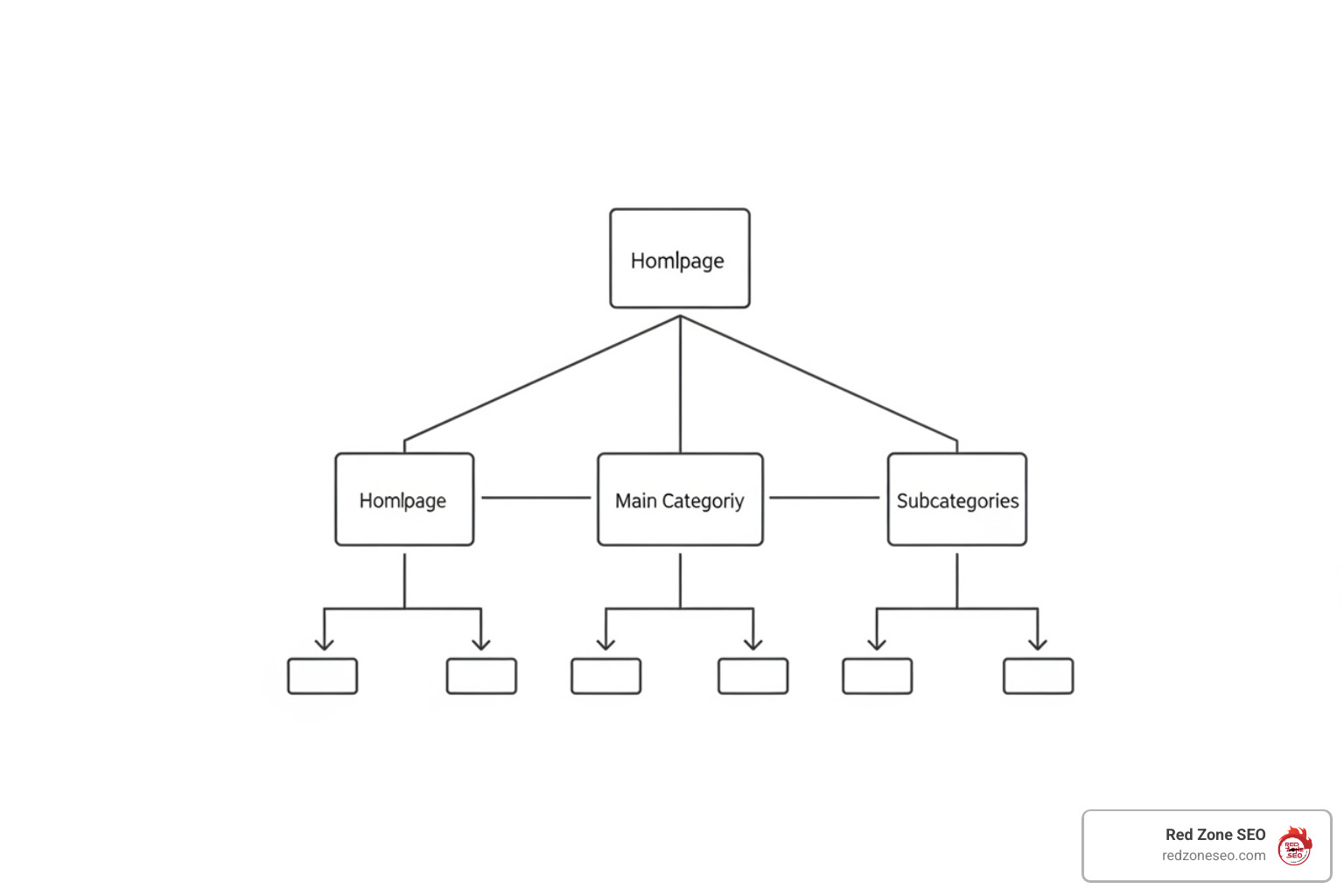
Category page optimization is vital, as these pages capture broad commercial intent from shoppers who are still browsing. Your product page structure should be consistent so customers always know where to find specs, reviews, and the buy button.
Use SEO-friendly URLs that are clean and descriptive (e.g., yourstore.com/womens-shoes/nike-air-zoom-pegasus) instead of confusing ones. Finally, breadcrumb navigation acts as a roadmap, helping users steer and creating internal links that clarify your site's structure for search engines.
Our comprehensive approach to E-commerce Site Structure & Contextual Links ensures your retail website becomes a well-organized destination that both customers and search engines love.
Think of your website as your digital storefront. When someone finds you in search results, they need to instantly understand what you sell and why they should choose you. On-page SEO for retail websites is the art of making every page work harder to attract customers and convert them into buyers.
Your product pages must charm both Google's algorithms and real humans. Avoid copying manufacturer descriptions, which Google sees as duplicate content. Instead, craft unique product descriptions that tell a story and paint a picture for customers who can't physically interact with the product. For key products, a detailed description provides immense value and ranking potential.
Your title tags are the ~60 character clickable headlines in search results. We make them strategic with "click magnet" words like "buy," "best," or "free shipping." Your meta description is your ~105 character elevator pitch to convince someone to click.
Use strategic header tags to organize content. Your H1 tag should feature your main keyword (the product name), while H2 tags can break down features and benefits. Use canonical tags to solve duplicate content issues that arise from product variations (e.g., different colors or sizes).
Social proof and reviews are game-changers. With 90% of consumers checking reviews before purchasing, they are essential for building trust. Reviews also provide fresh, keyword-rich content that helps pages rank, often incorporating valuable long-tail keywords naturally.
See these elements in action on this example of an optimized product page. For more insights, check out our guide on Content Optimization.
In retail, visuals are everything, but they can also be SEO goldmines. Every image needs descriptive alt text. This helps visually impaired users and gives context to search engines. Instead of "image1.jpg," we write descriptions like "Red leather women's handbag with gold clasp and adjustable strap."

Use SEO-friendly file names (e.g., red-leather-handbag.jpg) instead of generic ones. Crucially, image compression and modern file formats like WebP are essential for fast loading times without sacrificing quality. Optimized images can also rank in image search, creating another path for customers to find you.
Content marketing attracts customers earlier in their buying journey. Create helpful content that builds authority and trust. In-depth buying guides like "The Complete Guide to Choosing Your First DSLR Camera" and how-to articles like "How to Care for Your Leather Boots" target informational searches and position your brand as an expert.
Product video tutorials are also highly effective, as 76% of consumers have bought something after watching one. This strategy of targeting informational queries casts a wider net, building a relationship with potential customers long before they're ready to buy. Learn more with our guide to Content Marketing for Small Businesses.
Behind the beautiful photos and compelling descriptions, a whole technical world is working to ensure customers can find and use your site. Let's look at the engine that drives your retail website's success.
Technical SEO is the powerful engine that keeps your seo for retail websites running smoothly. Site speed is critical: 53% of users abandon slow sites that take more than three seconds to load. We use tools like Google's PageSpeed Insights to diagnose and fix speed issues.
Google measures user experience with Core Web Vitals: Largest Contentful Paint (LCP) for loading speed, Interaction to Next Paint (INP) for responsiveness, and Cumulative Layout Shift (CLS) for visual stability. Meeting these metrics is key to good rankings.
Google now uses mobile-first indexing, meaning it primarily ranks your site based on its mobile version. A flawless responsive design is non-negotiable. SSL certificates (HTTPS) are also essential to secure customer data and improve rankings. Finally, an XML sitemap acts as a directory for search engines, helping them efficiently find all your product pages. Our E-commerce SEO Audit Checklist covers these technical foundations.
Structured data (or schema markup) is code that gives your search listings superpowers, allowing them to show prices, star ratings, and availability directly in the results. For retail, this is incredibly powerful. Product schema (for item details), Review schema (for star ratings), and Local Business schema (for store info) are vital.
This turns your listings into rich snippets—improved search results that stand out from the competition. The result is a significantly higher click-through rate (CTR). We always validate our implementation using the Schema Markup Validator to ensure everything works perfectly.
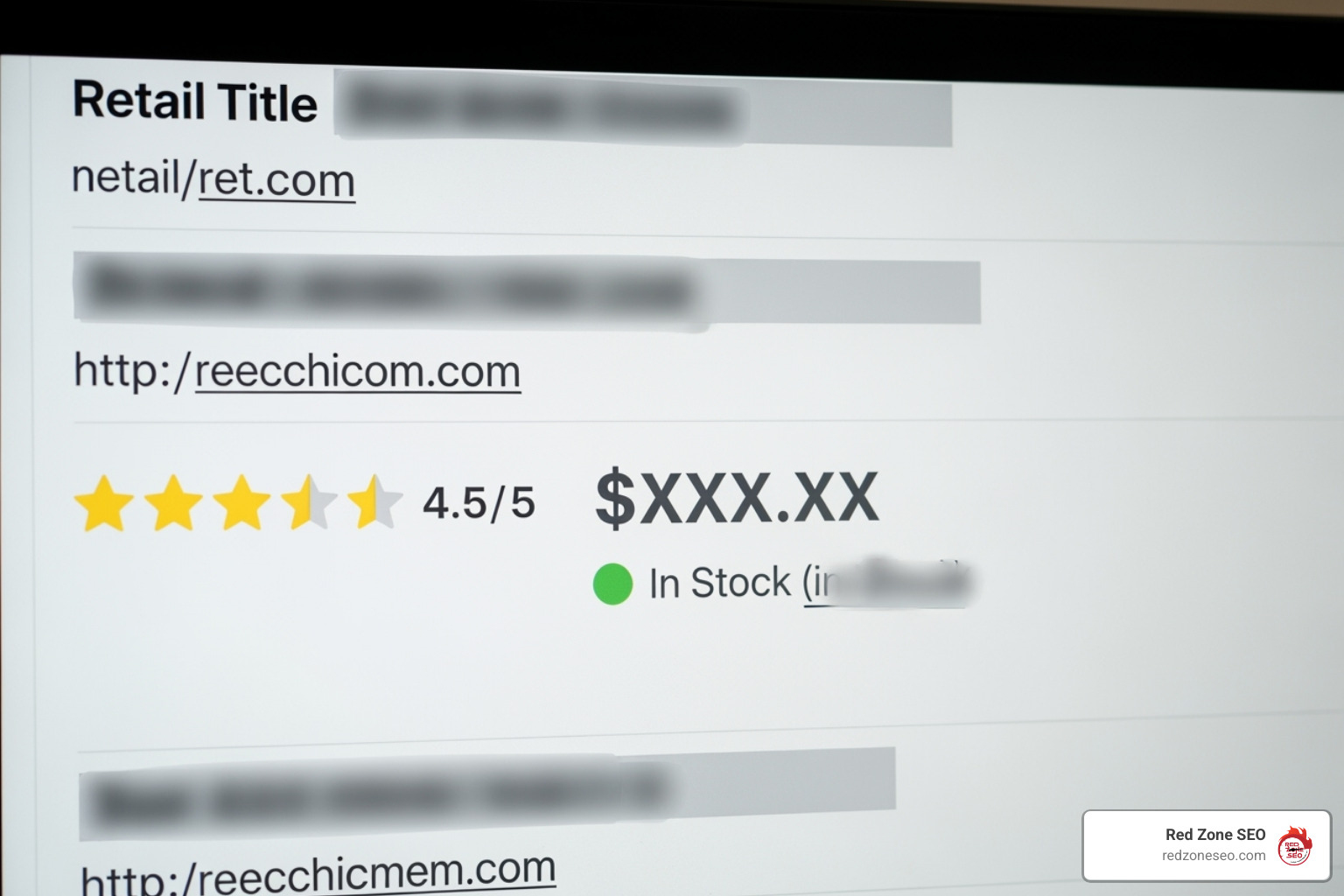
Google rewards sites that provide a great user experience. Simple navigation and clear calls-to-action (CTAs) are foundational. With 76% of U.S. adults shopping on smartphones, mobile usability is paramount for modern seo for retail websites.
Google also monitors user behavior signals like dwell time (how long people stay) and bounce rate (how many leave after one page). A positive user experience signals value to Google, which often correlates with better search rankings over time. Our expertise in Shopify Store SEO emphasizes creating websites that are not just search-engine friendly, but genuinely enjoyable for people to use.
If your perfectly optimized website sits on an island, it won't reach its full potential. Off-page and local SEO build your reputation across the web and ensure nearby customers can find your physical store.
Backlinks are digital endorsements. When other reputable websites link to yours, they're vouching for your credibility, and Google takes notice. Link building strategies are about earning these endorsements, where quality trumps quantity every time.
Digital PR involves creating newsworthy content or stories that naturally attract media attention and high-quality links. Thoughtful guest blogging on relevant sites your customers read can also drive traffic and authority. We also find unlinked brand mentions across the web and request that a link be added. Our focus is always on earning links from established, high domain authority websites to protect and build your reputation.
For physical stores, local SEO is critical for survival. With 87% of consumers using Google for local business research, you need to be visible for "near me" searches.
Your Google Business Profile (GBP) optimization is your digital storefront's front window. It's often the first impression a customer has and must be complete and accurate. A complete GBP includes your accurate name, address, and phone number (NAP), business categories, website, hours, products, and high-quality photos. NAP consistency across all online directories (like Yelp) is crucial for building trust with search engines.
Create geo-targeted content, like blog posts about local events, to improve local rankings and connect with your community. Finally, actively manage online reviews by encouraging happy customers and responding professionally to all feedback, as reviews directly impact whether someone chooses to visit your store.
We've seen the same avoidable mistakes in SEO for retail websites repeatedly. Here's how to steer clear of them:
We get many questions about seo for retail websites. Here are the most common ones, with straight answers to help you make informed decisions.
While both aim for search visibility, e-commerce SEO is unique. It focuses on optimizing hundreds or thousands of product pages at scale. Each page targets specific, transactional keywords (e.g., "buy Nike running shoes online") to drive sales. Structured data is also more critical in e-commerce to generate rich snippets with prices, stock status, and reviews in search results, which directly impacts click-through rates.
SEO is not an overnight fix, so it's crucial to set realistic expectations. Most businesses begin to see initial traction—improved rankings and more organic traffic—within 4-6 months. However, SEO is an ongoing, long-term strategy. The real value comes from consistent effort, as the results have compounding returns over time. Think of it as an investment that grows stronger, building on itself to create sustainable growth.
The cost of retail SEO varies. Key factors influencing cost include the scope of work (a local boutique vs. a national retailer), the level of market competition, and your website's current technical health. You can build an in-house team or work with an agency like Red Zone SEO, which gives you access to a full team of experts without the overhead. We provide data-driven, proven solutions custom to your business goals, focusing on delivering a strong return on your investment. For more details on local optimization costs, see our guide on Local SEO Cost.
We've covered the essentials of SEO for retail websites, from keyword research and site architecture to technical, on-page, and local strategies. While it may seem like a lot, every successful online retailer started on this same path.
SEO is a crucial, long-term investment that builds sustainable growth. Unlike paid ads, which stop when you stop paying, organic traffic is an asset that compounds over time. These visitors are highly valuable because they are actively searching for solutions you provide, leading to higher conversion rates and a stronger return on investment.
A data-driven approach removes the guesswork from marketing. We measure what's working to continuously refine your strategy for maximum impact. At Red Zone SEO, we've seen this approach transform businesses, like the electronics store whose sales jumped 127% after implementing a targeted SEO strategy.
Your customers are searching for you right now. The question is, will they find you or your competitors? Whether you run a boutique in Austin, have stores across Florida, or operate a national e-commerce site, the principles of being found online are the same.
Ready to transform your retail website from invisible to irresistible? The digital aisle is waiting. Don't let potential customers slip away.
Contact us today to build a winning strategy for your retail business. Let's conquer the digital marketplace together.
The average cost for seo services ranges from $500 to over $5,000 per month for most small to medium businesses, with hourly rates typically falling between $75-$200. However, these numbers only tell part of the story.
Quick Answer: Average SEO Service Costs
If you're a business owner trying to compete online, you've probably wondered: "How much should I actually spend on SEO?" The answer isn't simple because SEO isn't a commodity—it's a strategy customized to your specific business needs.
SEO pricing varies because every business faces different challenges. A local restaurant in Henderson, Nevada, will have completely different SEO needs than a law firm in Las Vegas competing for high-value keywords. Your website's current state, competition level, and growth goals all impact the investment required.
The confusion around SEO costs often stems from the fact that SEO encompasses dozens of different services. Some agencies bundle everything, while others charge separately for technical audits, content creation, and link building. Without understanding what you're buying, it's impossible to know if you're getting a fair deal. Most importantly, cheap SEO often costs more in the long run by using risky tactics that can hurt your rankings.
This guide will break down what drives SEO costs, what to expect at different investment levels, and how to choose a provider who delivers real results.
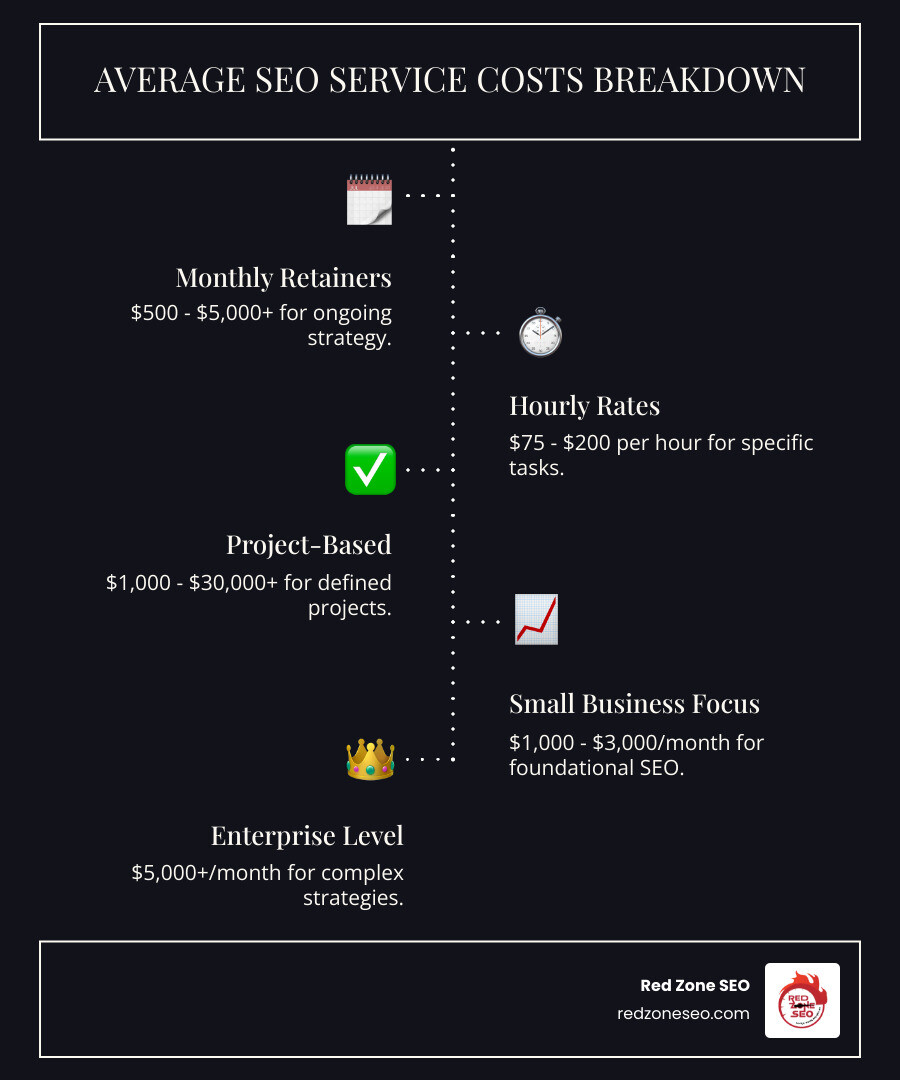
Average cost for seo services terms simplified:
The truth about SEO pricing is that there's no universal price tag. A local bakery in Henderson needs different SEO work than a national law firm. The bakery might focus on Google Business Profile optimization, while the law firm battles for highly competitive keywords. The average cost for seo services varies dramatically based on four main pricing models.
| Pricing Model | Description | Typical Use Cases | Pros | Cons |
|---|---|---|---|---|
| Hourly Rates | You pay for the time an SEO professional spends working on your project. | Small, specific tasks; consultations; one-off fixes. | Flexible; transparent billing for time spent. | Costs can add up quickly; focus on hours, not necessarily results. |
| Project-Based | A fixed fee for a defined scope of work, such as an SEO audit or website migration. | Website audits; content strategy development; technical overhauls. | Predictable costs; clear deliverables. | Less flexible if scope changes; may not include ongoing support. |
| Monthly Retainer | A recurring fee for ongoing SEO services over an extended period. | Long-term SEO strategy; continuous optimization; competitive niches. | Consistent effort; builds long-term results; partnership approach. | Requires ongoing budget commitment; results take time to manifest. |
| Performance-Based | Fees are tied directly to results (e.g., ranking improvements, traffic increases, leads generated). | Businesses with clear, measurable KPIs and high-value conversions. | Aligns agency and client goals; pay only for success. | Complex contracts; potential for short-term, risky tactics. |
Hourly rates ($75-$200/hr) are like hiring a consultant. This model offers flexibility and cost control for specific tasks, like a technical consultation or quick website review. You pay for the expert's time, making it ideal for well-defined, limited-scope projects.
Project-based fees ($1,000-$30,000+) offer predictable costs for a defined scope of work. This is perfect for one-time projects like a comprehensive SEO Audit Cost, a website migration, or developing a content strategy. You know exactly what you'll get and what it will cost upfront.
Monthly retainers ($500-$5,000+/month) are the most common model for a reason. SEO is an ongoing process, not a one-time fix. A retainer ensures you have an SEO partner consistently working to improve your rankings, create content, and adapt to algorithm changes. This partnership approach builds sustainable, long-term growth.
Performance-based SEO sounds appealing but can be problematic. Defining "results" is complex, and it can encourage agencies to use risky tactics for quick wins rather than focusing on sustainable growth. At Red Zone SEO, we find that transparent retainers and project scopes build better partnerships and deliver more reliable results.
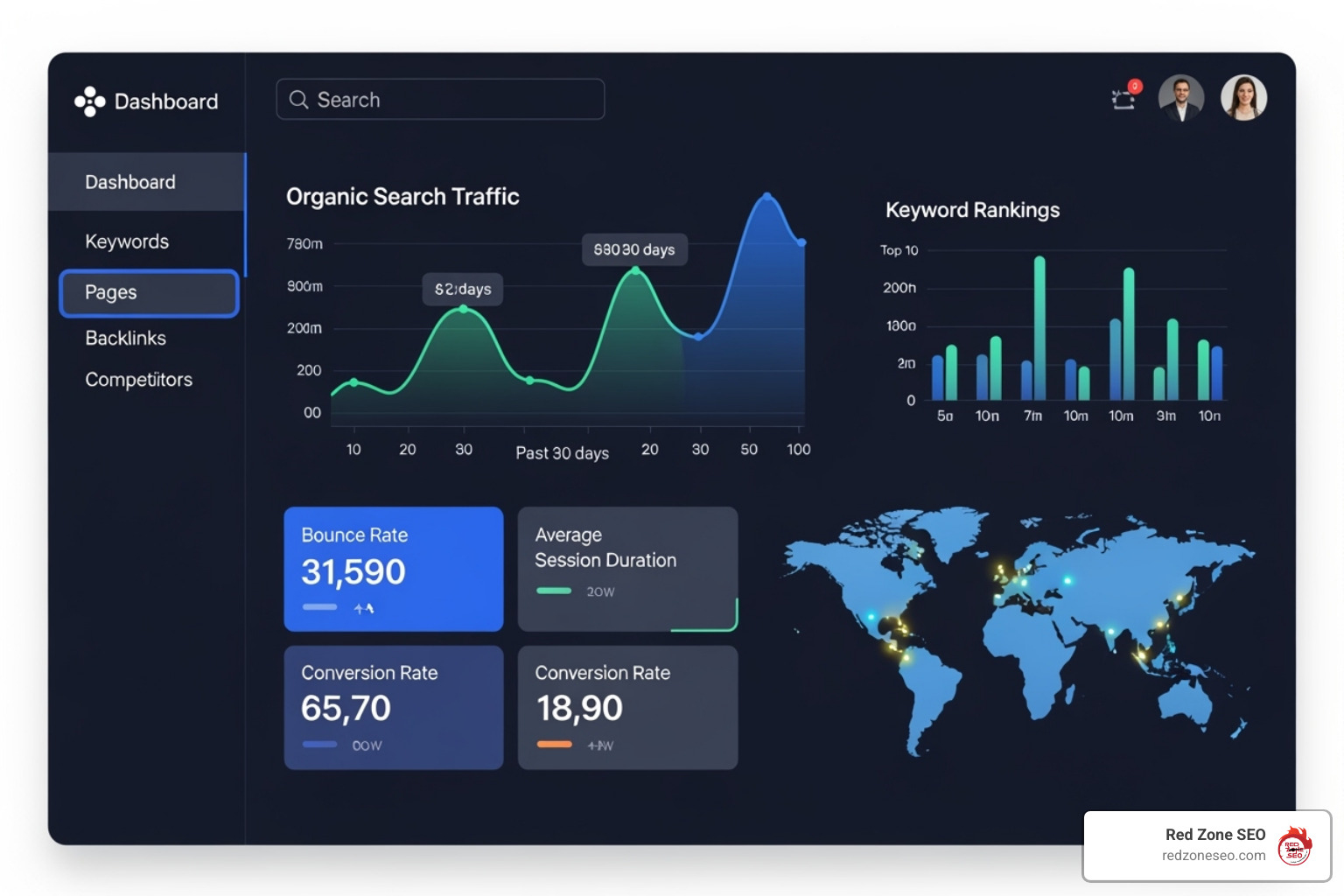
SEO costs depend on many variables. Understanding what drives these prices helps you make an informed investment. A custom strategy is key, as what works for a local bakery won't work for a national law firm. You get what you pay for, and in SEO, cutting corners with "cheap" providers can be catastrophic.
The average cost for seo services increases with your site's size and complexity. A 15-page local business site requires less work than an e-commerce site with thousands of products. E-commerce sites have unique challenges like filtering systems and duplicate content issues. Custom-built websites or sites with significant "technical debt"—accumulated issues like slow load times or broken links—also require more specialized expertise and time to optimize. For more details, see our guide on SEO for Website Cost.
Highly competitive industries like law, healthcare, and finance require a more aggressive and costly SEO strategy. Keywords in these sectors can cost hundreds of dollars per click in paid ads, indicating fierce competition for organic rankings. The scope of competition also matters. Competing locally against other businesses in Austin is more manageable than competing nationally or globally, where you face more competitors with larger budgets and more sophisticated strategies.
The breadth of services you need directly influences the cost. Some businesses need a comprehensive solution covering everything from technical SEO to content and link building. Others may opt for à la carte services.
The experience of your SEO provider significantly impacts cost and quality. Agencies typically charge more than freelancers due to higher overhead but offer broader expertise and resources. An experienced professional who has steerd numerous Google algorithm updates brings invaluable wisdom and efficiency. A provider's track record, shown through case studies and testimonials, is a strong indicator of their ability to deliver results.
When you're evaluating the average cost for seo services, think of it like shopping for a car. A basic package won't have the same features as a premium one. Understanding what you get at each investment level helps you set realistic expectations and focus on value, not just price. For a full overview, see our guide on SEO Packages Pricing.

Designed for startups and small local businesses in less competitive markets, these packages establish a foundational online presence. The focus is on showing up when locals search for what you offer.
Ideal for growing businesses ready to invest more seriously in competing online. The approach becomes more comprehensive, focusing on driving consistent traffic and leads.
For established businesses in highly competitive markets, like Las Vegas, that need to dominate their industry. The focus shifts to aggressive growth and market leadership.
Is the average cost for seo services worth it? Yes. SEO is an investment in a durable business asset. Unlike paid ads that stop when you stop paying, organic rankings can drive leads and sales for years. The value compounds over time as your website's authority grows.
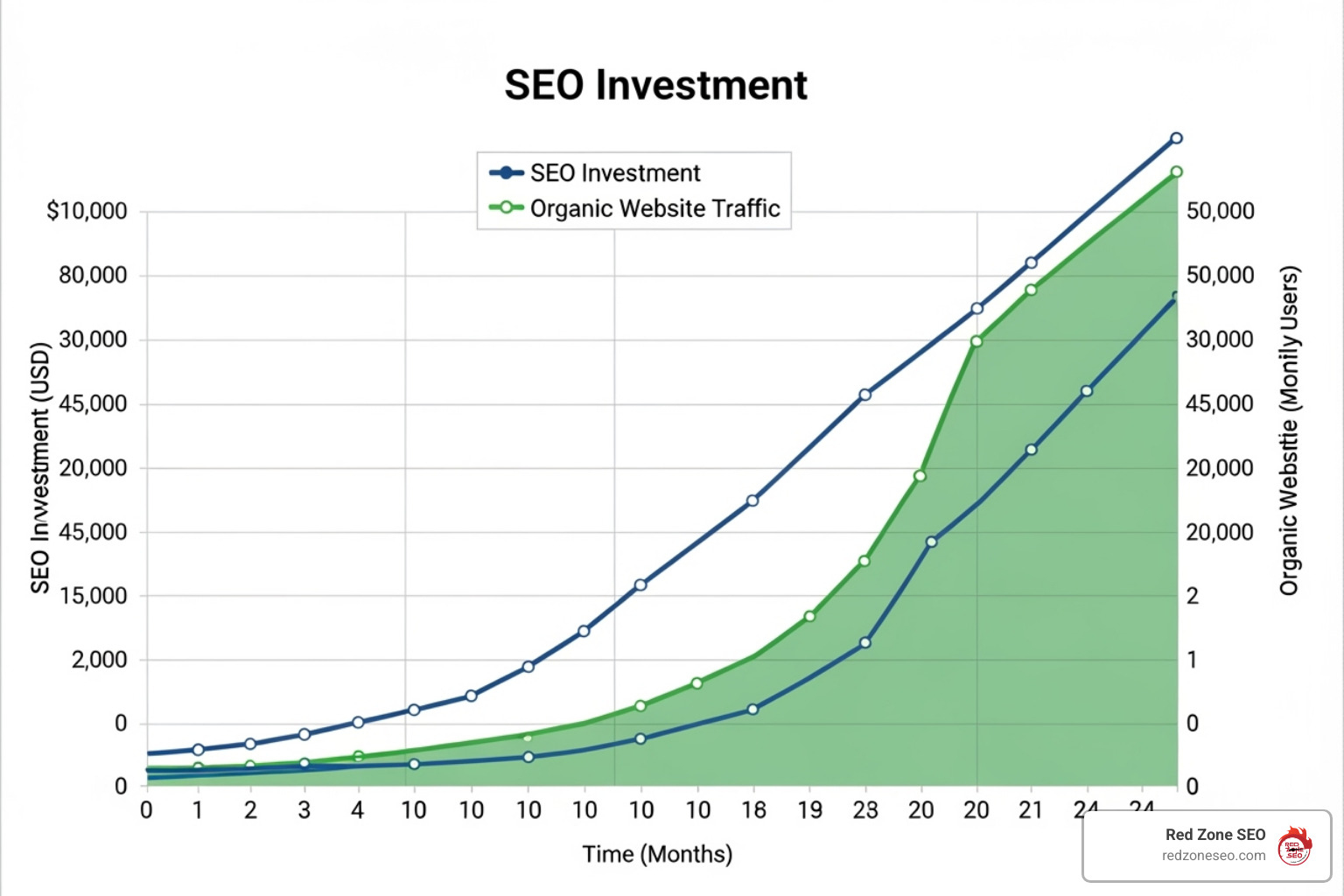
Measuring SEO ROI is crucial for understanding its value. The basic formula is: (Revenue from Organic Search - Cost of SEO) / Cost of SEO = ROI. To make this work, you need to track the right metrics:
While DIY SEO seems cost-effective, it requires a staggering amount of time and expertise. SEO involves technical complexities, content strategy, and constant learning to keep up with algorithm changes. You also need expensive professional tools that can cost hundreds per month. Doing SEO badly can lead to penalties and damage your online reputation. For most growing businesses, the efficiency, expertise, and faster results from a professional agency like Red Zone SEO provide a much higher return on investment.
Your SEO budget should be a strategic decision aligned with your goals.
Finding the right SEO partner is crucial. You need to vet agencies carefully to find a true partner focused on delivering genuine value, not just making empty promises.
A reputable agency will welcome your questions. Be sure to ask about:
To help, use our free cheat sheet to compare providers and make an informed, side-by-side comparison.
Some providers use questionable tactics. Watch out for these warning signs:
SEO pricing can be confusing. Here are straightforward answers to the most common questions we hear from business owners.
An SEO audit is a health check-up for your website. The cost depends on the scope. A basic audit might cost a few hundred dollars, while a comprehensive audit for a large, complex e-commerce site can run into the thousands. A quality audit examines technical issues, content, backlinks, and competitor performance, delivering an actionable roadmap for improvement. The real value is in identifying what's broken and what opportunities you're missing. For deep technical analysis, see our guide on How Much Should a Technical SEO Audit Cost?.
SEO is not instant. It typically takes four to twelve months to see meaningful results that impact your bottom line. You may see minor improvements in the first few months, but the real magic happens over time as your efforts compound. Factors like industry competition, your budget, and how quickly recommendations are implemented all affect the timeline. A brand-new website will take longer to see results than an established one with some existing authority.
While the average cost for seo services covers your agency's fees, other expenses can arise. Be aware of these potential costs:
A good SEO partner will be transparent about what's included and what might require additional investment.

Understanding the average cost for seo services is just the beginning. What truly matters is recognizing that SEO is a strategic investment in your company's digital future. It's an asset that pays dividends long after the initial work is done. While your competitors wonder why their phones aren't ringing, you'll be the business customers find first.
SEO is a long-term investment with compounding returns. The traffic you earn today continues to flow for months and even years, unlike paid ads that stop the moment you stop paying. Focusing on value over price is key. Investing in quality SEO means you're buying expertise, a proven strategy, and a partner dedicated to your success.
Choosing the right partner makes all the difference. At Red Zone SEO, we build our reputation on transparent pricing and proven expertise. We deliver measurable results through custom SEO strategies that work for businesses in competitive markets like Austin, Florida, Henderson, and Las Vegas. Your business deserves more than a cookie-cutter solution.
We're not just selling a service—we're building partnerships focused on your long-term growth. When you succeed, we succeed.
Ready to stop wondering about SEO costs and start seeing what professional SEO can do for your business? Explore our transparent SEO pricing and packages today, and let's start building your digital future together.
Learning how to improve technical seo is essential for any business that wants to rank higher in search results. Technical SEO is the behind-the-scenes work that helps search engines find, understand, and trust your website. Think of it as the foundation of a house. Without solid groundwork, even the most beautiful rooms (your content) won't matter if the building is inaccessible.
As one research study found: "If your technical SEO is messed up? Then you're not going to rank." This reality affects countless websites with great content that remain invisible because search engines can't properly access or understand them.
Quick Answer: How to Improve Technical SEO
Technical SEO is the first of three pillars, working alongside on-page SEO (content) and off-page SEO (authority). It ensures search engines can crawl your pages, index your content, and render your site correctly. When these basics fail, even the best content marketing and link-building efforts fall flat. With nearly half of web traffic coming from mobile and 40% of users abandoning sites that take more than three seconds to load, technical health is non-negotiable.
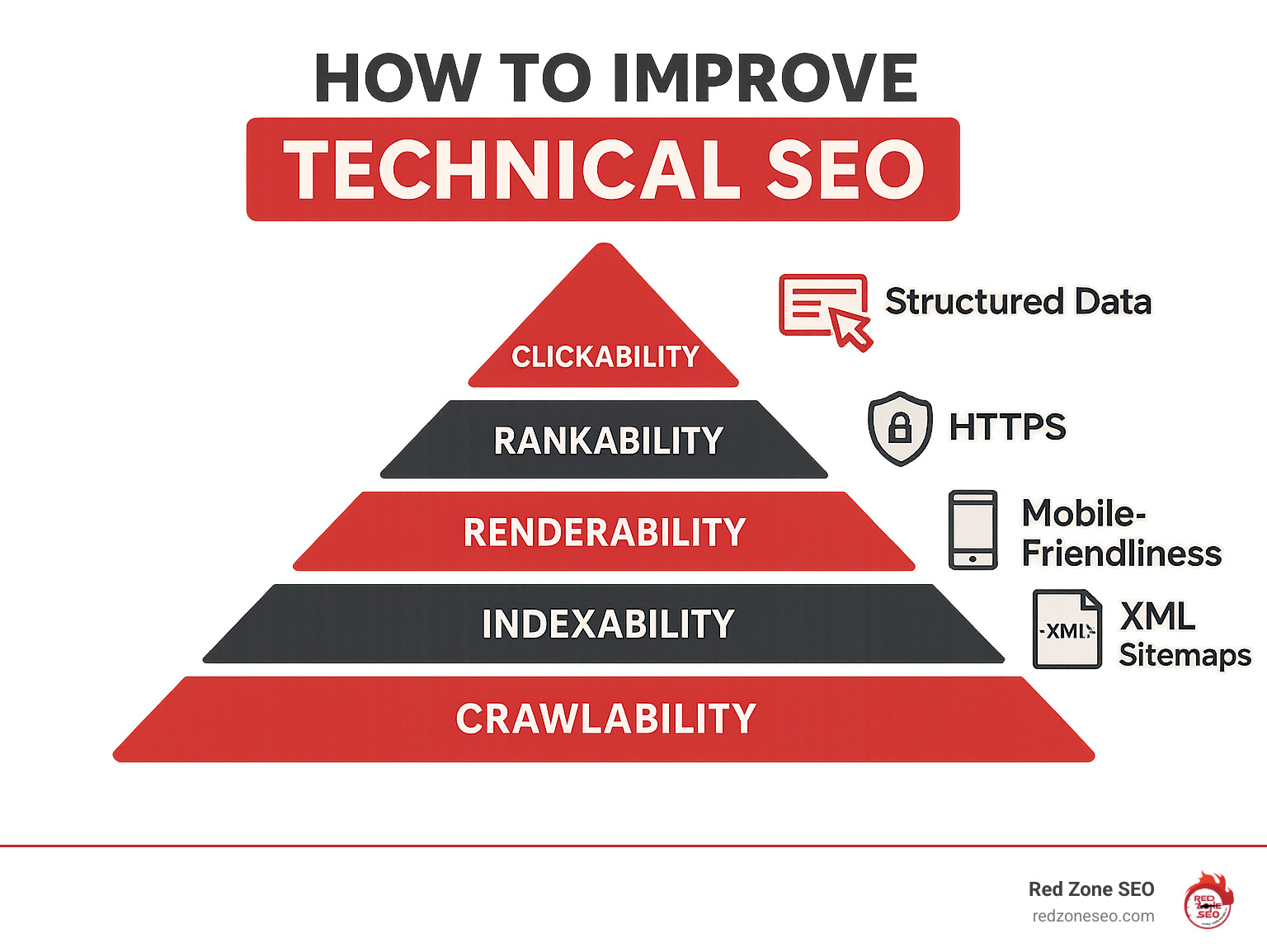
If search engines can't find your content, it will never rank. This section covers the absolute basics of how to improve technical SEO by making your website findable, understandable, and trustworthy for search engine crawlers.
Before Google can rank your pages, its bots must "crawl" them. Crawlability is simply how accessible your content is to these bots. Your robots.txt file acts as a doorman, telling crawlers which areas to avoid, like admin pages. Be careful not to accidentally block important content. You can find official guidance on controlling crawlers with a robots.txt file.
While robots.txt tells crawlers where not to go, XML sitemaps provide a detailed map of all the pages you want them to find. A clean, well-structured sitemap is crucial for ensuring all your valuable content gets finded. For larger websites, crawl budget optimization is key. This means making every visit from Googlebot count by fixing broken links, removing duplicate pages, and eliminating redirect chains that waste resources. You can learn more about what crawl budget means for Googlebot and monitor your site's performance in the "Crawl stats" report in Google Search Console.
After crawling, search engines decide which pages to add to their index, their massive library of web content. Duplicate content is a major obstacle here, as it confuses search engines about which version of a page to rank, diluting your authority. Two tools help manage this:
Use the URL Inspection Tool in Google Search Console to check if your important pages are being indexed correctly.
Website security builds trust with both users and search engines. HTTPS encrypts the connection between your site and its visitors, which is essential for any site with forms or login fields. Google confirmed HTTPS as a ranking signal since 2014, giving secure sites a small but important edge.
The padlock icon in the browser address bar is a powerful visual cue of trust. Most web hosts now offer free SSL/TLS certificates through services like Let's Encrypt, making HTTPS a standard expectation for all professional websites.
A well-organized website is like a well-organized library—it's easy for both people and search engine bots to find what they need. A logical site architecture improves user experience, helps search engines understand your content's hierarchy, and allows ranking power (link equity) to flow to your most important pages. This is a critical step in learning how to improve technical seo.
The best approach for most websites is a flat site architecture, where any page can be reached within three or four clicks from the homepage. This contrasts with a deep architecture, which buries content under many layers of navigation, frustrating users and hindering search engine crawlers.
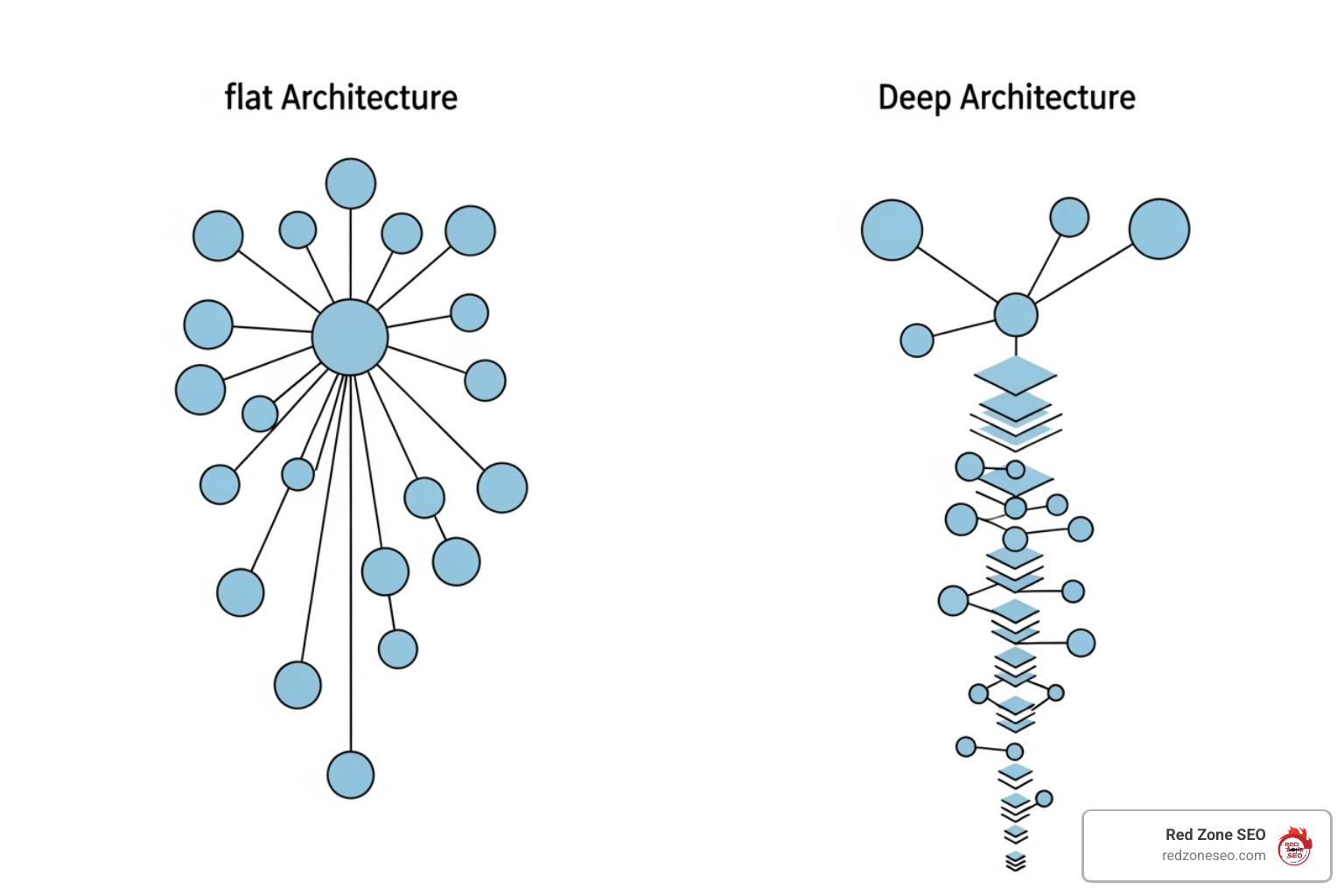
A flat structure makes content easily accessible, which keeps users engaged and helps Google's bots efficiently find and index all your pages. This is especially important for large e-commerce sites. Organize your content into logical categories and subfolders to create a clear hierarchy. A simple URL structure like /services/seo/technical-seo/ is far more effective than /page1/item/stuff/. Tools like Octopus.do can help you visualize and plan your site's structure before you build.
URL structure consistency is key. Use clean, descriptive URLs with hyphens to separate words (e.g., /category/product-name/). Your internal linking strategy is a powerful SEO tool. Links help users find related content and tell search engines which pages are most important. Use descriptive anchor text (the clickable words) like "technical SEO audit services" instead of generic phrases like "click here." This provides context to both users and search engines.
Breadcrumb navigation (e.g., Home > Services > SEO) is excellent for both usability and SEO. It shows users their location on your site and gives search engines clear structural signals. For more details, review these breadcrumb navigation best practices.
Broken links that lead to 404 error pages create a poor user experience and waste valuable link equity from other sites. Similarly, redirect chains (where Page A redirects to B, which redirects to C) slow down your site and can dilute ranking signals. As noted by Google's John Mueller, 30x redirects and PageRank can be negatively impacted by long chains.
Use redirects correctly:
Regularly finding and fixing broken links and inefficient redirects is essential maintenance for a healthy site.
Speed and mobile-friendliness are no longer optional; they are fundamental to user satisfaction and search rankings. Google prioritizes sites that offer a fast, seamless experience on any device. If your site is slow or clumsy on mobile, users will leave, sending negative signals to search engines that can harm your visibility. Focusing on performance is a core part of how to improve technical seo because it directly impacts how real people experience your brand.
Google has used page speed for mobile search as a ranking factor for years. The impact on user behavior is even more direct: as page load time goes from one to five seconds, the probability of a visitor bouncing increases by 90%.
Here are proven ways to speed up your site:
Use Google's PageSpeed Insights tool to get specific recommendations for your site.
With nearly half of all web traffic coming from mobile devices, Google now operates on a mobile-first indexing initiative. This means Google primarily uses the mobile version of your site for indexing and ranking. A poor mobile experience will hurt your rankings across all devices.
Responsive web design is the best practice. It ensures your site's layout automatically adapts to any screen size, from a large desktop to a small smartphone. Beyond that, focus on mobile usability: use readable fonts, provide ample space for tapping links, and avoid content that requires horizontal scrolling. Use Google's Mobile-Friendly Test to identify any issues.
Core Web Vitals (CWV) are part of Google's Page Experience signals and measure real-world user experience. There are three key metrics:
Optimizing for CWV isn't just about chasing scores; it's about creating a better, less frustrating experience for your visitors, which Google rewards.
With a solid technical foundation in place, you can use advanced strategies to give search engines a richer, more nuanced understanding of your content. These techniques are central to learning how to improve technical seo beyond the basics, helping you stand out in crowded search results, ensure complex sites are indexed correctly, and reach global audiences.
Structured data (or schema markup) is code you add to your HTML to explicitly tell search engines what your content is about. It doesn't directly impact rankings, but it enables rich snippets—improved search results that can include star ratings, prices, event dates, or FAQ toggles. These eye-catching results can dramatically increase your click-through rate.
Google's preferred format is JSON-LD. You can see the many types of rich results available in the Search Gallery. Popular types include:
Always validate your implementation with the Rich Results Test to ensure it's error-free and eligible for rich snippets.
Many modern websites use JavaScript to create dynamic user experiences. However, this can pose a challenge for search engines, which have to "render" the page (run the JavaScript) to see the final content. This is more resource-intensive than reading plain HTML.
While Google is good at rendering, complex or slow-loading scripts can cause content to be missed. There are several solutions:
The goal is to ensure all critical content and links are visible to search engines without requiring complex rendering.
If your website targets users in different countries or who speak different languages, you need to give search engines clear signals. Hreflang tags are HTML attributes that specify the language and geographic targeting for each version of a page. They tell Google to show the Spanish version to a user in Mexico and the UK English version to a user in the UK.
Proper implementation prevents duplicate content issues and ensures users land on the correct version of your site. However, hreflang is notoriously difficult to get right; common errors include missing return links or using incorrect country codes. You can find detailed specifications in Google's guide on using the hreflang tag. Tools like the Hreflang Tags Generator Tool from Aleyda Solis can help, but careful auditing is essential.
Technical SEO is not a one-time fix; it's an ongoing process of auditing and monitoring. Using the right tools is crucial for catching issues before they harm your rankings and for identifying opportunities for improvement. This proactive approach is key to maintaining a healthy, high-performing website.
A technical SEO audit is a systematic check of your website's health. The process involves analyzing:
robots.txt blocks, noindex tags, and duplicate content.Website crawlers are essential for this process. A tool like the Screaming Frog SEO Spider simulates a search engine bot, crawling your site to identify technical issues at scale. It helps you find broken links, analyze page titles and meta data, find duplicate content, and visualize your site structure.
Beyond a dedicated crawler, a suite of tools is necessary for effective diagnosis and monitoring:
When clients ask how to improve technical seo, a few key questions always come up. Understanding the answers can help you make smarter decisions for your website's long-term health and visibility.
For most small to medium-sized websites, a comprehensive technical audit every 3-6 months is a good rule of thumb. For large, complex sites (like e-commerce stores) that change frequently, monthly or quarterly audits are better.
However, continuous monitoring is essential for all websites. Tools like Google Search Console act as an early warning system for critical issues like crawl errors or security problems. Think of the full audit as an annual physical and the daily monitoring as checking your pulse—both are necessary for good health.
Many basic technical SEO tasks are manageable for a tech-savvy business owner. Using a modern CMS like WordPress or Shopify, you can likely submit a sitemap, fix a broken link, or install a plugin to compress images.
However, complex issues require specialized expertise. Problems related to JavaScript rendering, Core Web Vitals optimization, international SEO (hreflang), or large-scale site migrations can be incredibly difficult to solve. A mistake in these areas can have disastrous consequences, such as accidentally de-indexing your entire site. For businesses that rely on search traffic, investing in a technical SEO specialist is often a wise decision.
This is a crucial distinction. They work together, but focus on different areas:
Technical SEO is the foundation of your website. It ensures search engines can efficiently find, crawl, index, and render your site. It covers site speed, mobile-friendliness, security, and site structure. If the foundation is broken, nothing built on top of it will be stable.
On-page SEO is the content and interior design of your house. It focuses on making individual pages relevant to a user's search query. This includes keyword research, writing compelling title tags, structuring content with headers, and creating high-quality, useful information.
Both are essential. You can have the best content in the world (on-page SEO), but it won't rank if search engines can't access it due to technical problems. Conversely, a technically perfect site will fail if its content doesn't meet user needs.
Mastering how to improve technical seo is about building a website that works seamlessly for both visitors and search engines. By making your site crawlable, secure, fast, and mobile-friendly, you are laying the foundation that allows all your other marketing efforts—from content creation to link building—to succeed.
A technically sound website creates a positive feedback loop. A great user experience leads to higher engagement and lower bounce rates. These positive signals tell search engines that your site is a quality result, which in turn boosts your rankings. It's an investment that delivers compounding returns over time.
However, technical SEO is never truly "finished." Search engine algorithms evolve, new technologies emerge, and user expectations rise. This is why ongoing monitoring and regular audits are not just recommended; they are essential for maintaining a competitive edge. It's the difference between constantly playing catch-up and confidently staying ahead.
For many business owners, navigating the complexities of site migrations, JavaScript rendering, and Core Web Vitals can be overwhelming. The stakes are high, and a single mistake can undo months of hard work. When the technical details become too complex or time-consuming, seeking expert guidance from a technical SEO specialist or agency can be an invaluable investment. A professional can conduct a thorough audit, identify critical issues, and create a clear, data-driven roadmap for sustainable success, focusing on the improvements that will have the greatest impact on your rankings, traffic, and bottom line.
An investment in technical SEO is an investment in your website's future. A properly optimized site doesn't just rank better today—it's built to adapt and thrive in the ever-changing digital landscape. By prioritizing your site's technical health, you are not just chasing algorithms; you are building an unshakeable foundation for long-term growth and creating a powerful, lasting competitive advantage in the digital marketplace.
SEO for B2B companies is fundamentally different from consumer marketing, focusing on a distinct set of challenges and opportunities. With 54% of B2B brands increasing their digital and website budgets, it's clear that online visibility is paramount. Modern B2B buyers are methodical researchers, not impulse purchasers. They seek solutions to complex problems, involving significant investments and multiple stakeholders.
This landscape is defined by:
While B2B keywords have lower search volumes, they attract highly qualified prospects. A single conversion can represent substantial revenue. The goal of B2B SEO isn't just ranking; it's about establishing your company as a trusted authority that decision-makers rely on to solve their most pressing business challenges.
Seo for b2b companies terms to know:
SEO for B2B companies requires a strategic, long-term approach, much like a game of chess. Unlike the B2C world, B2B SEO is about endurance, precision, and understanding complex business dynamics. You're not casting a wide net; you're targeting a smaller, more valuable audience of professionals and executives solving specific business problems.
The key differences are stark:
| Factor | B2B SEO | B2C SEO |
|---|---|---|
| Audience | Businesses, professionals, multiple decision-makers | Individual consumers, broad demographics |
| Sales Cycle | Long, complex, multi-touchpoint | Short, often impulse-driven |
| Keyword Strategy | Specific, technical, long-tail, high-intent, lower volume | Broad, general, high-volume, often emotional |
| Content Goals | Educate, build trust, demonstrate expertise, solve problems | Entertain, inform, persuade, drive quick sales |
Understanding the different roles within a buying committee is crucial for creating content that resonates. Each member has a different perspective and requires different information to feel confident in a decision.
Your content strategy must provide assets that speak to each of these roles, guiding the entire committee toward a consensus.
The B2B buying process is complex, with multiple stakeholders involved. Your SEO strategy must cater to their needs at each stage.
Aligning content to this journey is crucial for nurturing leads effectively. By serving the right information at the right time, you build trust and guide prospects through their decision-making process.
In B2B, trust is everything. Google's E-E-A-T framework—Experience, Expertise, Authoritativeness, and Trustworthiness—is your guide to building that trust. Many B2B topics are considered Your Money or Your Life (YMYL) topics in B2B because a poor decision can have significant financial consequences.
To demonstrate E-E-A-T:
The goal is to become the go-to resource for decision-makers, which naturally leads to better SEO performance.
Keyword research is the blueprint for your entire SEO for B2B companies strategy. It's about finding the exact phrases your ideal customers use when solving critical business problems. This process begins with understanding your audience through detailed buyer personas—not just their job titles, but their pain points and professional language.
Search intent is your guide, helping you understand if a user is learning, comparing options, or ready to buy. This shapes both keyword selection and content creation. Your competitor analysis may also reveal that you're competing for keywords with non-direct competitors like consultants or industry publications, opening new content opportunities.
A powerful way to structure your content is through topic clusters and pillar pages. Instead of isolated articles, you create a comprehensive content hub. The pillar page covers a broad topic, while cluster pages dig into specifics, linking back to the pillar. This model builds immense topical authority with search engines.
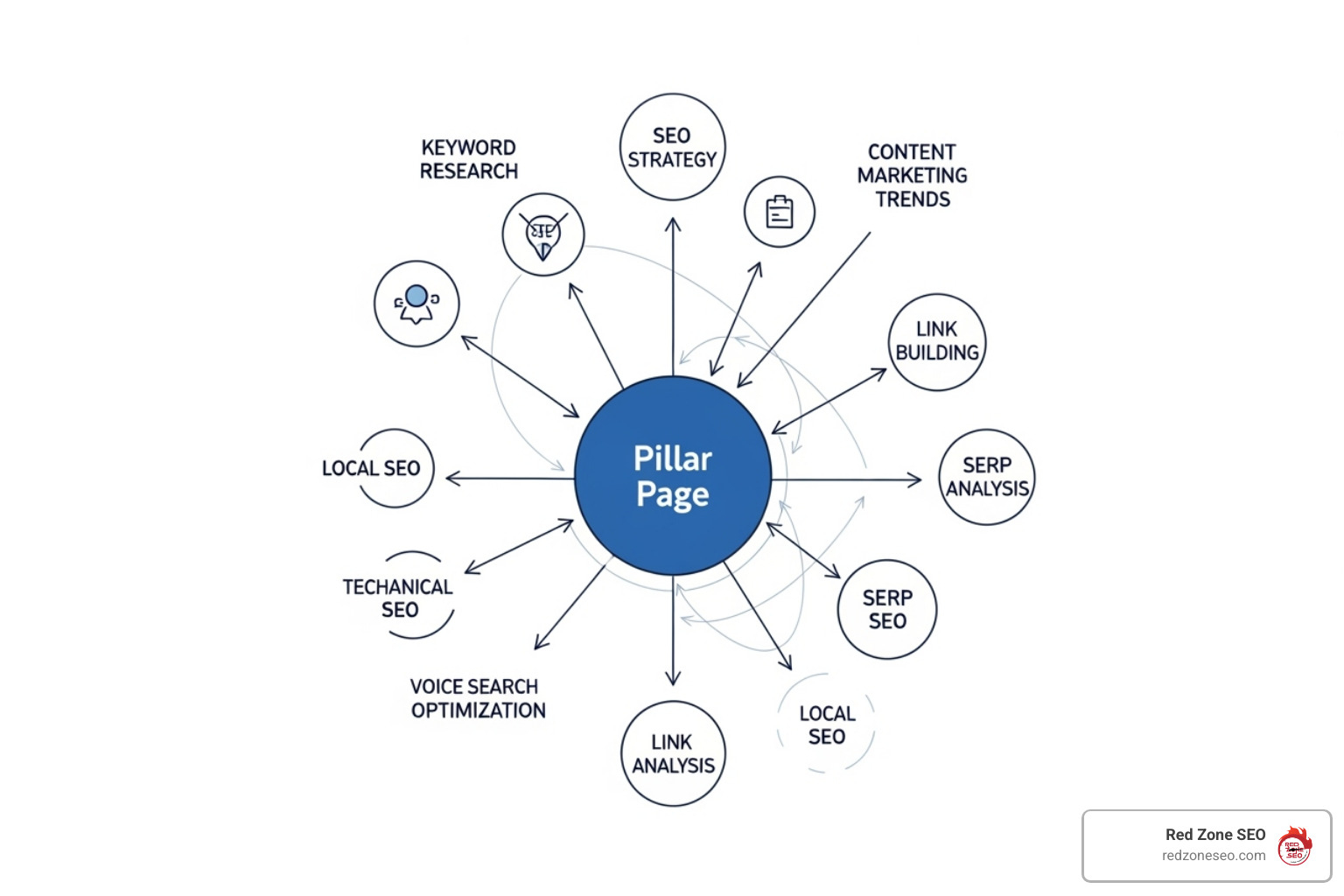
Our comprehensive Keyword Research process uncovers these strategic opportunities to create content that converts.
In B2B, the focus is on high-intent long-tail keywords. A phrase like "AI-powered inventory management software for pharmaceutical companies" may have low search volume, but the user is a serious buyer.
We leverage tools like Google Ads Keyword Planner to analyze Cost Per Click (CPC) data. High CPC is a strong indicator of commercial intent, helping us prioritize keywords that drive qualified traffic.
Aligning keywords to the buyer's journey creates a seamless experience that guides prospects from awareness to purchase.
A keyword map ensures every piece of content serves a strategic purpose, changing your website into a lead generation engine.
With a solid keyword strategy, the next step is execution. This involves building a strong foundation with on-page SEO, ensuring flawless performance with technical SEO, and creating compelling content that engages your audience. For B2B, professionalism is key; a slow page or a typo can damage the trust of a high-value decision-maker. A comprehensive SEO Audit is the best starting point to identify areas for improvement.
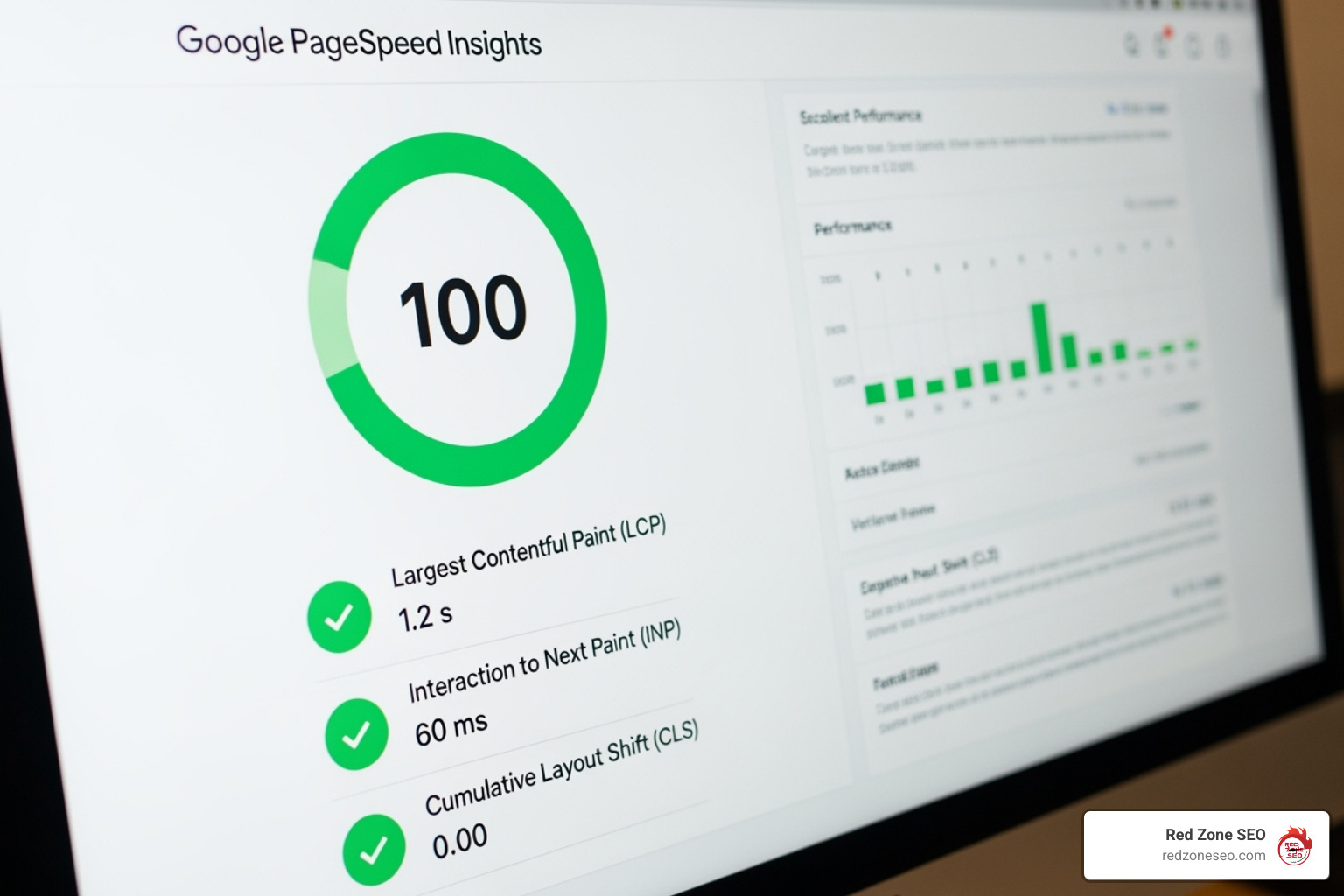
On-page SEO makes every page work harder to attract and convert prospects.
Our approach to On-Page SEO Definition and Content Optimization ensures every page meets both SEO and user needs.
Technical SEO is critical for B2B success. A slow, insecure, or broken website suggests your services might be unreliable.
/enterprise-cloud-solutions) for professionalism, clarity, and better user experience.In B2B, content is about establishing your company as an industry expert. Create resources that solve real problems and build trust.
The goal is to create substantial resources that address your prospects' biggest challenges. This approach aligns with our SEO Content Strategies, turning your content into a 24/7 salesperson.
Building a technically sound website with great content is just the beginning. Now comes the exciting part: getting your SEO for B2B companies strategy noticed by the right people. For an SEO for B2B companies strategy, this means executing off-page SEO through strategic link building and local SEO. These external "votes of confidence" signal to search engines that your content is valuable and trustworthy. In B2B, the quality and relevance of links always trump quantity.
Backlinks are a primary ranking factor, and B2B companies have a unique advantage in earning them through expertise.
Even national or global B2B companies benefit from local visibility. Decision-makers often prefer local providers for high-touch services, and a strong local presence helps attract top talent. At Red Zone SEO, we've seen this across our locations in Austin, Florida, Henderson, and Las Vegas, where local leads often convert at higher rates.
Whether you're seeking SEO Services Las Vegas or SEO Henderson, our approach builds a crucial local presence.
An SEO for B2B companies strategy is incomplete without robust measurement. We focus on data-driven decisions to prove the value of your investment. For B2B, this means tracking how organic search contributes to qualified leads, sales opportunities, and bottom-line revenue. The goal is to connect the dots from a prospect's first search to a signed contract, demonstrating clear business impact to stakeholders.
We track metrics that matter to business growth, not just vanity numbers. Our focus is on KPIs that resonate with the C-suite.
We use a suite of professional tools to measure and analyze performance.
By combining data from these sources, we provide transparent reports that show the tangible business results of your SEO for B2B companies strategy.
We work with many clients on SEO for B2B companies and often hear the same questions. Here are answers to the most common ones.
The primary difference is the audience and their buying process. B2B SEO targets a smaller, professional audience with a long, logic-driven sales cycle involving multiple decision-makers. This requires a focus on high-intent, low-volume keywords and in-depth, trust-building content like whitepapers and case studies. In contrast, B2C SEO targets a broad consumer base with a shorter, often emotional sales cycle, using high-volume keywords and more direct calls to action.
B2B SEO is a long-term investment. While you may see early indicators like ranking improvements within 3-4 months, significant results such as a steady flow of qualified leads typically take 6 to 12 months or more. The timeline depends on factors like your industry's competitiveness, your website's existing authority, and the consistency of your efforts. Patience is key, as building the trust and authority Google values takes time.
Absolutely. A small business's greatest advantage is the ability to be a specialist. While large corporations target broad, high-volume keywords, smaller companies can dominate niche, long-tail keywords. For example, instead of competing for "cybersecurity solutions," a small firm can own a term like "HIPAA compliant network security for dental offices." By creating highly targeted content that addresses the specific pain points of a niche audience, a smaller business can build authority, attract highly qualified leads, and effectively outmaneuver larger, more generalized competitors.
We've established that SEO for B2B companies is not just a marketing tactic; it's the backbone of sustainable growth. Your potential clients are actively searching for solutions online. A strategic SEO plan ensures they find you.
The B2B landscape is defined by long sales cycles, buying committees, and the critical need for trust. Success requires a patient, strategic approach that nurtures relationships through every stage of the buyer's journey—from keyword research and technical optimization to creating authoritative content and earning high-quality backlinks.
The power of B2B SEO lies in its compounding returns. Unlike paid ads, a strong organic presence delivers qualified leads for years to come, building a durable competitive advantage.
At Red Zone SEO, we specialize in creating these predictable growth engines. Our data-driven, custom strategies are designed to improve rankings and build the authority your business deserves in your specific industry. We transform websites from digital brochures into powerful lead-generation machines.
Ready to dominate your industry's search results? Learn how our proven SEO process works and find how we can help you achieve your business goals.